































Complete Endocrine System Word Search | Grades 6–7 Science

Paste this activity's link or code into your existing LMS (Google Classroom, Canvas, Teams, Schoology, Moodle, etc.).
Students can open and work on the activity right away, with no student login required.
You'll still be able to track student progress and results from your teacher account.
Endocrine System Overview Word Search
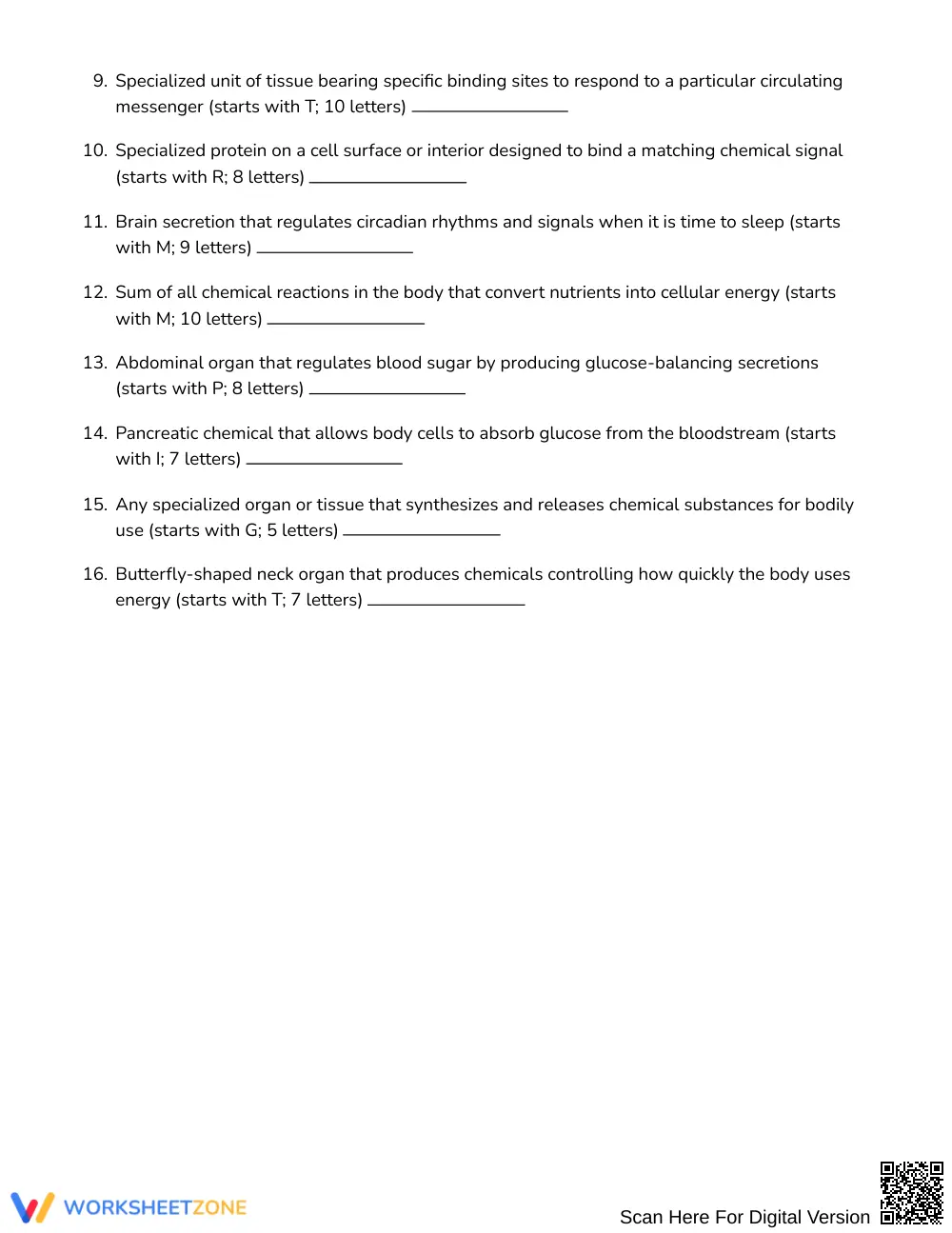
Strengthen middle school science vocabulary with this endocrine system word search for Grades 6–7. Students read biological definitions to identify key terms before hunting for each target word across the puzzle grid. This engaging no-bank challenge reinforces foundational human body system terminology while promoting independent active recall.
At a Glance
- Grade: Grades 6–7 · Subject: Science
- Standard: Not standards-assessed — vocabulary enrichment
- Skill Focus: Endocrine system overview
- Format: 3 pages · 16 words · Answer key included · PDF
- Best For: Vocabulary review and fast finishers
- Time: 20–30 minutes
What's Inside
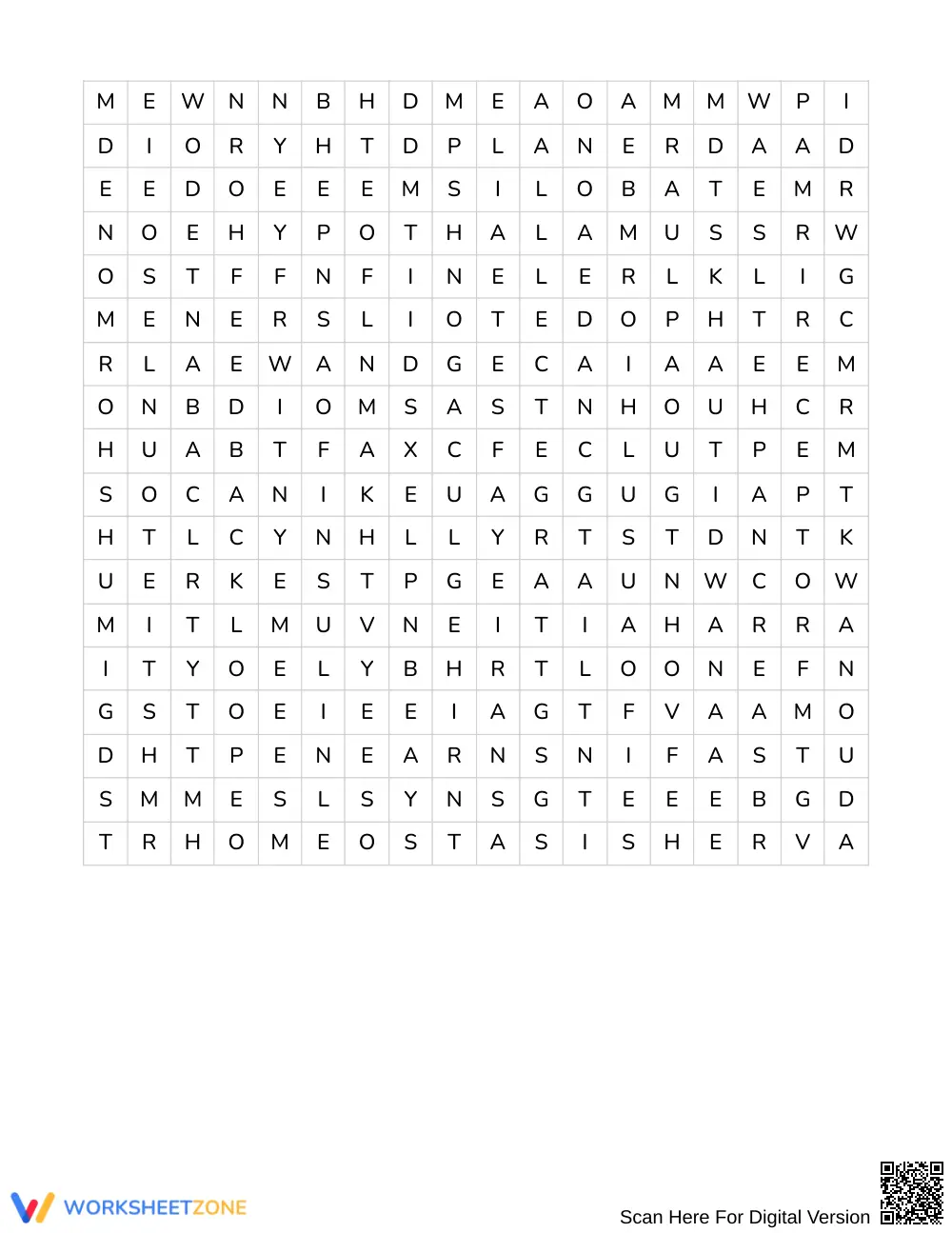
This 3-page science printable delivers a clue-based puzzle featuring 16 hidden endocrine terms. Instead of relying on a pre-printed word bank, students analyze detailed anatomical descriptions to deduce each term before searching. The package includes clean student puzzle sheets and a clear 4-page answer key highlighting every word location for rapid checking.
Puzzle Structure & Mechanics
The activity features an 18 x 18 letter grid designed to test students' retrieval and spatial scanning skills. Words run in all 8 directions: north, northeast, east, southeast, south, southwest, west, and northwest. Because no word bank is supplied, learners must actively process the provided physiological clues to determine target words before locating them.
Standards Alignment
This resource serves as targeted vocabulary enrichment and is not aligned to an assessed state standard. It reinforces essential life science terminology supporting middle school human body system units, allowing students to consolidate concept definitions through puzzle-based practice.
How to Use It
Implement this word search after direct instruction on human body systems to consolidate technical vocabulary. Alternatively, assign it as a collaborative review activity where partners read clues aloud to confirm definitions before scanning the grid. To formatively assess retention, observe whether students deduce terms directly from clues or need hint prompts. Most learners finish within 20 to 30 minutes.
Who It's For
This activity is designed for Grades 6–7 science classes exploring organ systems and internal regulation. For emerging readers, provide a reference textbook or allow paired work; for advanced learners, have them compose original explanatory sentences for three discovered terms. Pair this activity with an endocrine system diagram or organ function anchor chart.
Vocabulary acquisition forms a foundational pillar of middle school scientific literacy, establishing the conceptual architecture necessary for higher-order reasoning. Fisher & Frey (2014) demonstrate that intentional vocabulary instruction linked with retrieval practice accelerates student mastery of complex domain-specific terminology. This clue-based endocrine system overview requires Grades 6–7 science students to actively retrieve 16 specialized terms—such as hormone, pituitary, and homeostasis—by decoding physiological descriptions rather than passively recognizing terms from a list. By eliminating the standard word bank across an 18 x 18 grid, the puzzle stimulates dual cognitive processes: semantic memory recall during clue analysis and focused visual discrimination during the word search. This structured reinforcement solidifies essential human body system concepts, ensuring students build the precise scientific vocabulary needed to comprehend biological feedback mechanisms, glandular coordination, and systemic regulation across subsequent life science coursework.


