




























Views
Downloads



Complete Dominant Purpose Worksheet | Grade 6 ELA

Paste this activity's link or code into your existing LMS (Google Classroom, Canvas, Teams, Schoology, Moodle, etc.).
Students can open and work on the activity right away, with no student login required.
You'll still be able to track student progress and results from your teacher account.
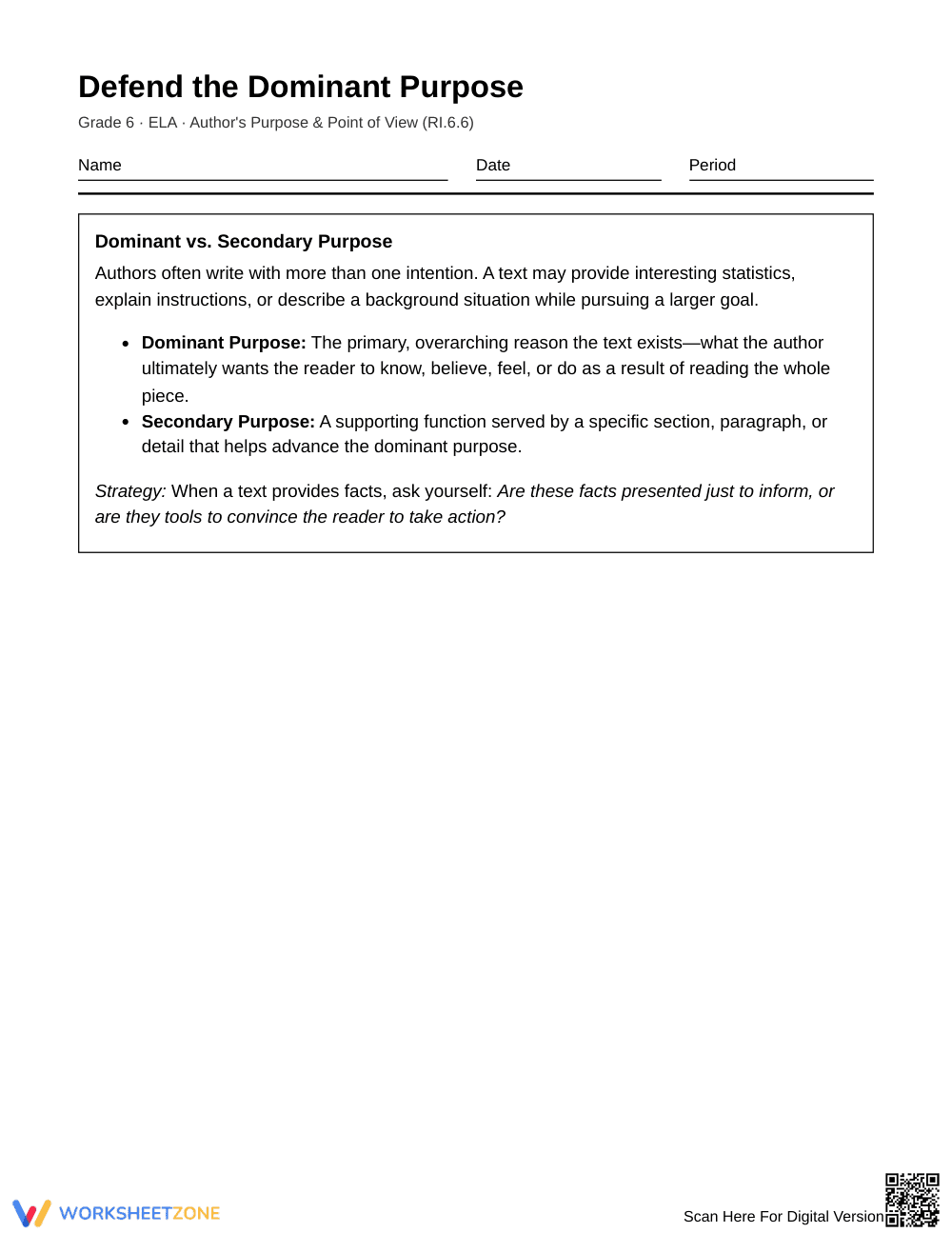
This Grade 6 reading informational text worksheet guides middle school students through distinguishing between primary authorial intentions and supporting sub-purposes. Learners examine an authentic community announcement passage, evaluate structural rhetoric, and defend the author's dominant persuasive goal using textual evidence across eight analytical prompts.
At a Glance
- Grade: 6 · Subject: ELA
- Standard:
RI.6.6— Determine an author's purpose in a text and explain how it is conveyed- Skill Focus: Defend the Dominant Purpose
- Format: 5 pages · 8 problems · Answer key included · PDF
- Best For: Informational text analysis and rhetorical defense
- Time: 40–50 minutes
What's Inside
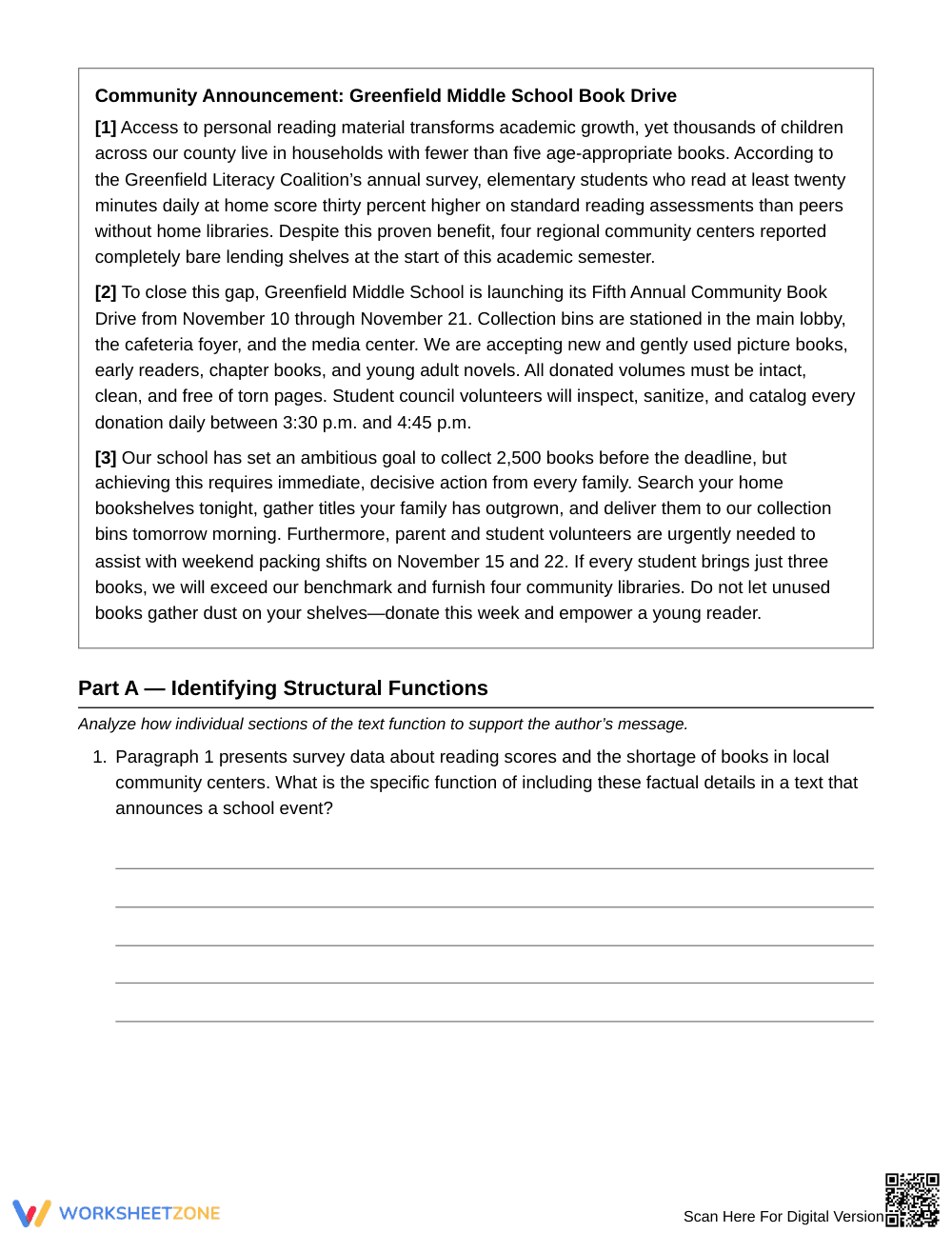
The 5-page resource includes an introductory concept summary defining dominant versus secondary purposes, followed by an original informational text titled "Community Announcement: Greenfield Middle School Book Drive." Students complete 8 multi-sentence analytical tasks arranged across three progressive sections, supported by a 2-page detailed answer key with exemplar text evidence.
Skill Progression
- Guided practice (Part A — 2 tasks): Students identify structural functions in individual paragraphs, analyzing how factual background data and logistical instructions serve broader communicative goals.
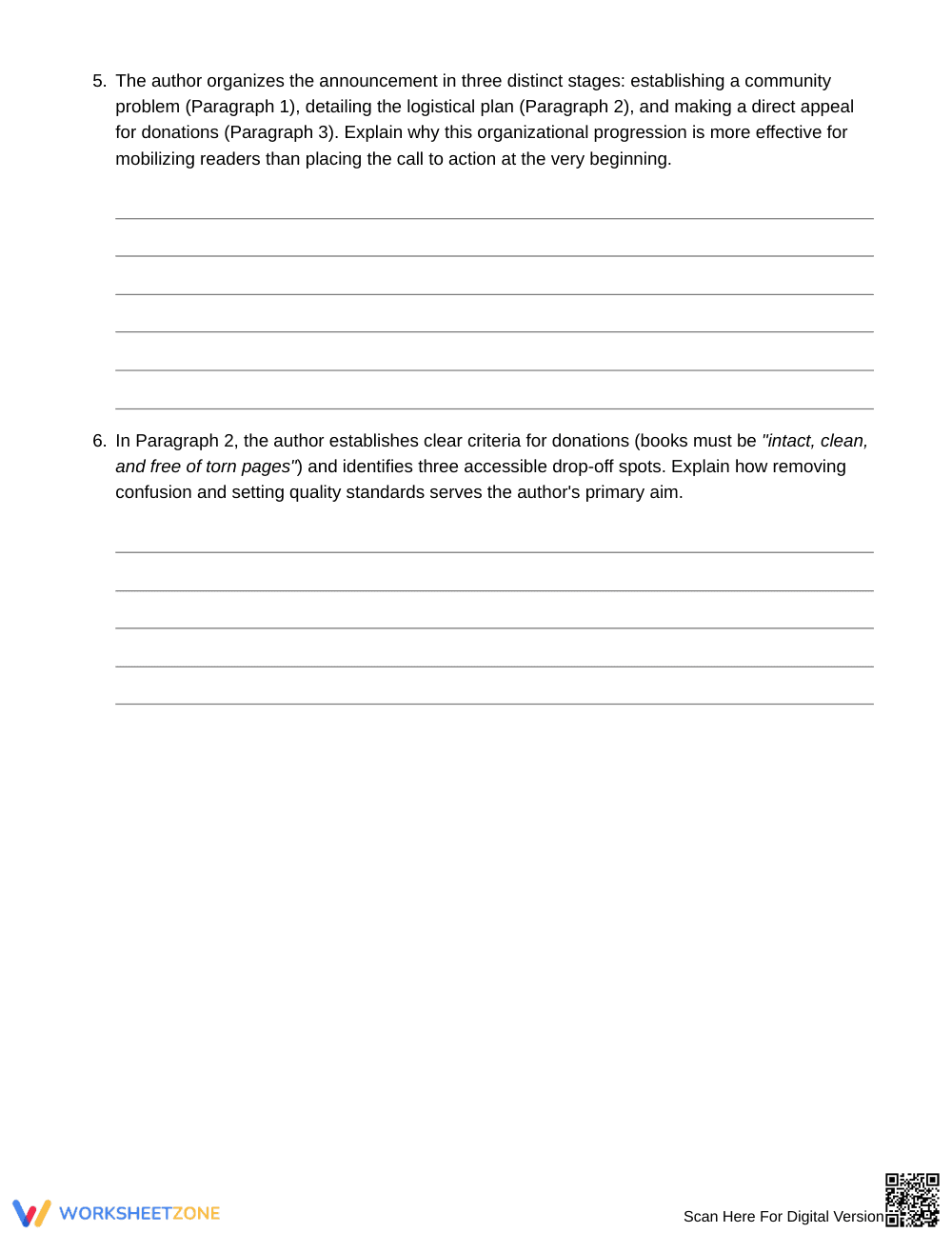
- Supported practice (Part B — 4 tasks): Students examine specific authorial craft choices, including urgent vocabulary, quantitative figures, drop-off criteria, and overall paragraph progression.
- Independent practice (Part C — 2 tasks): Students evaluate competing claims about the passage's primary intent and write evidence-based refutations of opposing viewpoints.
This structured progression reflects the gradual release of responsibility model, moving students from basic component analysis to rigorous written defense.
Standards Alignment
This activity directly addresses CCSS RI.6.6: "Determine an author's point of view or purpose in a text and explain how it is conveyed in the text." Students also reinforce supporting standard CCSS RI.6.1 by citing explicit text evidence to support their evaluations. Both standard codes can be copied directly into lesson plans, IEP goals, or district curriculum mapping tools.
How to Use It
Deploy this worksheet during the guided application phase following direct instruction on author's craft and rhetoric. It also functions effectively as a partner discussion activity where students debate Part C claims before writing. Monitor student work during Part B to ensure learners link craft choices directly to author intent rather than merely summarizing text facts. The complete activity takes approximately 40 to 50 minutes.
Who It's For
This resource is tailored for sixth-grade general education students, honors ELA enrichment groups, and intervention classes needing targeted work on rhetorical analysis. For emerging readers, provide a high-frequency transition word bank or sentence starters for the Part C refutation. Pair this activity directly with an anchor chart on author's purpose and rhetorical appeals.
According to Fisher & Frey (2014), explicit instruction in complex informational texts requires students to analyze structural decisions and rhetorical intent rather than merely identifying surface-level topic details. Aligning with CCSS standard RI.6.6, this 8-task worksheet develops middle schoolers' ability to defend dominant purpose by distinguishing overarching persuasive goals from supporting informational subsections. When students examine how paragraph organization, diction, and quantitative metrics operate collectively, they develop the critical literacy necessary to evaluate real-world informational media. The scaffolded question sets provide structured opportunities for students to articulate how authors deploy craft moves to influence audience response. By requiring written refutations of competing analytical claims, the material reinforces evidence-based argumentation and deep textual comprehension across diverse classroom reading environments.


