




























Views
Downloads

Complete DNA Structure Model Worksheet | Grade 8-12 Science

Paste this activity's link or code into your existing LMS (Google Classroom, Canvas, Teams, Schoology, Moodle, etc.).
Students can open and work on the activity right away, with no student login required.
You'll still be able to track student progress and results from your teacher account.
This comprehensive DNA structure worksheet develops student mastery of the double helix through targeted modeling exercises. High school biology students identify molecular subunits, construct complementary strands using base-pairing rules, calculate nucleotide proportions from empirical data, and correct structural misconceptions across 42 rigorous tasks designed to solidify foundational genetics knowledge.
At a Glance
- Grade: Grades 8–12 · Subject: Science
- Standard: Construct, complete, and revise structural models of the DNA double helix
- Skill Focus: Construct, complete, or revise a model of DNA structure
- Format: 4 pages · 42 problems · Answer key included · PDF
- Best For: Genetics unit reinforcement and model evaluation
- Time: 45–60 minutes
What's Inside
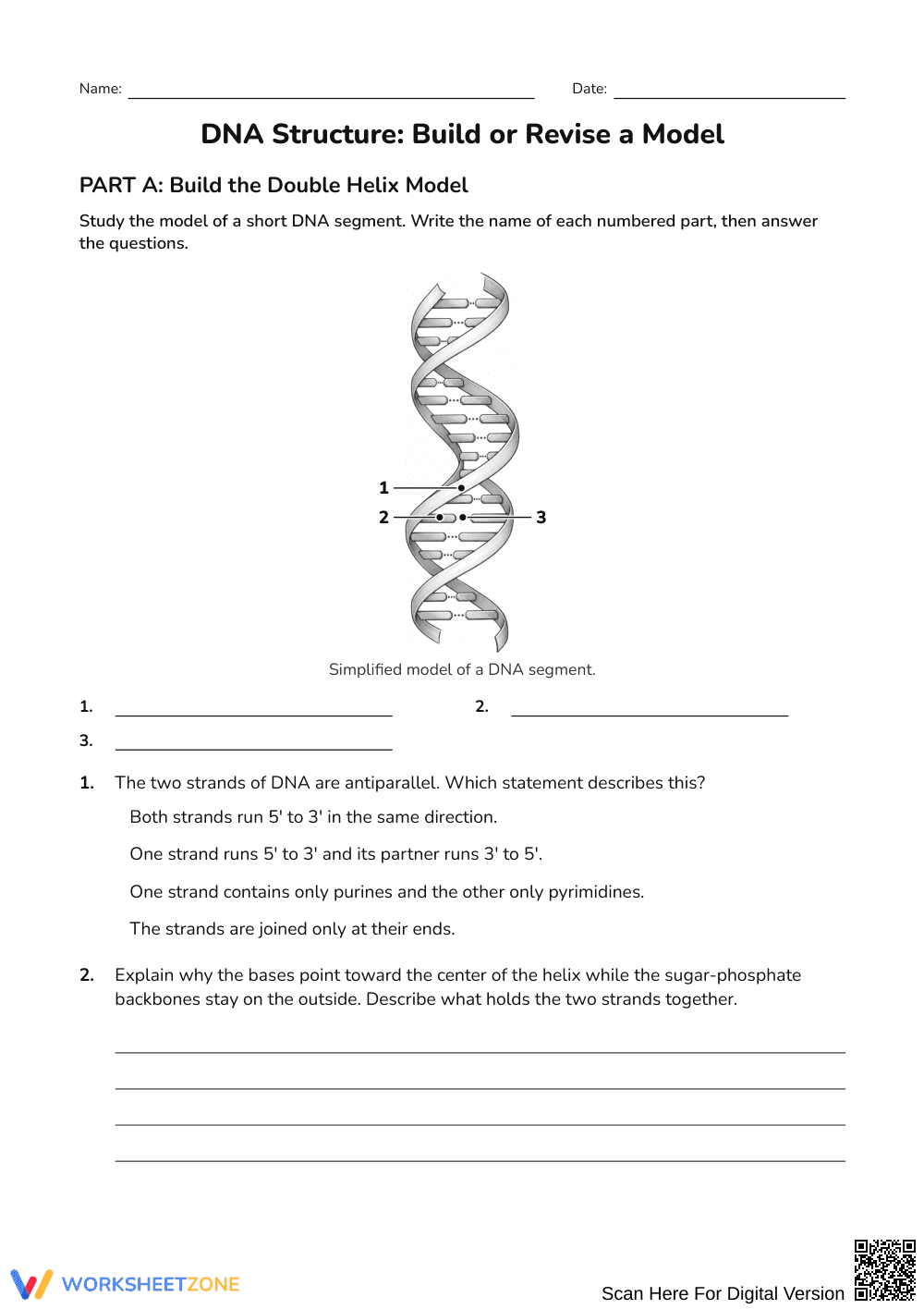
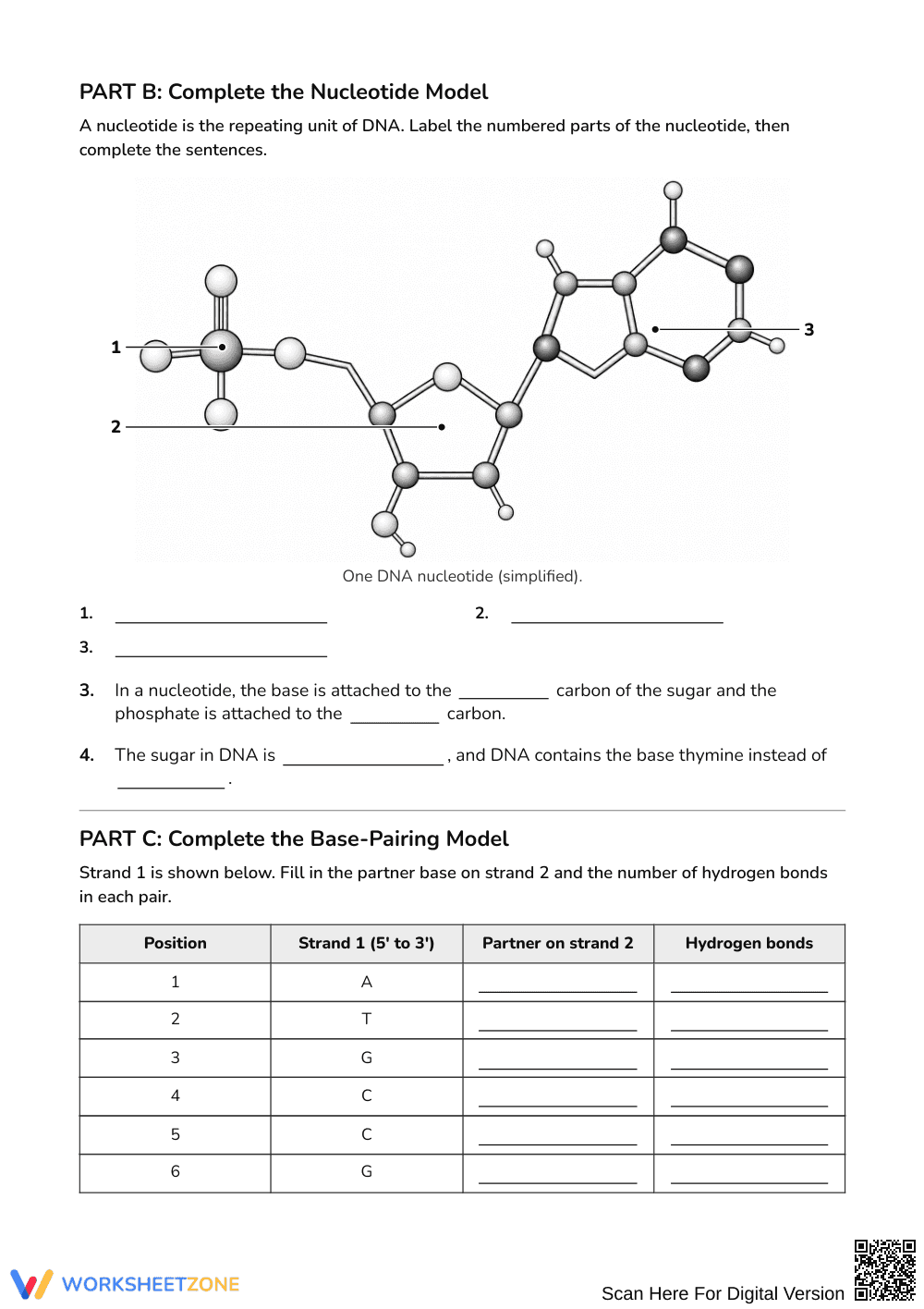
The 4-page student packet guides learners across five organized sections: labeled anatomical diagrams, nucleotide composition drills, complementary strand pairing tables, error-correction prompts, and Chargaff rule calculations. It includes visual diagrams of antiparallel strands and single nucleotides, complemented by an exhaustive 4-page teacher answer key displaying completed tables, dimensional calculations, and sample explanations.
Skill Progression
- Guided Practice: Parts A and B provide 14 scaffolded tasks identifying antiparallel backbones, carbon attachments, and nitrogenous bases with direct diagrammatic support.
- Supported Practice: Part C features 17 problems where students construct complementary strands, tally hydrogen bonds, and explain purine-pyrimidine spacing constraints.
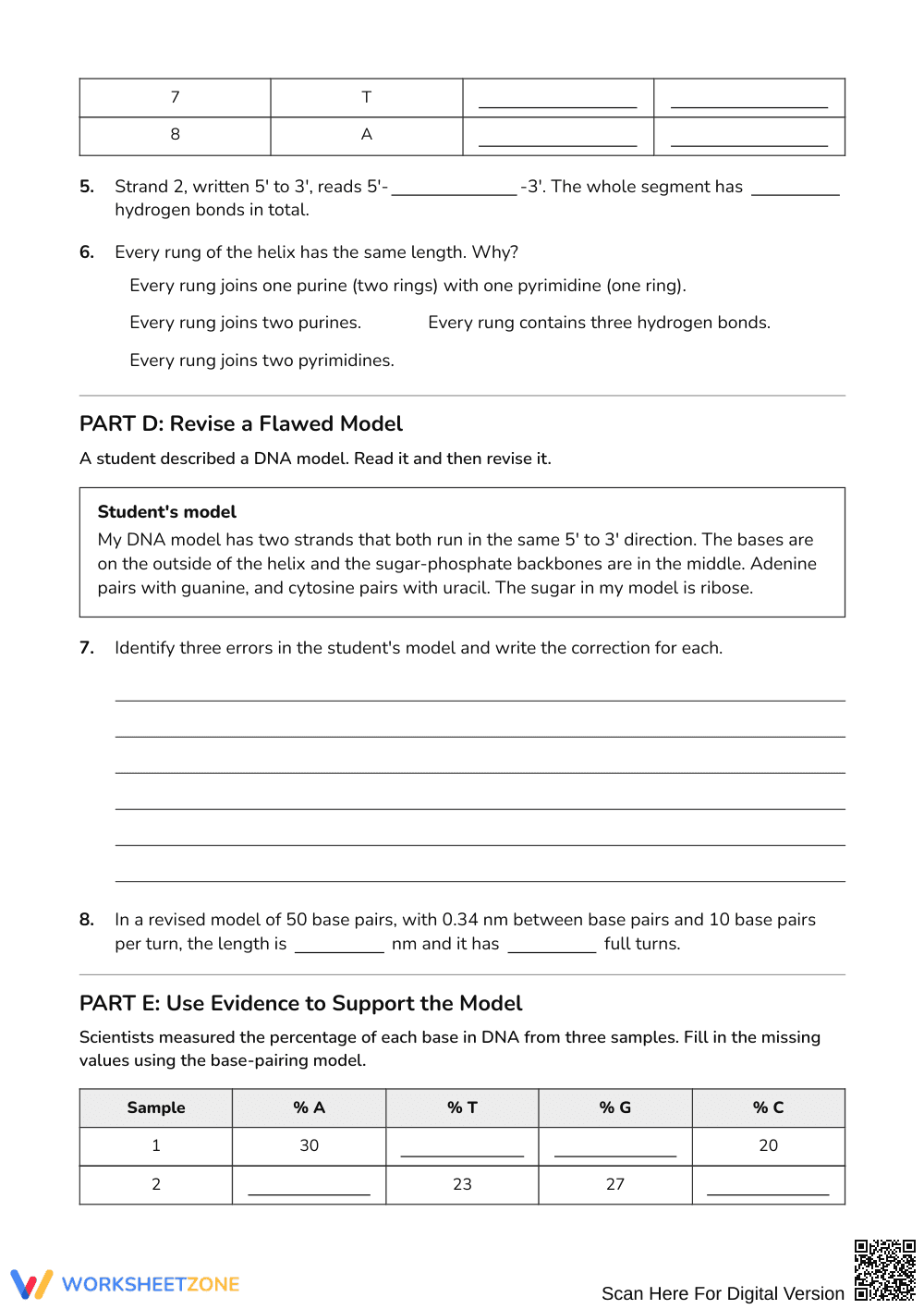
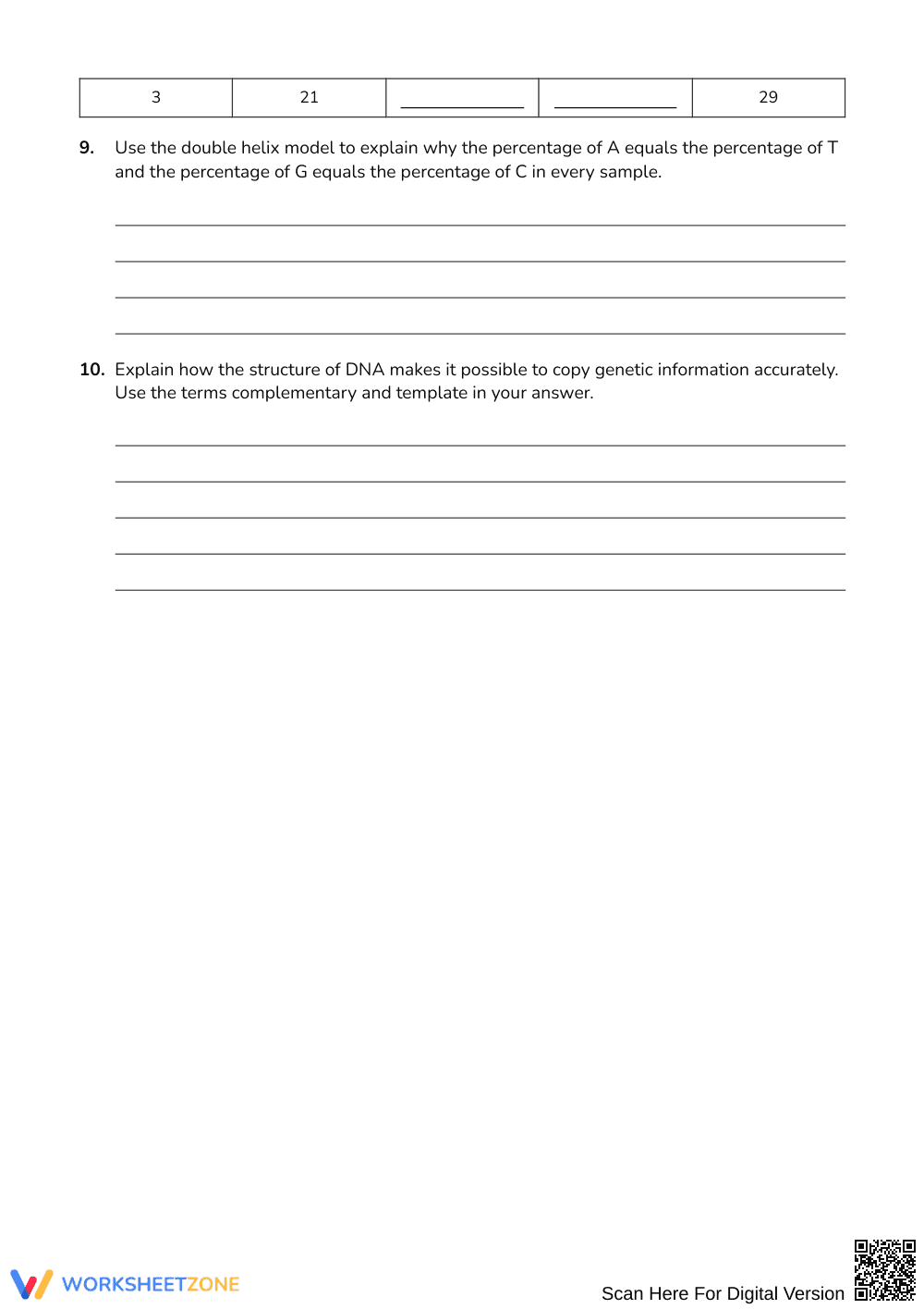
- Independent Practice: Parts D and E deliver 11 higher-order tasks requiring students to debug flawed models, calculate dimensions, and evaluate empirical data.
This intentional sequence follows the gradual release of responsibility framework, transitioning learners from visual identification to independent critique.
Standards Alignment
This worksheet addresses secondary life science standards requiring students to construct and revise models illustrating how DNA structure determines hereditary instructions. Activities emphasize antiparallel orientation, complementary nucleotide base pairing, and chemical bonding. These learning competencies can be copied directly into lesson plans, IEP goals, or district curriculum mapping tools.
How to Use It
Implement this packet during mid-unit guided practice or immediately after introducing Watson-Crick base-pairing mechanics. For formative assessment, inspect student responses in Part D; learners who fail to notice antiparallel directionality or ribose sugar substitutions require immediate visual re-teaching with physical manipulatives. High school students typically complete all 42 tasks in 45 to 60 minutes.
Who It's For
This resource serves general biology, AP Biology, and introductory life science students. Built-in diagrammatic cues support multilingual learners and students with IEP accommodations, while quantitative base-percentage problems challenge advanced learners. Pair this activity with a double-helix tactile modeling kit or an introductory presentation on nucleic acids.
Developing secondary science literacy requires students to construct, complete, and revise models of DNA structure rather than merely memorizing molecular nomenclature. Research by Fisher & Frey (2014) on scaffolded instructional design demonstrates that structured model analysis and deliberate error detection significantly enhance cognitive retention in STEM subjects. By requiring learners to actively diagnose flawed models, explain complementary base-pairing constraints, and apply Chargaff rules to quantitative datasets, this resource shifts student engagement from passive observation to evidence-based scientific reasoning. The worksheet's explicit transition through guided labeling, partner-strand completion, and independent error correction mirrors established gradual release principles, ensuring students master the antiparallel architecture of the double helix. Educators gain dependable formative insight into student conceptual understanding, confirming whether pupils can accurately translate physical structural properties into functional genetic mechanisms during standards-based instruction.


