


























Views
Downloads


Complete Dividing Mixed Numbers Worksheet | Grade 6 Math
Paste this activity's link or code into your existing LMS (Google Classroom, Canvas, Teams, Schoology, Moodle, etc.).
Students can open and work on the activity right away, with no student login required.
You'll still be able to track student progress and results from your teacher account.
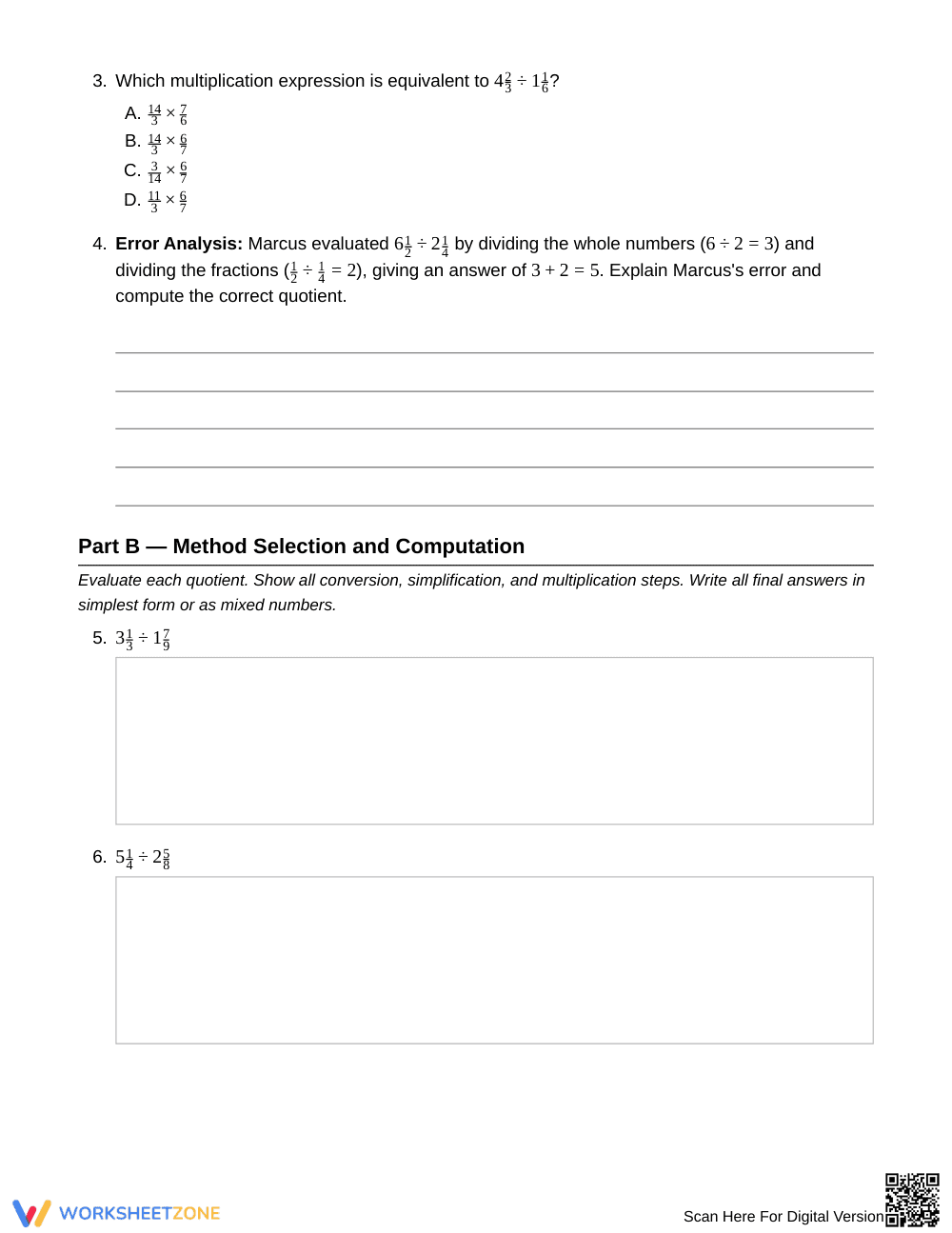
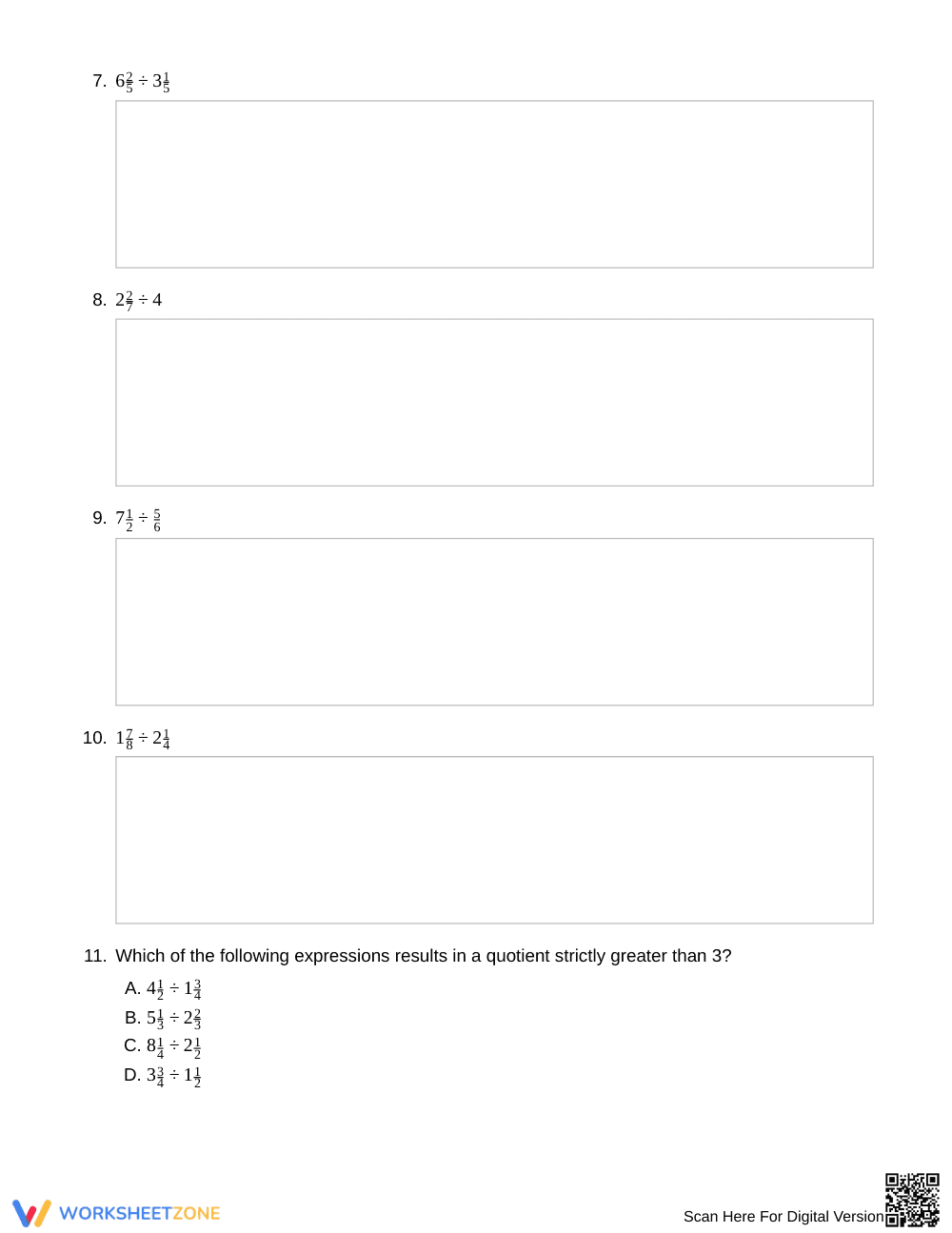
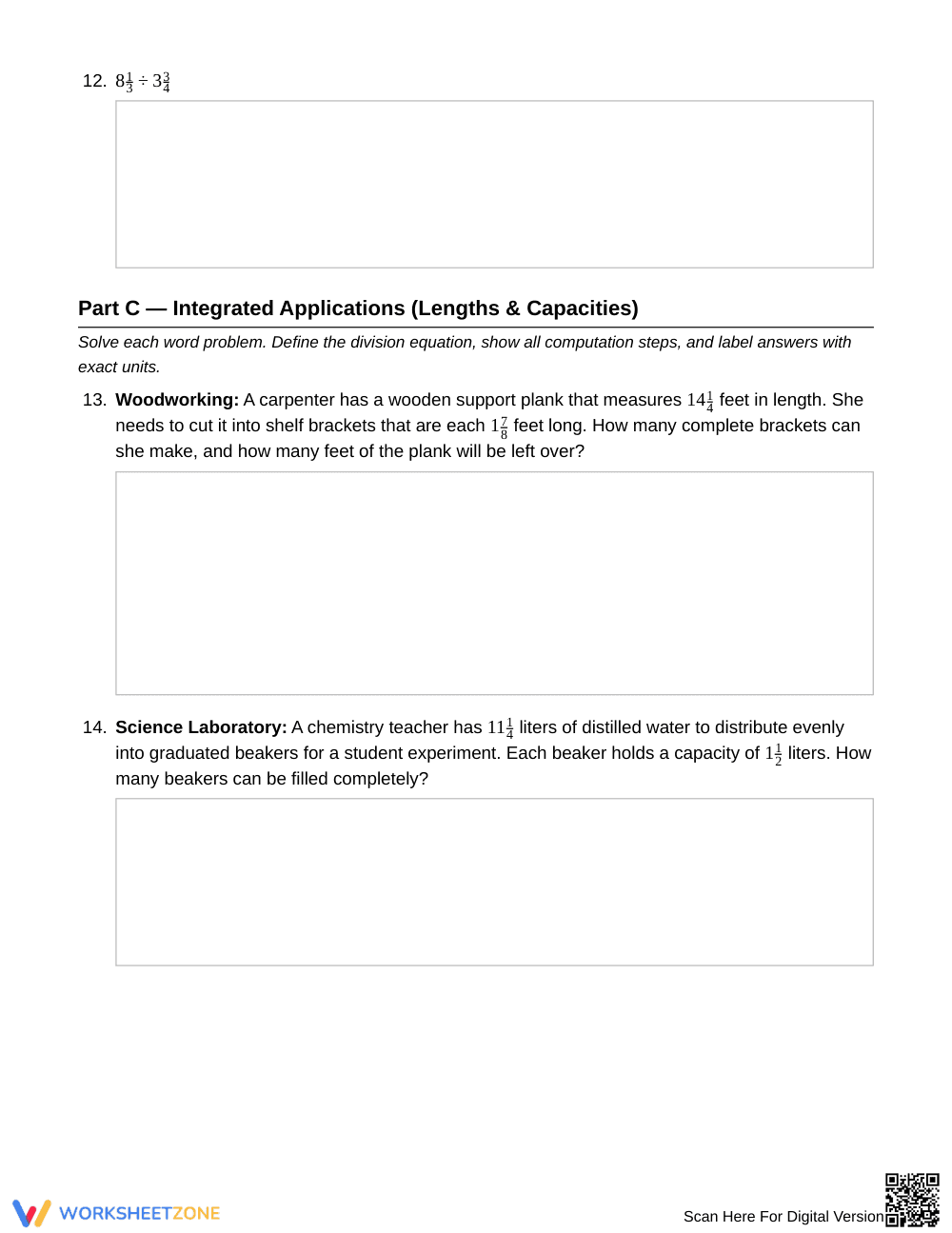
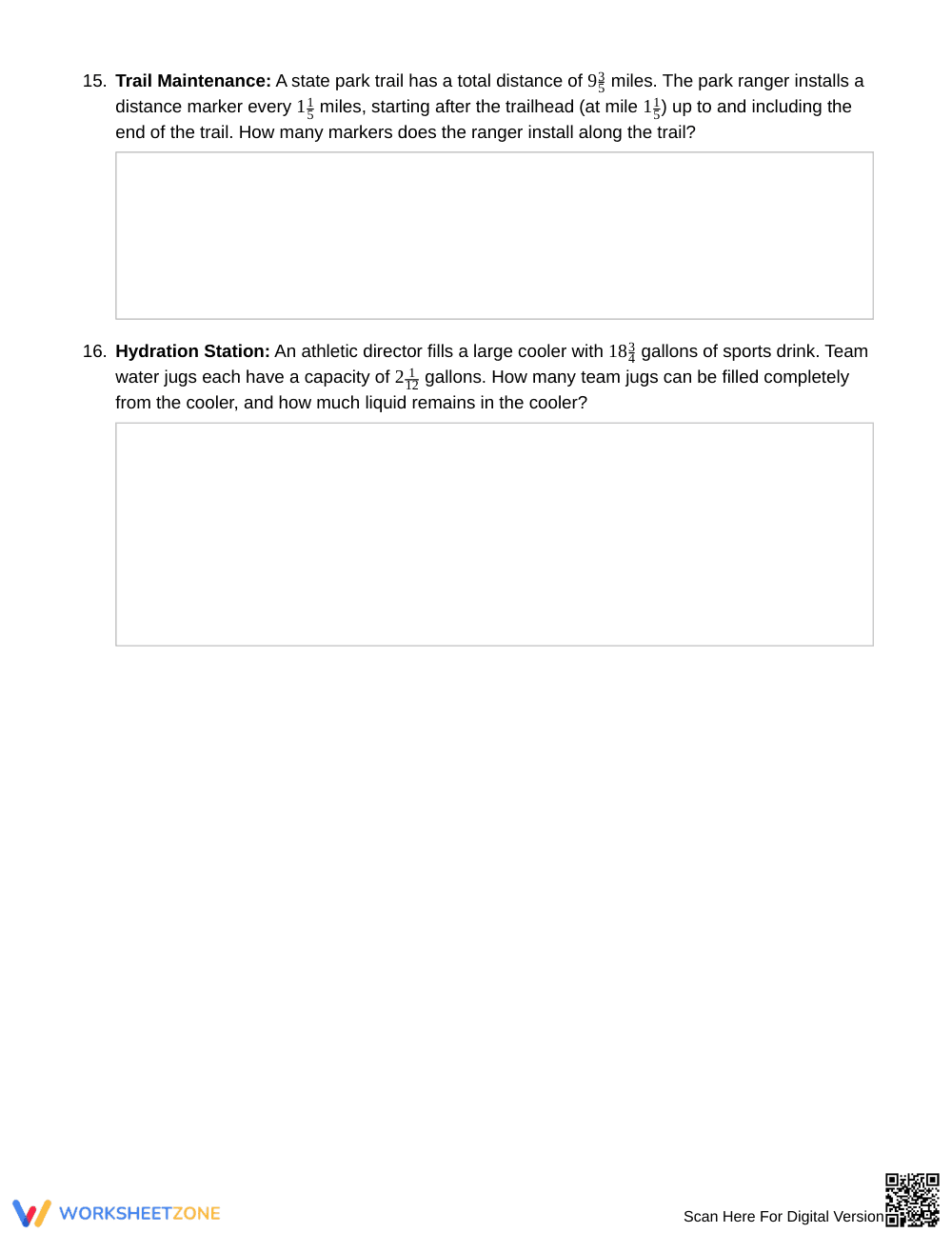
This Grade 6 math worksheet guides students through dividing mixed numbers to solve computation and real-world problems. Learners convert mixed numbers to improper fractions, multiply by reciprocals, and simplify quotients. Through structured exercises and error analysis, students build accurate calculation habits and apply division strategies to measurement contexts involving lengths and capacities.
At a Glance
- Grade: 6 · Subject: Math
- Standard:
6.NS.A.1— Compute quotients of fractions to solve real-world problems- Skill Focus: Mix Mixed-Number Divisors and Dividends
- Format: 5 pages · 16 problems · Answer key included · PDF
- Best For: Fraction division practice and review
- Time: 40–50 minutes
What's Inside
This 5-page resource includes a Core Strategy reference box outlining the three steps for fraction division: conversion, reciprocal multiplication, and simplification. The 16 problems feature multiple-choice checks, student error analysis, computation with varied fraction formats, and multi-step word problems involving measurement units. A comprehensive 3-page answer key provides step-by-step solutions for efficient grading.
Skill Progression
- Guided practice (Part A, 4 problems): Scaffolds foundational steps with conversion prompts, equivalent expressions, and error analysis targeting whole-number division misconceptions.
- Supported practice (Part B, 8 problems): Requires students to evaluate quotients across mixed numbers, whole numbers, and fractions, including comparative magnitude checks.
- Independent practice (Part C, 4 problems): Synthesizes skills through applied measurement scenarios involving woodworking, science labs, trail markers, and capacities with remainders.
This sequence embodies the gradual release of responsibility model, shifting cognitive ownership from structured procedural modeling to flexible real-world application.
Standards Alignment
The worksheet aligns with `6.NS.A.1`: Interpret and compute quotients of fractions, and solve word problems involving division of fractions by fractions, including mixed numbers, using equations. Supporting practice reinforces 6.EE.B.7 as students write equations to model capacity and distance relationships. Both standard codes can be copied directly into lesson plans, IEP goals, or district curriculum mapping tools.
How to Use It
Implement this worksheet directly after introducing reciprocal multiplication or during a mid-unit review station. For formative assessment, examine student responses to the Part A error analysis task; students who fail to convert mixed numbers prior to dividing reveal foundational gaps requiring immediate small-group intervention. Expect students to complete the 16 tasks within 40 to 50 minutes.
Who It's For
Designed for Grade 6 general education math students, this resource also provides targeted intervention for Grade 7 review or accelerated Grade 5 enrichment. Pair this worksheet with an anchor chart displaying visual tape diagrams and reciprocal multiplication models to support visual learners and English language learners.
According to Fisher & Frey (2014), structured instructional progressions that transition from guided conceptual scaffolding to independent application significantly improve student retention in complex mathematics. This Grade 6 instructional resource aligns directly with standard 6.NS.A.1 by requiring students to compute quotients of fractions and mixed numbers within realistic measurement contexts. Rather than relying on rote algorithmic execution, the sequence deliberately addresses conceptual hurdles through structured error analysis and unit-based problem solving. Students convert mixed numbers to improper fractions, apply reciprocal operations, and evaluate remainders in practical scenarios such as woodworking and volume distribution. By integrating procedural calculation with contextual interpretation, the 16-problem architecture builds mathematical fluency while mitigating common student errors identified in middle school rational number research. The accompanying step-by-step answer key supports educators in tracking formative data and providing targeted feedback during independent and small-group learning phases.


