





























Complete Digestive System Worksheet | Grades 6–10 Science
Paste this activity's link or code into your existing LMS (Google Classroom, Canvas, Teams, Schoology, Moodle, etc.).
Students can open and work on the activity right away, with no student login required.
You'll still be able to track student progress and results from your teacher account.
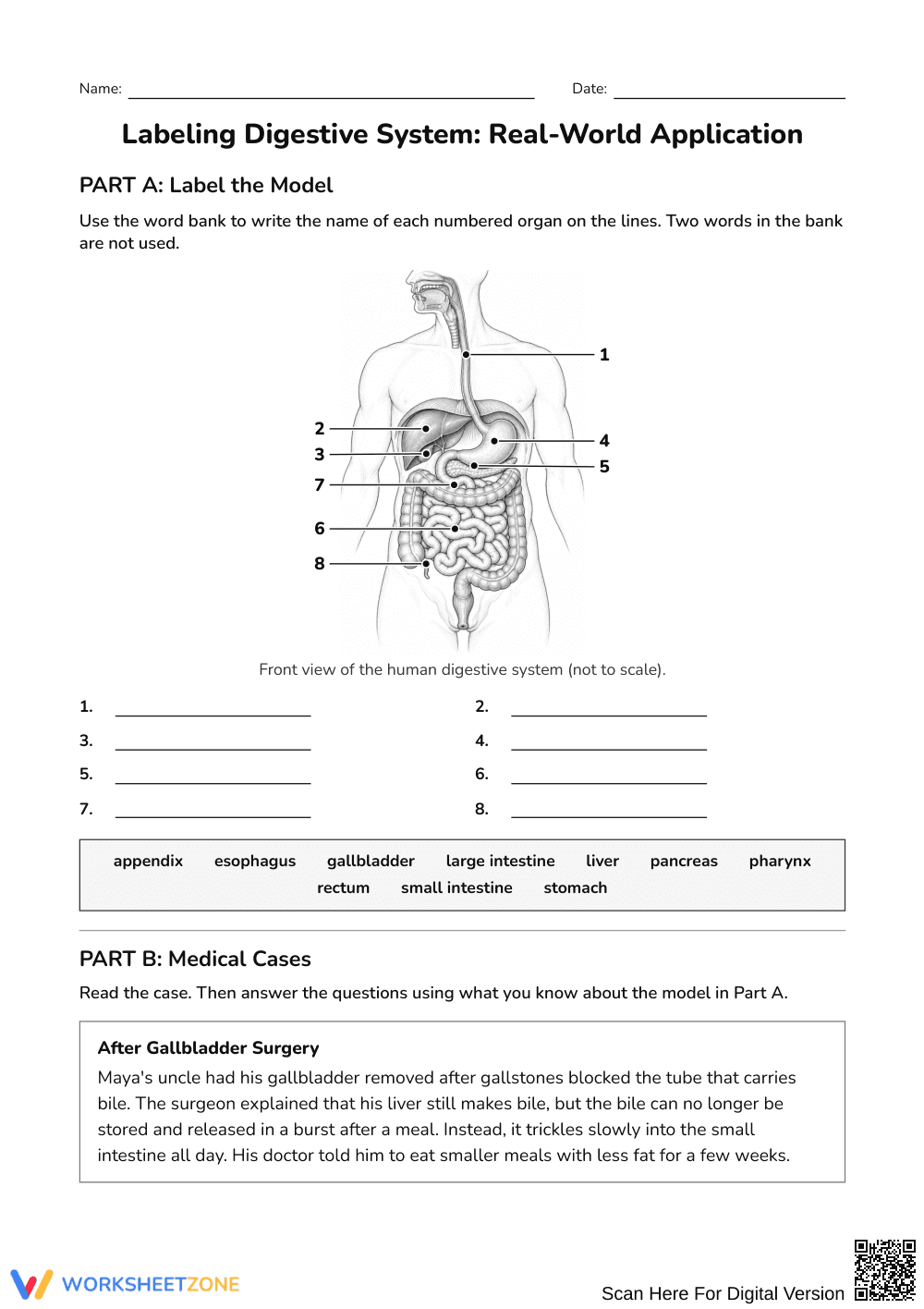
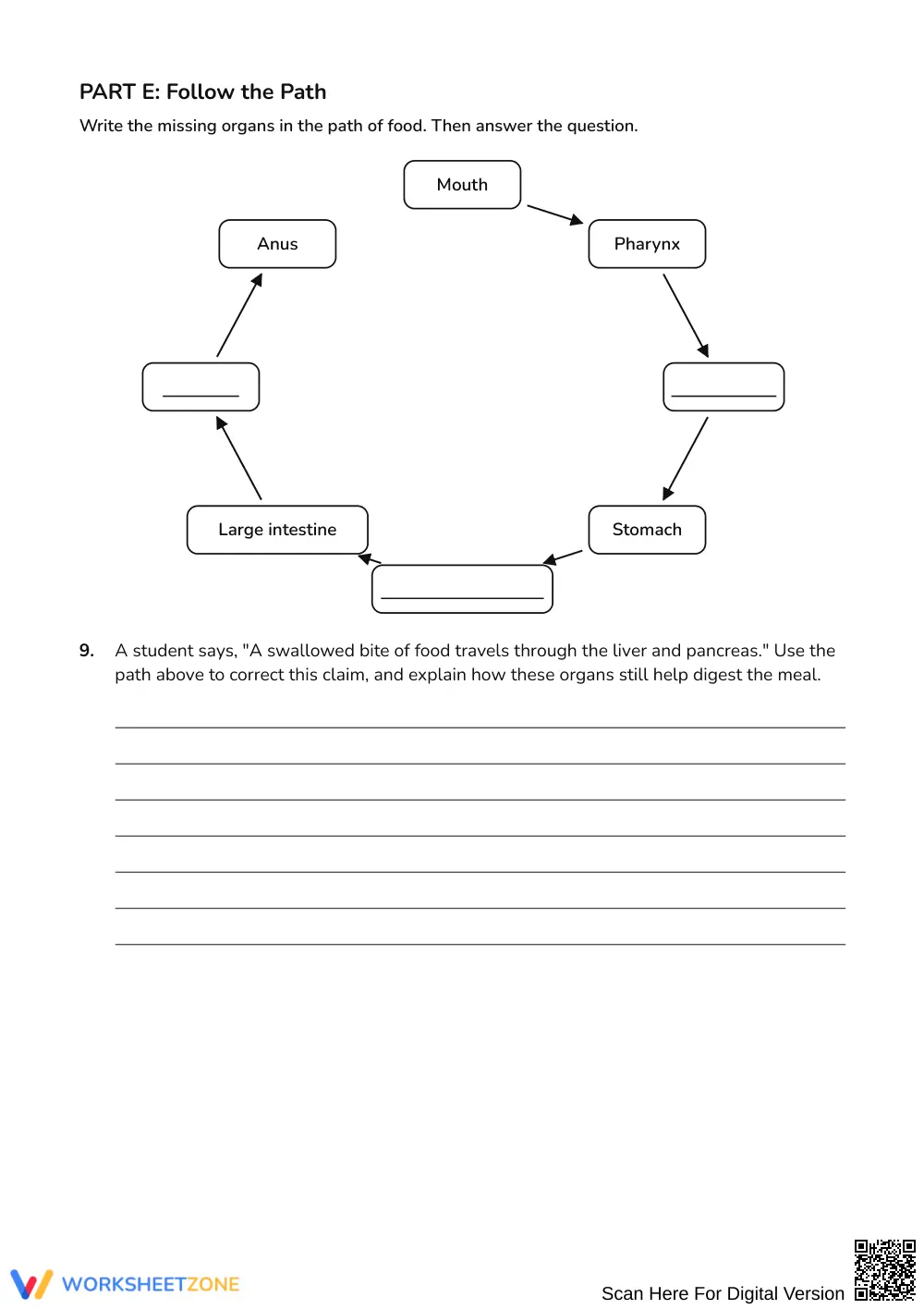
This comprehensive science worksheet reinforces digestive system anatomy and physiological mechanisms through authentic clinical applications. Students label key anatomical structures using a detailed biological diagram, evaluate medical case studies involving organ dysfunction, analyze surface area absorption data, and trace the path of nutrients through the gastrointestinal tract to connect structural form to biological function.
At a Glance
- Grade: Grades 6–10 · Subject: Science
- Standard:
Structure and Function— Model human body systems and explain structure-function interactions- Skill Focus: Digestive system labeling and physiological mechanism analysis
- Format: 4 pages · 25 problems · Answer key included · PDF
- Best For: Mid-unit practice and formative assessment
- Time: 40–55 minutes
What's Inside
Inside this 4-page activity packet, learners engage with anatomical labeling tasks supported by a specialized word bank containing distractor terms, clinical scenario prompts, diagnostic matching tables, and comparative data tables. A full 4-page answer key provides complete model responses and thorough physiological explanations for every question.
Skill Progression
- Guided practice: Students reference an anatomical diagram to correctly identify and label primary organs with word bank support across initial identification items.
- Supported practice: Learners evaluate clinical scenarios, including post-cholecystectomy dietary adjustments, gastric acid reflux mechanisms, and celiac villi damage using structured diagnostic prompts and quantitative surface area models.
- Independent practice: Students track complete alimentary canal sequencing and construct written arguments refuting common misconceptions regarding food passage through accessory organs like the liver and pancreas.
This structured progression reflects the gradual release of responsibility model, guiding students from baseline anatomical recall to complex physiological reasoning.
Standards Alignment
This resource aligns with secondary life science standards emphasizing how organ systems interact to support life processes and how cellular and tissue architecture dictates nutrient absorption capacity. Standard objectives can be copied directly into lesson plans, IEP goals, or district curriculum mapping tools.
How to Use It
Deploy this worksheet after direct instruction on the human gastrointestinal tract. Use Part B as an active partner checkpoint during class, pausing to observe whether students distinguish mechanical bile emulsification from chemical digestion. Expect students to complete the 4 pages in approximately 40 to 55 minutes.
Who It's For
This resource serves general science, middle school life science, and introductory high school biology classrooms. It offers accessible entry points through clear structural diagrams while challenging advanced learners with realistic clinical pathology cases. Pair this packet directly with an alimentary canal interactive slide deck or tissue histology laboratory.
According to Fisher & Frey (2014), purposeful guided practice paired with immediate corrective feedback accelerates conceptual mastery in secondary science disciplines. This 4-page digestive system resource grounds biological terminology in applied physiological contexts, prompting students to examine how cellular folds maximize nutrient absorption while tracing chemical pathways across specialized tissues. By connecting anatomical labeling directly to medical case studies and mathematical surface area models, the instructional design operationalizes evidence-based formative routines that solidify retention. Students do not merely memorize isolated organ locations; they interrogate how structural degradation impairs metabolic equilibrium across organ systems. Teachers gain verifiable diagnostic data through 25 targeted tasks, supporting targeted remediation and standards-aligned progress monitoring across diverse classroom settings.


