




























Views
Downloads



Complete Counterclaim Argument Worksheet | Grade 8 ELA

Paste this activity's link or code into your existing LMS (Google Classroom, Canvas, Teams, Schoology, Moodle, etc.).
Students can open and work on the activity right away, with no student login required.
You'll still be able to track student progress and results from your teacher account.
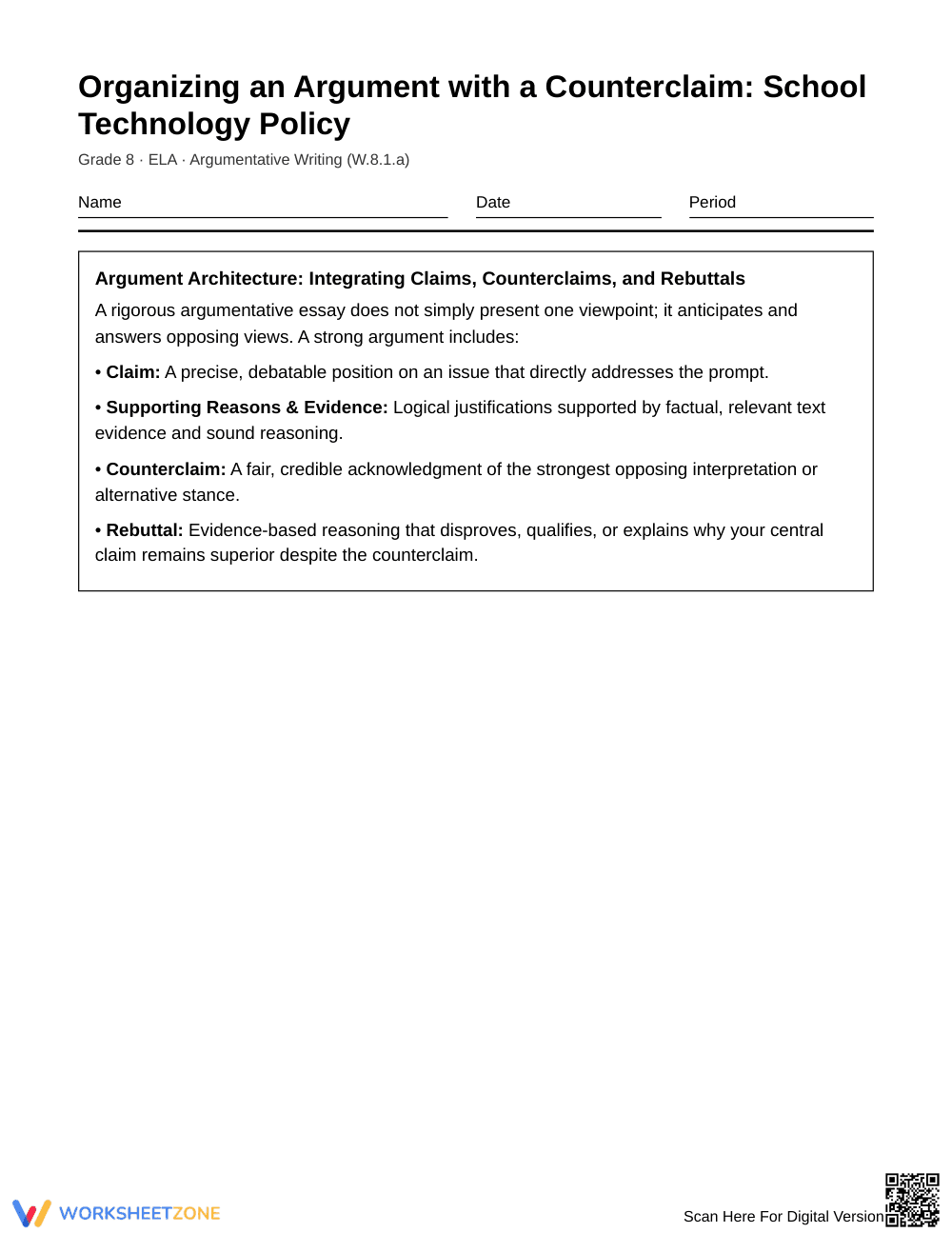
This Grade 8 argument writing worksheet teaches students to introduce claims, recognize opposing perspectives, and integrate counterclaims and rebuttals. Using balanced texts on school mobile device policies, students evaluate competing viewpoints and draft a cohesive essay supported by textual evidence and sound reasoning.
At a Glance
- Grade: 8 · Subject: ELA
- Standard:
W.8.1.a— Introduce claims, acknowledge counterclaims, and organize reasons logically.- Skill Focus: Organize an Argument with a Counterclaim
- Format: 5 pages · 8 problems · Answer key included · PDF
- Best For: Argumentative essay drafting and revision
- Time: 45–60 minutes
What's Inside
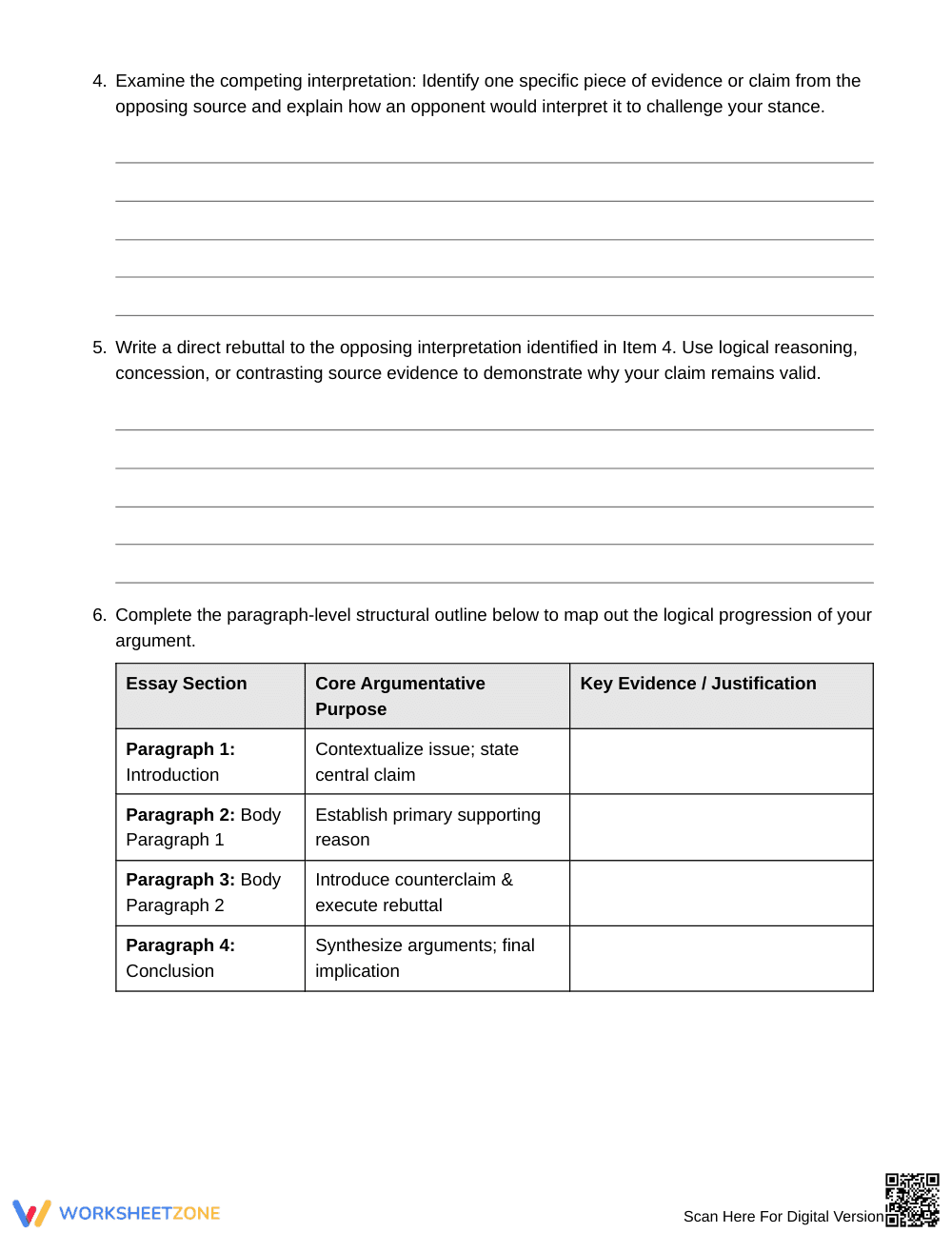
This 5-page worksheet includes two paired informational texts debating school personal device policies. Through 8 focused tasks, students analyze perspectives, cite text evidence, and formulate direct rebuttals. Features include an argument planning table, a 250–350-word drafting section, a structural alignment audit, and a complete 5-page teacher answer key.
Skill Progression
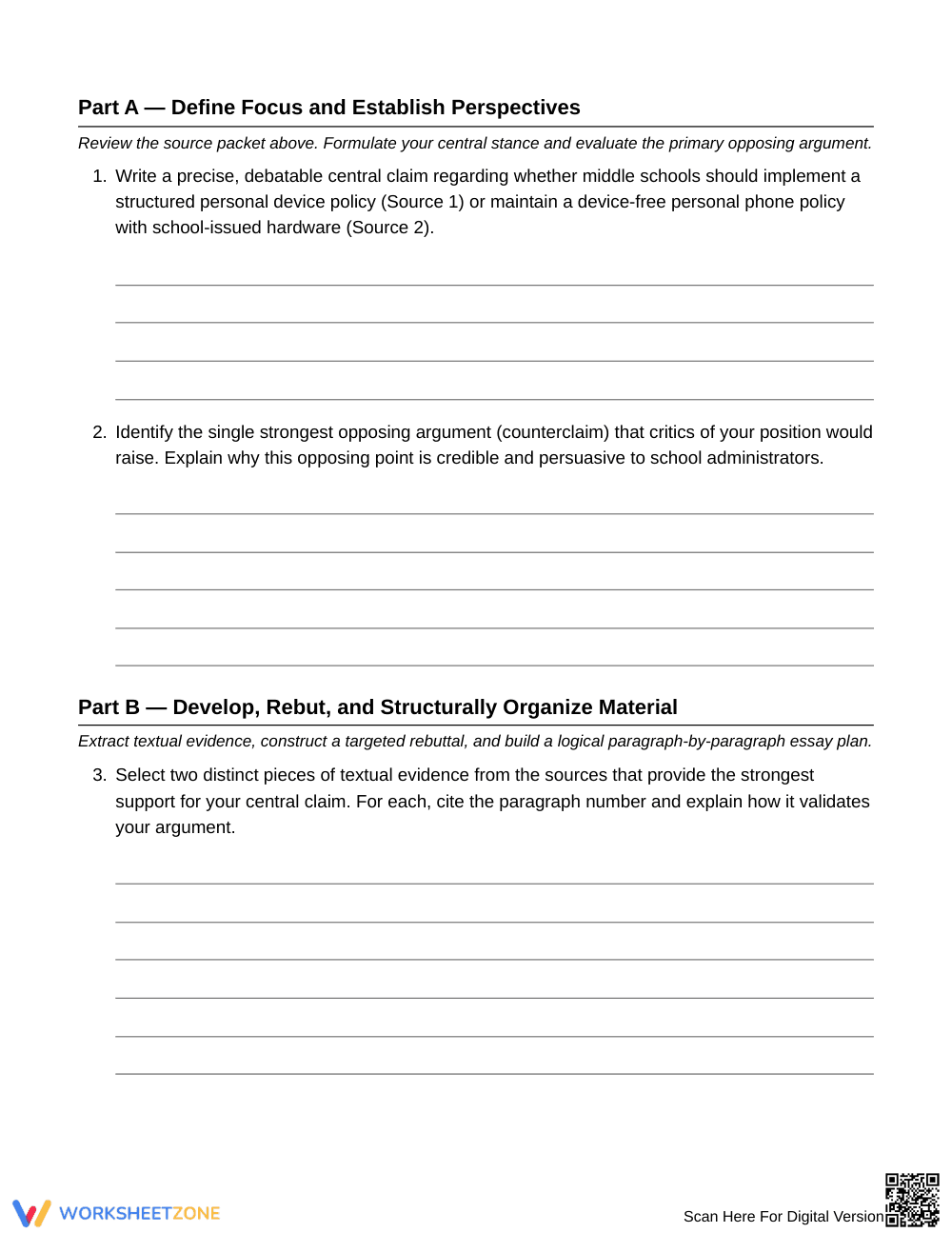
- Guided Practice (Tasks 1–2): Students evaluate the source packet to construct a debatable claim and identify a credible opposing argument.
- Supported Practice (Tasks 3–6): Students cite source evidence, write a targeted rebuttal, and complete a 4-paragraph structural outline table.
- Independent Practice (Tasks 7–8): Students compose an argumentative essay and complete a self-audit justifying their counterclaim placement.
This progression embodies gradual release, guiding students from perspective identification to independent argumentative writing.
Standards Alignment
This worksheet aligns directly with CCSS `W.8.1.a`: "Introduce claim(s), acknowledge and distinguish the claim(s) from alternate or opposing claims, and organize the reasons and evidence logically." It also supports `W.8.1.b` through evidence-based reasoning. Both standard codes can be copied directly into lesson plans, IEP goals, or district curriculum mapping tools.
How to Use It
Use this worksheet after direct instruction on counterclaim placement and transitional phrasing. In a 50-minute workshop, have students complete Parts A and B with a peer before drafting Part C independently. Formatively review Task 5 to confirm rebuttals actively counter the opposing view. Completion time is 45 to 60 minutes.
Who It's For
This resource serves Grade 8 ELA classes studying argumentative writing and older students needing remedial counterclaim practice. Differentiate by offering sentence frames for rebuttal transitions. Pair this worksheet with an anchor chart on argument structure or a mini-lesson on addressing opposing viewpoints.
According to Fisher & Frey (2014), the gradual release of responsibility framework empowers adolescent writers by scaffolded progression from collaborative modeling to independent text generation. Aligning directly with Common Core standard W.8.1.a, this instructional resource targets the essential middle school skill of organizing an argument with a counterclaim. Middle school writers frequently struggle to acknowledge opposing viewpoints without undermining their own positions. By isolating the distinct components of claim formation, evidence extraction, counterargument analysis, and rebuttal construction, the 8 tasks guide learners through deliberate analytical rehearsal before drafting. Students systematically evaluate contrasting viewpoints within balanced informational texts, plan paragraph transitions, and conduct a structural alignment audit to evaluate how rebuttal placement strengthens rhetorical impact. This rigorous, evidence-based approach ensures students meet grade-level expectations for logical coherence and objective argumentation in secondary academic writing.


