




























Views
Downloads


Complete Competing Attitudes Worksheet | Grade 10 English II

Paste this activity's link or code into your existing LMS (Google Classroom, Canvas, Teams, Schoology, Moodle, etc.).
Students can open and work on the activity right away, with no student login required.
You'll still be able to track student progress and results from your teacher account.
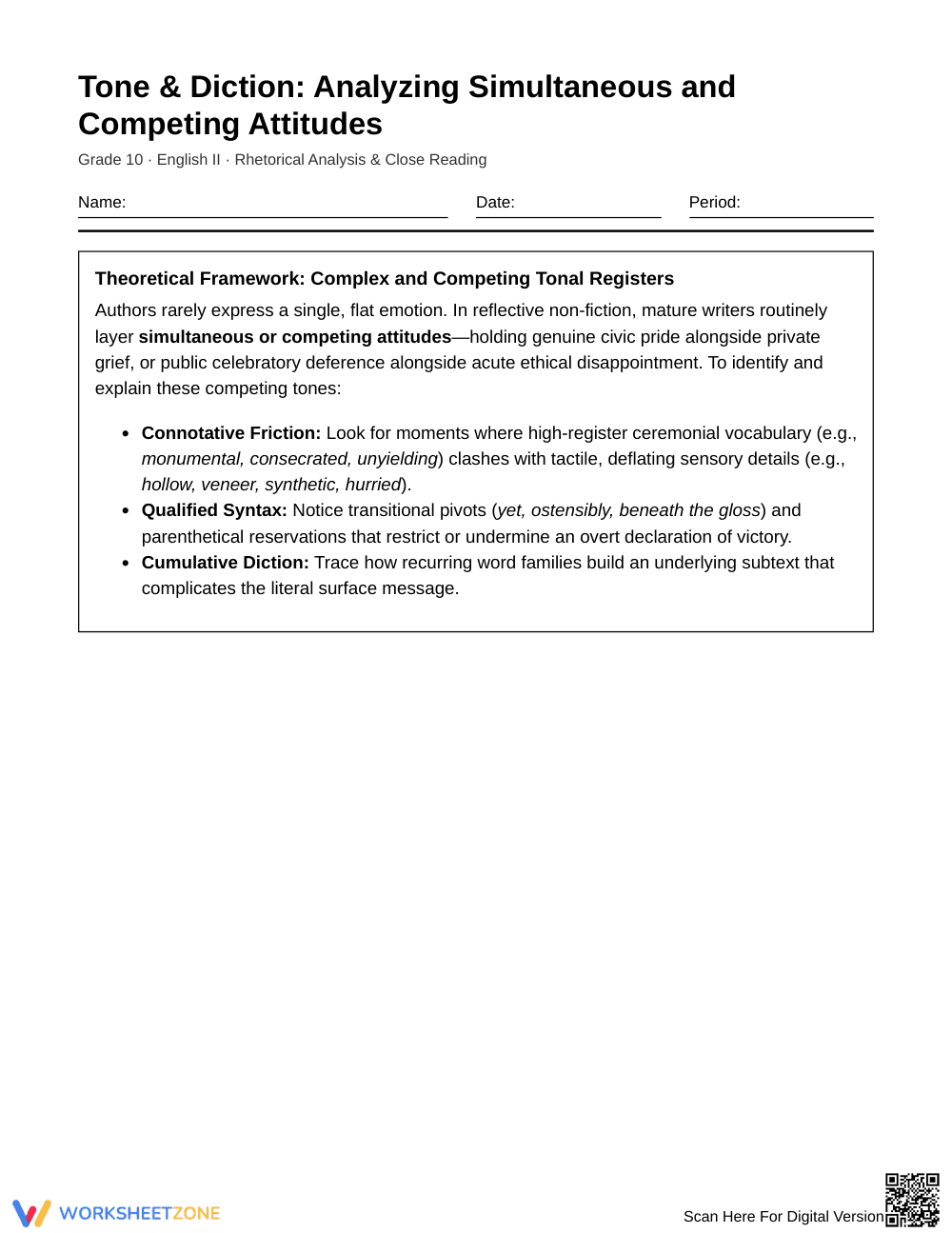
This Grade 10 English II worksheet helps students analyze how authors layer simultaneous and competing attitudes in non-fiction texts. High school readers examine paired passages featuring public celebration and private disillusionment, evaluating how nuanced word choice, qualified syntax, and connotative friction create layered rhetorical tone.
At a Glance
- Grade: 10 · Subject: English II
- Standard:
RI.9-10.4— Determine the meaning of words and phrases, including figurative and connotative meanings- Skill Focus: Explain Simultaneous or Competing Attitudes
- Format: 6 pages · 8 problems · Answer key included · PDF
- Best For: Rhetorical analysis and close-reading practice
- Time: 45–60 minutes
What's Inside
The 6-page printable resource includes a theoretical framework detailing connotative friction and qualified syntax, two parallel non-fiction passages (Text A and Text B), 8 multi-step analytical tasks, and a detailed 3-page answer key with exemplar responses.
Skill Progression
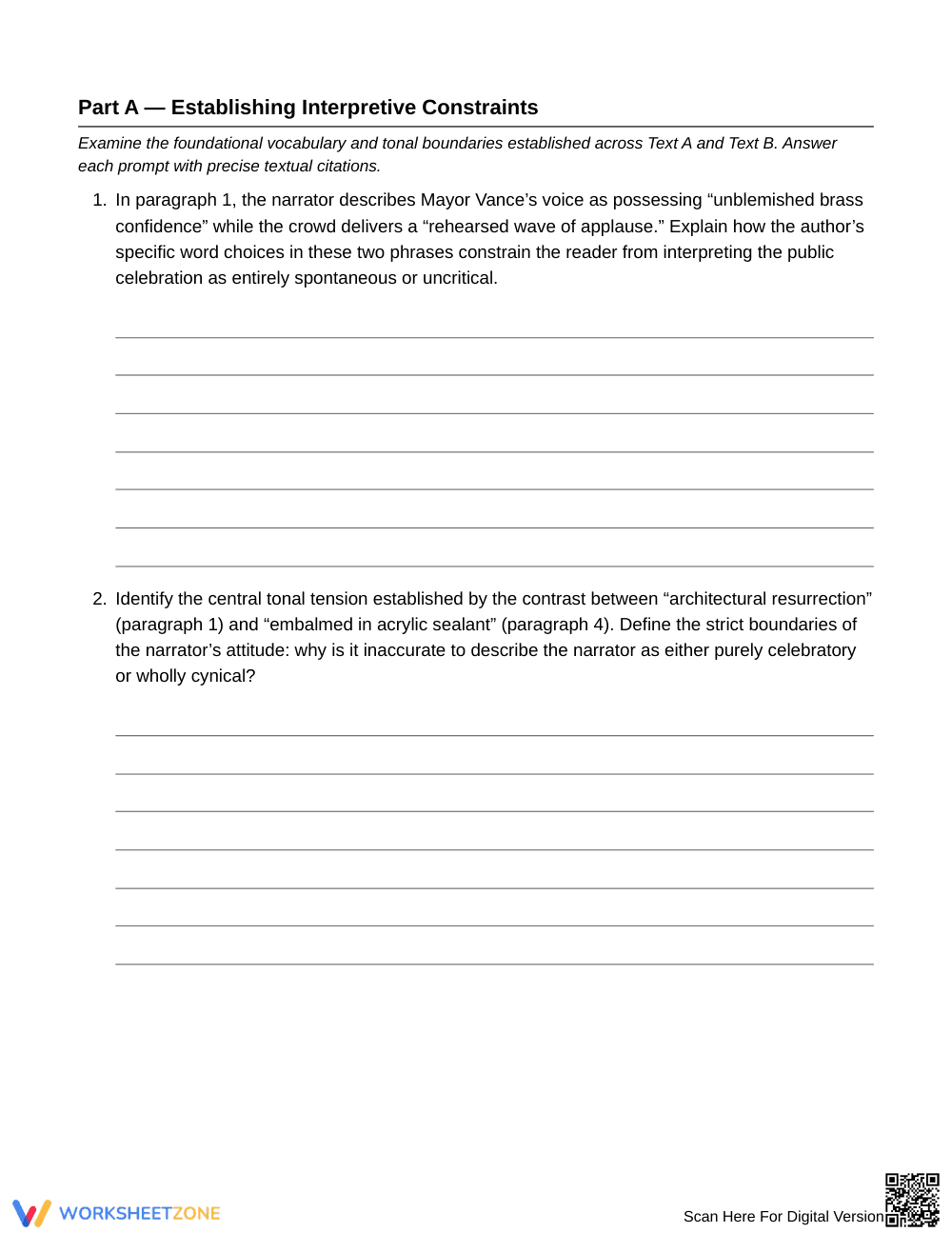
- Guided Practice (Tasks 1–2): Students identify baseline vocabulary and establish interpretive boundaries by contrasting ceremonial phrasing with deflating sensory language.
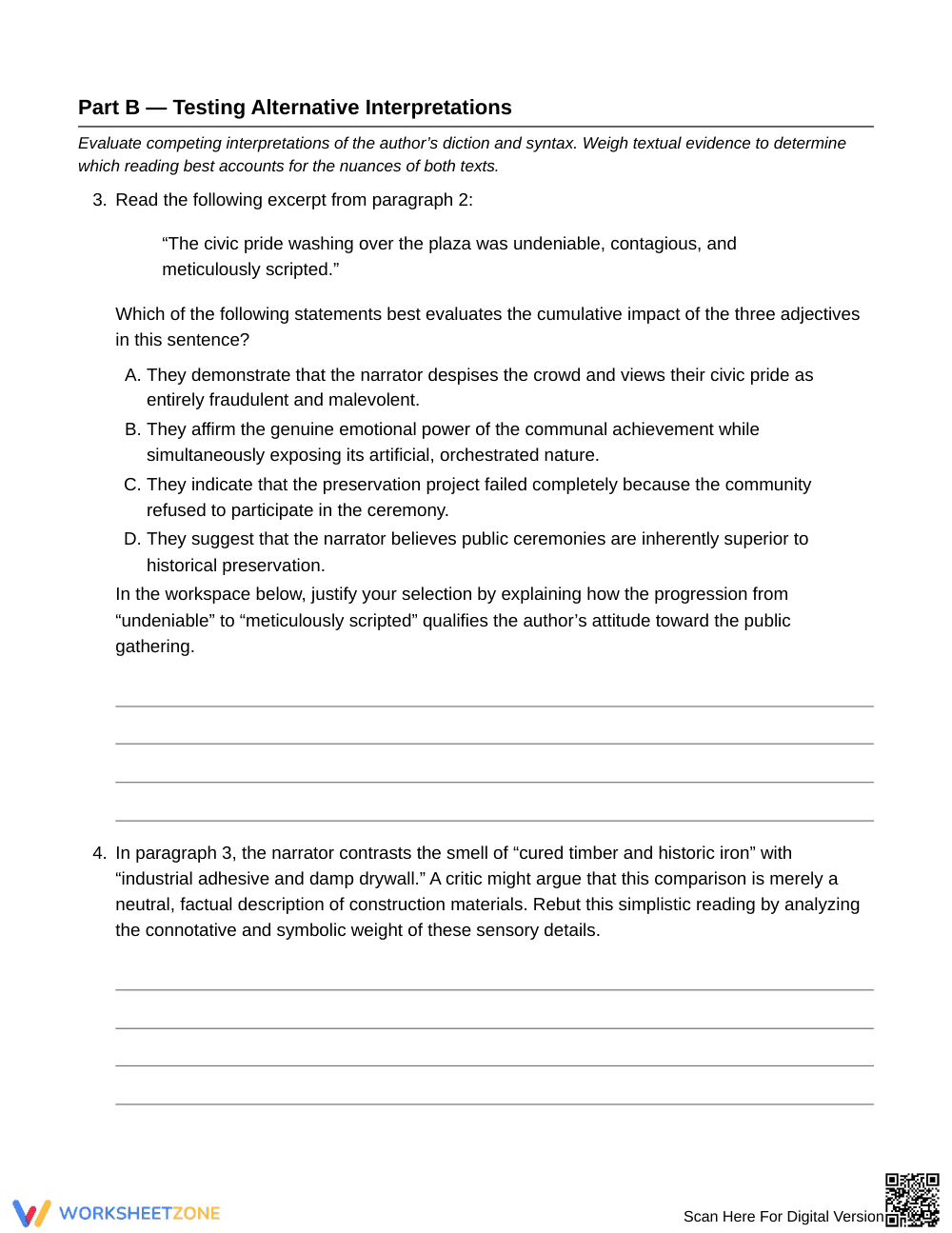
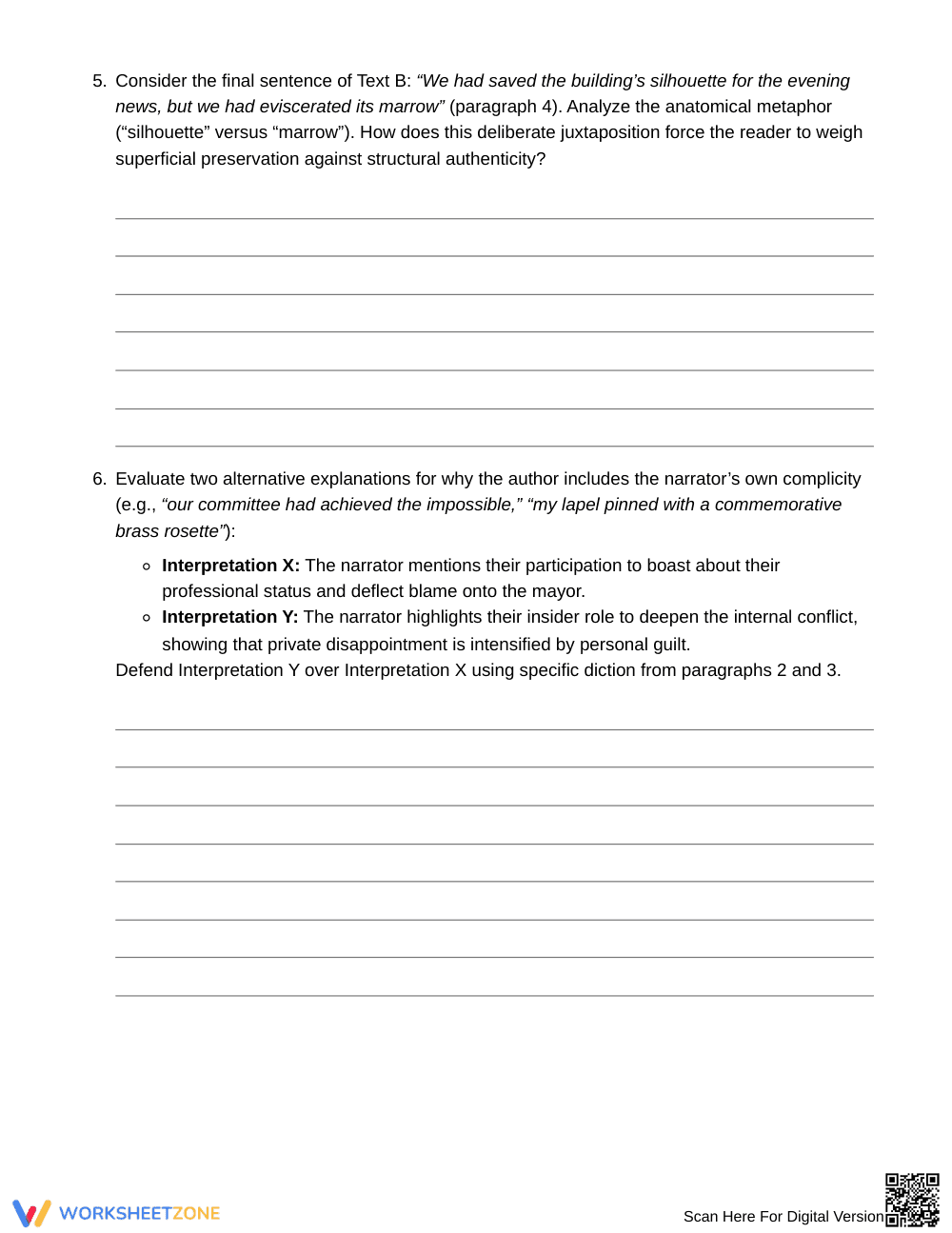
- Supported Practice (Tasks 3–6): Learners weigh competing interpretations of authorial intent, analyze anatomical metaphors, and evaluate the narrator's internal conflict.
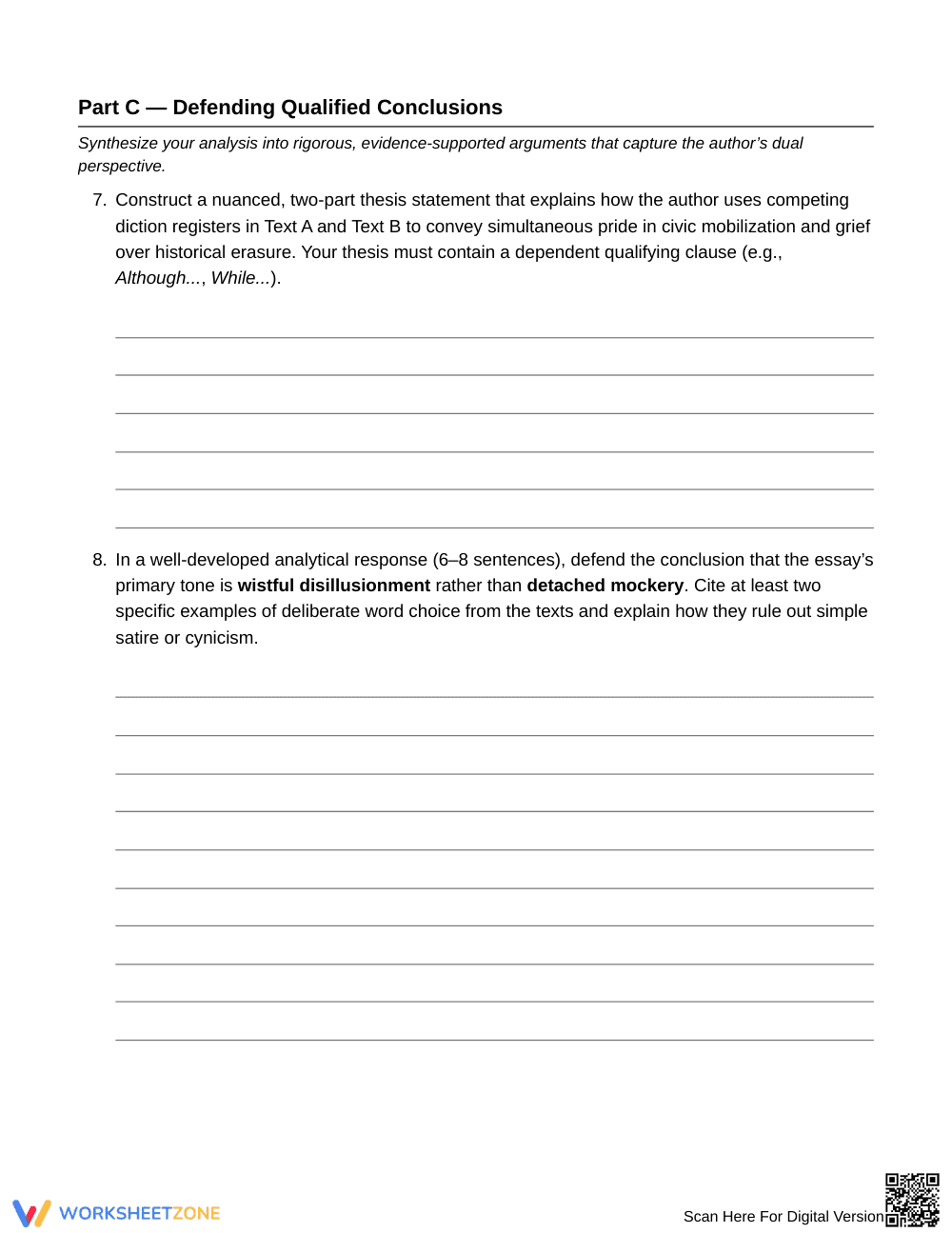
- Independent Practice (Tasks 7–8): Students compose a qualified thesis statement and defend a multi-sentence analytical conclusion distinguishing nuanced disillusionment from superficial cynicism.
This structured progression reflects the gradual release of responsibility model, moving students systematically from word-level recognition to sophisticated rhetorical synthesis.
Standards Alignment
This worksheet directly addresses Common Core standard RI.9-10.4: determine the meaning of words and phrases as they are used in a text, including figurative, connotative, and technical meanings, while analyzing the cumulative impact of specific word choices on meaning and tone. Both standard codes can be copied directly into lesson plans, IEP goals, or district curriculum mapping tools.
How to Use It
Assign this activity after direct instruction on rhetorical devices during a Tone and Diction unit. In a whole-group setting, read Text A and Text B aloud before students complete Part A in pairs and Parts B and C independently. For formative assessment, examine student responses to Task 3 to verify whether learners grasp how single adjectives qualify broader thematic claims. Expect the full 8-task set to take 45 to 60 minutes.
Who It's For
Designed for Grade 10 English II and Pre-AP English classrooms, this resource supports on-grade students developing advanced text-analysis capabilities. It pairs naturally with non-fiction memoirs, rhetorical analysis units, or historical speech analysis lessons.
According to Fisher & Frey (2014), guiding students through close reading of complex texts requires systematic attention to authorial word choice and structured argumentation. This resource operationalizes standard RI.9-10.4 by requiring tenth-grade readers to dissect how non-fiction authors sustain competing attitudes across contrasting scenes. By analyzing connotative diction and synthesizing evidence across 8 targeted tasks, students build critical analytical writing routines essential for secondary literacy success. Furthermore, explicit instructional modeling encourages high school learners to examine how subtle phrase-level shifts contribute to layered thematic interpretations. When educators provide scaffolded analytical frameworks, tenth graders can evaluate contradictory perspectives without reducing intricate prose to simplistic polarities. Ultimately, engaging directly with textual ambivalence strengthens independent reasoning, reinforces academic discourse habits, and equips sophomores with the rhetorical comprehension skills necessary for advanced coursework and standardized assessments across varied non-fiction informational texts.


