





























Complete Compare Structures Worksheet | Grade 10 English II
Paste this activity's link or code into your existing LMS (Google Classroom, Canvas, Teams, Schoology, Moodle, etc.).
Students can open and work on the activity right away, with no student login required.
You'll still be able to track student progress and results from your teacher account.
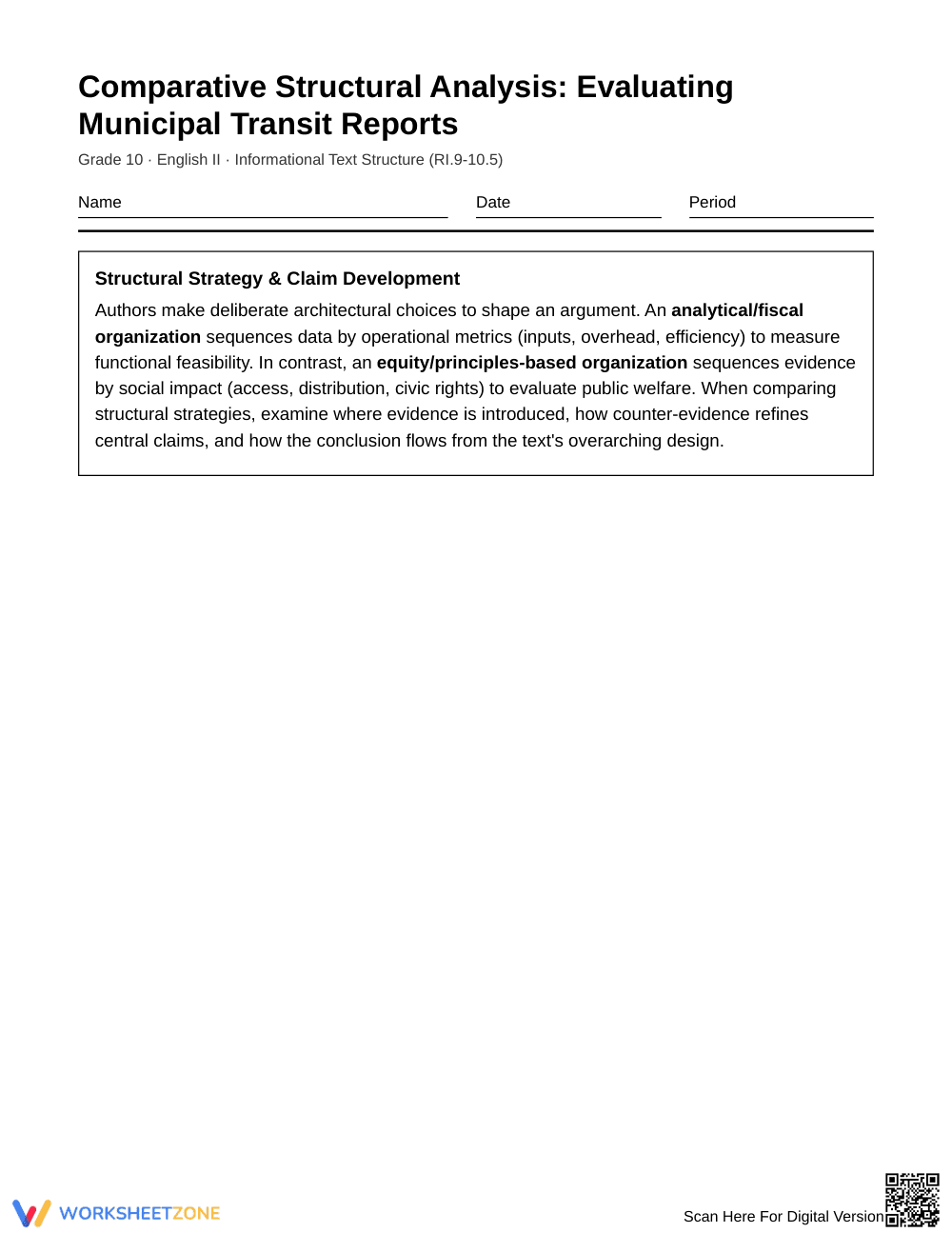
Analyze how authors structure arguments by comparing two contrasting policy reports on municipal transit. This worksheet equips Grade 10 students to examine structural choices, evaluate metric sequencing, and determine how organizational frameworks shape persuasive claims. Students contrast analytical-fiscal and equity-based texts to build advanced rhetorical analysis skills.
At a Glance
- Grade: 10 · Subject: English II
- Standard:
RI.9-10.5— Analyze in detail how an author's ideas or claims are developed and refined- Skill Focus: Compare Two Organizational Strategies
- Format: 6 pages · 10 problems · Answer key included · PDF
- Best For: Informational text analysis and paired-text comparison
- Time: 45–60 minutes
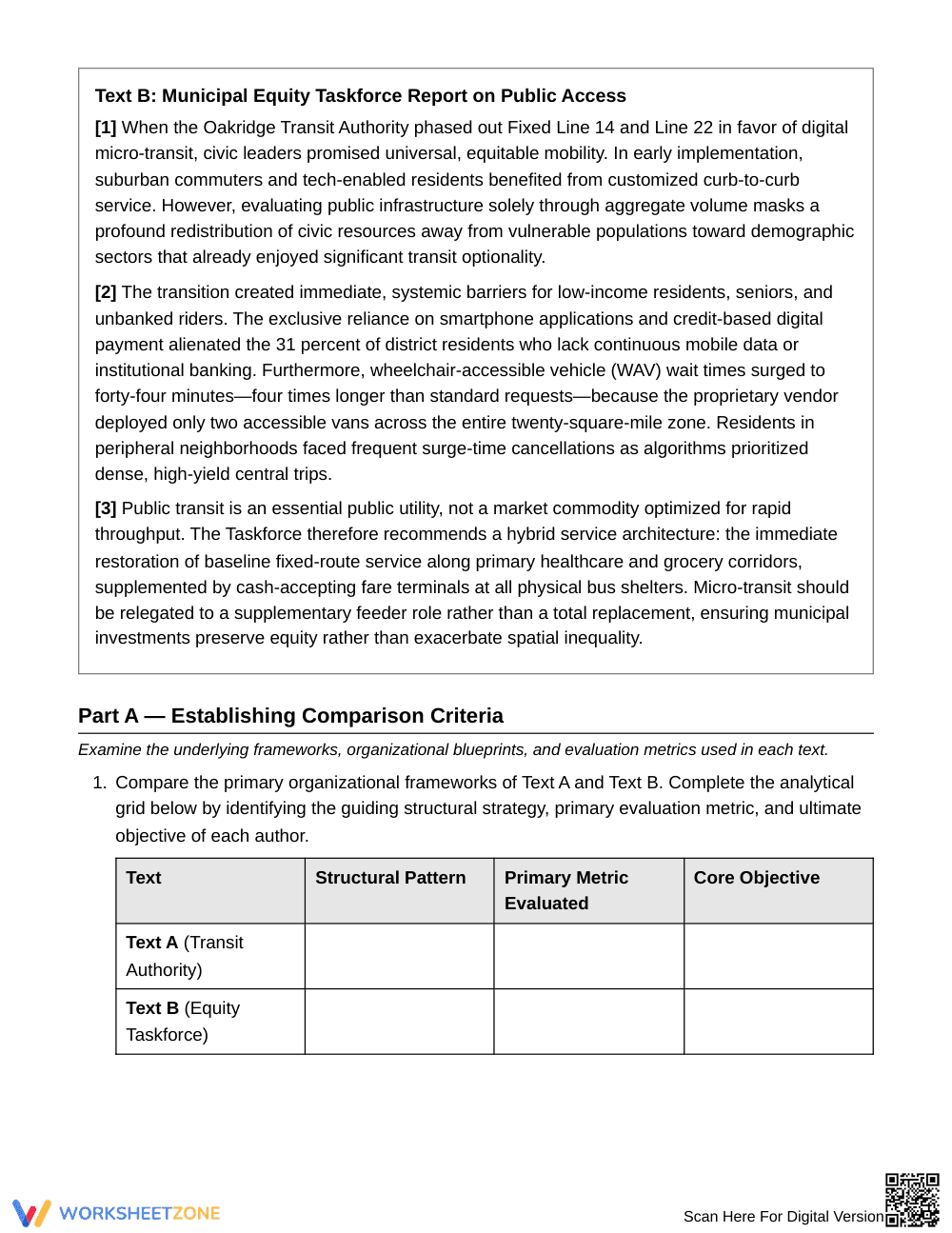
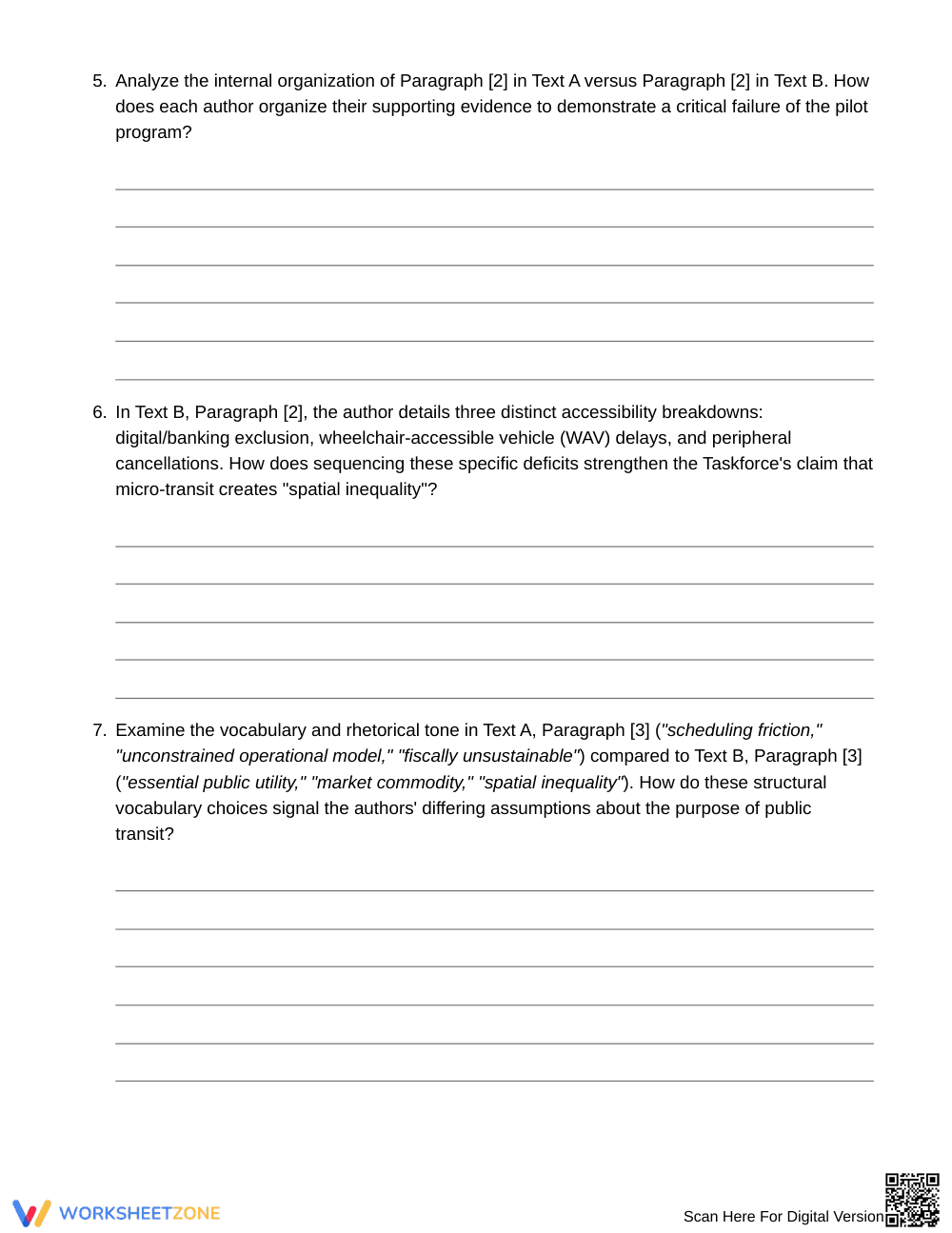
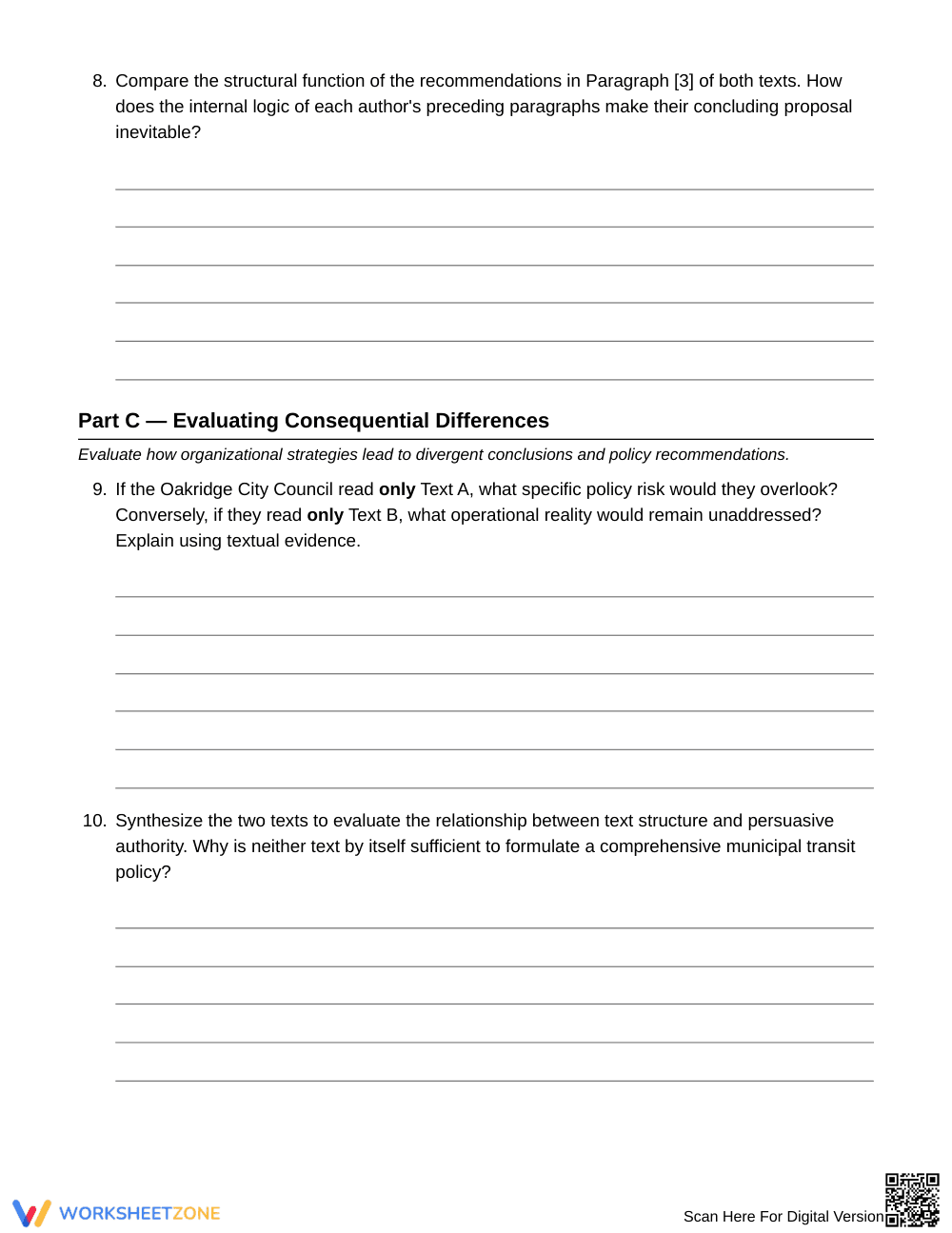
This 6-page printable resource includes paired informational texts followed by 10 analytical tasks. Students complete a structural comparison grid, evaluate transitional pivots, write text-dependent responses analyzing evidence placement, and synthesize policy outcomes. A comprehensive 3-page answer key provides complete model responses for teacher reference.
- Guided practice (Part A, 2 tasks): Students establish foundational criteria using a structured analytical grid to map evaluation metrics across both texts.
- Supported practice (Part B, 6 tasks): Students analyze paragraph architecture, transitional pivots, and rhetorical vocabulary choices through targeted text-dependent questions.
- Independent practice (Part C, 2 tasks): Students synthesize overarching claims without scaffolds, evaluating municipal policy blind spots and structural persuasive authority.
This sequence follows a gradual-release model, moving from structured criteria mapping to rigorous, independent synthesis.
This resource aligns directly to RI.9-10.5: "Analyze in detail how an author's ideas or claims are developed and refined by particular sentences, paragraphs, or larger portions of a text." It also supports comparative informational reading standards across secondary curricula. Both standard codes can be copied directly into lesson plans, IEP goals, or district curriculum mapping tools.
Deploy this worksheet during an informational text unit after introducing organizational patterns such as fiscal and equity frameworks. It functions well as a 45- to 60-minute paired-text analysis workshop. During instruction, check Part B to observe whether students recognize how transitional sentences function as structural pivots between claims and evidence.
This worksheet serves Grade 10 English II students preparing for state assessments and advanced rhetorical reading. Built-in analytical frameworks support developing readers, while complex policy topics challenge advanced students. Pair this activity with an anchor chart on text structures or a direct lesson on comparative rhetorical analysis.
Rigorous comparative analysis of informational text structure accelerates reading comprehension and critical evaluation skills. According to Fisher & Frey (2014), engaging secondary students in close reading of complex, paired informational texts with contrasting organizational frameworks fosters deep analytical reasoning and metacognitive transfer. When students evaluate how authors sequence evidence and refine arguments under standard RI.9-10.5, they move beyond surface-level comprehension to examine authorial intent and architectural logic. This 6-page worksheet operationalizes these evidence-based principles across 10 structured tasks, requiring tenth-grade readers to systematically deconstruct how distinct organizational frameworks—such as operational efficiency versus social equity—shape public policy debates. By examining structural pivots and synthesizing divergent viewpoints, students develop durable rhetorical competencies that enhance their reading proficiency across academic disciplines and standardized literacy assessments.


