

































Complete Claims & Warrants Worksheet | Grade 10 English II

Paste this activity's link or code into your existing LMS (Google Classroom, Canvas, Teams, Schoology, Moodle, etc.).
Students can open and work on the activity right away, with no student login required.
You'll still be able to track student progress and results from your teacher account.
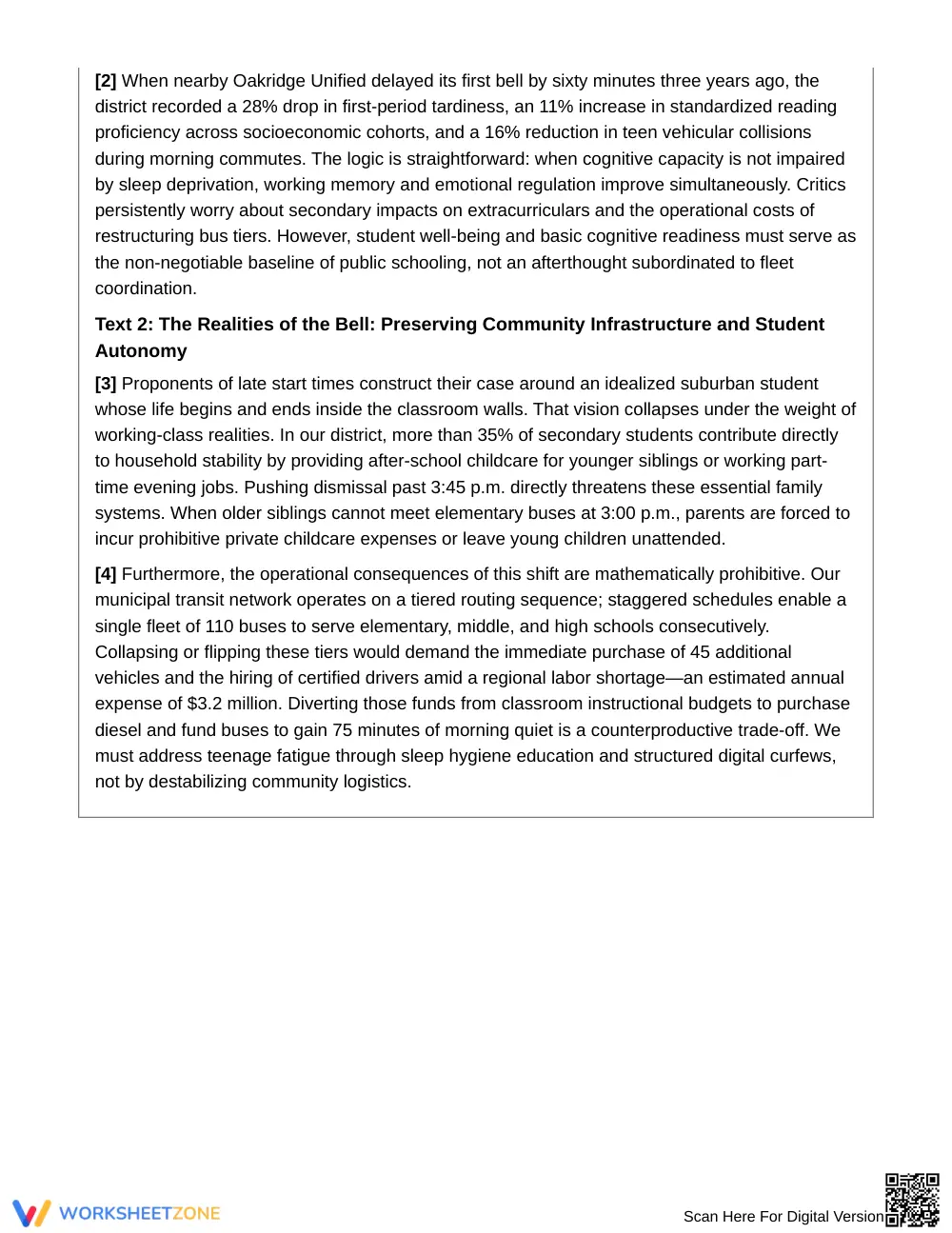
This Grade 10 English II worksheet trains students to dissect argumentative structures by identifying claims, testing unstated warrants, and evaluating opposing counterclaims. Through paired texts examining high school start times, learners analyze how logical assumptions bridge evidence and conclusions, preparing them to evaluate complex informational texts for argumentative validity.
At a Glance
- Grade: 10 · Subject: English II
- Standard:
RI.9-10.8— Evaluate argument validity, reasoning, and evidence sufficiency in complex non-fiction- Skill Focus: Claims, Warrants, and Counterclaims
- Format: 6 pages · 10 problems · Answer key included · PDF
- Best For: Argument analysis and test preparation
- Time: 45–60 minutes
What's Inside
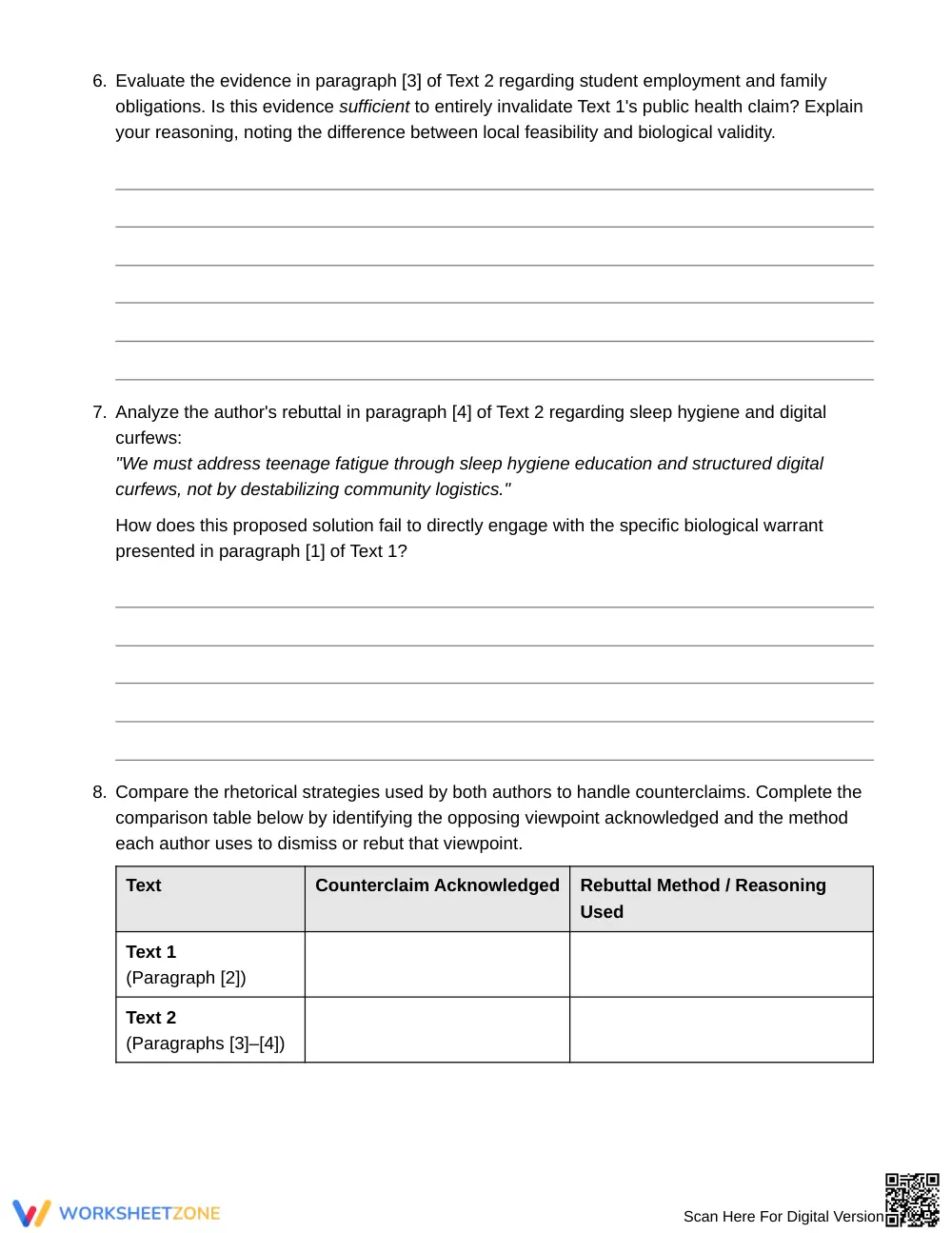
This 6-page resource features two paired informational passages debating high school start times alongside 10 analytical tasks. A definitions reference box establishes key terminology. Students complete multiple-choice questions, textual warrant analyses, a comparative counterclaim chart, and a synthesis essay. A detailed 4-page answer key provides complete model rationales for all items.
Skill Progression
- Guided practice (Part A, Problems 1–3): Builds core knowledge through multiple-choice items identifying warrant flaws and defining evidence sufficiency.
- Supported practice (Part B, Problems 4–8): Applies concepts across five passage-based tasks and a graphic organizer comparing rebuttal strategies.
- Independent practice (Part C, Problems 9–10): Requires students to revise economic reasoning and write an extended evaluative synthesis response.
This structure follows a gradual release model, guiding learners from conceptual identification to independent critique.
Standards Alignment
This resource aligns directly with RI.9-10.8: Delineate and evaluate the argument and specific claims in a text, assessing whether the reasoning is valid and the evidence is relevant and sufficient. Supporting tasks target W.9-10.1 through written analysis of competing arguments. Both standard codes can be copied directly into lesson plans, IEP goals, or district curriculum mapping tools.
How to Use It
Assign this worksheet after direct instruction on rhetorical argumentation to solidify mastery. Facilitate collaborative pairs through Parts A and B, prompting students to identify implicit warrants before writing. Formatively assess whether students confuse evidence relevance with sufficiency during discussion. Students complete the 10 tasks in approximately 45 to 60 minutes.
Who It's For
Designed for Grade 10 English II classes, this worksheet prepares learners for standardized reading exams and rhetorical writing. Reference boxes support English learners, while the synthesis prompt challenges advanced students. Pair this activity with an anchor chart on logical fallacies or a guided debate lesson.
Rigorous argument evaluation under RI.9-10.8 requires students to analyze how underlying warrants validate claims rather than merely tracking factual citations. According to Fisher & Frey (2014), implementing a structured gradual release framework significantly enhances adolescent reading comprehension when dissecting complex argumentative texts. By systematically transitioning students from foundational concept distinctions to text-based analysis and independent synthesis, learners develop durable critical literacy skills. In this Grade 10 English II worksheet, 10 targeted problems prompt learners to evaluate evidence sufficiency, detect unstated assumptions, and assess competing policy viewpoints across two opposing texts. The included reference boxes and exemplar response keys reinforce metacognitive reflection, allowing high school readers to identify logical vulnerabilities in public discourse. Grounding textual analysis in deliberate warrant deconstruction empowers secondary students to transition from passive consumers of informational texts into discerning evaluators of sophisticated rhetoric.


