
































Complete Cell Theory Worksheet | Grades 7-12 Science

Paste this activity's link or code into your existing LMS (Google Classroom, Canvas, Teams, Schoology, Moodle, etc.).
Students can open and work on the activity right away, with no student login required.
You'll still be able to track student progress and results from your teacher account.
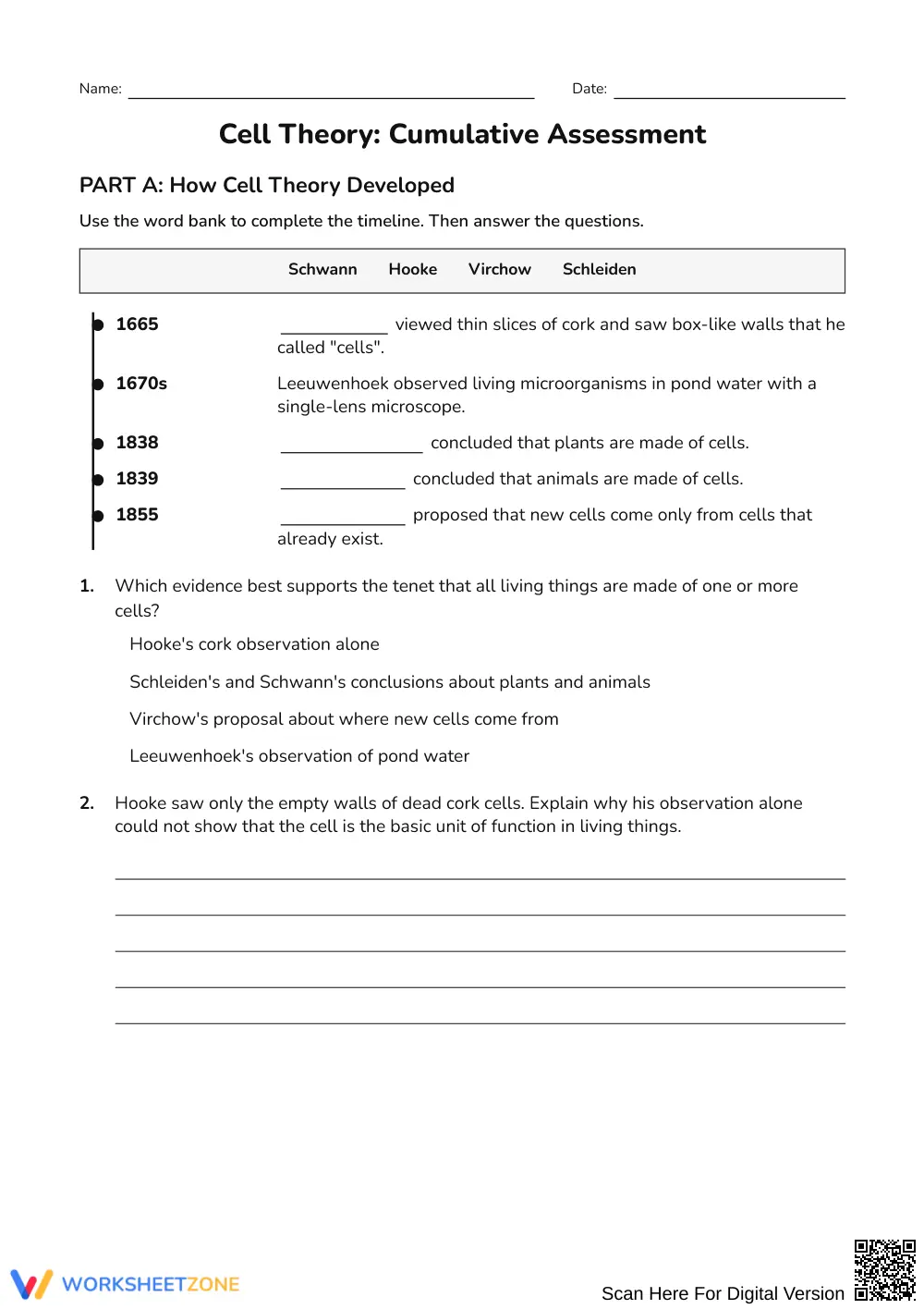
This comprehensive cell theory cumulative assessment gives secondary biology students structured practice evaluating the historical development, structural tenets, and experimental evidence underlying modern cell biology. Learners analyze historical timelines, label cell models, evaluate division stages, and synthesize quantitative data to explain how all living things originate from existing cells.
At a Glance
- Grade: Grades 7–12 · Subject: Science
- Standard: Relate cell theory tenets to microscopic discovery, cellular diversity, and reproductive models
- Skill Focus: Cell Theory cumulative assessment
- Format: 4 pages · 25 problems · Answer key included · PDF
- Best For: End-of-unit cumulative exam or structured review
- Time: 45–60 minutes
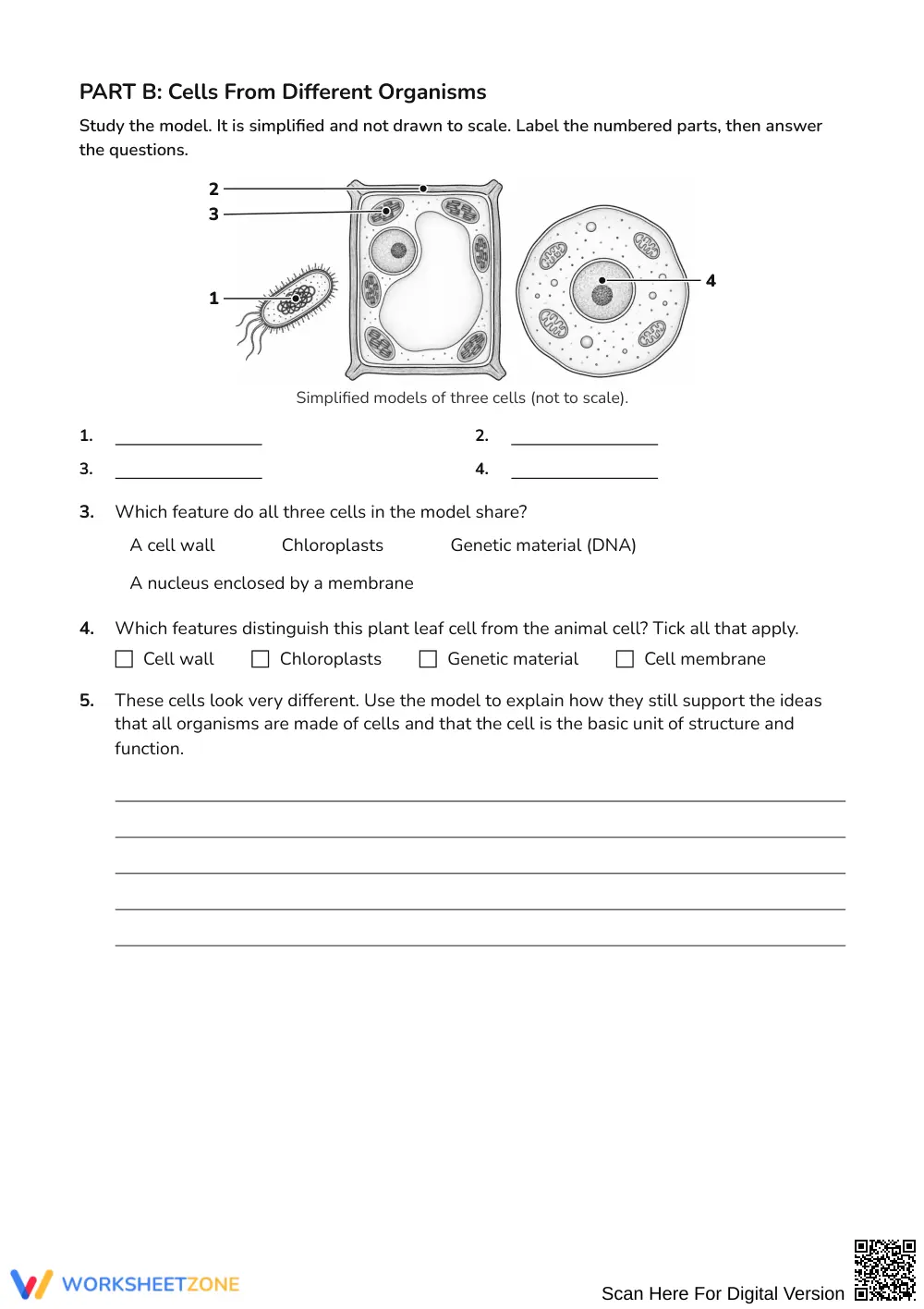
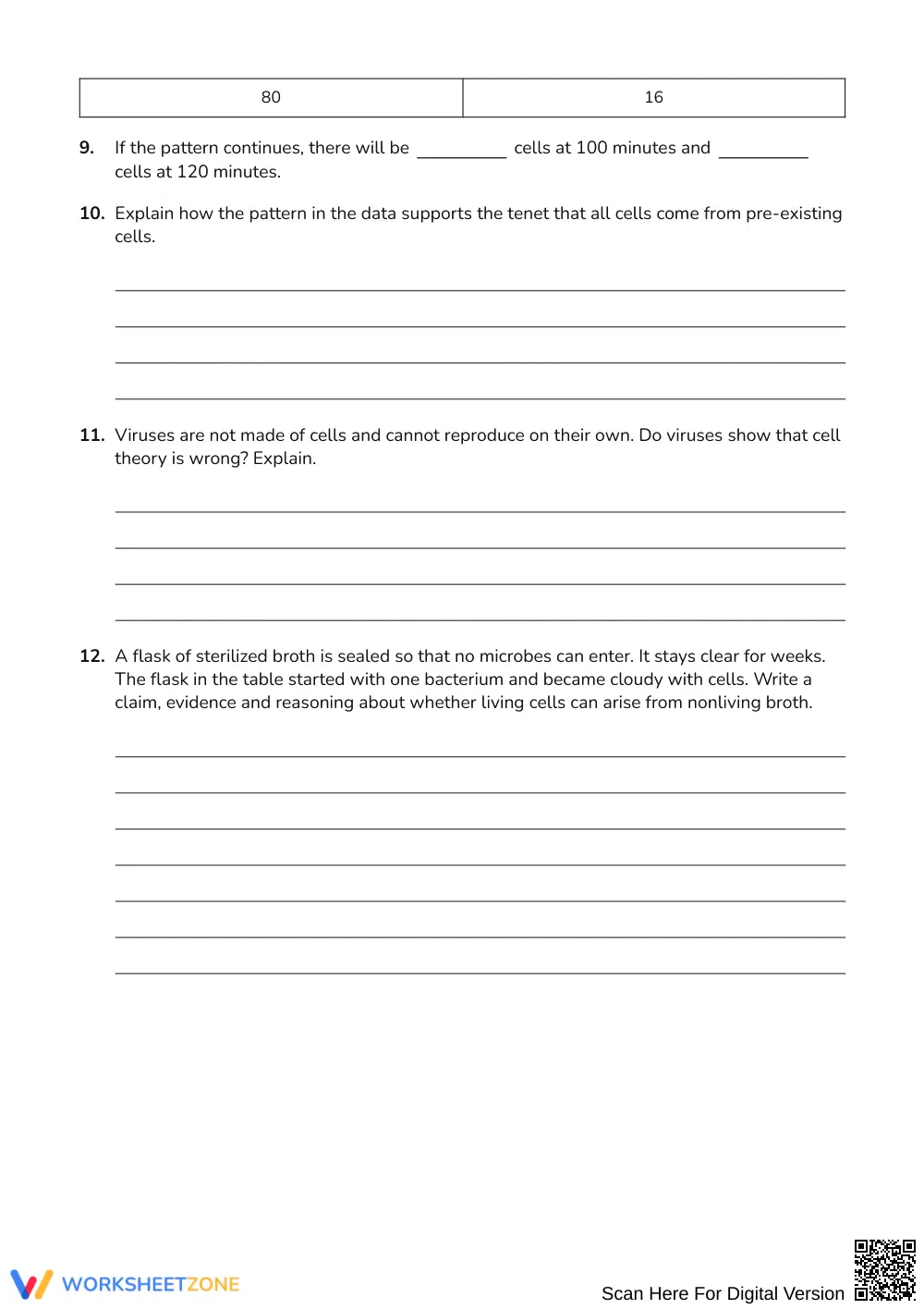
What's Inside: This four-page assessment features 25 targeted questions organized into four rigorous sections. Students interpret scientific history using a scientist word bank, label comparative diagrams of bacteria, plant, and animal cells, trace chromosome replication across cell division stages, and construct a claim-evidence-reasoning response from bacterial growth data. A comprehensive 4-page answer key provides complete model responses.
Skill Progression
- Guided practice (Part A, 6 items): Students use structured scientist bank prompts to reconstruct historical milestones from Hooke to Virchow and analyze early observational limitations.
- Supported practice (Parts B & C, 12 items): Students analyze multi-organism cell diagrams and three-stage division models with targeted multiple-choice checks and structural comparison prompts.
- Independent practice (Part D, 7 items): Students interpret numerical bacterial division tables, evaluate viral non-living status, and compose an evidence-based scientific argument.
This gradual release sequence follows the gradual release of responsibility model, transitioning students from foundational historical recall to rigorous empirical explanation.
Standards Alignment
This resource aligns with middle and high school life science standards requiring students to develop and use models to describe how cells serve as the basic structural and functional units of life. The tasks directly evaluate understanding that all organisms are composed of cells and that cells arise solely through division of pre-existing cells. Both curriculum concepts can be copied directly into lesson plans, IEP goals, or district curriculum mapping tools.
How to Use It
Deploy this assessment as a summative unit evaluation after completing direct instruction on cellular biology and the microscope revolution. Alternatively, assign individual sections as targeted station activities during review week. During administration, observe whether students identify chromosomes as the essential replicated unit in Part C or confuse viral structure with living cellular systems in Part D. The complete four-page packet requires approximately 45 to 60 minutes for student completion.
Who It's For
Designed for middle school life science and introductory high school biology courses, this packet supports general education, honors tracks, and remediation groups. Pair this print-and-go packet directly with compound microscope lab investigations or a cellular organelle anchor chart to reinforce structure-function relationships.
Educational research from Fisher & Frey (2014) underscores that structured, gradual-release task design supports deep conceptual consolidation during cumulative science evaluations. When secondary life science students connect historical evidence to concrete diagrammatic models, their retention of fundamental biological principles increases markedly. This 25-task assessment anchors student understanding in the core tenets that living organisms consist of one or more cells, that the cell operates as the fundamental structural unit of life, and that new cellular units emerge exclusively from pre-existing cellular division. By pairing quantitative bacterial population data with structured claim-evidence-reasoning writing prompts, the worksheet helps students transform isolated scientific terminology into defensible scientific arguments. Secondary instructors can reliably integrate this 4-page diagnostic evaluation into summative assessment protocols to quantify student mastery across multiple interconnected biological objectives.


