































Complete Cell Labeling Worksheet | Grades 7-12 Science

Paste this activity's link or code into your existing LMS (Google Classroom, Canvas, Teams, Schoology, Moodle, etc.).
Students can open and work on the activity right away, with no student login required.
You'll still be able to track student progress and results from your teacher account.
This comprehensive science worksheet guides secondary students through cell labeling foundations and organelle vocabulary across 48 targeted practice items. Students define key structures, label plant and animal cell diagrams, and analyze organelle functions. This resource builds visual fluency and conceptual clarity for life science units.
At a Glance
- Grade: Grades 7–12 · Subject: Science
- Standard: Cell Biology — Identify cell organelles and model their structures and specialized biological roles
- Skill Focus: Cell labeling foundations and organelle vocabulary
- Format: 4 pages · 48 problems · Answer key included · PDF
- Best For: Biology unit practice or review
- Time: 40–50 minutes
What's Inside
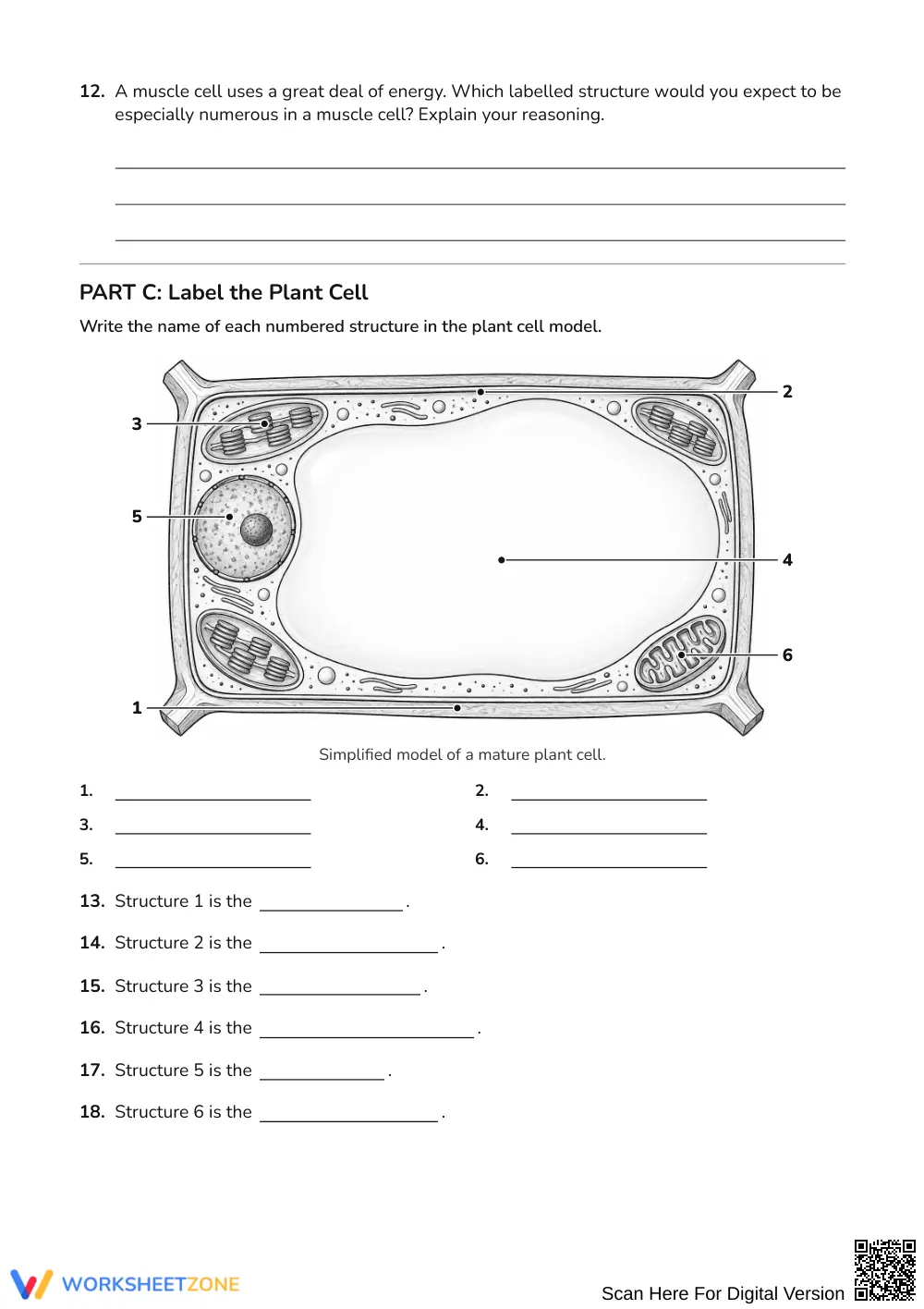
The 4-page worksheet contains 48 tasks divided into four structured parts. Students use word banks to complete definitions and match organelles to their jobs, label plant and animal cell diagrams, complete a comparative organelle chart, and analyze a common energy misconception. A complete 4-page answer key provides full model explanations.
Skill Progression
- Guided Practice (Part A): Students use a word bank to complete organelle definitions and match structures to cellular functions.
- Supported Practice (Parts B & C): Learners label animal and plant cell diagrams using structured word banks, followed by an organelle quantity analysis.
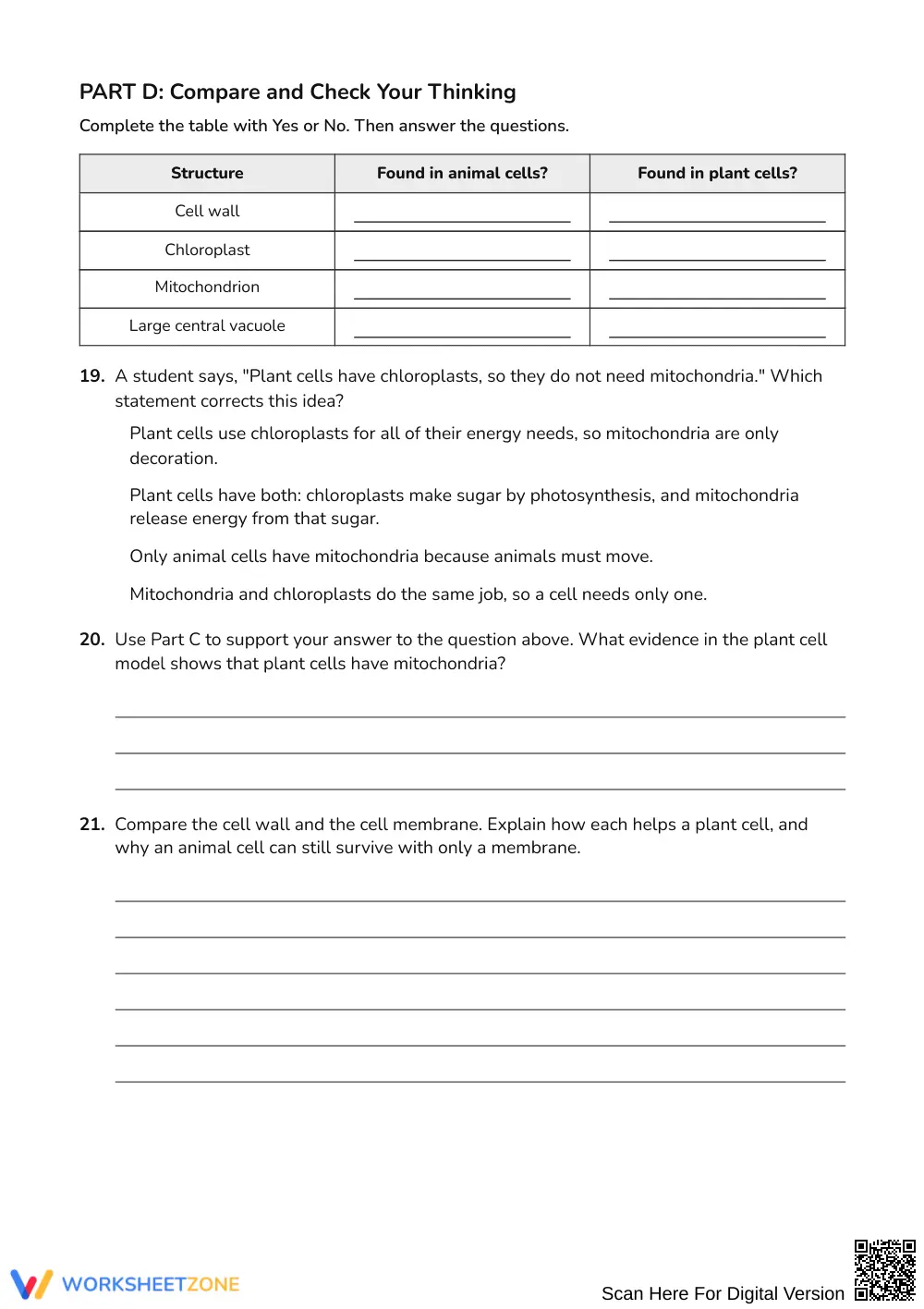
- Independent Practice (Part D): Students evaluate organelle distribution in a comparison table, correct an energy misconception, and contrast cell boundaries.
This progression reflects the gradual-release model, advancing students from terminology recall to independent conceptual analysis.
Standards Alignment
This worksheet aligns with secondary life science standards for cell structure and function. Students develop cell models to explain organelle roles and compare plant and animal structures. This alignment can be copied directly into lesson plans, IEP goals, or district curriculum mapping tools.
How to Use It
Administer this worksheet after direct instruction on cell anatomy or as an assessment review. When students reach Part D, check formatively whether they understand that plant cells contain both chloroplasts and mitochondria. Expect students to complete the four pages in 40 to 50 minutes.
Who It's For
This resource supports middle and high school life science and biology classes. Word banks scaffold access for English learners and students requiring accommodations, while written comparisons provide rigor for on-grade learners. Pair this worksheet with microscope slide observations of plant and animal tissue.
Educational research underscores that mastering foundational biological vocabulary and anatomical modeling requires intentional visual-verbal integration. According to Fisher & Frey (2014), structured instructional progressions that guide students from word-level definitions through diagrammatic labeling to evaluative synthesis establish durable scientific comprehension and self-regulated learning. This 4-page cell labeling worksheet puts this research into practice by systematically pairing lexical definitions with two-dimensional cell models, followed by comparative analysis of plant and animal organelles. By requiring secondary students to resolve misconceptions regarding energy transformation in plant cells, the tasks cultivate higher-order scientific literacy. Students directly interact with 48 tasks that build spatial awareness of cellular architecture and clarify organelle functions. This deliberate framework ensures that learners develop deep conceptual retention rather than superficial memorization, making the resource a valuable component of secondary life science curricula that prepares students for advanced biology coursework.


