
































Complete Bread Types Word Search | Grades 7–8 ELA

Paste this activity's link or code into your existing LMS (Google Classroom, Canvas, Teams, Schoology, Moodle, etc.).
Students can open and work on the activity right away, with no student login required.
You'll still be able to track student progress and results from your teacher account.
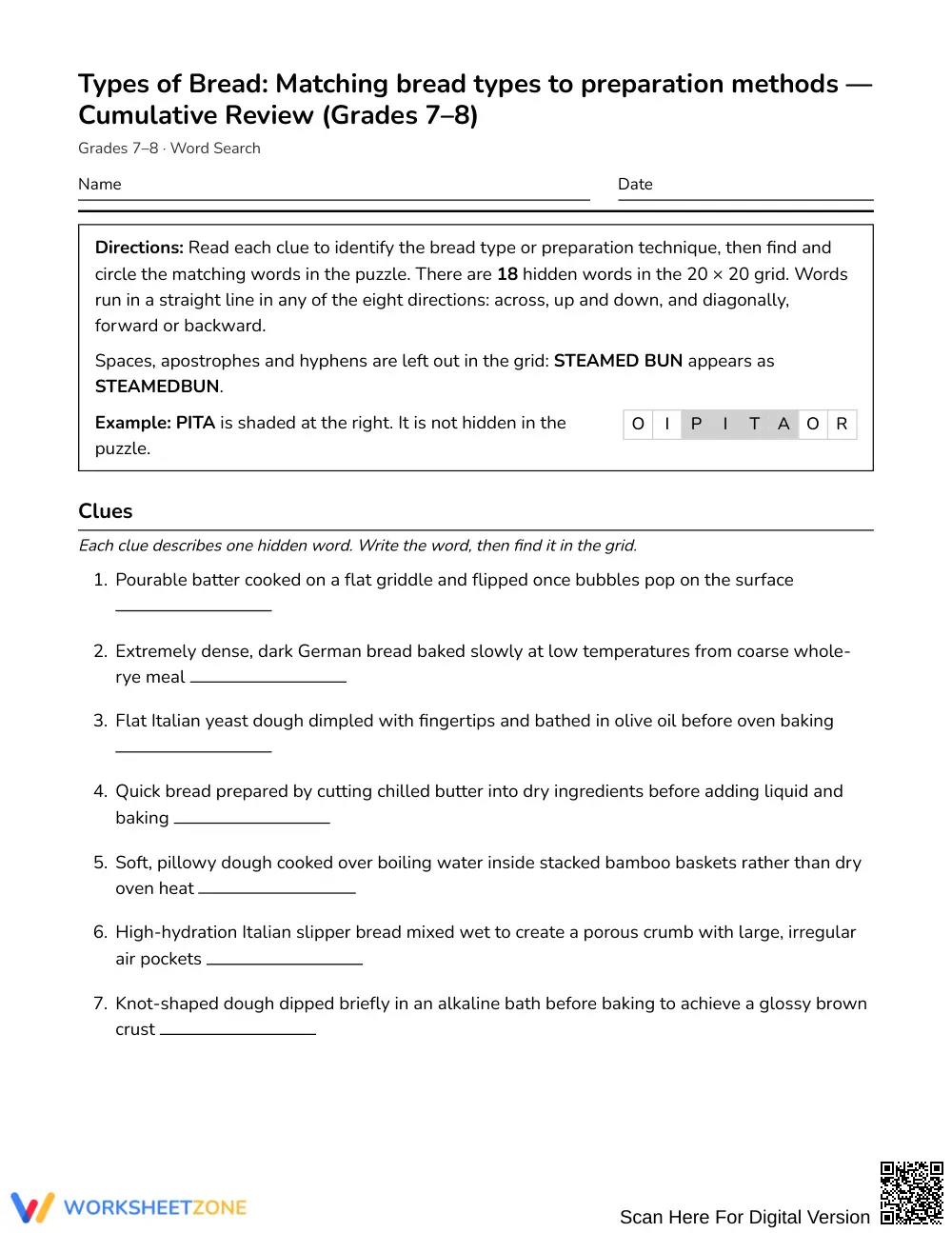
This vocabulary word search reinforces domain-specific culinary language by challenging middle school learners to match eighteen distinct bread varieties to their preparation techniques. Students read technical culinary descriptions, identify the target terms, and locate each word within a letter grid, boosting reading comprehension across Grades 7–8.
At a Glance
- Grade: Grades 7–8 · Subject: English Language Arts (ELA) Vocabulary
- Standard: Not standards-assessed — domain-specific vocabulary enrichment
- Skill Focus: Matching artisan bread types to preparation methods
- Format: 3 student pages · 18 words · Full 4-page answer key included · PDF
- Best For: Vocabulary review, sub plans, and fast-finisher enrichment
- Time: 25–35 minutes
What's Inside
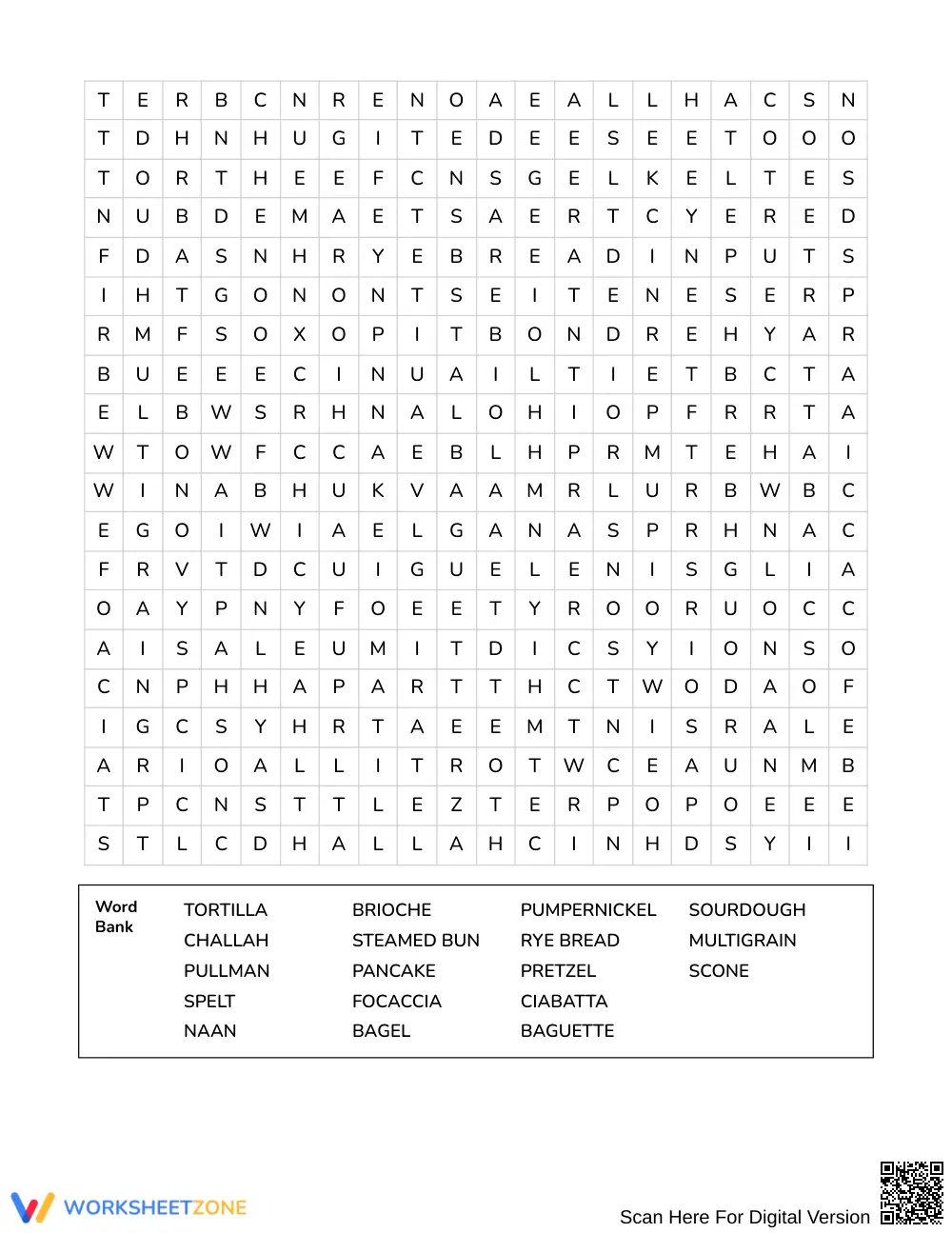
This 3-page activity pack features an eighteen-word puzzle paired with descriptive culinary clues. Students read technical descriptions of baking methods—such as boiling, bamboo steaming, and cold-butter cutting—to identify terms like bagel, brioche, and sourdough. A shuffled word bank provides reference support, and a complete 4-page answer key enables rapid grading.
Puzzle Mechanics
This vocabulary challenge utilizes structured puzzle mechanics designed for rigorous engagement:
- Grid Size: An expansive 20 x 20 letter grid accommodates multi-word and technical culinary entries.
- Search Directions: Words run in all 8 directions: north, northeast, east, southeast, south, southwest, west, and northwest.
- Clue-Driven Search: Students decode eighteen descriptive preparation clues before finding items in the shuffled word bank.
Standards Alignment
This resource serves as vocabulary enrichment and is not aligned to a formal academic standard. It reinforces cross-curricular technical literacy by requiring learners to analyze informational text clues, make semantic connections, and apply spelling skills across secondary English Language Arts.
How to Use It
Use this word search during or after a unit on expository text or culinary terminology. First, assign it as a collaborative review where student pairs match preparation descriptions like water boiling or oil dimpling to target breads. Second, use it as a zero-prep sub plan or independent finisher task. For formative assessment, observe whether students identify terms directly from clues before consulting the word bank. Most learners finish within 25 to 35 minutes.
Who It's For
This puzzle is designed for Grades 7–8 English Language Arts students, culinary electives, and English language learners developing academic vocabulary. Differentiate by having emerging readers highlight key verbs in the clues before searching, while advanced students define additional bread types. Pair this activity with an informational article on global baking methods or an anchor chart.
Educational research from Fisher & Frey (2014) highlights that purposeful vocabulary acquisition requires repeated exposures to domain-specific terminology within meaningful informational contexts rather than through rote memorization of isolated lists. This vocabulary enrichment resource engages middle school students in matching eighteen distinct bread types to authentic preparation methods, bridging informational reading and lexical retention. By embedding technical terms such as sourdough, brioche, and focaccia into clue-based puzzles spanning an eight-directional 20 x 20 grid, learners actively decode descriptive definitions and consolidate spelling patterns. While not aligned to a formal state standard, the activity fosters active linguistic recall and semantic association. Teachers utilizing this resource receive a multi-page instructional tool that reinforces culinary literacy, supports differentiated reading levels, and provides immediate formative insight into student comprehension, corroborating contemporary findings that structured word-study activities substantially deepen contextual reading fluency across secondary English classrooms.


