
































Complete Body System Model Worksheet | Grades 6-10 Science

Paste this activity's link or code into your existing LMS (Google Classroom, Canvas, Teams, Schoology, Moodle, etc.).
Students can open and work on the activity right away, with no student login required.
You'll still be able to track student progress and results from your teacher account.
This body systems worksheet helps middle and high school students master how human body systems interact to maintain homeostasis. Through 25 focused tasks, learners identify anatomical structures, trace oxygen and nutrient delivery during physical exercise, and evaluate conceptual errors in feedback models to build deep mechanistic understanding.
At a Glance
- Grade: 6–10 · Subject: Science
- Standard: Model how interacting organ systems provide oxygen, nutrients, and maintain homeostasis
- Skill Focus: Construct, complete, and revise models of interacting organ systems
- Format: 4 pages · 25 problems · Answer key included · PDF
- Best For: Independent practice and conceptual review
- Time: 45–60 minutes
What's Inside
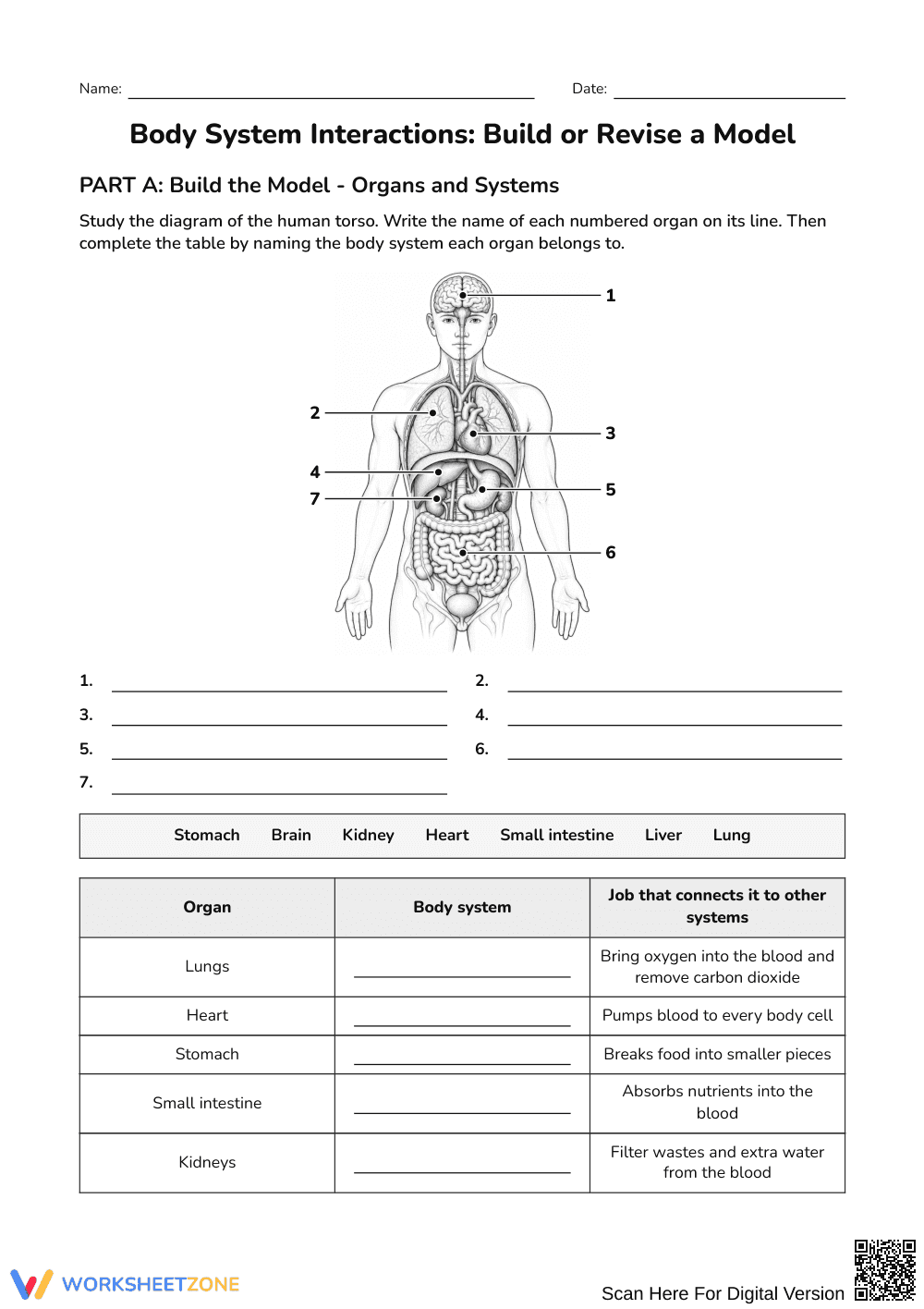
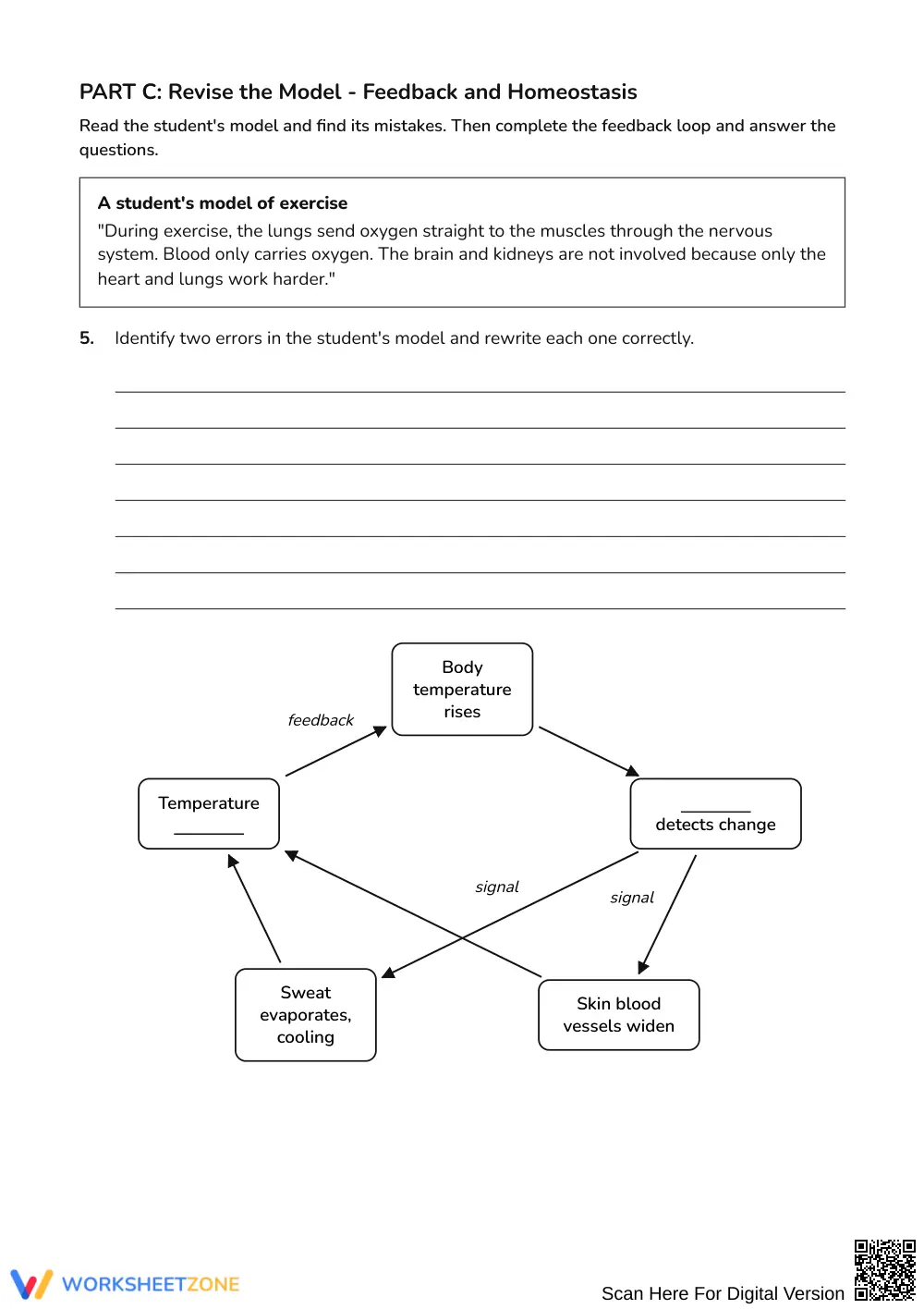
The 4-page activity provides a sequential, multi-part investigation. Students begin by labeling a human torso diagram and matching seven vital organs to their parent systems. Next, students complete an exercise oxygen-delivery pathway and identify connections to digestion. Finally, students analyze a flawed peer model, correct misconceptions, and chart a negative feedback loop. A complete 4-page teacher answer key is included.
Skill Progression
- Guided practice (Part A): Students use visual torso diagrams and word banks across 14 initial identification and function-matching items.
- Supported practice (Part B): Learners complete a 6-part flow chart tracking circulatory, nervous, and respiratory coordination during strenuous muscular activity.
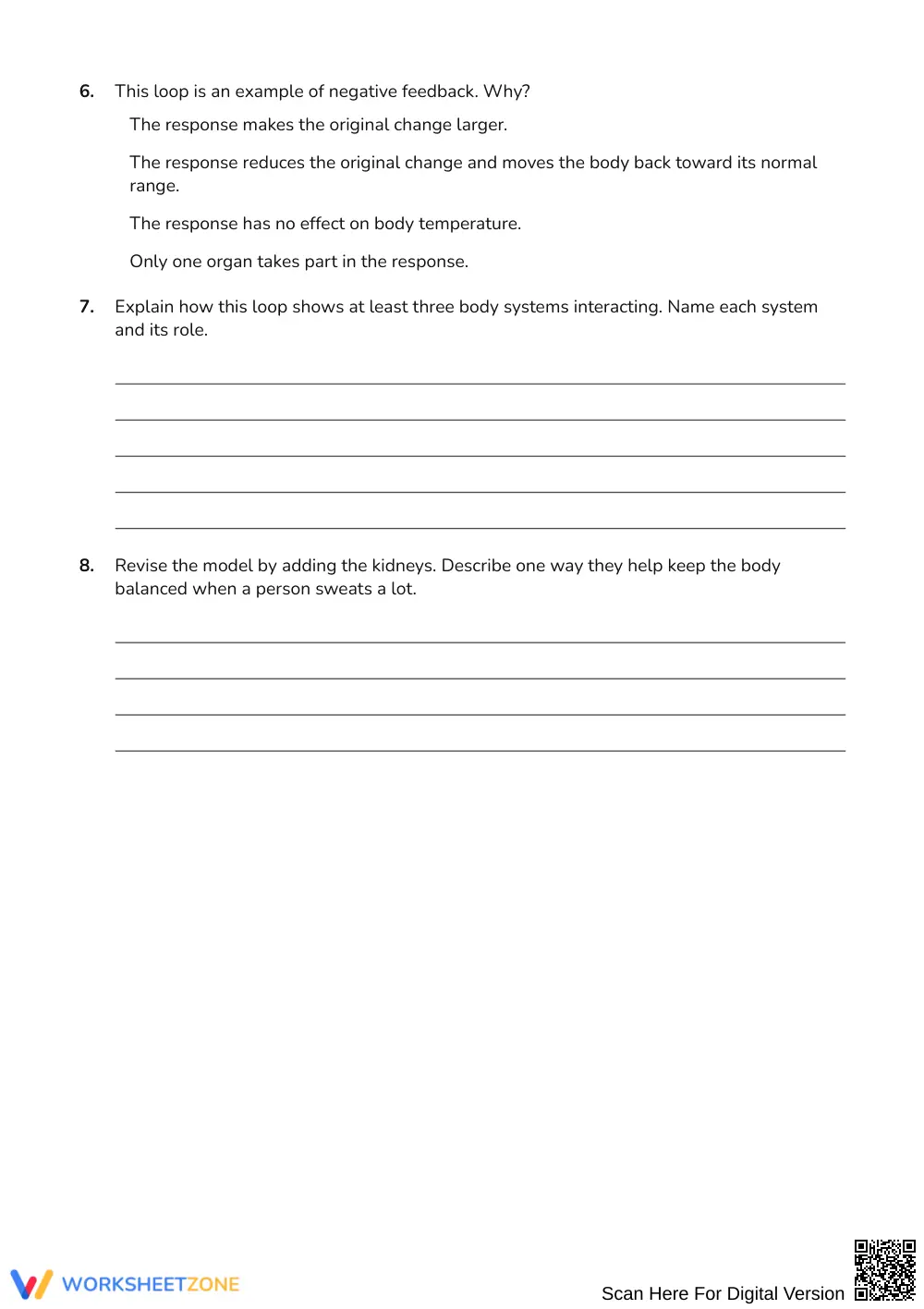
- Independent practice (Part C): Students independently analyze 5 higher-order items, debugging faulty claims and diagramming thermoregulatory negative feedback loops involving the skin and kidneys.
This structured progression follows the gradual-release framework, moving learners smoothly from structural recall to system-level synthesis.
Standards Alignment
This worksheet directly targets middle school and high school life science standards requiring students to develop and use models showing how body systems interact to support cellular function and maintain internal balance. Both standard codes can be copied directly into lesson plans, IEP goals, or district curriculum mapping tools.
How to Use It
Deploy this resource during the synthesis phase of a human body systems unit, after direct instruction on individual organs. It functions exceptionally well as mid-unit formative assessment: observe student responses on Part C to evaluate whether learners distinguish between the nervous and circulatory systems during gas transport. Plan for 45 to 60 minutes of focused student work.
Who It's For
Designed for general science, introductory biology, and anatomy students across grades 6 through 10. Scaffolded diagramming provides access for emerging bilingual students, while peer-model debugging offers rigorous extension for advanced learners. Pair this printable with a physical circulatory-respiratory demonstration or an interactive homeostasis simulation.
Developing explanatory models of internal body systems poses persistent conceptual hurdles for secondary science learners. According to Fisher & Frey (2014), gradual-release instructional sequences that combine visual modeling with explicit error analysis significantly accelerate conceptual mastery. By challenging students to identify structural components, trace physiological pathways, and diagnose inaccurate scientific statements, this 25-task worksheet operationalizes rigorous modeling practices. Students transition from passive memorization of isolated anatomical terms to dynamic understanding of cross-system homeostasis, preparing them for advanced life science coursework.


