




























Views
Downloads



Complete Author's Purpose Worksheet | Grade 6 ELA

Paste this activity's link or code into your existing LMS (Google Classroom, Canvas, Teams, Schoology, Moodle, etc.).
Students can open and work on the activity right away, with no student login required.
You'll still be able to track student progress and results from your teacher account.
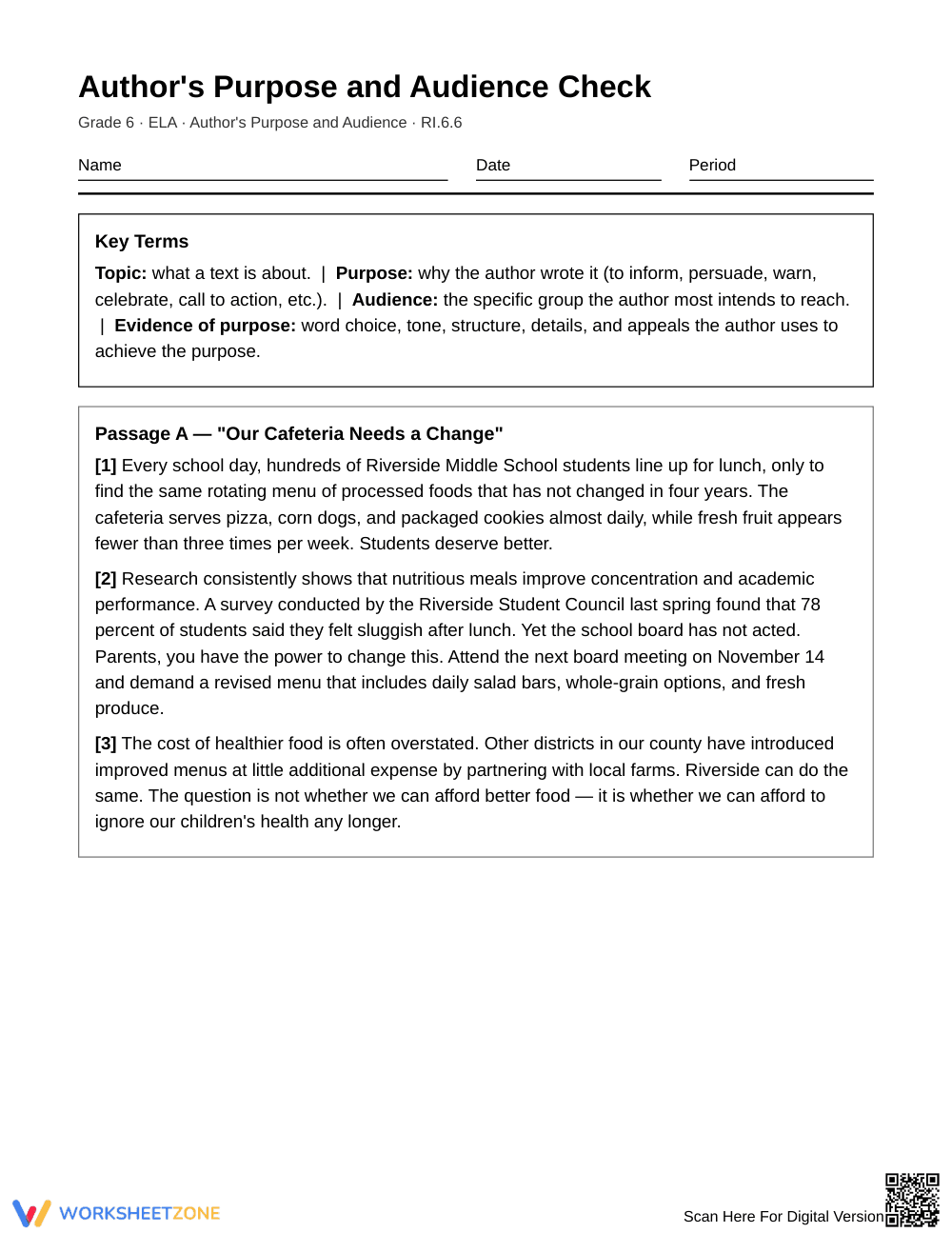
This Grade 6 ELA worksheet guides students through identifying and analyzing author's purpose and audience across paired informational texts. Sixth graders examine an argumentative cafeteria editorial and an informative recycling announcement, distinguishing topic from purpose, evaluating structural choices, and justifying conclusions with textual evidence to build vital analytical reading skills.
At a Glance
- Grade: 6 · Subject: ELA
- Standard:
RI.6.6— Determine author purpose and explain how specific details convey intended meaning.- Skill Focus: Author's Purpose, Audience Identification, and Rhetorical Evidence
- Format: 5 packet pages · 12 analytical problems · Comprehensive answer key included · PDF
- Best For: Independent reading practice and targeted formative assessment
- Time: 35–45 minutes of active instruction
What's Inside
This 5-page resource features two contrasting passages: a persuasive editorial regarding cafeteria menus and an informative announcement about school recycling. A foundational key terms box defines topic, purpose, audience, and textual evidence. Students complete 12 questions spanning multiple-choice identification, short-answer evidence analysis, and claim evaluation, supported by a 4-page answer key.
Skill Progression
- Guided practice (Questions 1–3): Multiple-choice items scaffold understanding by isolating the passage topic from the author's primary purpose.
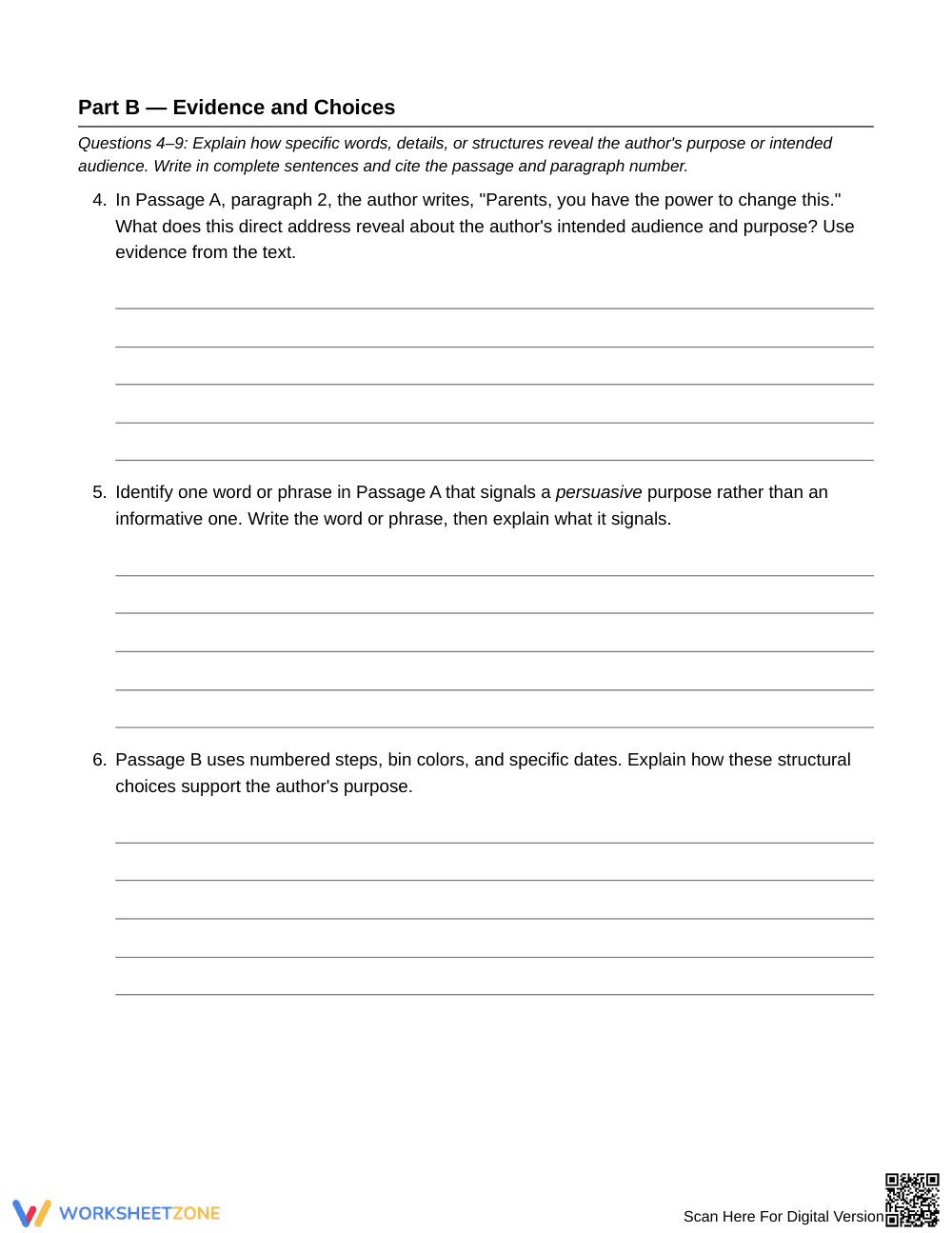
- Supported practice (Questions 4–9): Open-ended prompts require students to cite paragraph evidence explaining how data, tone, and formatting advance purpose.
- Independent practice (Questions 10–12): Students evaluate alternative claims about audience and intent, identifying misconceptions across both texts.
This structured progression reflects the gradual release model, transitioning students from foundational categorization to rigorous critical analysis.
Standards Alignment
This worksheet aligns directly to Common Core standard `RI.6.6`: determine an author's point of view or purpose in a text and explain how it is conveyed. It also supports standard `RI.6.1` through rigorous text citation requirements. Both standard codes can be copied directly into lesson plans, IEP goals, or district curriculum mapping tools.
How to Use It
Use this resource following direct instruction on rhetorical intent. Dedicate 35 to 45 minutes for independent practice or paired analysis. During work time, check Question 10 to see whether students confuse topic with audience, intervening promptly before they tackle comparative claim evaluation.
Who It's For
This activity targets grade 6 ELA classrooms, reading intervention groups, and English language learners needing explicit practice distinguishing topic from intent. Pair this activity with an author's purpose anchor chart or an introductory mini-lesson on text structures.
Aligned directly to standard RI.6.6, this educational worksheet guides sixth-grade middle school students in mastering author's purpose and audience analysis across informational texts. By examining a persuasive cafeteria editorial alongside an informative recycling announcement, the 12-task learning progression requires students to evaluate rhetorical techniques, structural design choices, and targeted language. According to research on structured literacy instruction by Fisher & Frey (2014), gradual release frameworks that bridge explicit conceptual modeling with independent analytical evaluation yield measurable gains in middle school reading comprehension and argumentative literacy. The comprehensive 5-page curriculum resource integrates built-in academic definitions, structured text-dependent short answers, and claim-evaluation exercises, culminating in a thorough 4-page answer key with model evidentiary citations. Educators can effectively deploy this rigorous instructional printout for standards-based diagnostic evaluation, small-group intervention, or reading comprehension practice across diverse sixth-grade classroom learning environments.


