




























Views
Downloads


Complete Author's Purpose Worksheet | Grade 6 ELA

Paste this activity's link or code into your existing LMS (Google Classroom, Canvas, Teams, Schoology, Moodle, etc.).
Students can open and work on the activity right away, with no student login required.
You'll still be able to track student progress and results from your teacher account.
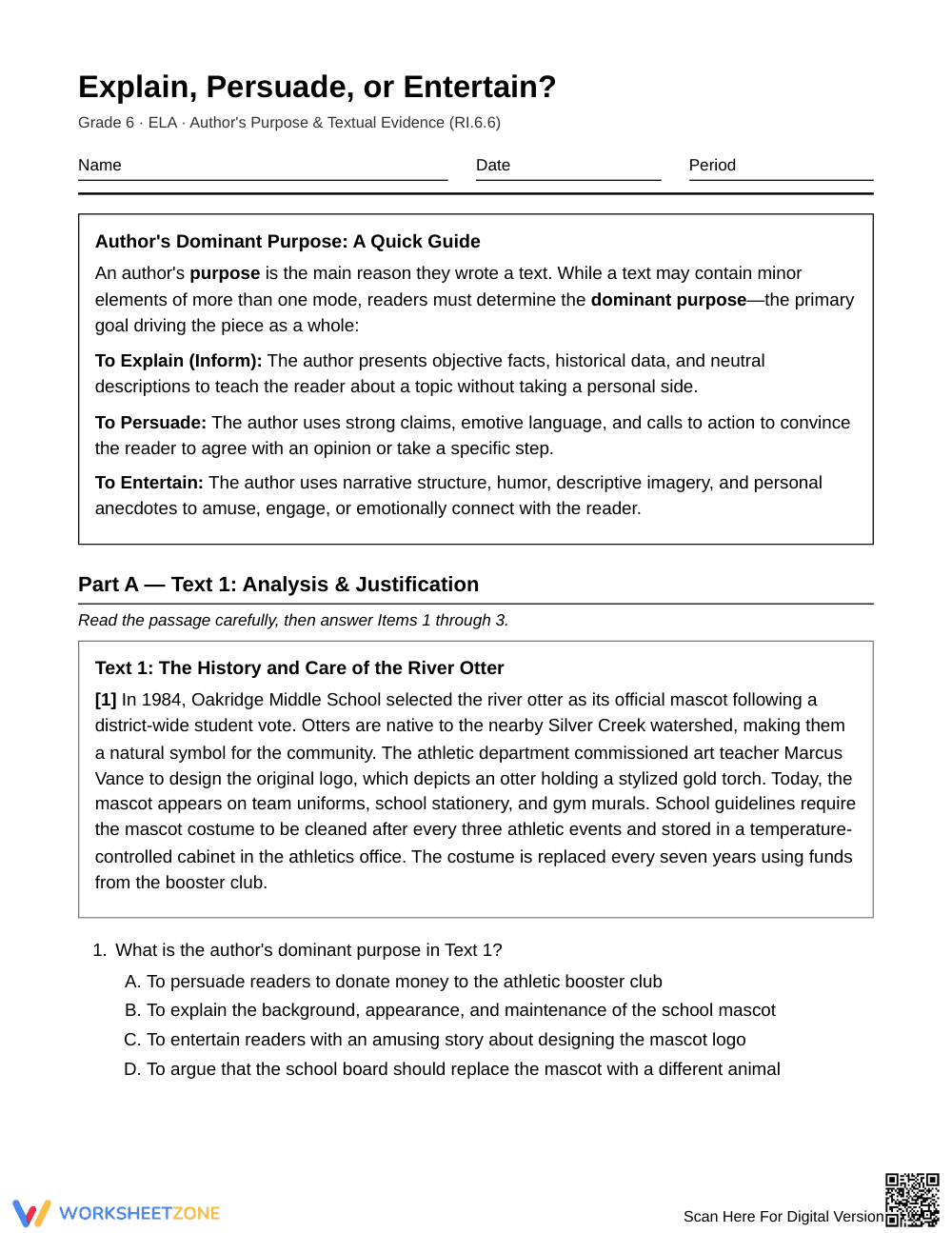
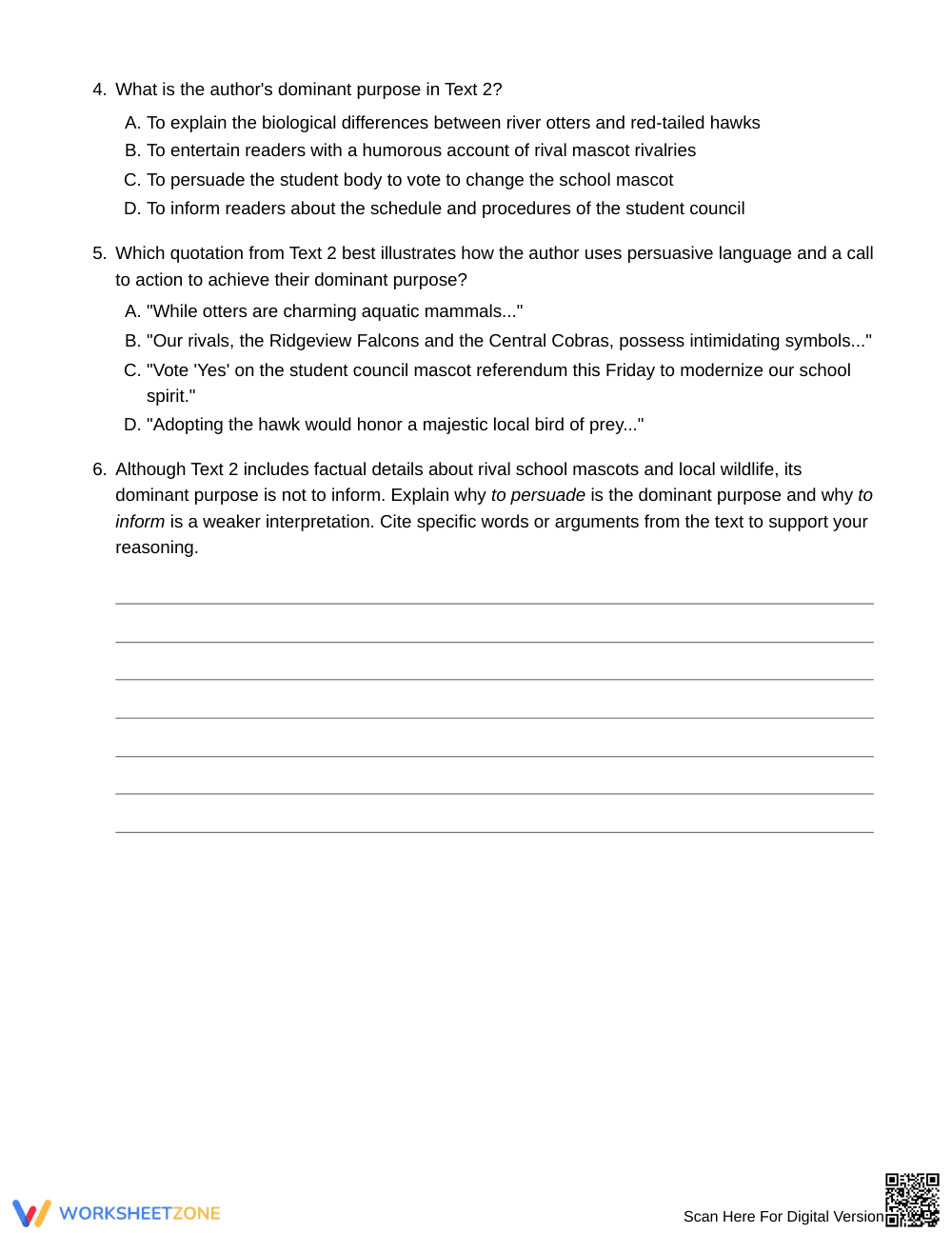
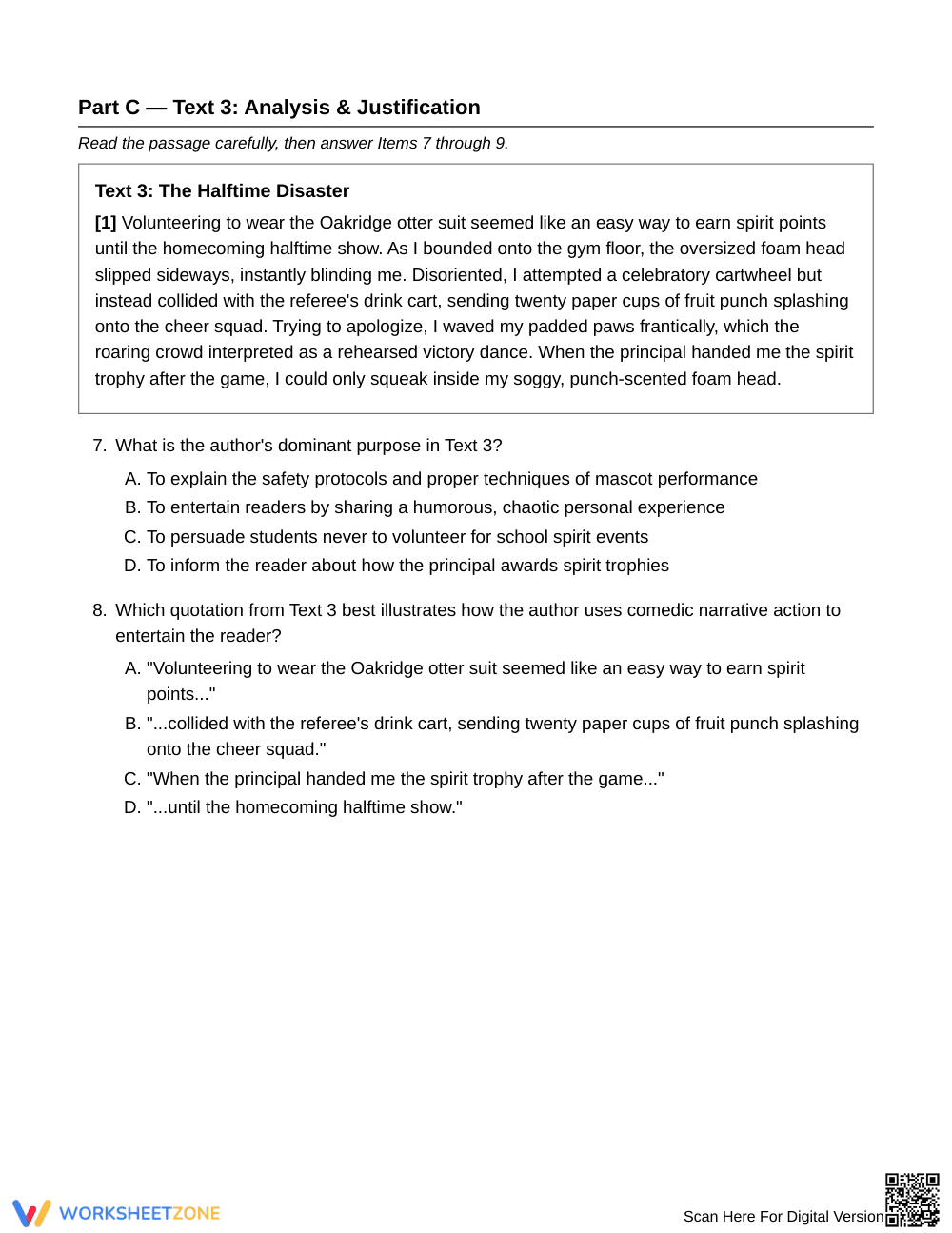
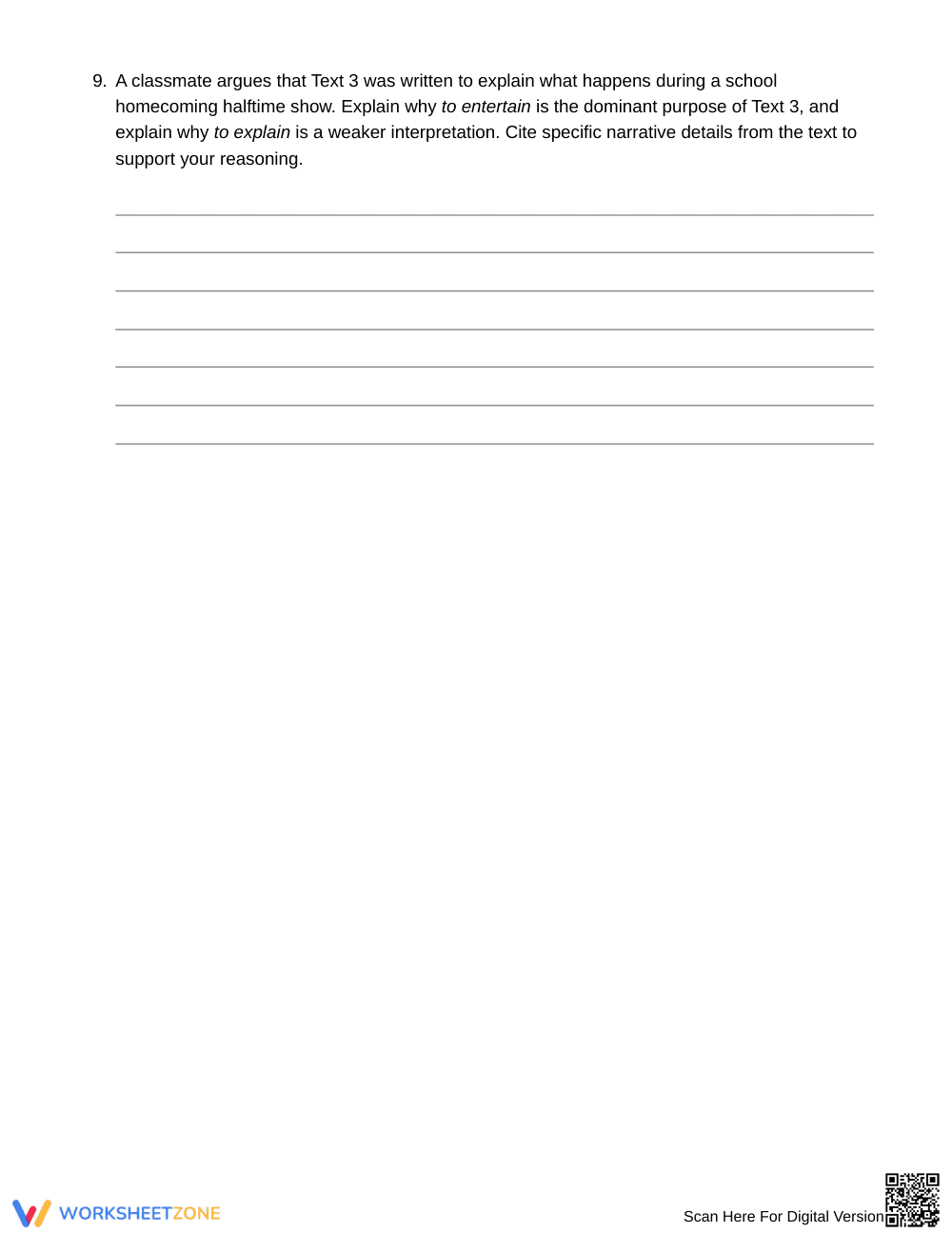
This five-page worksheet helps Grade 6 students identify an author's dominant purpose—explain, persuade, or entertain—and defend that identification with specific textual evidence. Across three original passages and nine structured tasks, students move from recognition to reasoned justification, building analytical skills required by standard RI.6.6.
At a Glance
- Grade: 6 · Subject: ELA
- Standard:
RI.6.6— Determine an author’s point of view or purpose in a text and explain how it is conveyed- Skill Focus: Identifying dominant author’s purpose with textual evidence
- Format: 5 pages · 9 problems · Answer key included · PDF
- Best For: Guided or independent reading practice
- Time: 25–35 minutes
What’s Inside
The worksheet opens with a concise reference guide defining the three dominant purposes along with key language features. Students then work through three thematically linked passages about a school mascot. Each passage includes an identification question, an evidence-selection item, and a constructed-response prompt requiring written justification. A three-page answer key provides complete solutions and model responses for straightforward scoring.
Skill Progression
- Guided practice (Items 1–3): Text 1 presents an informational passage with neutral facts. Students identify the purpose, choose supporting textual features, and write a scaffolded explanation.
- Supported practice (Items 4–6): Text 2 offers a persuasive editorial requiring students to distinguish dominant purpose from factual details and highlight persuasive language.
- Independent practice (Items 7–9): Text 3 provides a humorous narrative where students recognize entertainment as primary and defend their conclusion against an alternative interpretation.
Standards Alignment
The resource directly aligns to RI.6.6 by asking students to determine an author’s purpose and explain how it is conveyed in a text. It also reinforces RI.6.1 by requiring students to cite specific textual evidence for every analytical response.
How to Use It
Use this worksheet after direct instruction on author’s purpose. Teachers can model the first passage whole-class, have student pairs complete the second passage, and assign the third for independent practice. It also serves as an effective 25-minute formative assessment.
Who It’s For
Designed for Grade 6 ELA classrooms, this printable resource supports general-education students, reading intervention groups, and English learners needing structured practice distinguishing informational, persuasive, and entertaining texts.
This printable Grade 6 ELA worksheet targets standard RI.6.6, which requires middle school students to determine an author’s point of view or purpose and explain how that stance is conveyed across a text. Through nine structured problems, learners practice identifying whether each passage aims primarily to explain, persuade, or entertain, supporting their conclusions with concrete textual evidence. Research from Fisher and Frey (2014) demonstrates that structured gradual release tasks, in which explicit scaffolding decreases across successive items, significantly improve students’ ability to transfer analytical comprehension skills to novel reading selections. Featuring three thematically linked passages, an introductory reference guide, and a detailed three-page answer key with model explanations, this five-page resource delivers rigorous practice. Teachers can implement it effectively for guided small-group instruction, targeted intervention, independent reading practice, or standards-aligned formative assessment during any non-fiction unit.


