
































Complete Author's Choices Worksheet | Grade 11 English III

Paste this activity's link or code into your existing LMS (Google Classroom, Canvas, Teams, Schoology, Moodle, etc.).
Students can open and work on the activity right away, with no student login required.
You'll still be able to track student progress and results from your teacher account.
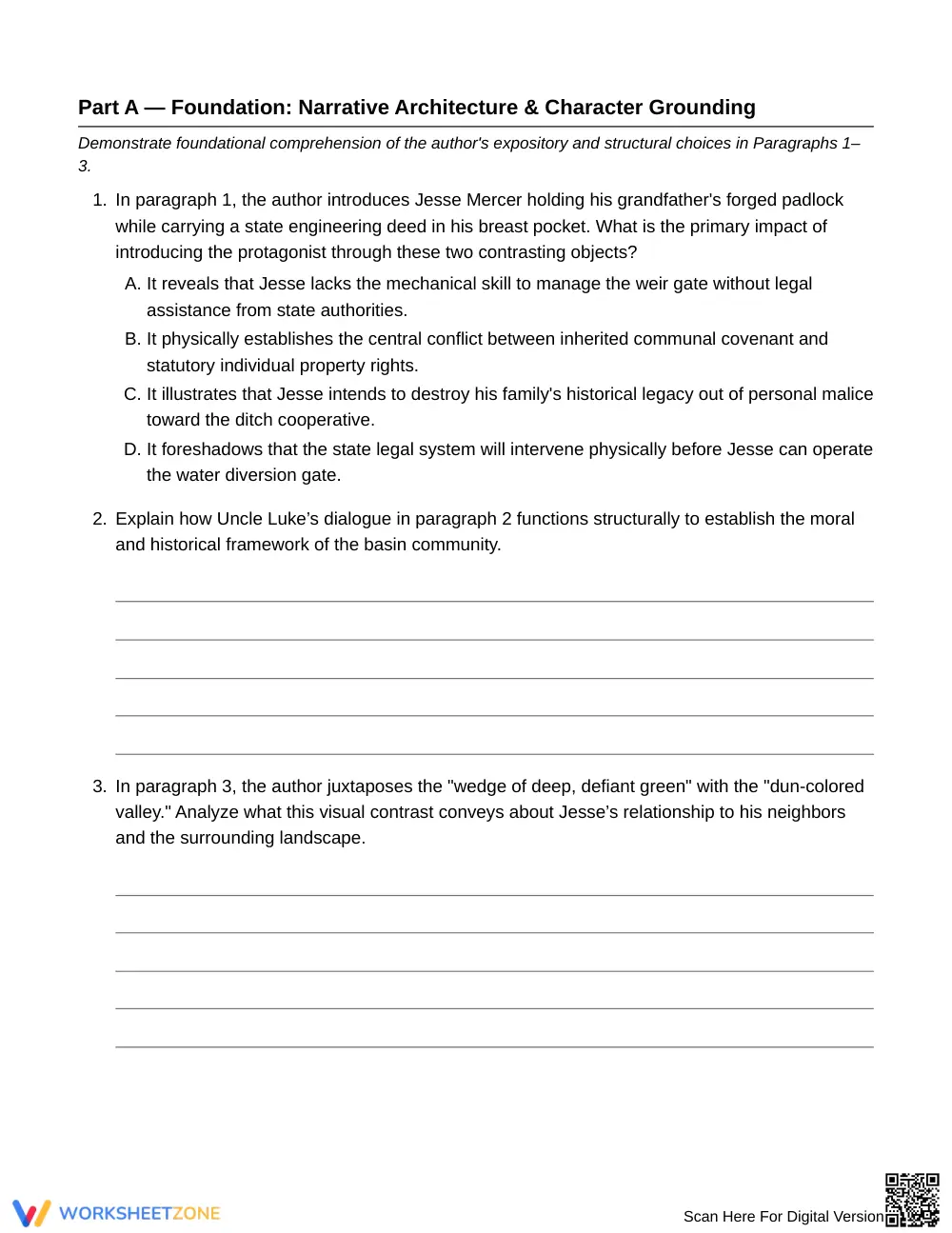
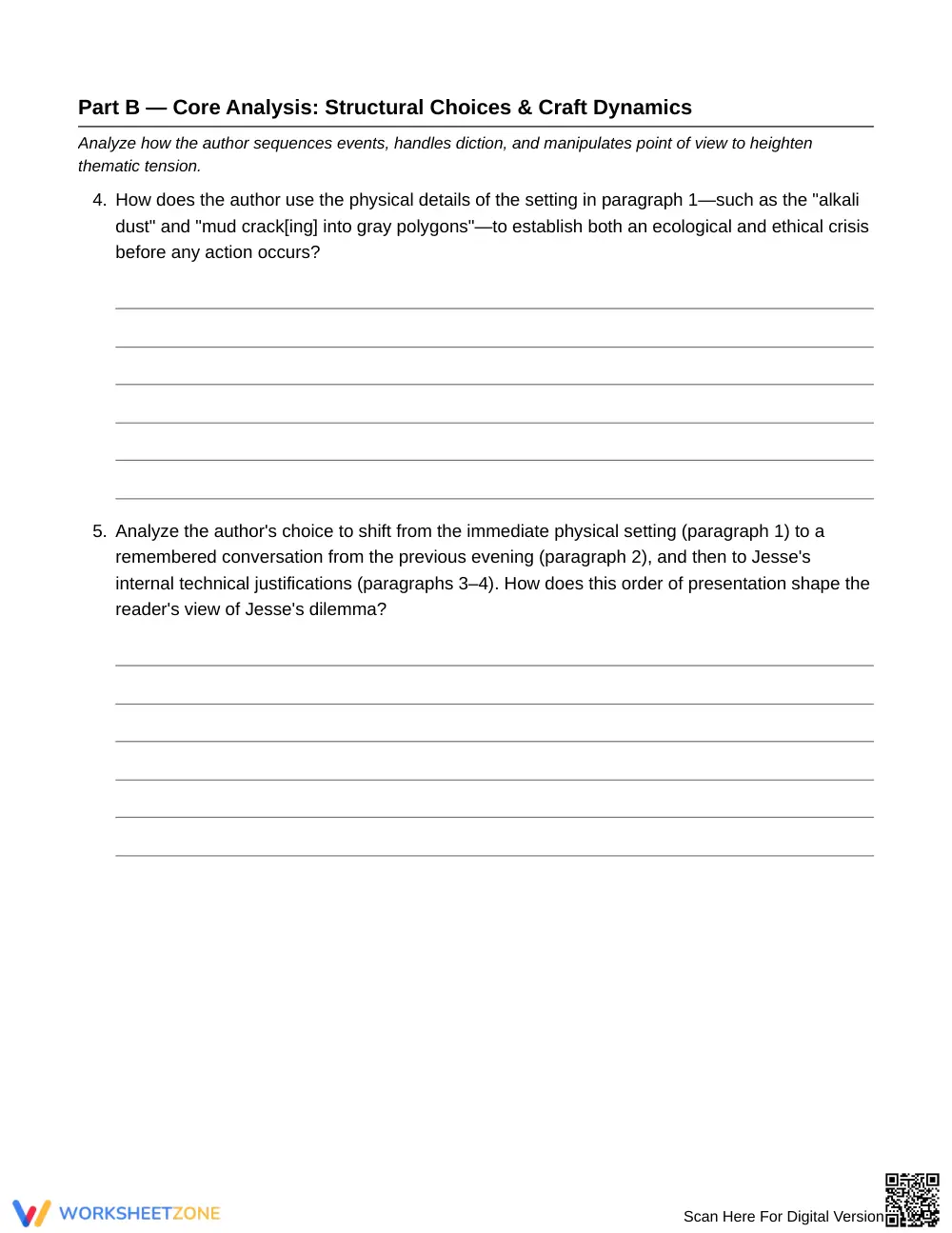
This Grade 11 literary analysis worksheet guides students to analyze how complex authorial choices create narrative impact and thematic tension. High school readers examine an original narrative passage, "The Water Gate," evaluating how setting, structural sequencing, and character foils shape meaning to prepare for rigorous text-dependent writing.
At a Glance
- Grade: 11 · Subject: English III
- Standard:
RL.11-12.3— Analyze the impact of author choices on story elements and development- Skill Focus: Authorial Craft and Narrative Architecture
- Format: 7 pages · 12 problems · Answer key included · PDF
- Best For: High school close-reading and craft assessment
- Time: 45–60 minutes
What's Inside
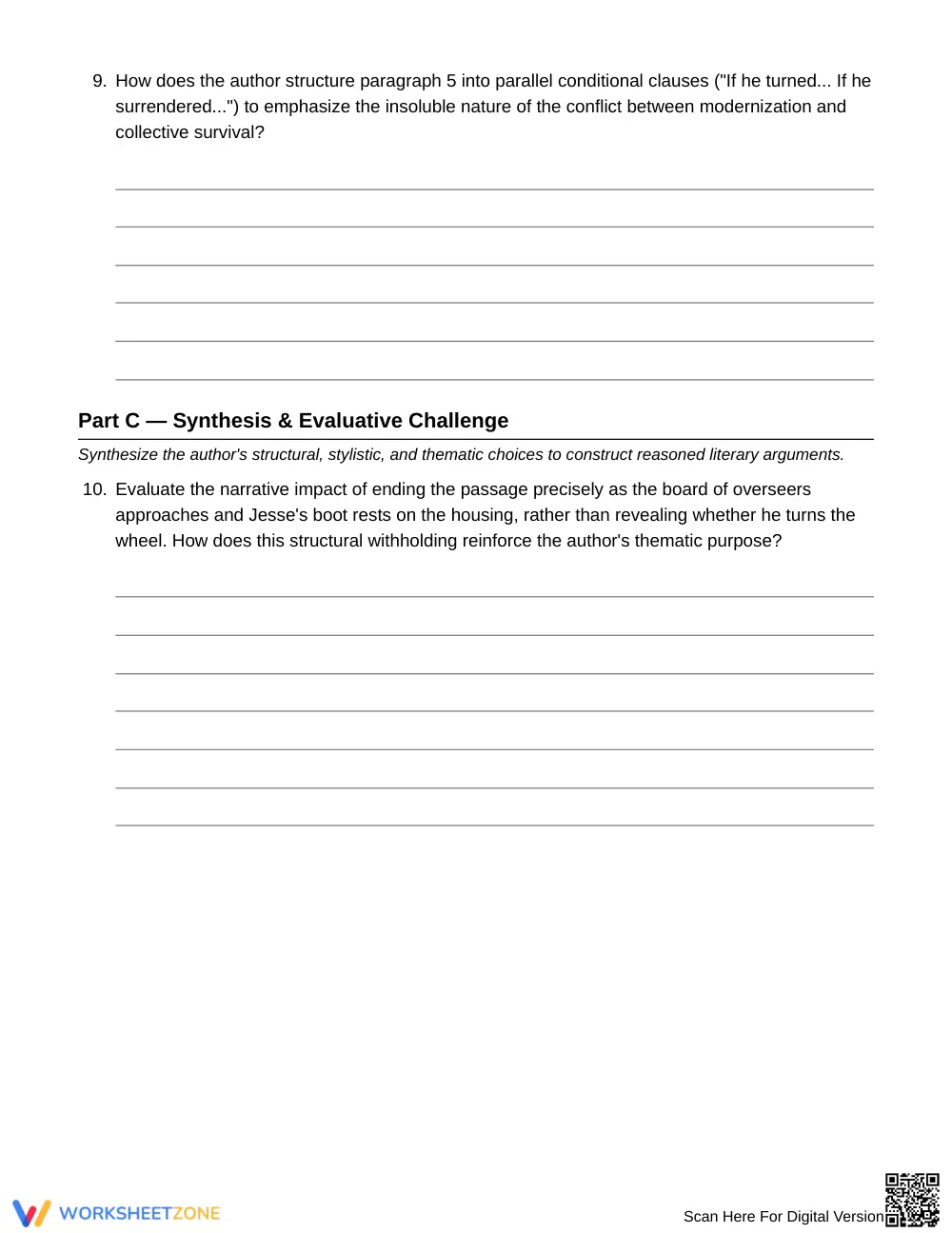
This 7-page printable resource includes an original five-paragraph narrative passage paired with 12 text-dependent questions: one foundational multiple-choice question, eight constructed-response analysis items, and three evaluative synthesis prompts. A 4-page teacher answer key provides complete model responses and textual evidence citations for every task.
Skill Progression
- Guided practice (Part A, 3 problems): Students identify foundational expository choices, character introductions, dialogue functions, and visual contrasts using guided text references.
- Supported practice (Part B, 6 problems): Learners analyze core craft dynamics, examining scene sequencing, diction, sensory imagery, objective correlatives, and parallel syntax.
- Independent practice (Part C, 3 problems): Writers evaluate character foils, structural withholding, and conflicting critical arguments.
This sequence follows the gradual-release model, moving from scaffolded identification to independent synthesis.
Standards Alignment
This resource aligns to primary standard RL.11-12.3: Analyze the impact of the author's choices regarding how to develop and relate elements of a story or drama. Supporting standard RL.11-12.1 reinforces citing strong textual evidence to support inferences. Both standard codes can be copied directly into lesson plans, IEP goals, or district curriculum mapping tools.
How to Use It
Deploy this worksheet after direct instruction on authorial craft to assess mastery of narrative analysis. During independent practice, observe whether students connect physical setting motifs to internal character dilemmas. Alternatively, assign the passage as a mid-unit benchmark assessment. Expected completion time is 45 to 60 minutes.
Who It's For
This worksheet is designed for Grade 11 English III students practicing advanced text analysis. Provide paragraph line references for developing readers, or challenge advanced learners to write full comparative essays for Part C. Pair this resource with an anchor chart on narrative pacing and authorial craft.
According to Fisher & Frey (2014), instructional scaffolding that moves systematically from foundational comprehension to deep structural analysis significantly improves high school students' ability to evaluate complex literary texts. This worksheet supports Common Core standard RL.11-12.3 by requiring learners to analyze how deliberate authorial choices regarding characterization, setting juxtaposition, and scene sequencing shape narrative tension and thematic complexity. Rather than asking passive recall questions, the 12 problems prompt students to examine how physical motifs serve as objective correlatives for internal psychological states and how open structural endings reinforce thematic ambiguity. By engaging with both targeted analytical prompts and conflicting critical interpretations, Grade 11 students cultivate the evidence-based reasoning skills essential for postsecondary academic writing and college-level literary criticism. This structured analytical practice equips educators to assess nuanced interpretive competencies effectively across secondary English classrooms.


