





























Complete Arteries and Veins Worksheet | Grades 6–10 Science
Paste this activity's link or code into your existing LMS (Google Classroom, Canvas, Teams, Schoology, Moodle, etc.).
Students can open and work on the activity right away, with no student login required.
You'll still be able to track student progress and results from your teacher account.
This comprehensive circulatory system worksheet guides students through structural and functional differences among arteries, veins, and capillaries. Learners analyze cross-section diagrams, trace systemic and pulmonary pathways, interpret blood pressure gradients, and apply their understanding to medical case studies, developing deep mastery of cardiovascular anatomy and physiological adaptations.
At a Glance
- Grade: Grades 6–10 · Subject: Science
- Standard: Relate anatomical structures of circulatory vessels to directional blood flow and physiological function
- Skill Focus: Classifying blood vessels and tracing cardiovascular pathways
- Format: 4 pages · 28 problems · Answer key included · PDF
- Best For: Mid-unit mastery practice or review
- Time: 45–60 minutes
What's Inside
Across four student pages, this resource features 28 targeted tasks organized into five distinct parts. Students examine anatomical cross sections, sort structural characteristics, track sequential double-loop circulation, interpret a hemodynamic pressure gradient graph, and resolve an evaluative clinical case study. The packet includes a complete four-page teacher answer key with exemplar written explanations.
Skill Progression
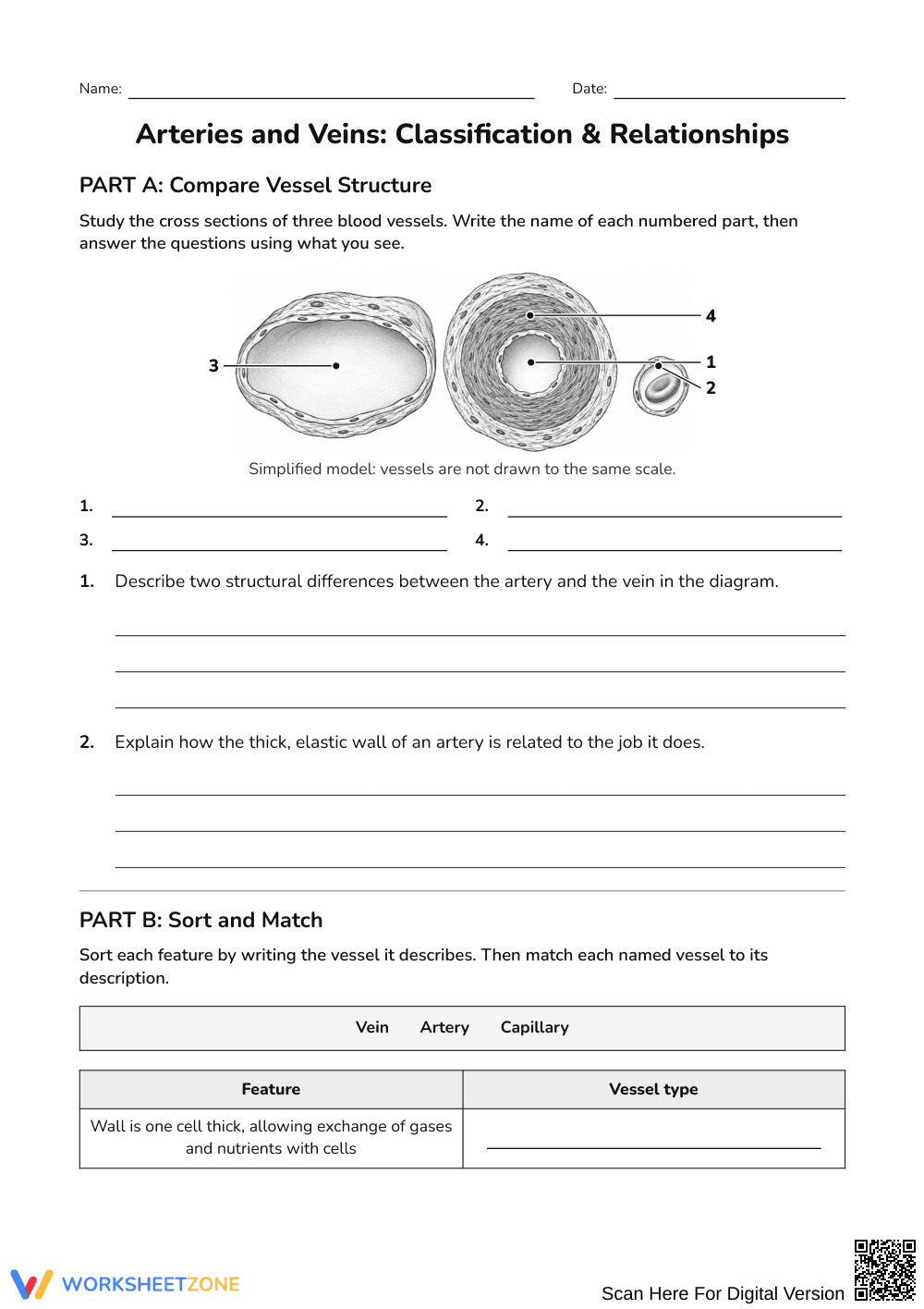
- Guided Practice (Part A): Students examine labeled cross-sectional vessel diagrams and describe how specific structural features, such as tunica media thickness and lumen diameter, support distinct pressure environments (4 items).
- Supported Practice (Parts B & C): Learners categorize vessel traits, match named vessels to systemic functions, and map sequential blood flow through double circulation loops while addressing common misconceptions about oxygenation (16 items).
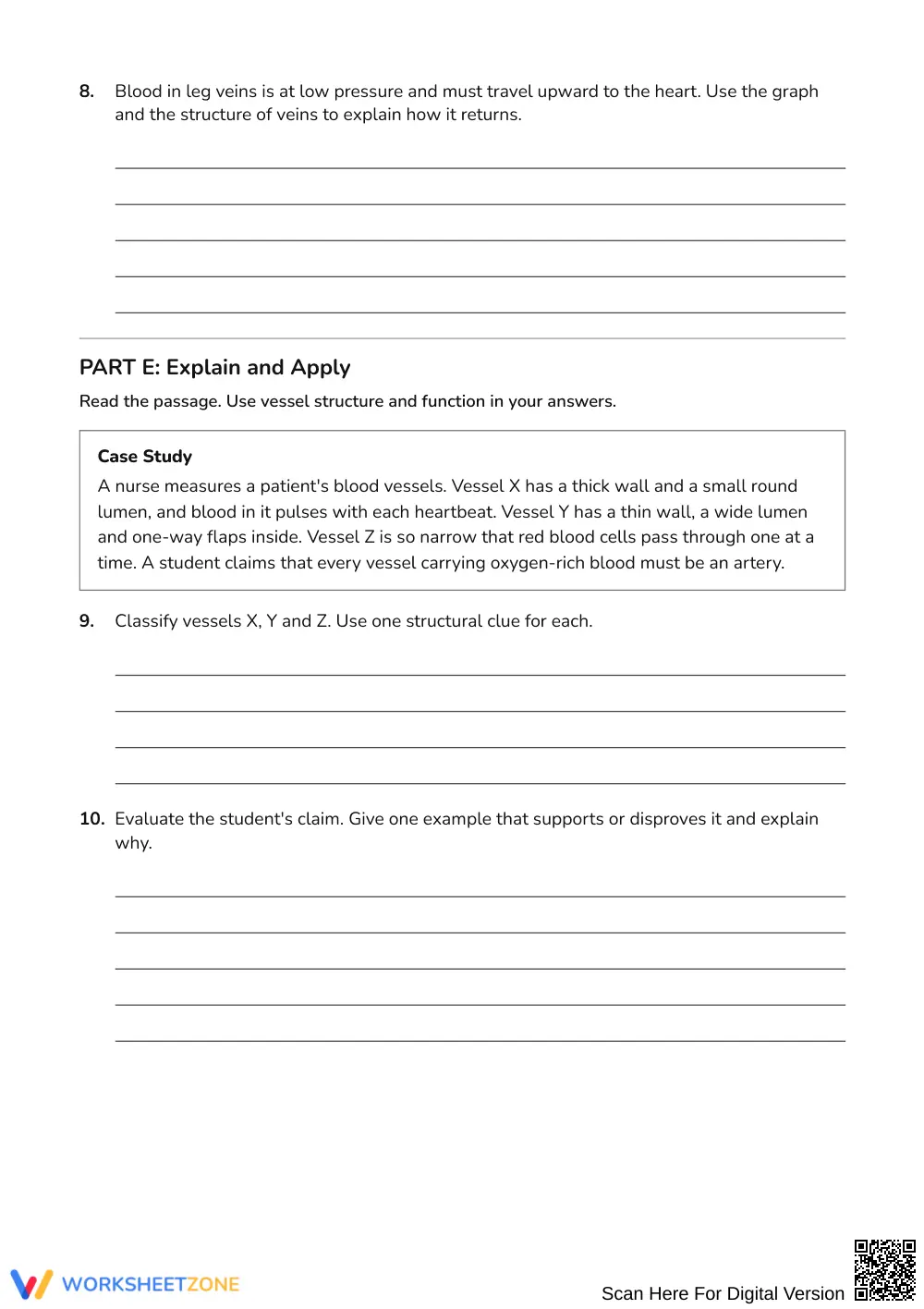
- Independent Application (Parts D & E): Students interpret blood pressure data from the aorta to the venae cavae, analyze venous return mechanisms, and evaluate clinical claims in a patient scenario (8 items).
This structured progression reflects the gradual release of responsibility model, moving students smoothly from visual identification to higher-order evaluative synthesis.
Standards Alignment
This resource aligns with middle and secondary life science standards focused on multicellular organisms and body systems. Students analyze how specialized tissues and organ structures interact to sustain cellular respiration throughout the human body. Standard objectives can be copied directly into lesson plans, IEP goals, or district curriculum mapping tools.
How to Use It
Implement this worksheet after direct instruction on the circulatory system to consolidate student comprehension. During independent work time, circulate to verify that students explain vessel classifications by flow direction rather than color conventions. This packet takes 45 to 60 minutes to complete in a single class period or across two split-block sessions.
Who It's For
Designed for middle school life science and introductory high school biology classrooms, this worksheet supports general education, honors review, and targeted remediation. Pair this resource with a human heart anatomical model or a microscopic tissue slide laboratory investigation.
According to Fisher & Frey (2014), structured instructional sequences that integrate visual models, classification tasks, and evidence-based explanations significantly enhance domain-specific science comprehension. This 28-task resource reinforces essential life science concepts by prompting students to connect vessel morphology directly with pressure dynamics and directional transport. Learners consistently analyze how structural variations in arterial, venous, and capillary walls directly serve physiological exchange needs across systemic and pulmonary circuits. By incorporating concrete data interpretation alongside diagnostic scenario evaluation, the worksheet bridges foundational anatomical recall and complex biomedical reasoning.


