


























Views
Plays
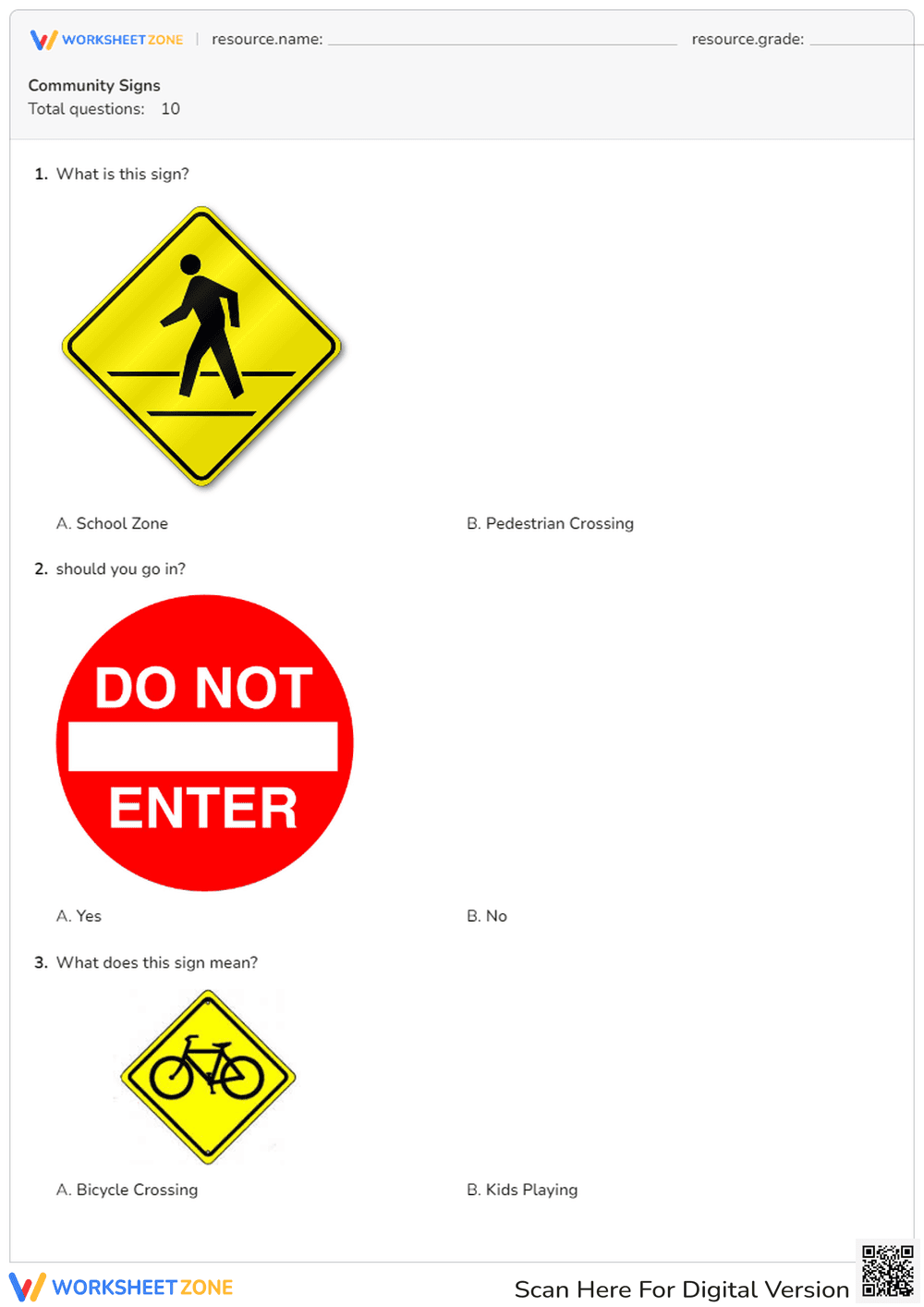
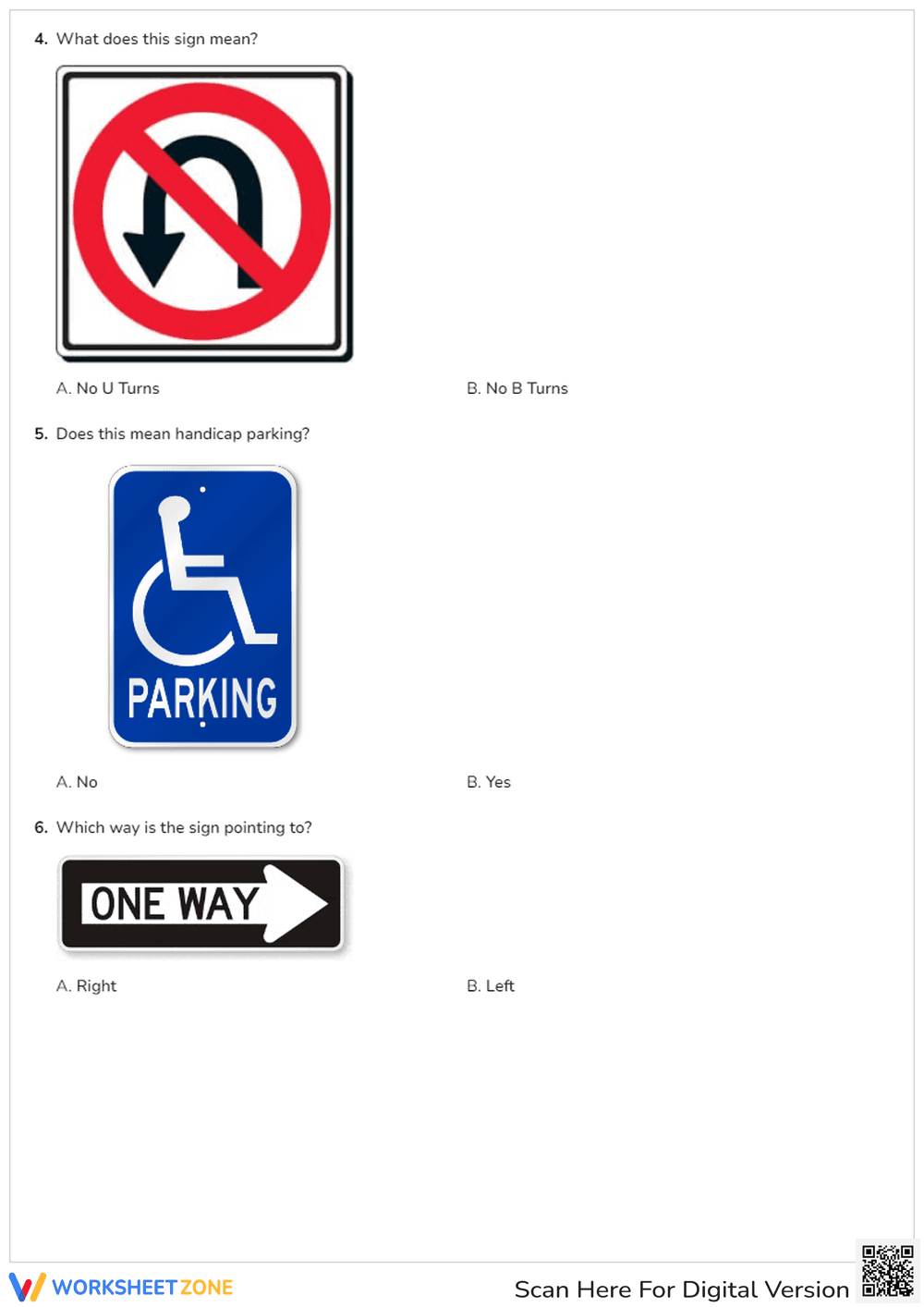
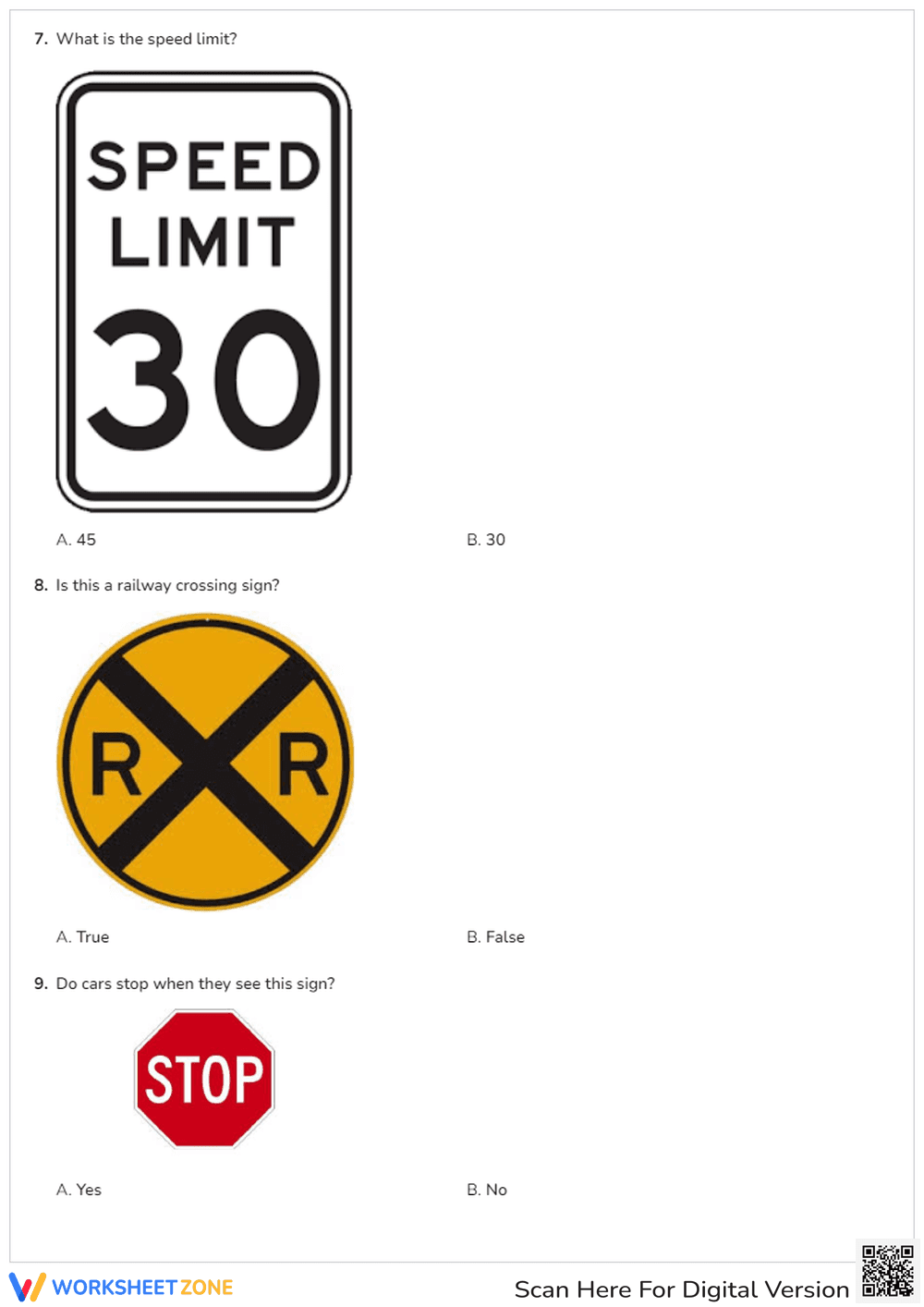
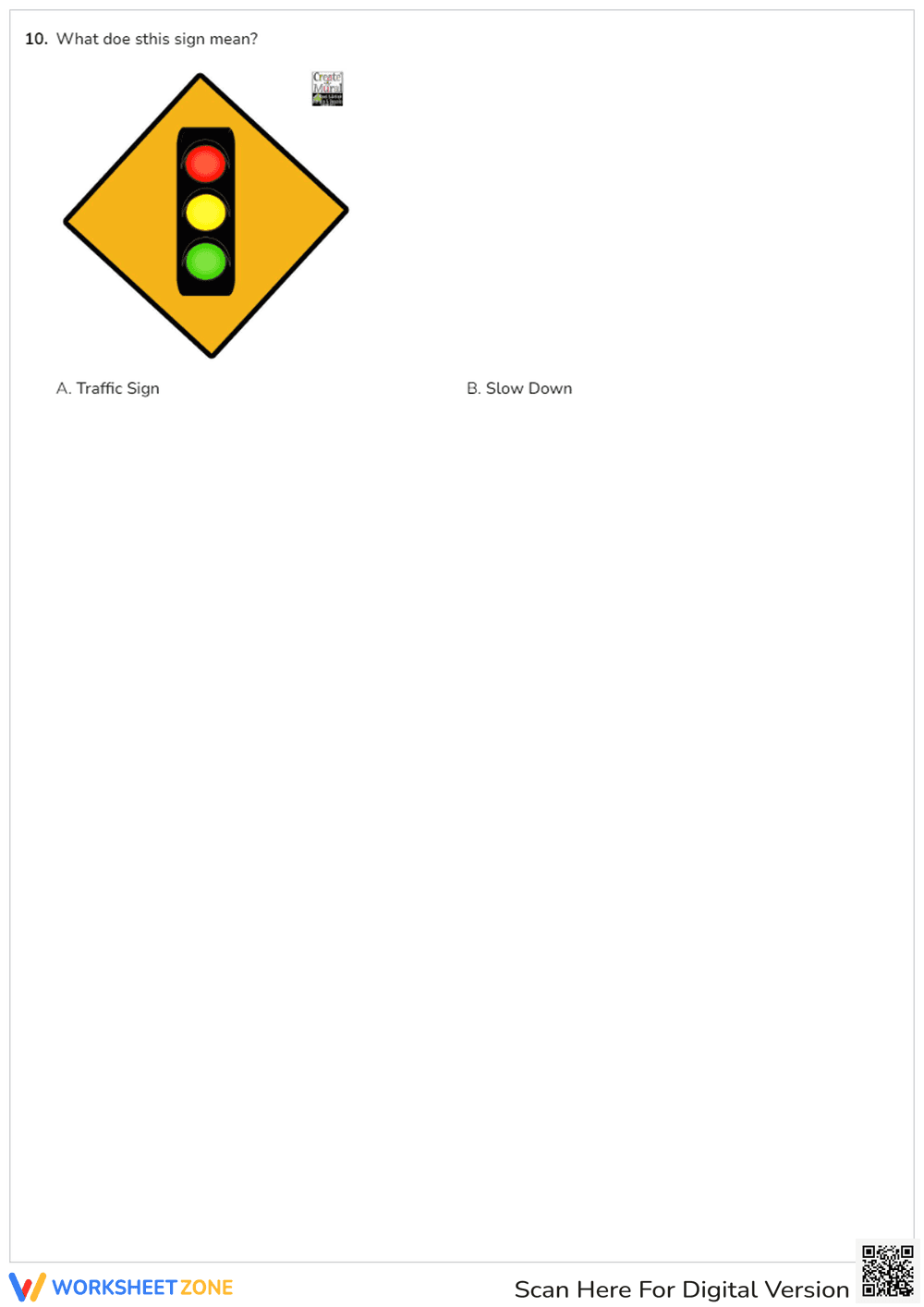

Printable Community Signs Quiz | Grades 1-3
Paste this activity's link or code into your existing LMS (Google Classroom, Canvas, Teams, Schoology, Moodle, etc.).
Students can open and work on the activity right away, with no student login required.
You'll still be able to track student progress and results from your teacher account.
This foundational social studies worksheet helps early elementary students recognize and understand essential community signs. By evaluating common public symbols, students develop crucial civic awareness and safety skills. The straightforward multiple-choice format allows young learners to independently demonstrate their knowledge of the rules that keep neighborhoods safe.
At a Glance
- Grade: 1-3 · Subject: Social Studies
- Standard:
C3.D2.Civ.3.K-2— Identify and explain the purpose of community rules and symbols- Skill Focus: Community Sign Recognition
- Format: 4 pages · 10 problems · Answer key included · PDF
- Best For: Independent practice and safety units
- Time: 10–15 minutes
This resource features a 10-question multiple-choice quiz across four uncluttered pages. Each question presents a large image of a common community sign—such as a stop sign or pedestrian crossing—paired with two simple text options. The generous spacing supports early readers and visual learners. A complete answer key is included to facilitate quick grading.
- Print (1 minute): The four-page layout is ready to print immediately, with high-contrast images that reproduce well in both color and grayscale.
- Distribute (1 minute): Hand out the packets to students during a social studies block or morning work session. No additional materials or prior setup are required.
- Review (3 minutes): Use the provided answer key to quickly check student responses or project the pages on a smartboard for a whole-class review.
Total teacher preparation time is under two minutes, making this an excellent option for sub plans.
This resource is aligned to the C3.D2.Civ.3.K-2 standard, which requires students to explain the need for and purposes of rules in various settings inside and outside of school. By identifying these visual rules, students connect abstract civic concepts to their daily environment. Both standard codes can be copied directly into lesson plans, IEP goals, or district curriculum mapping tools.
Deploy this quiz as a formative assessment after a direct instruction lesson on neighborhood safety or community helpers. Teachers can observe whether students struggle with specific categories of signs, such as warnings versus regulatory instructions, to guide future instruction. Alternatively, use it as an engaging independent center activity where students can discuss the signs with a partner before selecting their answers. Expected completion time ranges from 10 to 15 minutes depending on reading fluency.
This worksheet is ideal for first through third-grade students building foundational social studies and life skills. The visual nature of the multiple-choice questions provides excellent differentiation for English Language Learners and students requiring reading accommodations. It pairs perfectly with a community walk activity or a read-aloud book about neighborhood helpers and civic responsibility.
Integrating visual literacy into early civics education is critical for developing community awareness. Standard C3.D2.Civ.3.K-2 emphasizes the ability to identify and explain the purpose of community rules and symbols. According to Fisher & Frey (2014), providing students with clear, visual representations of abstract concepts significantly improves retention and practical application in real-world contexts. When young learners practice identifying community signs through structured multiple-choice tasks, they build the necessary schema to navigate their neighborhoods safely and responsibly. This targeted practice bridges the gap between classroom learning and everyday civic participation, ensuring students understand the visual language of public safety. By evaluating these symbols independently, students demonstrate mastery of essential life skills while reinforcing their early reading comprehension strategies in a meaningful, context-rich environment.


