Bold Rice, Nori, and Roe Details Make These Pages Pop
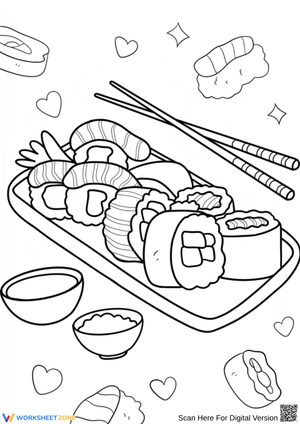
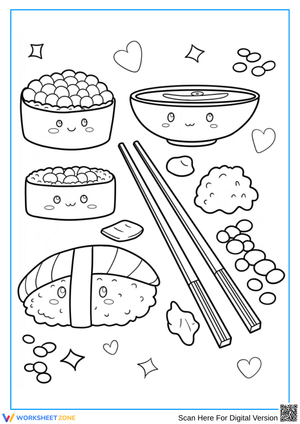
Each design in this set of sushi coloring pages breaks the plate into clear, separate zones, so filling it in feels satisfying rather than confusing. Salmon and tuna nigiri get warm pink and orange tones, rice sits in soft cream or white, and nori wrappers form bold black or deep green bands around each roll. Some sheets add tiny dots of orange roe on top, giving kids and adults a chance to practice small, controlled strokes. The clean outlines keep every ingredient easy to spot before coloring begins.
What's Included in This Sushi Collection
This collection ranges from simple single-piece nigiri and one-filling hosomaki rolls to loaded futomaki platters with three or four ingredients stacked inside. You'll also find uramaki sheets showing the rice-on-the-outside style, plus kawaii sushi characters with round smiling faces for younger fans of cute art. A few pages group several pieces on a wooden platter alongside chopsticks and a small dish of wasabi, while others pair sushi with a bento box, giving families extra options for a Japan-themed coloring session at home.
Coloring Tips for Rice, Fish, and Nori Shading
Warm shading brings these sushi coloring pages to life: try coral pink layered under a thin red glaze for tuna, and soft orange with a yellow undertone for salmon. Color nori first in solid black or charcoal so the rice underneath stays bright by contrast, then add short curved pencil strokes for rice grains instead of one flat block of white. Yellow-green dabs work well for wasabi, and a light gray wash on chopsticks adds depth. Markers give bold, glossy results, while colored pencils allow softer blending for older colorists.
Frequently Asked Questions
1. What supplies work best for coloring rice and nori?
Colored pencils give the best control for rice texture, since light layering and short strokes create a grainy look instead of a flat white shape. Black markers or fine-tip pens work well for solid nori sections, keeping edges crisp. Crayons are a good match for younger colorists who want bold, quick color without much blending.
2. Can these pages work for a sushi party theme?
Yes. Sushi coloring pages make an easy activity table at a Japanese food or sushi-themed birthday party, especially paired with chopstick practice or a bento-box craft station. Print a few nigiri and kawaii character sheets for younger guests and a detailed platter page for teens or adults. They also work well as a quiet lunch-box insert or placemat activity for a family sushi night at home.
3. What's a surprising fact about sushi's name and origin?
Sushi doesn't actually mean raw fish; it comes from the Japanese words for vinegar and rice, referring to the seasoned rice itself. Early sushi began as a way to preserve fish by packing it in fermented rice, and people originally ate only the fish, discarding the rice. Modern rolls, nigiri, and kawaii-style sushi coloring pages all trace back to that centuries-old vinegared-rice tradition rather than the fish on top.