Why Hot Dog Coloring Pages Fit a Food or Summer Unit
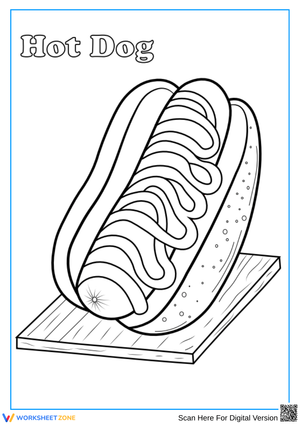
Teachers planning a food-themed, summer send-off, or end-of-year cookout activity need a printable that students can finish in one sitting without extra prep. Hot dog coloring pages give you exactly that: a bold, familiar image kids recognize instantly, with enough detail (bun texture, mustard zigzags, ketchup dots) to keep older students engaged while staying simple enough for kindergarten hands. Pair the sheets with a short discussion of cookout foods, ballpark traditions, or National Hot Dog Day in July, and you have a five-minute transition activity or a full center rotation ready to go.
What's Included in a Hot Dog Coloring Page Set
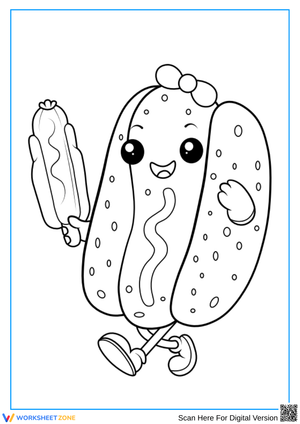
A well-built set covers more than one version of the same image. Look for a plain hot dog on a bun for early finishers, a loaded hot dog with mustard, ketchup, relish, and onions for students who enjoy detail work, a hot dog on a grill for a cookout scene, and a cartoon hot dog character with a face for younger classes. Having four or five variations means you can differentiate by interest rather than reprinting the same page, and it keeps a whole-class coloring session from feeling repetitive when several students finish early and want a second sheet.
Printing and Materials Setup
Print hot dog coloring pages on standard letter-size paper for classroom use; heavier cardstock works better if students plan to display finished pages on a bulletin board or take them home as a keepsake. Bold-outline designs hold up well with crayons, which spread color quickly across the wide bun and sausage shapes, while the detailed topping versions look sharper with fine-tip markers or colored pencils for the mustard zigzag and relish flecks. If you're printing a full class set, group the plain and loaded versions together so early finishers can grab a second sheet without waiting on a fresh print run.
Frequently Asked Questions
1. What coloring tools work best for bold outline food designs?
Crayons work well on plain, wide-outline pages because they cover large areas quickly, which suits younger students. For loaded hot dog designs with topping details, fine-tip markers or colored pencils give cleaner lines around the mustard zigzag, ketchup dots, and relish flecks. Cardstock holds up better than standard paper if students plan to press hard with markers or display the finished page afterward.
2. Are these hot dog coloring pages good for a summer or cookout theme?
Yes. Hot dog designs pair naturally with picnic, Fourth of July, ballpark, or end-of-year cookout activities. A grill-scene version or a hot dog cart image adds a seasonal backdrop, and teachers often combine the page with a short discussion of summer foods or a food-groups review before releasing students to color independently.
3. What is a surprising fact about hot dog history worth sharing with students?
German immigrants brought sausages to the U.S. in the 1800s, and street vendors originally sold them as 'dachshund sausages' before the name 'hot dog' took hold. National Hot Dog Day, started in 1991 by the National Hot Dog and Sausage Council, is now celebrated every year on the third Wednesday in July, giving classrooms a built-in date for a themed coloring day.