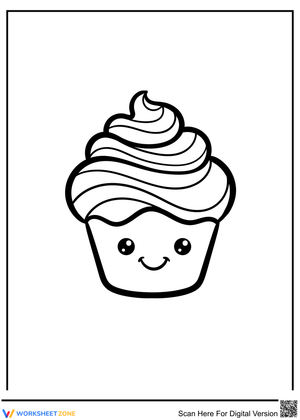
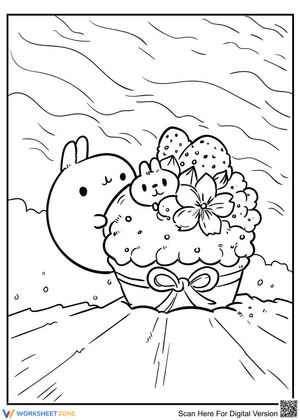
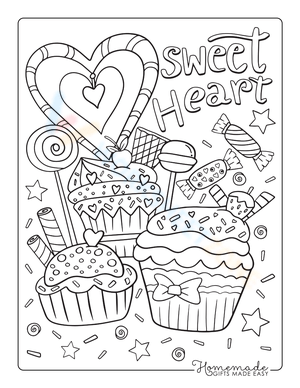
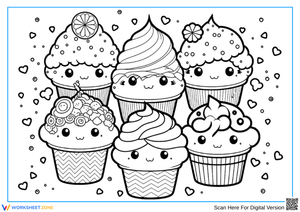
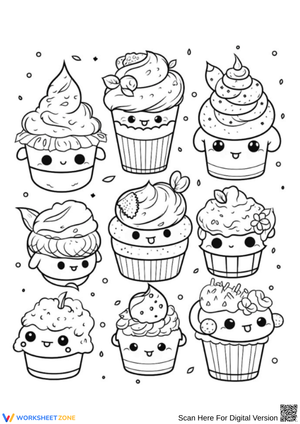
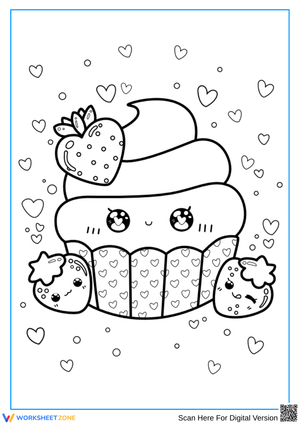
What These Cupcake Coloring Pages Show
Each sheet in this set centers on a single cupcake, drawn with a fluted paper liner, a swirl or dollop of frosting on top, and small extras like sprinkles, a cherry, or a birthday candle. Some designs stack two or three cupcakes on a plate or tray, while others place one cupcake inside a simple frame for a card or gift-tag look. Line weight stays bold enough for crayons but detailed enough for fine-tip markers, so the frosting swirl and liner ridges stay easy to follow.
Picking The Right Design For Each Age
Toddlers and preschoolers do best with chunky, rounded outlines that skip fine details, so look for pages with one thick frosting swirl and no background clutter. Grade-schoolers can handle liner texture, a few sprinkles, and a simple background pattern. Teens and adults get more from bakery-display sheets with layered frosting ruffles, patterned liners, and small toppings like sprinkles or fruit slices, which give more room for shading, blending, and color experimentation before the page feels finished.
Printing And Coloring Tips For Best Results
White cardstock at full page size keeps lines crisp and stands up to markers without bleeding through. For a paper-texture liner, shade in short vertical strokes rather than one flat color, and layer two or three shades of the same warm tone across the frosting swirl for a fuller look. Dot markers work well for sprinkles, while a single dark outline around the cherry or candle flame adds contrast. These small techniques turn a plain outline into a finished, bakery-style picture.
Frequently Asked Questions
1. Are cupcake coloring pages good for young kids?
Yes, many sheets use one large cupcake with a thick outline and minimal background, which suits toddlers and preschoolers who are still building fine motor control. Older kids can move on to designs with liner texture, sprinkles, and shading details. Choosing by outline thickness rather than age alone helps match a page to a child's current coloring skill.
2. What paper and tools work best for printing?
Plain white cardstock, roughly 65 to 110 pound weight, holds up well to markers, colored pencils, and gel pens without warping or bleeding through. Standard printer paper works fine for crayons or light pencil shading. Printing at full page size, rather than shrinking multiple designs onto one sheet, keeps frosting swirls and liner lines large enough for younger colorers to stay inside them.
3. What occasions pair well with these designs?
Birthday parties are the most common use, especially candle-topped cupcake designs that kids can color while waiting for cake. Bakery or cafe classroom themes, gift-tag projects, and simple placemat activities also work well with this set. Because the designs range from plain to detailed, the same collection can cover a preschool birthday table and a teen craft night.
4. What is a surprising fact about cupcake history?
The printed word cupcake first showed up in an 1828 cookbook, though small cup-baked cakes date to Amelia Simmons's 1796 recipe. Bakers once called them Number Cakes because the standard recipe used 1 cup butter, 2 cups sugar, 3 cups flour, and 4 eggs. Paper liners did not become common until the early 1900s, which is why older recipes describe baking straight in a buttered cup.