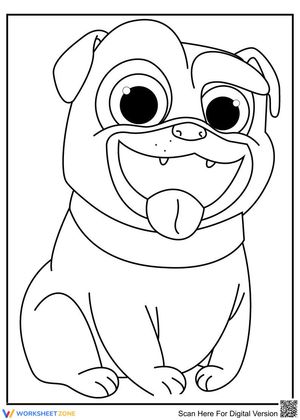
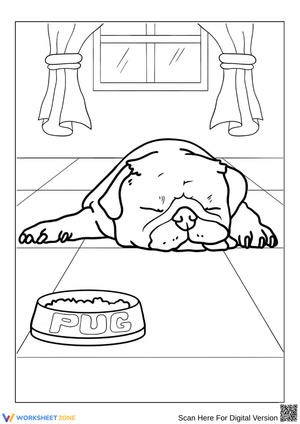
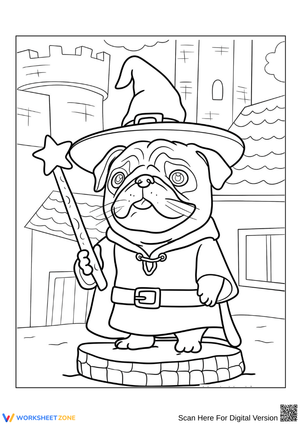
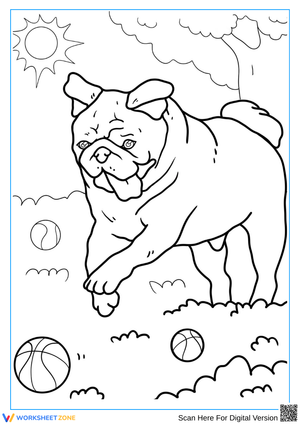
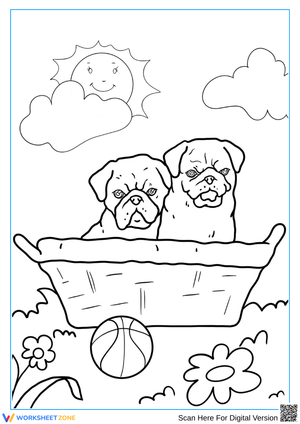
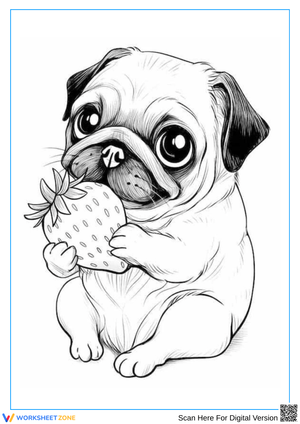
Round eyes, tiny folded ears, curly tails, and those famous wrinkly faces make pugs hard to forget. That is exactly why pug coloring pages can be so much fun for kids. These little dogs have a lot of personality packed into a small body, so even a simple page can feel cheerful, silly, and full of character. For children who enjoy puppies, pet-themed art, or cute animal activities, a pug page offers an easy way to turn coloring time into something playful and memorable.
Some pug designs may show a puppy sitting with a happy face, while others might include a pug wearing a collar, chasing a toy, sleeping on a pillow, or running through the grass. A few pages may focus on just the face, which is great for noticing the wrinkles, nose, and wide eyes. Other pages may build a full scene around the dog with bowls, paw prints, pet beds, hearts, bones, flowers, or a backyard setting. Because the breed already has such a recognizable look, children can enjoy coloring the dog itself while also having fun with all the extra little details around it.
There is also a nice balance between realistic coloring and pure imagination here. Kids who want a natural look can use tan, fawn, black, cream, gray, or brown for the pug’s fur, then add darker shades around the nose and ears. Children who want something more playful can create a purple collar, a rainbow blanket, a bright red toy ball, or even a silly party hat for the dog. As they work through the face, paws, tail, and background pieces, they build fine motor control, focus, patience, and color recognition in a relaxed, pet-friendly way.
Pug coloring pages can fit into many different settings, which makes them useful for both home and school. Parents can bring them out on rainy afternoons, during quiet time, or as part of a pet-themed weekend activity. In the classroom, teachers can use them in animal units, art stations, early-finisher folders, or creative writing time. A child might color a pug and then give it a name, describe its personality, or write one or two sentences about what the puppy is doing. That small extra step helps turn the page into more than a coloring activity; it becomes a mini storytelling moment too.
After the coloring is finished, the page can still be used in creative ways. Kids can turn their artwork into a pet poster, a bookmark, a card for a dog lover, or a display piece for a classroom wall. They can cut out the pug and glue it onto a handmade pet scene with toys, a dog house, a blanket, and a food bowl. Some children may want to add a speech bubble, a name tag, or a short caption to make their pug feel even more alive. With its lovable face and playful energy, pug coloring pages give children a sweet way to enjoy dog-themed creativity while practicing calm and careful art skills.
Frequently Asked Questions
Question 1: What kinds of designs are common in pug coloring pages?
Pug coloring pages often include sitting pugs, playful puppies, close-up dog faces, pugs with collars, dog beds, bowls, toys, bones, paw prints, and simple home or backyard scenes. Some pages are made with large, easy shapes for younger children, while others include more detailed wrinkles, accessories, and backgrounds for older kids. This variety makes pug coloring pages useful for quiet coloring, animal themes, pet units, and fun creative projects.
Question 2: What colors work well for pug coloring pages?
Classic pug colors usually include tan, fawn, black, cream, gray, and light brown. Many children like to use these shades to make the dog look realistic, especially around the face, ears, and curled tail. At the same time, there is plenty of room for imagination. Kids can add colorful collars, patterned blankets, bright toys, or playful backgrounds to make the page feel more personal. Both realistic and creative color choices work well for this theme.
Question 3: How can parents or teachers make pug coloring pages more interactive?
Adults can build simple extension activities around the page to make it more engaging. Children can name the pug, decide what kind of toy it likes, draw a pet bed or dog park, or write a short sentence about the dog’s day. Teachers can use the pages in animal or pet-care discussions, while parents can turn them into a conversation about kindness to animals or what pets need to stay healthy and happy. These additions help the activity feel richer without making it too complicated.
Question 4: How can finished pug coloring pages be used creatively?
Finished pug coloring pages can be turned into bookmarks, pet posters, greeting cards, classroom displays, scrapbook pages, or story starters. Children can also cut out the finished dog and place it in a handmade scene with a yard, dog house, bowl, blanket, and toys. Adding a name tag, a speech bubble, or a short caption can make the artwork feel more complete and personal. This gives kids a fun reason to save, share, or proudly display what they created.












 Interactive Worksheet Maker
 Quiz Maker
 Word Search Maker
 Crossword Puzzle Maker
 Word Scramble Generator
 Sentence Scramble Generator
 Handwriting Worksheet Generator
 Name Tracing Generator
 Fill In The Blank Generator