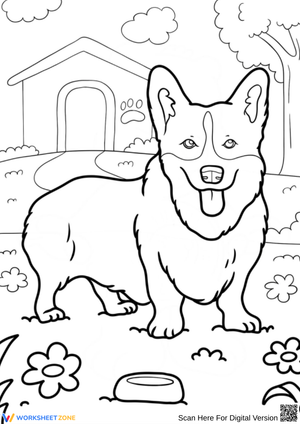
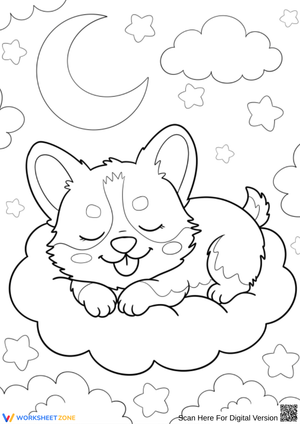
A corgi may be small, but its cheerful face, fluffy coat, and tiny legs can fill a coloring page with personality. Corgi coloring pages are perfect for kids who love cute dogs, playful puppies, pet scenes, and friendly animal art. The shape of a corgi is easy to recognize, from its pointy ears and round body to its short legs and bright expression, making each page feel fun before the first color is even added.
Instead of feeling like a simple dog outline, a corgi page can become a whole little puppy moment. Children might color a corgi running through a park, sitting beside a toy, wearing a cute collar, playing with a ball, or resting in a cozy home scene. Some designs may focus on one adorable corgi face, while others may include grass, flowers, paw prints, dog bowls, blankets, hearts, or backyard details. This variety makes the theme suitable for both quick coloring and more detailed creative sessions.
Kids can choose classic corgi colors like orange, tan, cream, white, brown, or black, but they do not have to stop there. A corgi can wear a purple collar, sit on a rainbow blanket, chase a bright red ball, or stand in a colorful garden. While children color the ears, paws, tail, fur patches, and background details, they naturally practice focus, patience, fine motor control, and color recognition. The friendly pet theme also helps the activity feel relaxed and familiar.
Corgi coloring pages can be used in many easy ways at home or in class. Parents can bring them out for quiet time, rainy afternoons, pet-themed play, or weekend art activities. Teachers can use them for animal units, art centers, early-finisher folders, creative writing prompts, or classroom displays. To extend the activity, children can name their corgi, draw its favorite toy, design a dog park, or write a short sentence about what the puppy is doing.
The finished page can become more than a cute picture. Kids can turn their corgi artwork into a bookmark, greeting card, pet poster, journal page, or classroom gallery piece. They can also cut out the corgi and place it in a handmade scene with trees, flowers, toys, and a dog house. With its lovable shape and happy energy, corgi coloring pages give children a sweet way to enjoy pet-themed creativity while building confidence through art.
Frequently Asked Questions
Question 1: What designs are common in corgi coloring pages?
Corgi coloring pages often include happy corgis, playful puppies, dog park scenes, paw prints, toys, collars, flowers, blankets, food bowls, and cozy home backgrounds. Some pages show one simple corgi with large spaces for younger children, while others include more detailed pet scenes for older kids. This variety makes the pages useful for quiet coloring, animal themes, classroom art, and creative storytelling.
Question 2: What colors work well for corgi coloring pages?
Traditional corgi colors include orange, tan, cream, white, brown, and black, especially around the face, ears, back, and paws. Children can use these shades for a realistic look or choose brighter colors for a more playful design. They can also add colorful collars, toys, blankets, grass, flowers, or background patterns to make each page feel more personal and imaginative.
Question 3: How can adults make corgi coloring pages more engaging?
Adults can make the activity more engaging by adding simple prompts. Children can name the corgi, describe its personality, draw a favorite toy, create a dog park, or write a short story about the puppy’s day. Teachers can connect the page to pet-care discussions, animal vocabulary, or creative writing. These small additions help turn a simple coloring page into a more interactive and memorable activity.
Question 4: How can finished corgi coloring pages be used creatively?
Finished corgi coloring pages can become pet posters, bookmarks, greeting cards, journal decorations, classroom displays, or story starters. Children can cut out the corgi and add it to a handmade backyard, dog park, or pet shop scene. Adding a name tag, speech bubble, short caption, or extra toys can make the artwork feel complete and give kids a reason to proudly share their finished page.












 Interactive Worksheet Maker
 Quiz Maker
 Word Search Maker
 Crossword Puzzle Maker
 Word Scramble Generator
 Sentence Scramble Generator
 Handwriting Worksheet Generator
 Name Tracing Generator
 Fill In The Blank Generator