




























Views
Downloads
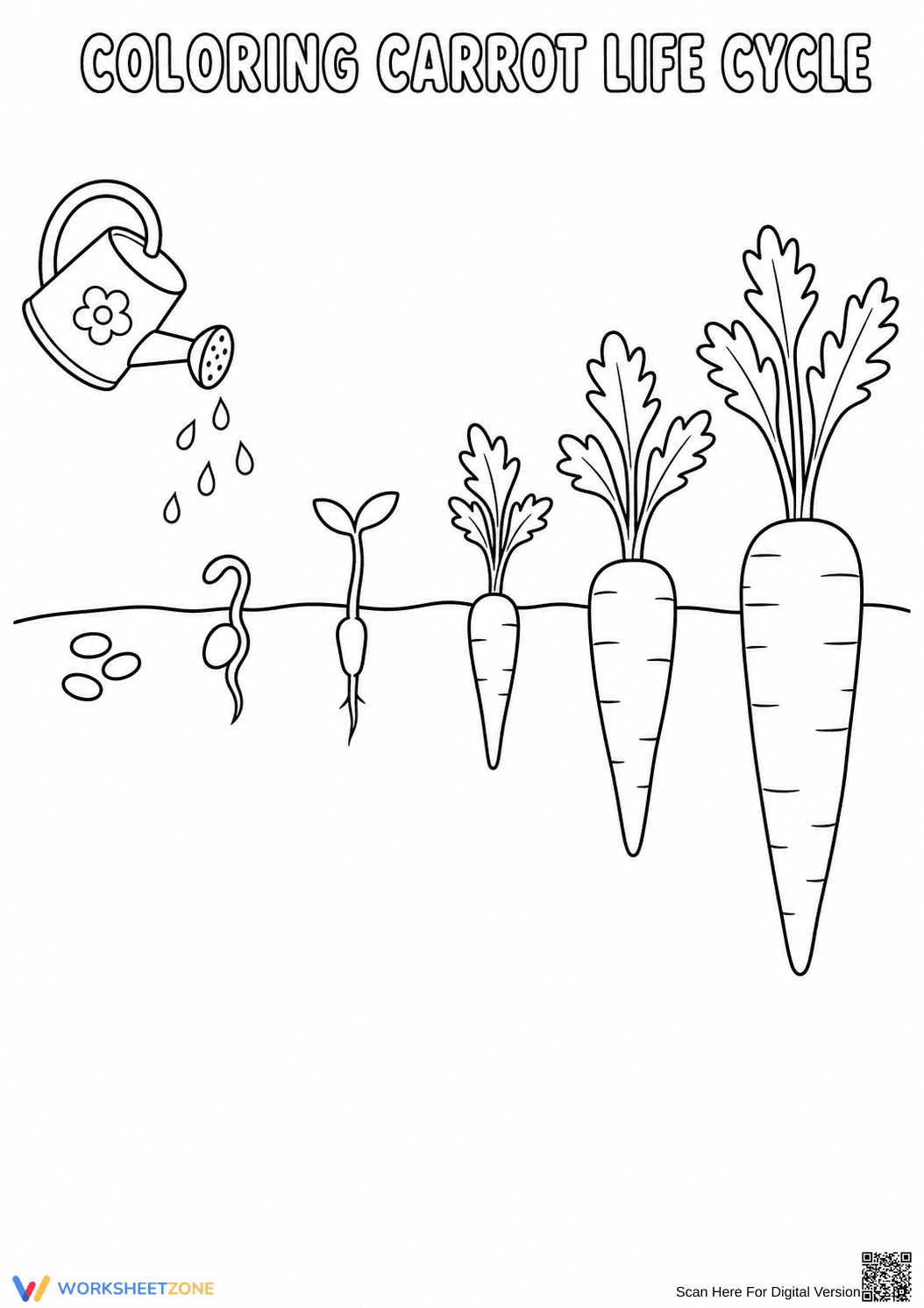

Carrot Life Cycle Worksheet | Grade 2-5 Essential

Paste this activity's link or code into your existing LMS (Google Classroom, Canvas, Teams, Schoology, Moodle, etc.).
Students can open and work on the activity right away, with no student login required.
You'll still be able to track student progress and results from your teacher account.
This Grade 2-5 carrot life cycle worksheet provides a clear visual model for students to observe and identify the sequential stages of plant development. By engaging with the 6 distinct growth phases—from dormant seeds to a mature root vegetable—learners develop a foundational understanding of biological progression and the environmental needs of living organisms.
At a Glance
- Grade: 2-5 · Subject: Science
- Standard:
3-LS1-1— Develop models to describe that organisms have unique and diverse life cycles- Skill Focus: Plant growth sequencing
- Format: 1 page · 6 stages · Coloring activity · PDF
- Best For: Science centers and introductory biology lessons
- Time: 15–20 minutes
What's Inside
This single-page PDF features a high-quality black-and-white illustration of the carrot's developmental journey. It includes six specific stages: seeds, initial germination, early sprouting, root establishment, foliage expansion, and the final mature carrot. The worksheet is designed as a coloring page, allowing students to personalize their learning while focusing on the anatomical changes of the plant. It is accessible for independent work or as a supplemental visual aid during botany lessons.
Zero-Prep Workflow
- Print: Generate the single-page PDF for your entire class in under 1 minute.
- Distribute: Hand out the sheets during your science block with zero setup.
- Review: Discuss the stages as a group, asking students to explain the role of hydration in germination.
This workflow requires minimal teacher preparation, making it an ideal choice for emergency sub plans or last-minute science enrichment.
Standards Alignment
This resource is aligned with `3-LS1-1`: "Develop models to describe that organisms have unique and diverse life cycles but all have in common birth, growth, reproduction, and death." While the worksheet focuses on growth and maturation, it serves as a primary model for understanding how plants change over time. This standard code can be copied directly into lesson plans or curriculum mapping tools to ensure compliance with science frameworks.
How to Use It
Use this worksheet as a formative assessment after a lesson on plant parts. As students color, circulate to observe if they can identify which stage represents germination versus maturation. It also works well as a "Science Center" station where students compare the carrot's life cycle to other plants like pumpkins or beans. Expect students to spend 15 to 20 minutes completing the activity.
Who It's For
This resource is tailored for elementary students in grades 2 through 5 who benefit from visual learning. It is particularly effective for English Language Learners (ELLs) who need non-linguistic representations of scientific concepts. Pair this worksheet with a seed-planting activity or a time-lapse video to provide a multi-sensory experience.
According to reports on elementary science instruction, visual models like the 3-LS1-1 carrot life cycle worksheet are critical for developing early scientific literacy. Research indicates that students engaging with pictorial representations of biological processes are significantly more likely to retain information compared to text-only instruction. This worksheet provides a structured visual scaffold that allows students to move from guided observation to independent mastery of plant biology. By focusing on the specific stages of the carrot, educators provide a concrete example of the "growth" component of the NGSS life science standards. This resource serves as a high-utility tool for classrooms prioritizing evidence-based, visual-first learning strategies, ensuring that foundational biological principles are accessible to all learners regardless of reading level.


