


























Views
Downloads

Short E Phonics Worksheet | Grade 1 Printable
Paste this activity's link or code into your existing LMS (Google Classroom, Canvas, Teams, Schoology, Moodle, etc.).
Students can open and work on the activity right away, with no student login required.
You'll still be able to track student progress and results from your teacher account.
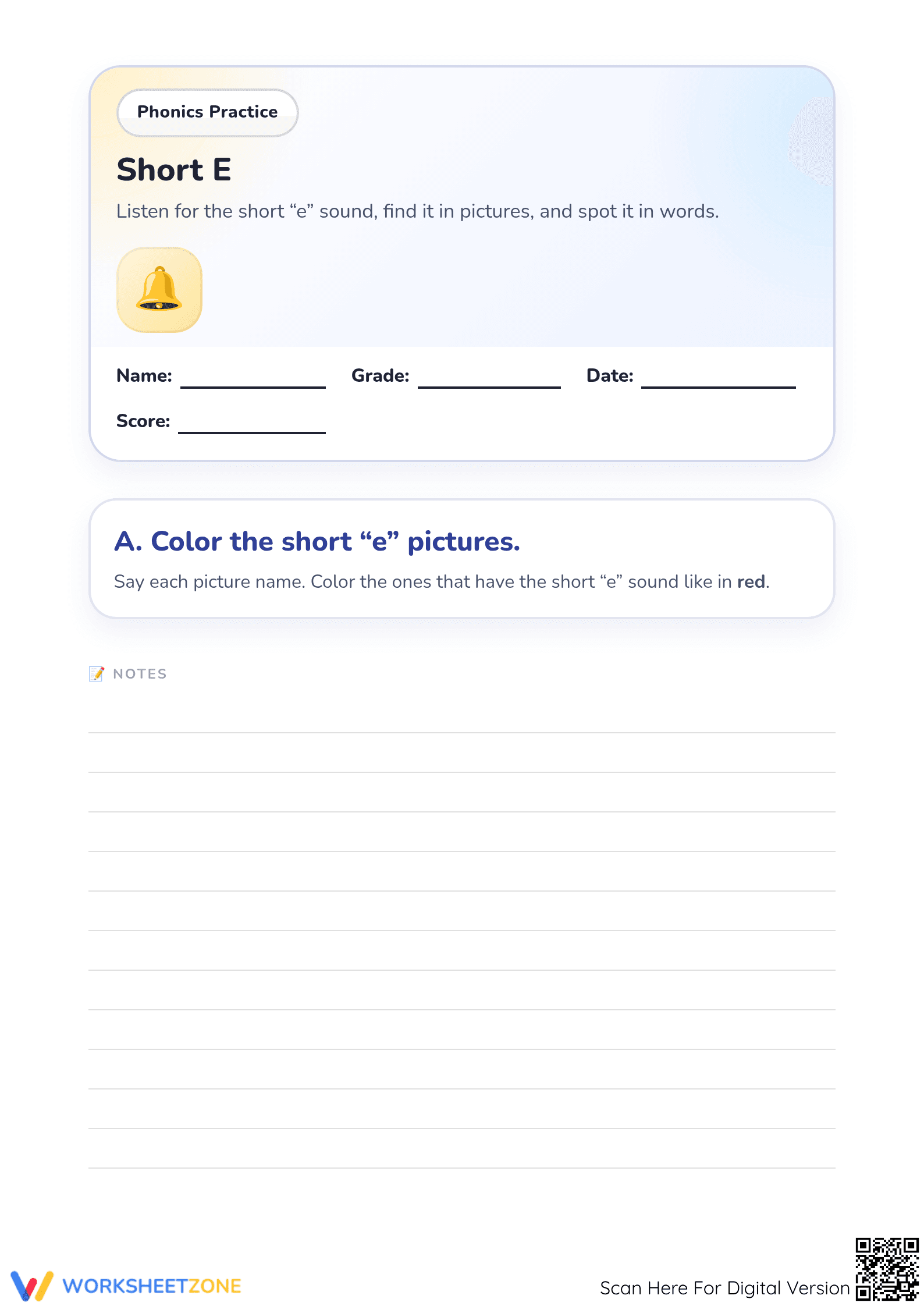
This Grade 1 phonics worksheet provides targeted practice for mastering the short "e" vowel sound. Students engage with both visual and textual cues to distinguish the specific /e/ sound from other vowel sounds. By identifying pictures and reading words, learners build the foundational decoding skills necessary for early reading fluency and phonemic awareness.
At a Glance
- Grade: 1 · Subject: ELA
- Standard:
CCSS.ELA-LITERACY.RF.1.2.A— Distinguish long from short vowel sounds in spoken single-syllable words- Skill Focus: Short E Vowel Identification
- Format: 4 pages · 24 problems · Answer key included · PDF
- Best For: Independent phonics practice and literacy centers
- Time: 15–20 minutes
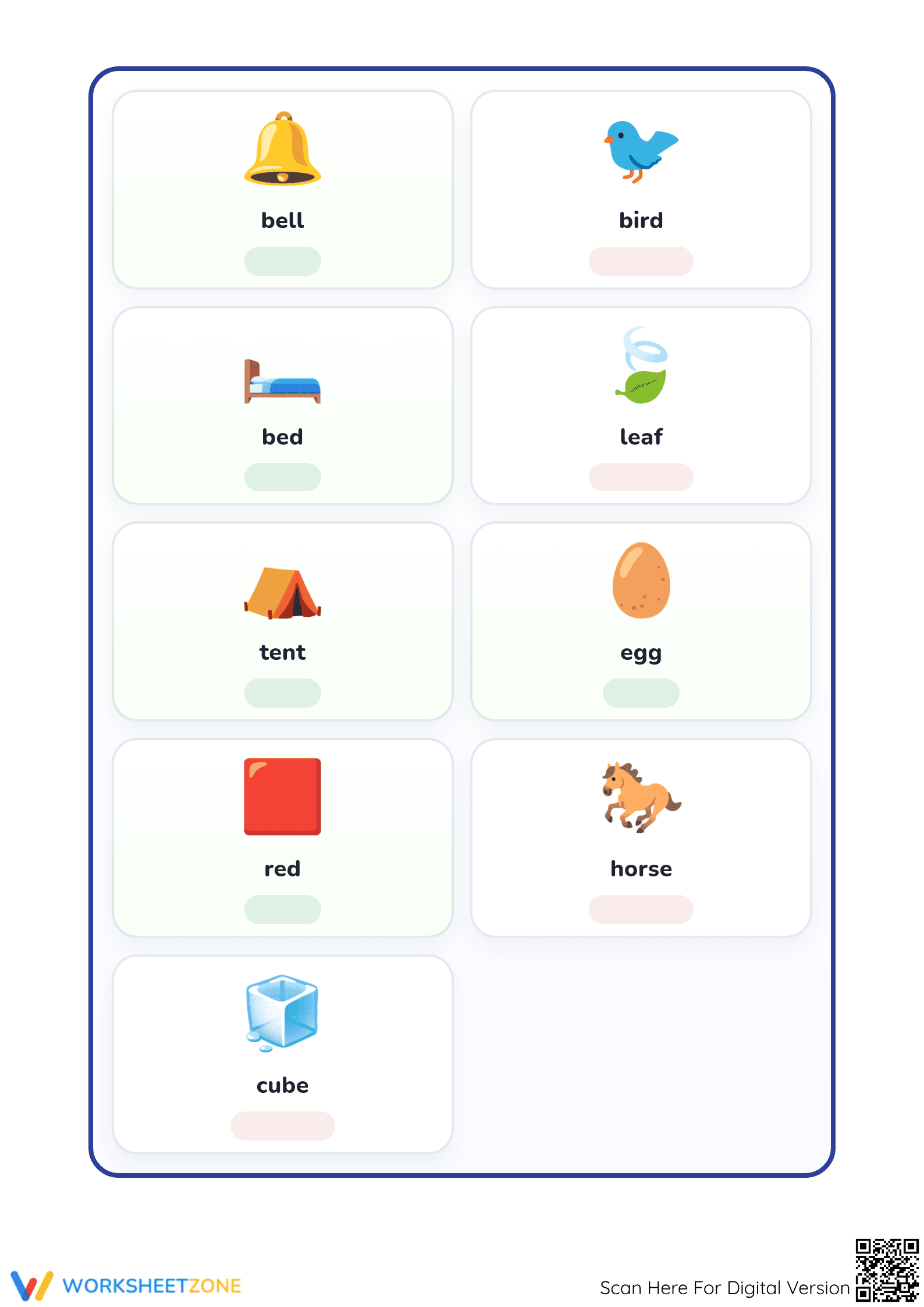
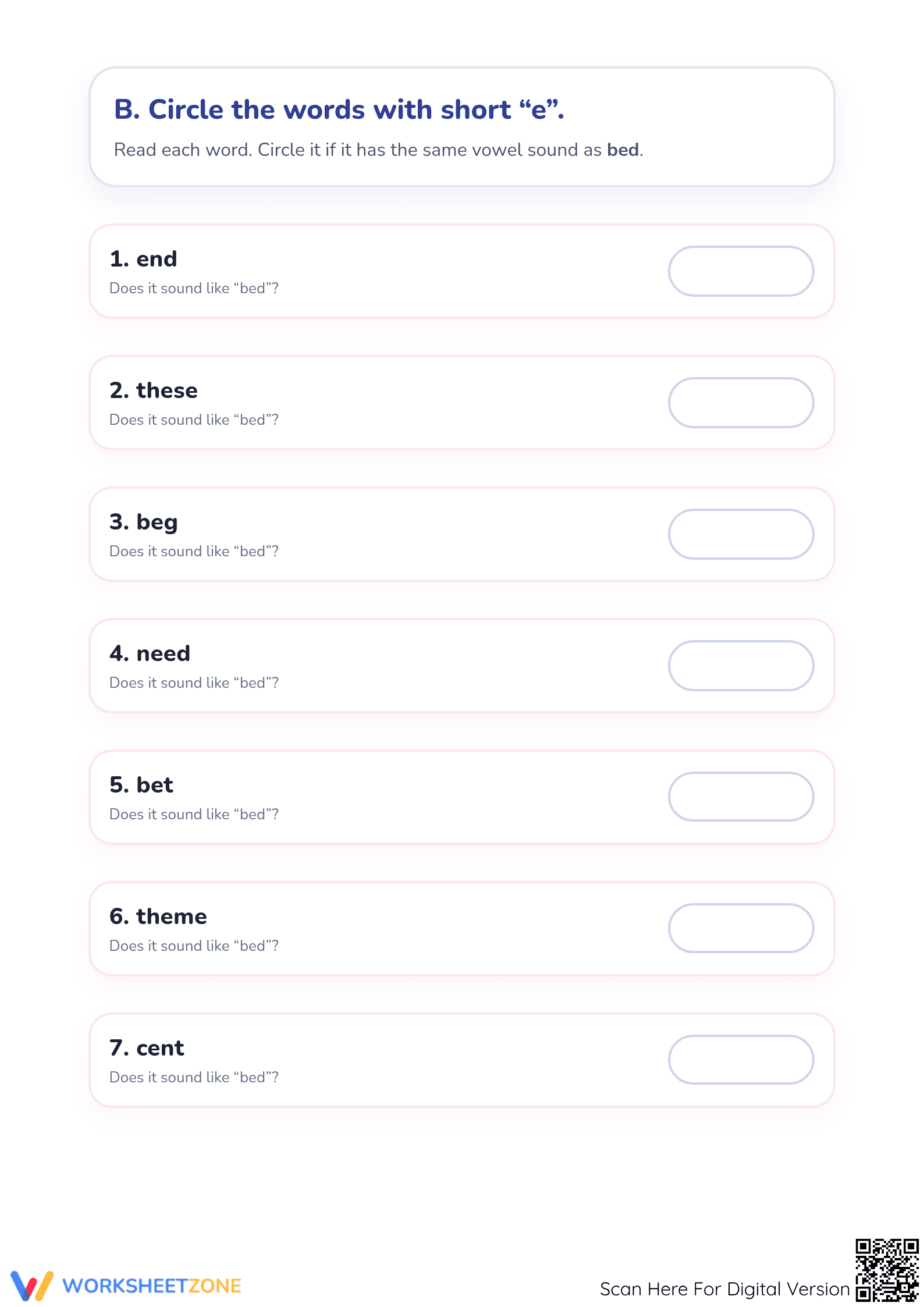
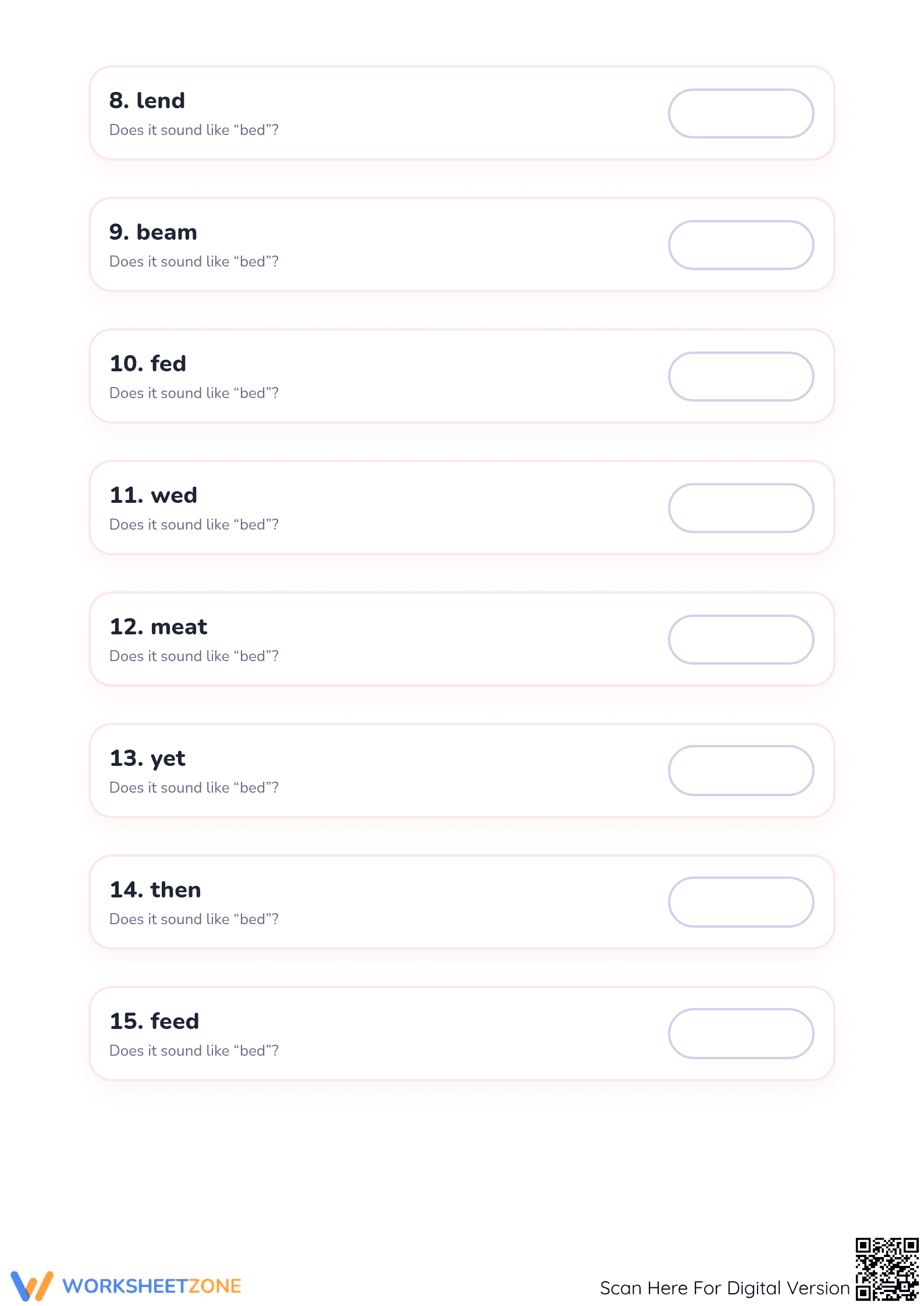
What's Inside: The 4-page PDF contains two distinct sections. The first part features 9 labeled illustrations where students must identify and color objects containing the short "e" sound, such as "bell" and "tent." The second part consists of 15 word-based problems that challenge students to compare vowel sounds against a reference word. A full answer key is provided for quick grading.
- Guided practice: 9 picture-based tasks provide visual scaffolding to help students hear the /e/ sound in familiar objects.
- Supported practice: 7 initial word tasks use a "Does it sound like 'bed'?" prompt to provide a consistent auditory anchor.
- Independent practice: 8 final word tasks require students to apply their knowledge to more complex spellings and vowel contrasts.
This sequence follows a gradual-release model, moving from concrete visual recognition to abstract phonemic discrimination.
Standards Alignment
This resource is aligned to CCSS.ELA-LITERACY.RF.1.2.A, which requires students to distinguish long from short vowel sounds in spoken single-syllable words. It also supports RF.K.3.B by reinforcing common spellings for the short "e" sound. Both standard codes can be copied directly into lesson plans, IEP goals, or district curriculum mapping tools.
How to Use It
Use this worksheet during the independent practice phase of a phonics lesson after introducing the short "e" sound with an anchor chart. It also serves as an excellent formative assessment tool; observe if students struggle more with the picture section (auditory) or the word section (visual/decoding). Completion typically takes 15 to 20 minutes.
Who It's For
This is designed for Grade 1 students or Kindergarteners ready for advanced phonics. It is particularly helpful for English Language Learners (ELLs) who need visual support to connect sounds to English vocabulary. Pair this with a short "e" decodable reader or a classroom word sort activity for maximum impact.
According to the Fisher & Frey (2014) framework for intentional and targeted phonics instruction, students require multiple exposures to vowel sounds in different contexts to achieve mastery. This worksheet addresses that need by providing 24 specific opportunities to practice the short "e" sound through both visual and textual modalities. By isolating the /e/ sound and contrasting it with long vowel sounds (like in "beam" or "feed"), the resource directly supports the phonemic awareness requirements of CCSS.ELA-LITERACY.RF.1.2.A. Research from EdReports 2024 emphasizes that high-quality foundational skills materials must include explicit practice in phoneme-grapheme correspondence. This printable provides that explicit practice, ensuring students can accurately identify the short "e" sound in single-syllable words, a critical precursor to reading fluency and successful decoding in early elementary education.


