


























Views
Downloads

Grade 3 Cinco de Mayo Poem — Printable No-Prep Worksheet
Paste this activity's link or code into your existing LMS (Google Classroom, Canvas, Teams, Schoology, Moodle, etc.).
Students can open and work on the activity right away, with no student login required.
You'll still be able to track student progress and results from your teacher account.
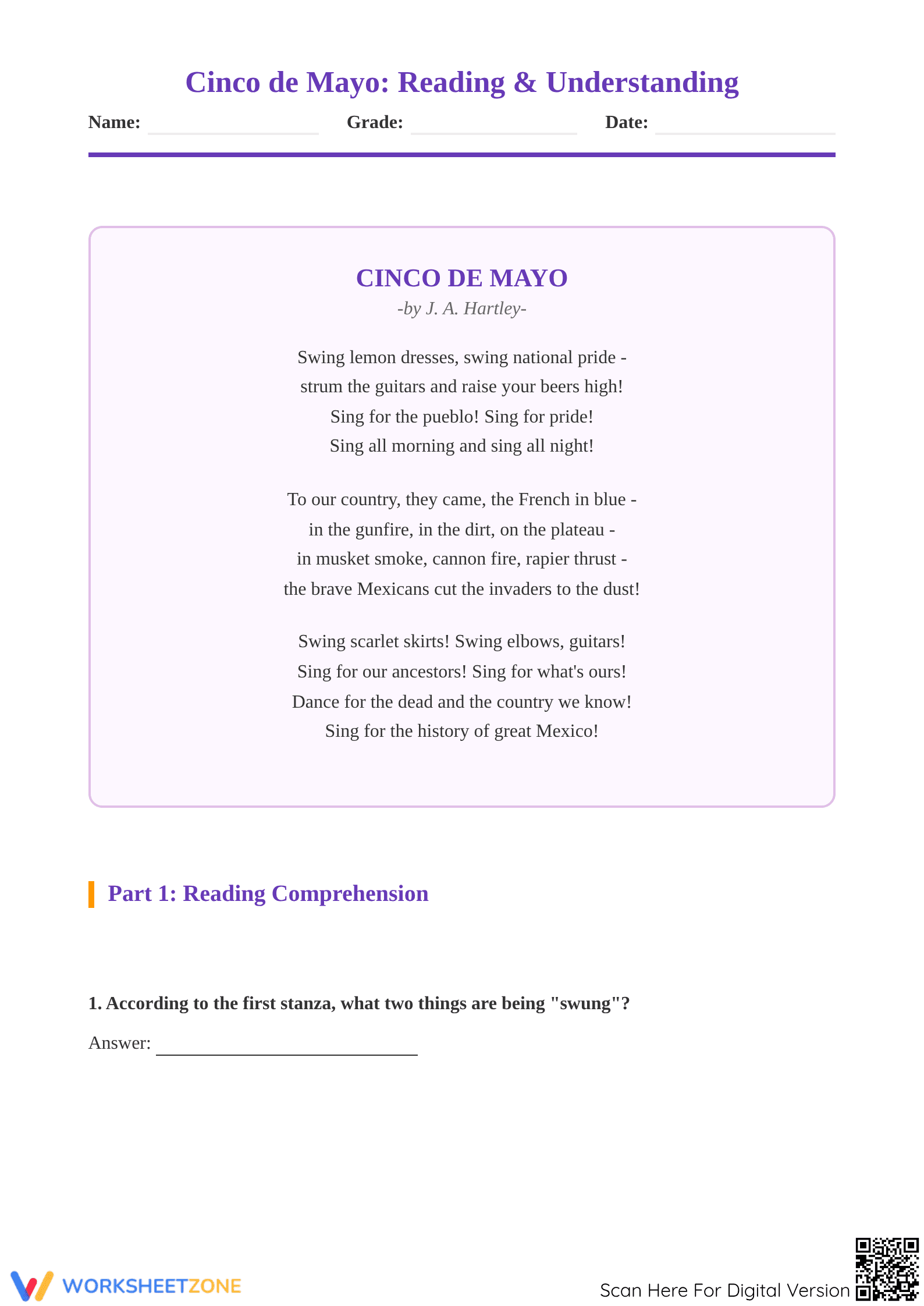
This Grade 3 reading comprehension worksheet helps students analyze poetry while learning about the cultural significance of Cinco de Mayo. By reading an engaging original poem and answering targeted questions, learners practice extracting key details and determining the meaning of vocabulary words in context.
At a Glance
- Grade: 3 · Subject: ELA
- Standard:
CCSS.ELA-LITERACY.RL.3.1— Ask and answer questions to demonstrate understanding of a text.- Skill Focus: Poetry comprehension and vocabulary
- Format: 3 pages · 7 problems · Answer key included · PDF
- Best For: Independent practice or morning work
- Time: 15–20 minutes
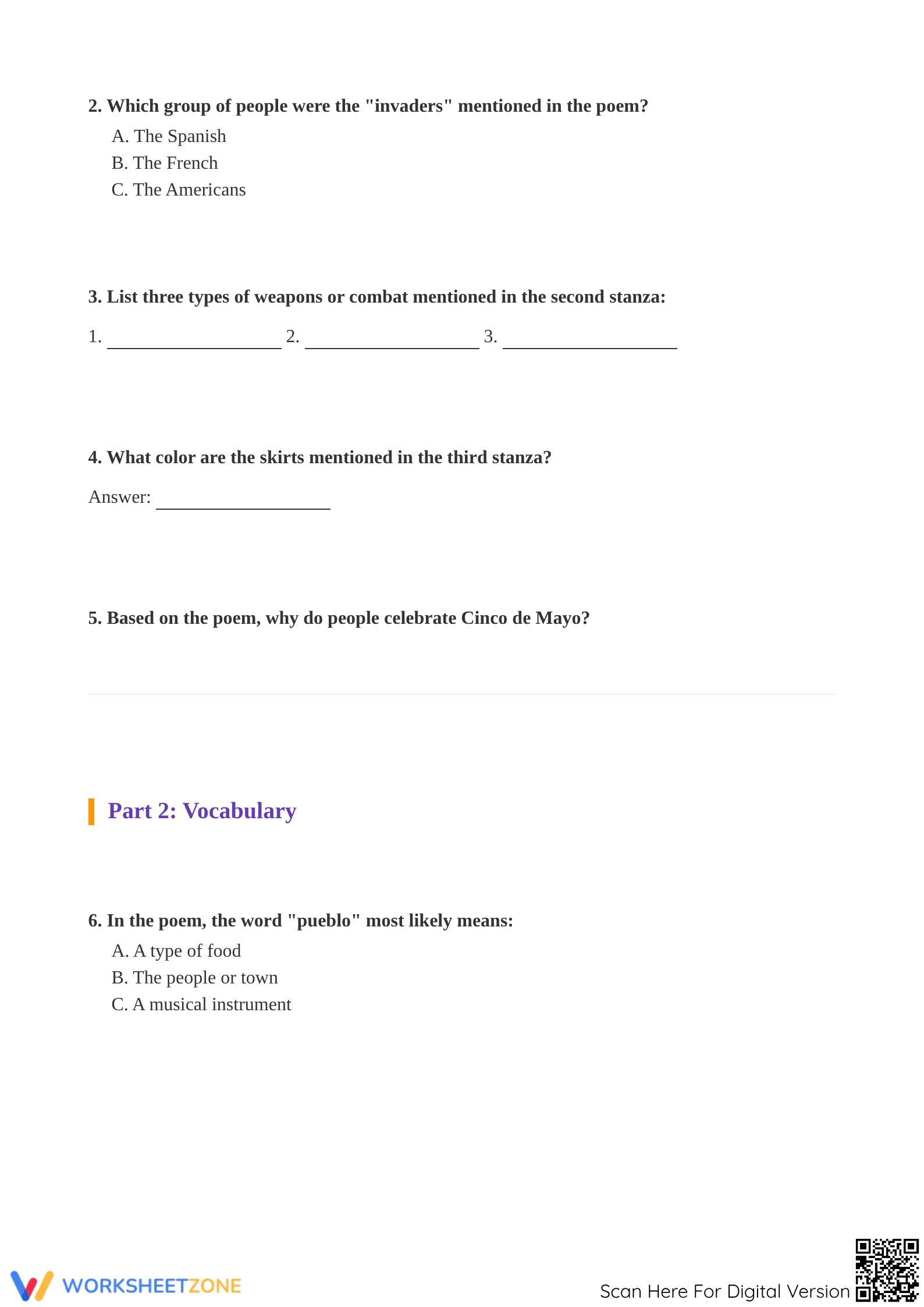
Inside this resource, educators will find a three-page packet centered around an original poem titled "Cinco de Mayo." The text is followed by seven total problems. Part one includes five reading comprehension questions requiring students to locate specific details, like identifying the "invaders." Part two focuses on vocabulary, asking students to define words like "pueblo" and interpret figurative phrases. A complete answer key is provided.
This resource features a highly efficient zero-prep workflow:
- Print (1 minute): Download the PDF and print the student packet. No special formatting required.
- Distribute (1 minute): Hand out the worksheets as students transition into reading. Instructions are self-explanatory.
- Review (3 minutes): Use the included answer key to quickly check responses.
With teacher prep time under two minutes, this activity is an excellent addition to any emergency sub plan.
This activity is directly aligned to CCSS.ELA-LITERACY.RL.3.1, requiring students to ask and answer questions to demonstrate understanding of a text, referring explicitly to the text as the basis for the answers. It also supports vocabulary development by challenging learners to determine the meaning of words and phrases as they are used in a poem. Both standard codes can be copied directly into lesson plans, IEP goals, or district curriculum mapping tools.
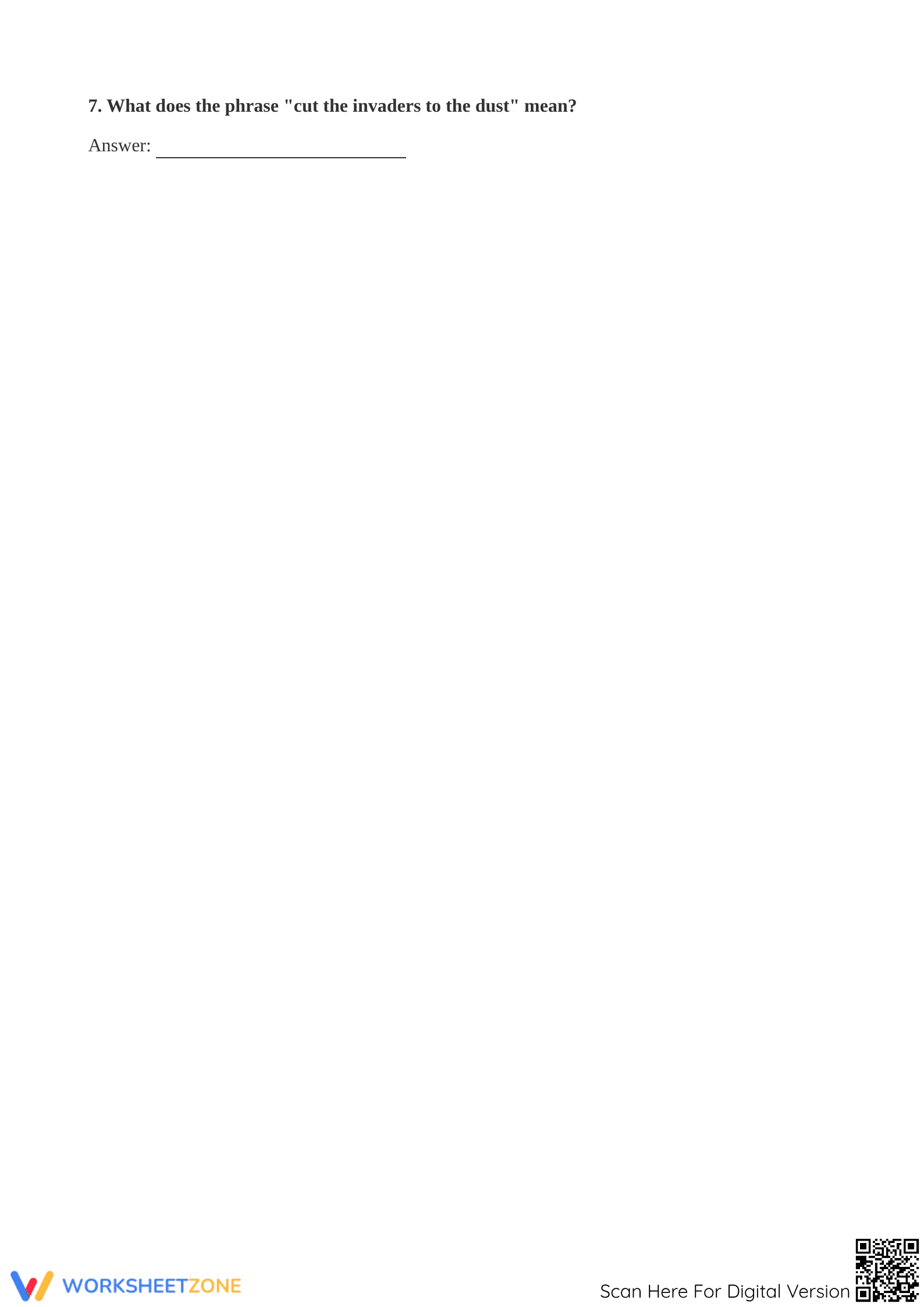
Teachers can utilize this worksheet during a reading block or as a thematic activity for the fifth of May. It works perfectly as independent practice after direct instruction on reading poetry. As a formative assessment tip, observe how students approach question seven to gauge their comprehension of nonliteral language. Students typically complete the reading and questions within 15 to 20 minutes.
This resource is designed for second and third-grade students developing reading comprehension skills. The structured layout makes it accessible for on-level readers, while short-answer questions challenge advanced learners. For students needing support, teachers can read the poem aloud to model fluency. This worksheet pairs naturally with a social studies lesson on Mexican history.
Effectively teaching poetry comprehension requires targeted practice that connects textual evidence to broader themes and cultural contexts. Aligned with CCSS.ELA-LITERACY.RL.3.1, this resource ensures students can ask and answer questions to demonstrate understanding of a text. According to a recent EdReports 2024 analysis, integrating culturally relevant texts—such as a thematic Cinco de Mayo poem—into standard reading instruction significantly increases student engagement and background knowledge activation. When young learners are prompted to identify specific details, analyze stanzas, and define vocabulary within the context of a poem, they build essential analytical skills that transfer to more complex literary works. By combining structured comprehension questions with engaging thematic content, educators can provide meaningful, standards-based reading practice that reinforces both core literacy requirements and cultural awareness in the elementary classroom.


