


























0
Views
0
Downloads

0.0
0
Save
0 Likes
Explore Christmas Traditions in Finland
0 Views
0 Downloads
Paste this activity's link or code into your existing LMS (Google Classroom, Canvas, Teams, Schoology, Moodle, etc.).
Students can open and work on the activity right away, with no student login required.
You'll still be able to track student progress and results from your teacher account.
Information
Description
What It Is:
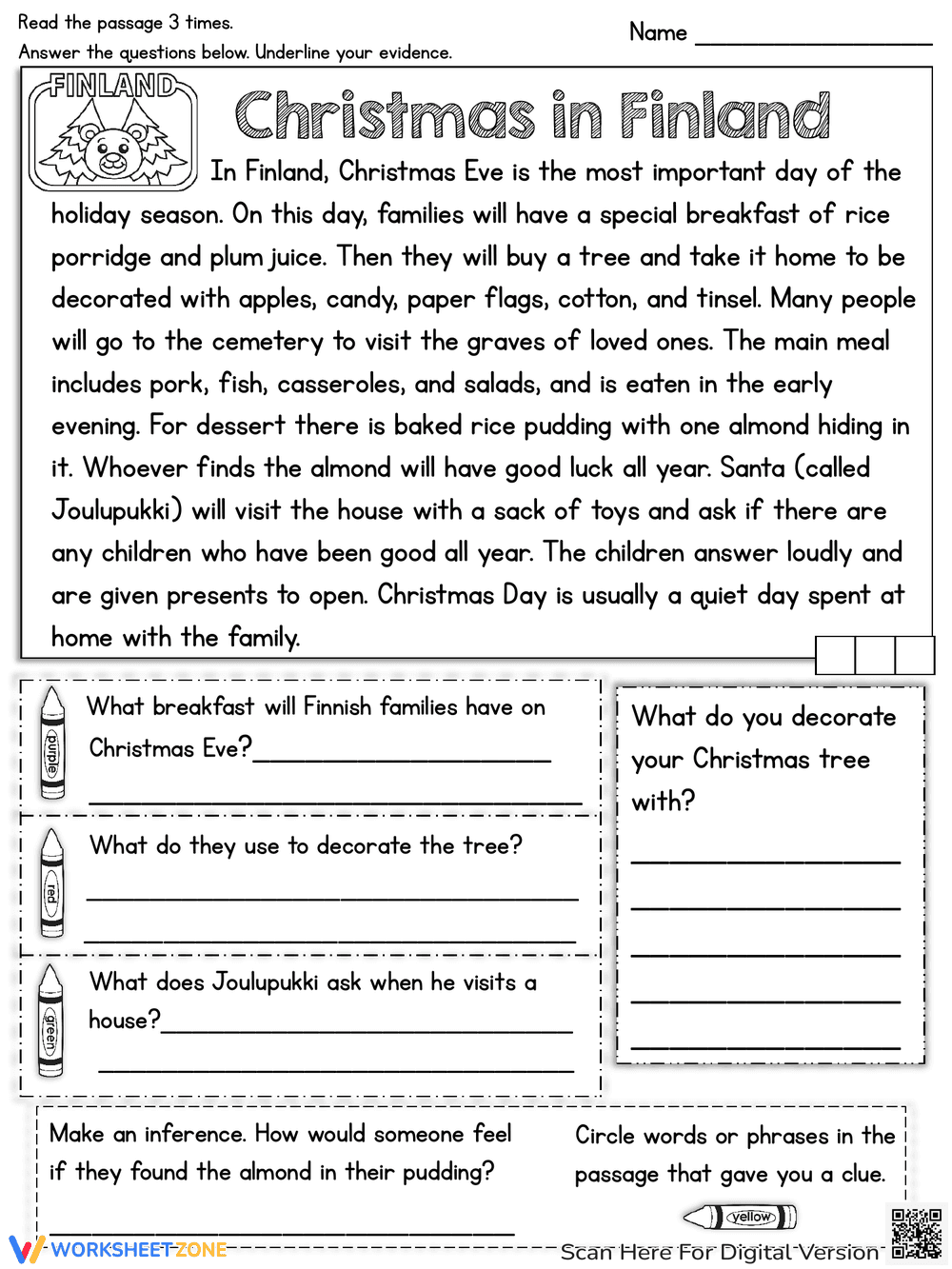
This is a reading comprehension worksheet about Christmas traditions in Finland. It includes a short passage describing Finnish Christmas Eve customs, followed by questions about the text. The questions ask about the Finnish Christmas breakfast, decorations used on the tree, what Santa (Joulupukki) asks when he visits, an inference question about finding an almond in pudding, and asks the student to circle clues in the text.
Grade Level Suitability:
This worksheet is suitable for grades 2-4. The reading level is appropriate for this age range, and the questions require comprehension skills that are typically developed in these grades. The activities of answering comprehension questions and identifying clues within the text are skills taught in these grades.
Why Use It:
This worksheet helps students develop reading comprehension skills, learn about cultural traditions, and practice making inferences. It reinforces close reading strategies by asking students to identify supporting details in the text.
How to Use It:
Students should read the passage about Christmas in Finland three times. Then, they should answer the comprehension questions based on the text. They should underline the evidence in the passage that supports their answers. Finally, they should circle words or phrases in the passage that helped them answer the questions.
Target Users:
This worksheet is ideal for elementary school students in grades 2-4 who are working on reading comprehension skills. It can be used in the classroom or as a supplemental activity at home. It's also suitable for ESL/ELL students learning about different cultures and traditions.
This is a reading comprehension worksheet about Christmas traditions in Finland. It includes a short passage describing Finnish Christmas Eve customs, followed by questions about the text. The questions ask about the Finnish Christmas breakfast, decorations used on the tree, what Santa (Joulupukki) asks when he visits, an inference question about finding an almond in pudding, and asks the student to circle clues in the text.
Grade Level Suitability:
This worksheet is suitable for grades 2-4. The reading level is appropriate for this age range, and the questions require comprehension skills that are typically developed in these grades. The activities of answering comprehension questions and identifying clues within the text are skills taught in these grades.
Why Use It:
This worksheet helps students develop reading comprehension skills, learn about cultural traditions, and practice making inferences. It reinforces close reading strategies by asking students to identify supporting details in the text.
How to Use It:
Students should read the passage about Christmas in Finland three times. Then, they should answer the comprehension questions based on the text. They should underline the evidence in the passage that supports their answers. Finally, they should circle words or phrases in the passage that helped them answer the questions.
Target Users:
This worksheet is ideal for elementary school students in grades 2-4 who are working on reading comprehension skills. It can be used in the classroom or as a supplemental activity at home. It's also suitable for ESL/ELL students learning about different cultures and traditions.


