


























Views
Downloads

Butterfly Life Cycle Worksheet | Grade 2-5 Essential
Paste this activity's link or code into your existing LMS (Google Classroom, Canvas, Teams, Schoology, Moodle, etc.).
Students can open and work on the activity right away, with no student login required.
You'll still be able to track student progress and results from your teacher account.
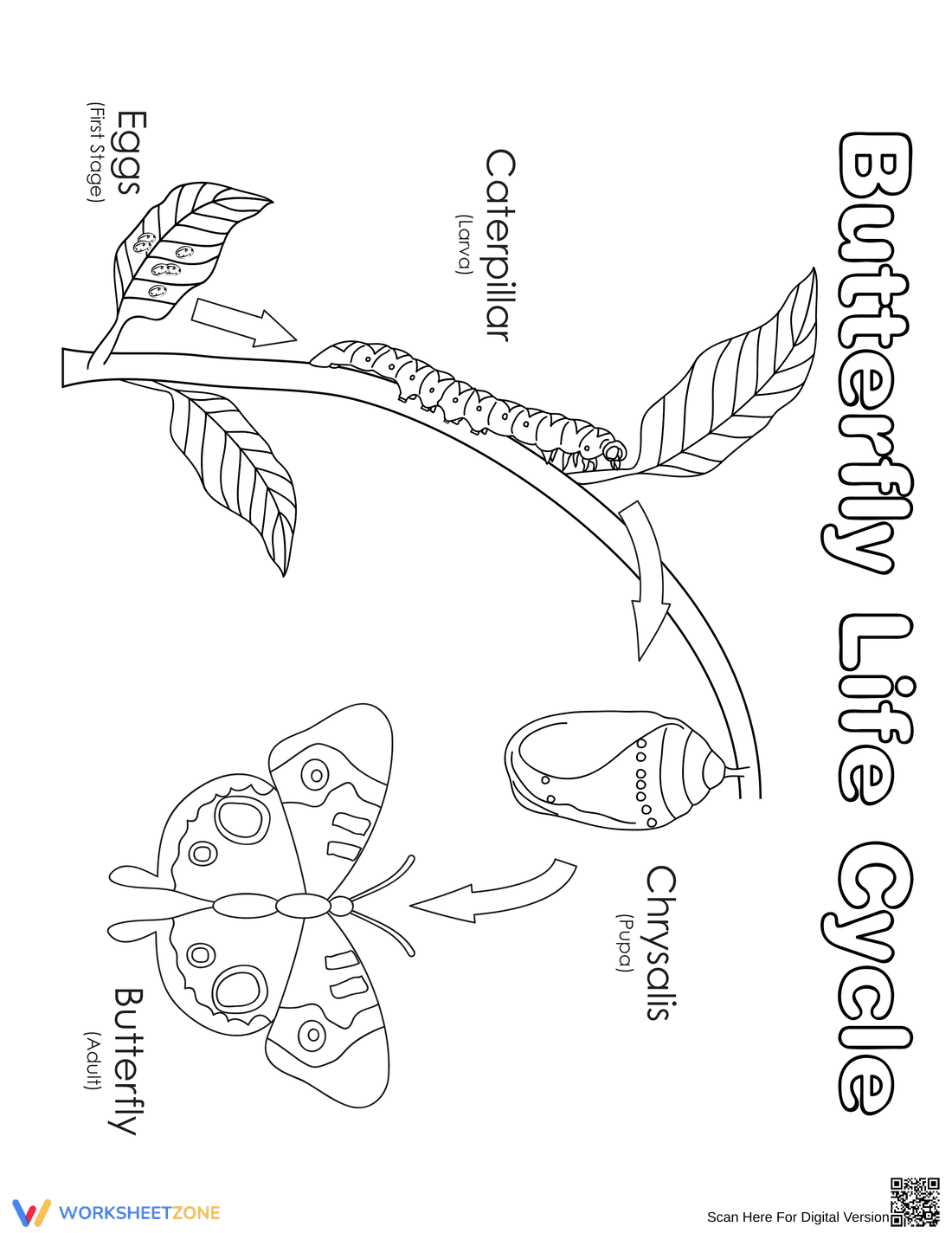
This Grade 2-5 butterfly life cycle worksheet provides a clear visual model for students to identify and sequence the four primary stages of metamorphosis. By connecting scientific vocabulary like larva and pupa to recognizable imagery, students build a foundational understanding of biological growth and development. This resource simplifies complex biological transitions into an accessible, one-page format.
At a Glance
- Grade: 2-5 · Subject: Science
- Standard:
3-LS1-1— Develop models to describe that organisms have unique and diverse life cycles- Skill Focus: Metamorphosis sequencing
- Format: 1 page · 4 stages · Answer key included · PDF
- Best For: Introduction to life science units
- Time: 15–20 minutes
What's Inside
This single-page PDF features a diagram illustrating the progression from eggs to the adult butterfly. It includes specific scientific terminology for each phase: Eggs (First Stage), Caterpillar (Larva), Chrysalis (Pupa), and Butterfly (Adult). The layout uses directional arrows to emphasize the cyclical nature of the process, providing a clear visual scaffold for students who are new to the concept of metamorphosis.
Zero-Prep Workflow
The zero-prep workflow for this resource is designed for efficiency. First, print the required number of copies (30 seconds). Second, distribute the worksheets during your science block or as a transition activity (1 minute). Third, review the stages as a whole group using the provided diagram to check for understanding (5 minutes). Total teacher preparation time is under 2 minutes, making this an ideal choice for emergency sub plans or spontaneous science extensions.
Standards Alignment
This resource is primarily aligned with `3-LS1-1`, which requires students to develop models to describe that organisms have unique and diverse life cycles. It also supports CCSS.ELA-LITERACY.RI.3.7 by using information gained from illustrations to demonstrate understanding of the text. Both standard codes can be copied directly into lesson plans, IEP goals, or district curriculum mapping tools.
How to Use It
Use this worksheet during the "Explore" phase of a 5E instructional model. After a brief read-aloud about insects, have students color and label the diagram to solidify their mental model of the cycle. As a formative assessment, observe whether students can explain the transition between the larva and pupa stages. This activity typically takes 15 to 20 minutes.
Who It's For
This worksheet is designed for elementary students in grades 2 through 5, particularly those who benefit from visual learning and fine motor activities like coloring. It serves as an excellent differentiation tool for English Language Learners who need to pair scientific vocabulary with concrete images. Pair this resource with a live butterfly kit for a comprehensive learning experience.
According to research by Fisher & Frey (2014) on the gradual release of responsibility, visual models like this butterfly life cycle diagram are essential for scaffolding complex scientific concepts before students move to independent analysis. The use of the 3-LS1-1 standard ensures that the content meets rigorous national benchmarks for life science education. By focusing on the four distinct stages—egg, larva, pupa, and adult—this worksheet helps students internalize the concept of metamorphosis, a key component of the elementary science curriculum. Studies from EdReports 2024 indicate that high-quality, standards-aligned visual aids significantly improve retention rates among Grade 3-5 learners compared to text-only instruction. This resource provides the necessary structure for students to build accurate mental schemas of biological processes, facilitating a deeper understanding of how living things grow and change over time within their specific environments.


