


























Views
Downloads
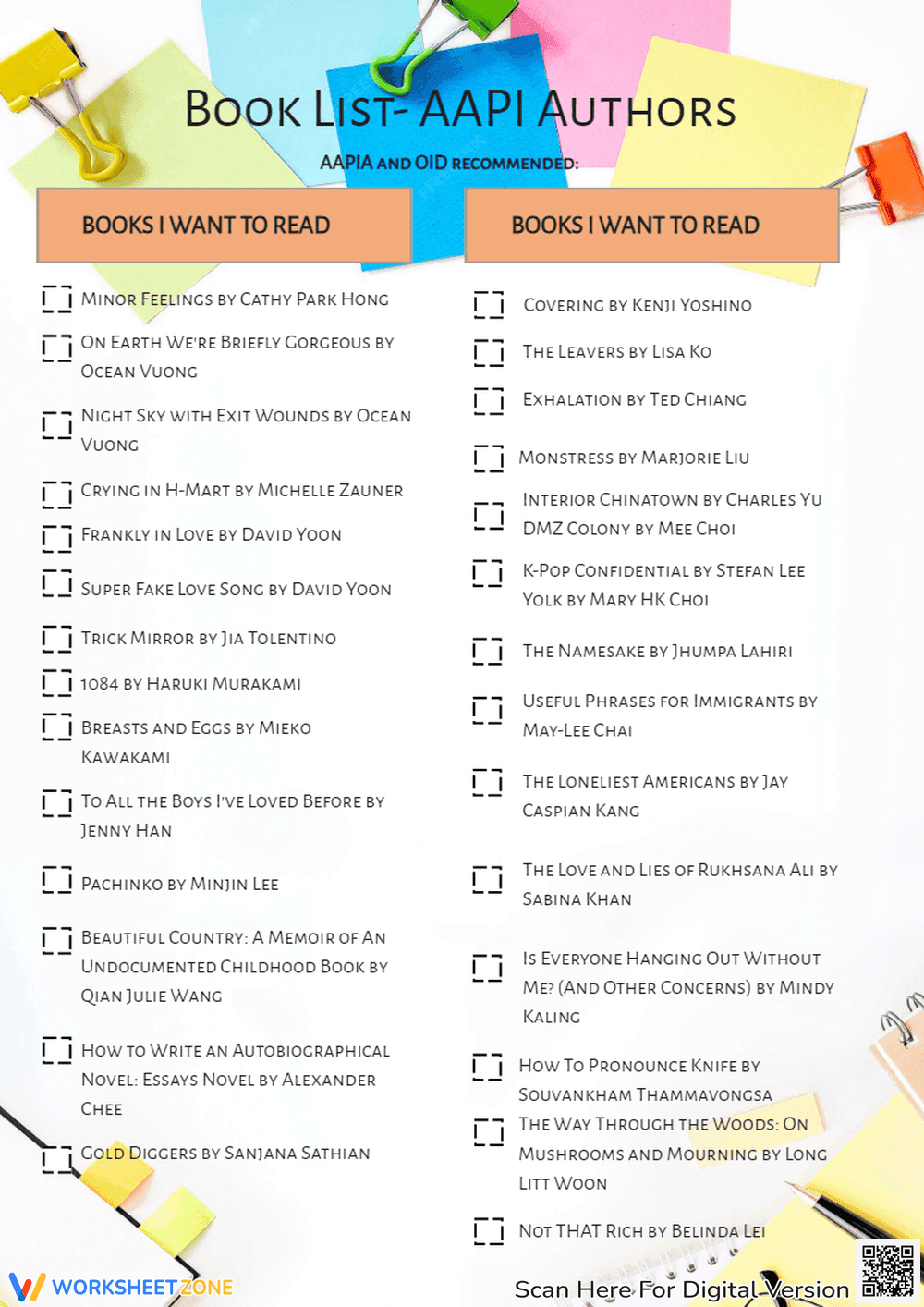

AAPI Authors Book List | Essential Grade 5 ELA Guide
Paste this activity's link or code into your existing LMS (Google Classroom, Canvas, Teams, Schoology, Moodle, etc.).
Students can open and work on the activity right away, with no student login required.
You'll still be able to track student progress and results from your teacher account.
This Grade 5 AAPI authors book list provides a structured way for students to explore diverse literature and track their reading progress. By offering a curated selection of 28 significant titles, this resource encourages students to engage with Asian American and Pacific Islander voices, fostering cultural empathy and expanding their literary horizons during Heritage Month or year-round.
At a Glance
- Grade: 5 · Subject: ELA
- Standard:
CCSS.ELA-LITERACY.RL.5.10— Read and comprehend literature at the high end of the grade complexity band- Skill Focus: Diverse literature selection
- Format: 1 page · 28 titles · Checklist format · PDF
- Best For: Independent reading choice and cultural awareness
- Time: 5–10 minutes
What's Inside
This single-page PDF features a clean, organized layout containing 28 specific book titles from acclaimed AAPI authors. Each entry includes a checkbox for students to mark "Books I Want to Read," making it an effective tool for independent reading selection. The list includes a mix of memoirs, novels, and essay collections, providing a broad overview of contemporary AAPI contributions to literature and helping students build a personalized reading roadmap.
Zero-Prep Workflow
- Print: Generate the single-page PDF for your entire class in under 30 seconds.
- Distribute: Hand out the list during a library visit or ELA block to facilitate immediate book browsing.
- Review: Allow students 5 minutes to review the titles and check off books that pique their interest for future reading projects.
Total teacher preparation time is targeted at under 2 minutes, making this an ideal resource for sub plans or busy instructional days.
Standards Alignment
This resource aligns with `CCSS.ELA-LITERACY.RL.5.10`, which requires students to "By the end of the year, read and comprehend literature, including stories, dramas, and poetry, at the high end of the grades 4-5 text complexity band independently and proficiently." It supports the selection of diverse texts to meet these complexity requirements. Both standard codes can be copied directly into lesson plans, IEP goals, or district curriculum mapping tools.
How to Use It
Use this checklist as a formative tool during the first week of Asian American and Pacific Islander Heritage Month to gauge student interest in diverse narratives. Teachers can observe which genres or themes attract students most, allowing for more personalized book recommendations during 10-15 minute independent reading sessions. This expected completion time range ensures it fits easily into any literacy block.
Who It's For
This worksheet is ideal for Grade 5 students who are transitioning to more complex independent reading. It serves as a valuable resource for school librarians, ELA teachers, and homeschool parents looking to diversify their classroom libraries. It provides a clear scaffold for students who struggle with selecting appropriate texts independently.
According to the RAND AIRS 2024 report on literacy engagement, providing students with curated choice-based reading lists significantly increases time-on-task and intrinsic motivation for independent reading. This Grade 5 resource specifically addresses CCSS.ELA-LITERACY.RL.5.10 by offering a pathway to high-complexity literature through the lens of AAPI authors. By identifying 28 specific titles, the worksheet reduces the choice paralysis often felt by upper elementary readers when selecting new texts. Research from Fisher & Frey (2014) emphasizes that exposure to diverse cultural perspectives in literature is a critical component of developing advanced reading comprehension and social-emotional intelligence. This printable checklist serves as a practical bridge between standard-aligned curriculum goals and inclusive classroom practices, ensuring that students have access to a wide range of representative voices while meeting grade-level expectations for text variety and complexity.


