


























Views
Plays

Building Materials Quiz | Grade 8 Essential Science
Paste this activity's link or code into your existing LMS (Google Classroom, Canvas, Teams, Schoology, Moodle, etc.).
Students can open and work on the activity right away, with no student login required.
You'll still be able to track student progress and results from your teacher account.
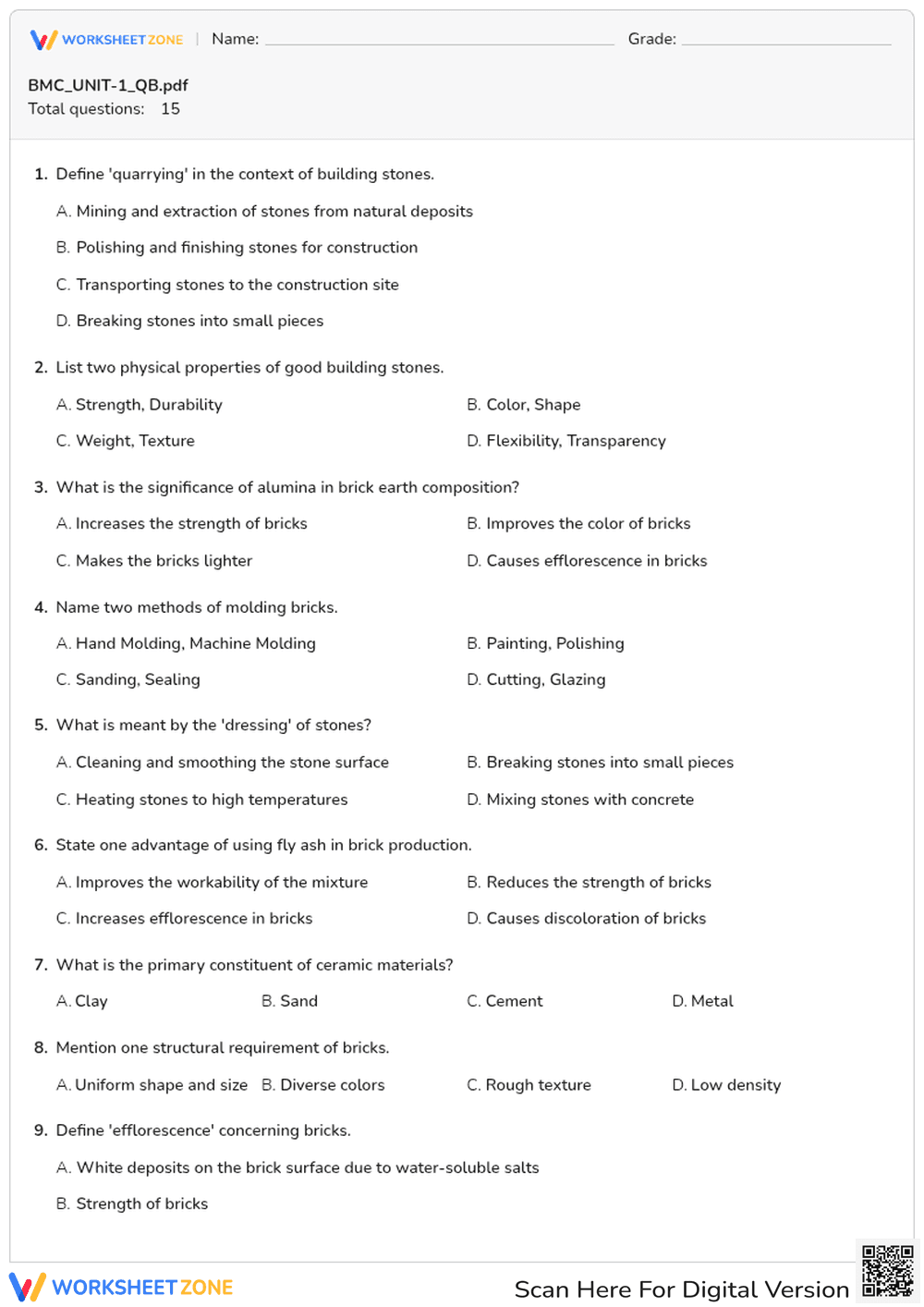
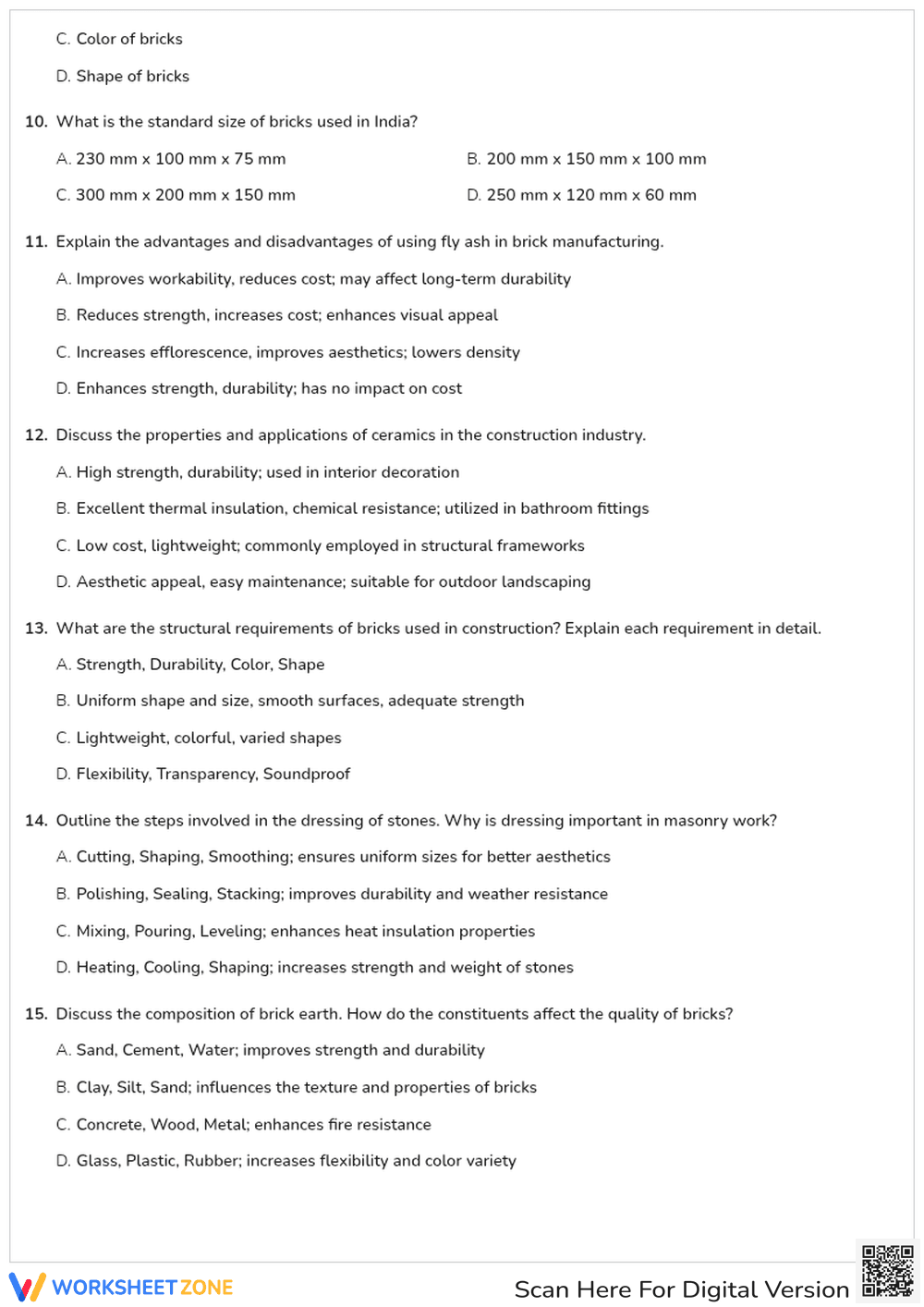
This Grade 8 building materials worksheet provides students with 15 structured multiple-choice questions to evaluate their understanding of construction components. Students will identify properties of stones, brick composition, and ceramic applications. It serves as a comprehensive assessment tool for engineering and physical science units, ensuring students can distinguish between various industrial materials and their specific uses.
At a Glance
- Grade: 8 · Subject: Physical Science
- Standard:
MS-PS1-3— Gather and make sense of information to describe synthetic materials- Skill Focus: Construction Material Properties
- Format: 2 pages · 15 problems · Answer key included · PDF
- Best For: Unit assessment or sub plan
- Time: 20–30 minutes
This two-page PDF contains 15 multiple-choice questions focusing on the technical aspects of building materials. The task types range from simple definitions, such as quarrying and dressing, to more complex analysis of chemical compositions like alumina in brick earth and the benefits of fly ash. The layout is clean and professional, featuring a dedicated space for student names, making it ready for immediate classroom distribution.
The zero-prep workflow for this resource is designed for efficiency. First, print the two-page document (30 seconds). Second, distribute the quiz to students as a quiet individual activity (1 minute). Third, review the answers using the included key to provide immediate feedback (5 minutes). Total teacher preparation time is under 2 minutes, making this an ideal solution for unexpected absences or quick formative checks.
Standards Alignment: The primary standard addressed is `MS-PS1-3`, which requires students to gather and make sense of information to describe that synthetic materials come from natural resources and impact society. This worksheet specifically examines how natural stones and processed bricks are utilized in human infrastructure. Both standard codes can be copied directly into lesson plans, IEP goals, or district curriculum mapping tools.
How to Use It: Use this worksheet as a summative assessment at the conclusion of a unit on civil engineering or material science. It is best assigned after direct instruction on the manufacturing processes of bricks and the extraction of natural stones. For a formative assessment observation, monitor students as they answer question 11 regarding fly ash to gauge their understanding of sustainable additives in modern construction.
Who It's For: This resource is tailored for Grade 7 through Grade 9 students. It provides necessary scaffolding through clear multiple-choice options, making it accessible for English Language Learners and students with IEPs who require reduced writing demands. It pairs naturally with an anchor chart detailing the life cycle of a brick or a direct instruction lesson on masonry.
This assessment resource aligns with the MS-PS1-3 standard by requiring students to identify the properties and origins of construction materials like stone and ceramic. According to the Fisher & Frey (2014) framework for purposeful instruction, structured assessments like this 15-question quiz provide the necessary data points for teachers to evaluate student mastery of technical vocabulary and material science concepts. Research from the 2024 EdReports analysis suggests that high-quality, focused practice materials significantly improve student retention of domain-specific terminology in middle school science. By isolating specific variables such as the dressing of stones and efflorescence in bricks, the worksheet ensures that students move beyond surface-level recognition toward a technical understanding of engineering requirements. This document serves as a reliable instrument for measuring student progress within the NGSS framework, providing clear evidence of learning that can be easily integrated into digital gradebooks or student portfolios.


