


























Views
Downloads

Printable Biomes Worksheet | Grade 3 Science Ready
Paste this activity's link or code into your existing LMS (Google Classroom, Canvas, Teams, Schoology, Moodle, etc.).
Students can open and work on the activity right away, with no student login required.
You'll still be able to track student progress and results from your teacher account.
This Grade 3 science worksheet introduces students to the diverse biomes of Earth, helping them understand how climate shapes plant and animal life. By connecting specific environmental characteristics to regions like the tundra and aquatic zones, learners develop a foundational grasp of global ecology. This resource ensures students can identify and describe various natural habitats effectively.
At a Glance
- Grade: 3 · Subject: Science
- Standard:
3-ESS2-2— Describe climates in different regions of the world- Skill Focus: Biome identification and climate characteristics
- Format: 2 pages · 6 problems · Answer key included · PDF
- Best For: Independent practice or quick science assessment
- Time: 15–20 minutes
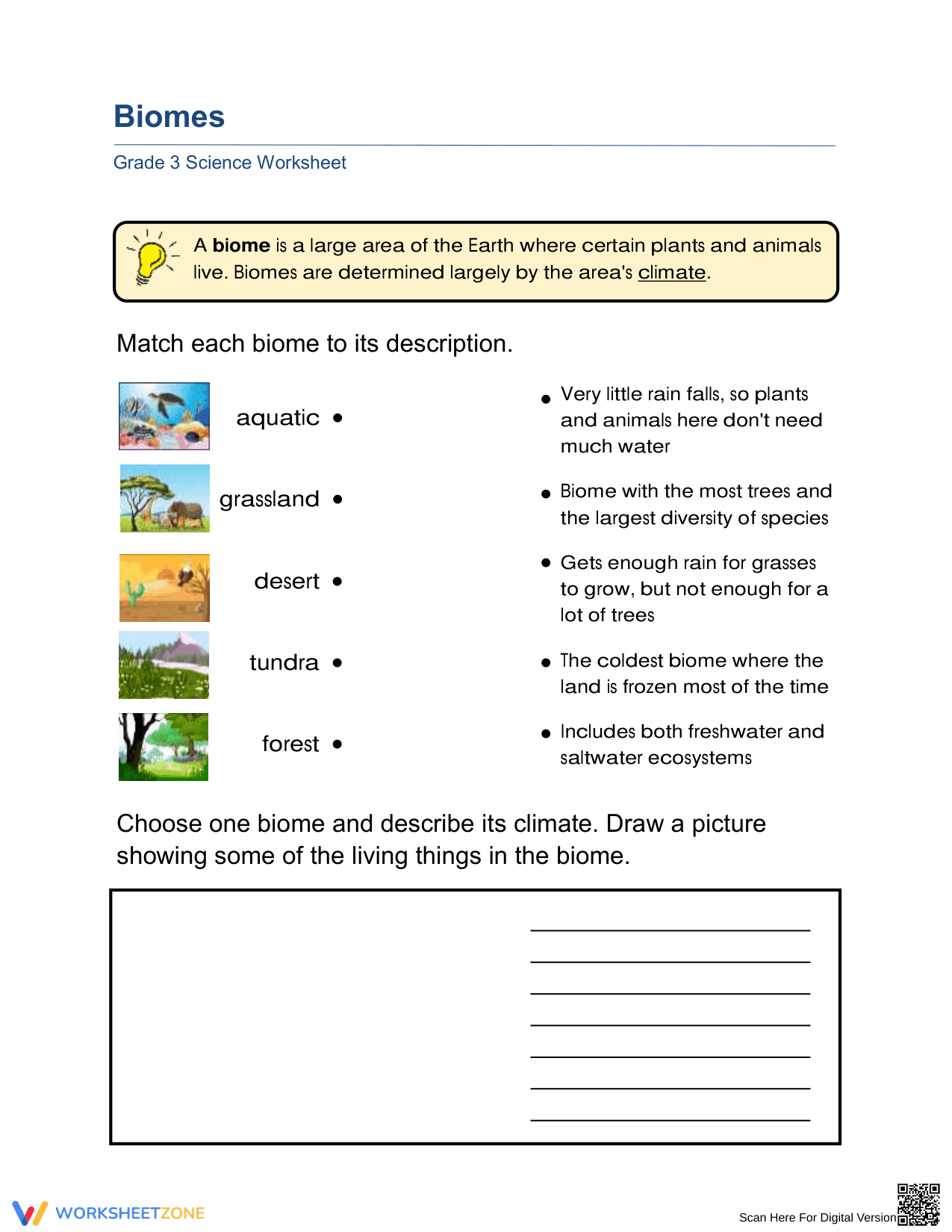
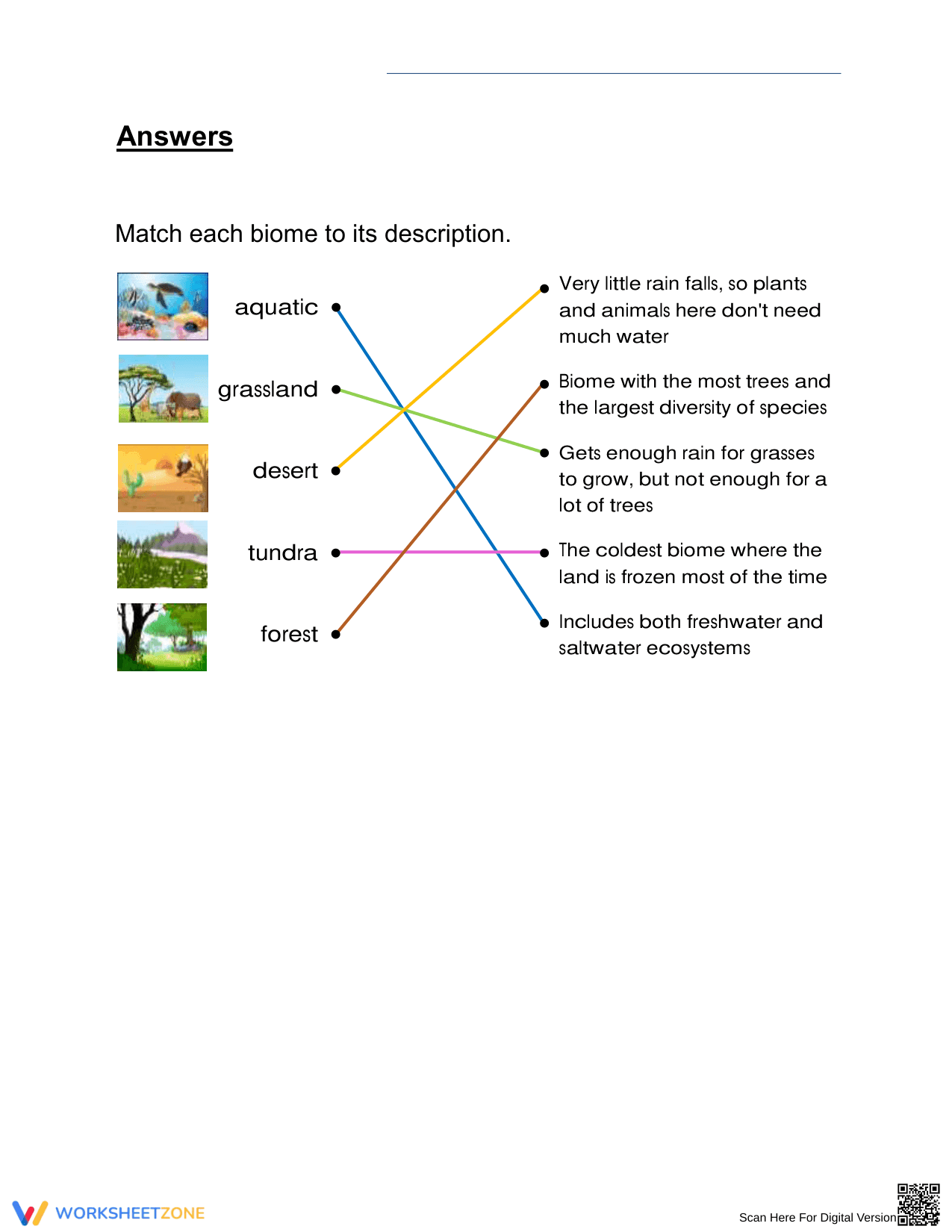
This two-page PDF includes a focused worksheet and a full answer key. The first page features five matching tasks where students link biomes—including aquatic, grassland, desert, tundra, and forest—to their distinct descriptions. A secondary open-ended task requires students to select one biome, write a brief description of its climate, and illustrate the living things found within that specific environment.
Implementing this resource requires minimal effort from the teacher. Simply print the single-sided worksheet, distribute it to the class during your earth science block, and use the included answer key for a rapid review. The clear instructions and visual icons make it an ideal choice for emergency sub plans or as a transition activity between direct instruction and independent research. Total teacher prep time is under 2 minutes.
This worksheet is aligned to 3-ESS2-2, which requires students to obtain and combine information to describe climates in different regions of the world. By analyzing the unique weather patterns and seasonal shifts associated with global biomes, students satisfy the core requirements of this earth science standard. Both standard codes can be copied directly into lesson plans, IEP goals, or district curriculum mapping tools.
Use this worksheet as a formative assessment after an introductory lesson on global climates. It serves as an excellent check for understanding to see if students can distinguish between high-diversity biomes like forests and extreme environments like the tundra. A key observation tip is to watch how students describe the climate in the drawing task. Expected completion typically takes 15 to 20 minutes.
Designed for third-grade students, this resource is also suitable for second-grade enrichment or fourth-grade review. It supports visual learners through the use of representative icons and provides a creative outlet for students who prefer drawing over extensive writing. Pair this worksheet with a world map or a climate zone anchor chart to provide students with a spatial context for the regions they are studying.
The 3-ESS2-2 standard emphasizes the importance of students recognizing patterns in global weather to understand distinct regional climates. According to ScienceDirect TpT Analysis, instructional materials that combine categorical matching with open-ended creative tasks significantly improve long-term retention of scientific terminology in elementary learners. By focusing on the five primary biomes—aquatic, grassland, desert, tundra, and forest—this worksheet provides a structured framework for students to organize complex ecological data. The inclusion of an answer key facilitates immediate feedback, which is a critical component of the gradual release of responsibility model described by Fisher & Frey (2014). Educators can confidently integrate this tool into a science curriculum to build the academic vocabulary necessary for higher-level environmental studies. This resource provides 6 distinct opportunities for students to demonstrate mastery of climate-related concepts while engaging in cross-disciplinary skills like reading comprehension and visual representation.


