


























Views
Downloads

Essential Wise Mind Worksheet | Grade 9-12 Mindfulness
Paste this activity's link or code into your existing LMS (Google Classroom, Canvas, Teams, Schoology, Moodle, etc.).
Students can open and work on the activity right away, with no student login required.
You'll still be able to track student progress and results from your teacher account.
This Grade 9-12 mindfulness worksheet helps students master the "Wise Mind" concept by balancing goal-oriented "Doing Mind" with present-focused "Being Mind." Students learn to integrate productivity with awareness to improve emotional regulation and reduce stress. It provides a clear framework for navigating complex emotional states through structured reflection and daily practice.
At a Glance
- Grade: 9-12 · Subject: Behavior Activities
- Standard:
CCSS.ELA-LITERACY.W.9-12.10— Write routinely over extended time frames for reflection and self-analysis- Skill Focus: Mindfulness & Emotional Regulation
- Format: 4 pages · 14 tasks · Reflection prompts included · PDF
- Best For: SEL blocks, counseling, or sub plans
- Time: 20–45 minutes
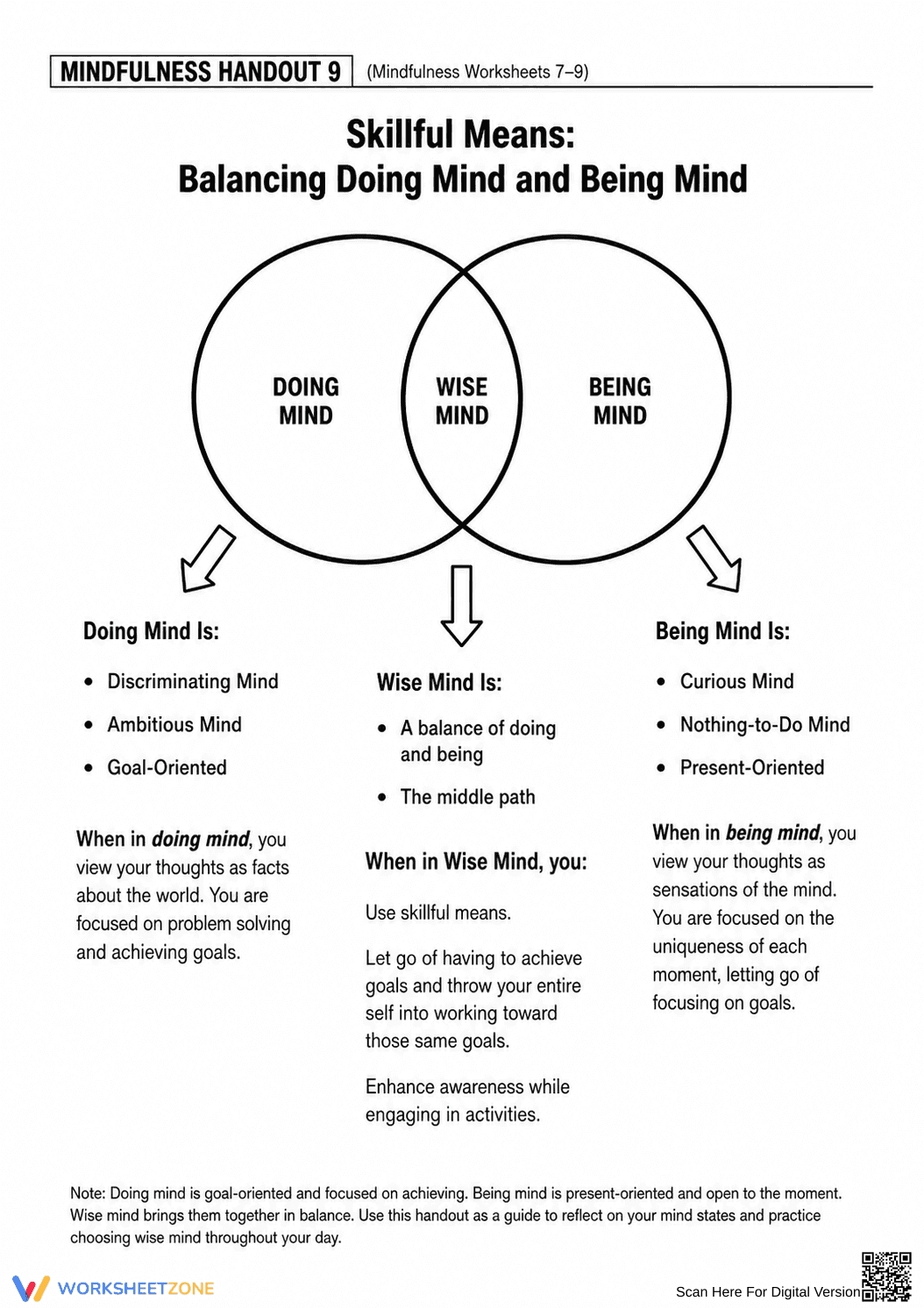
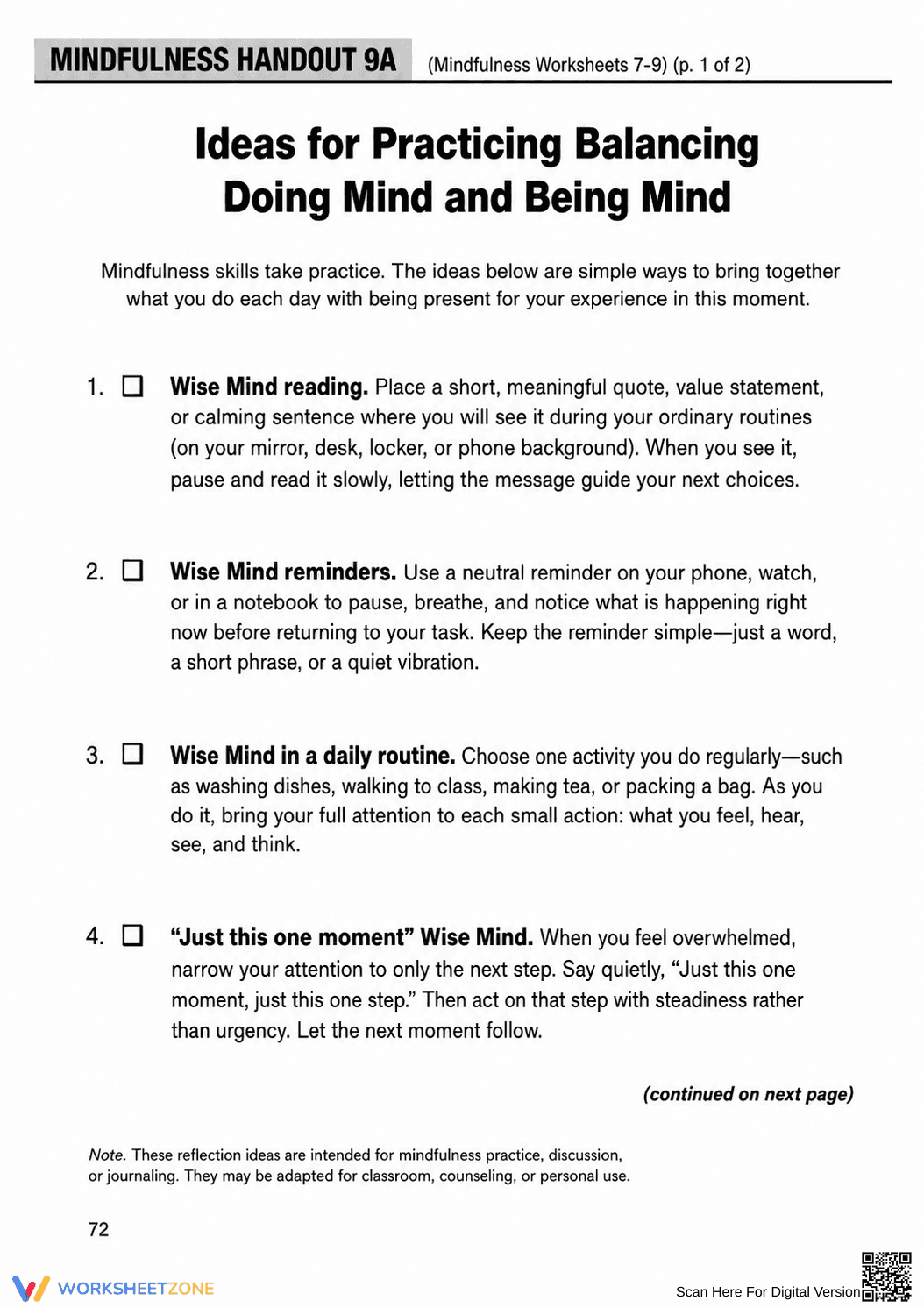
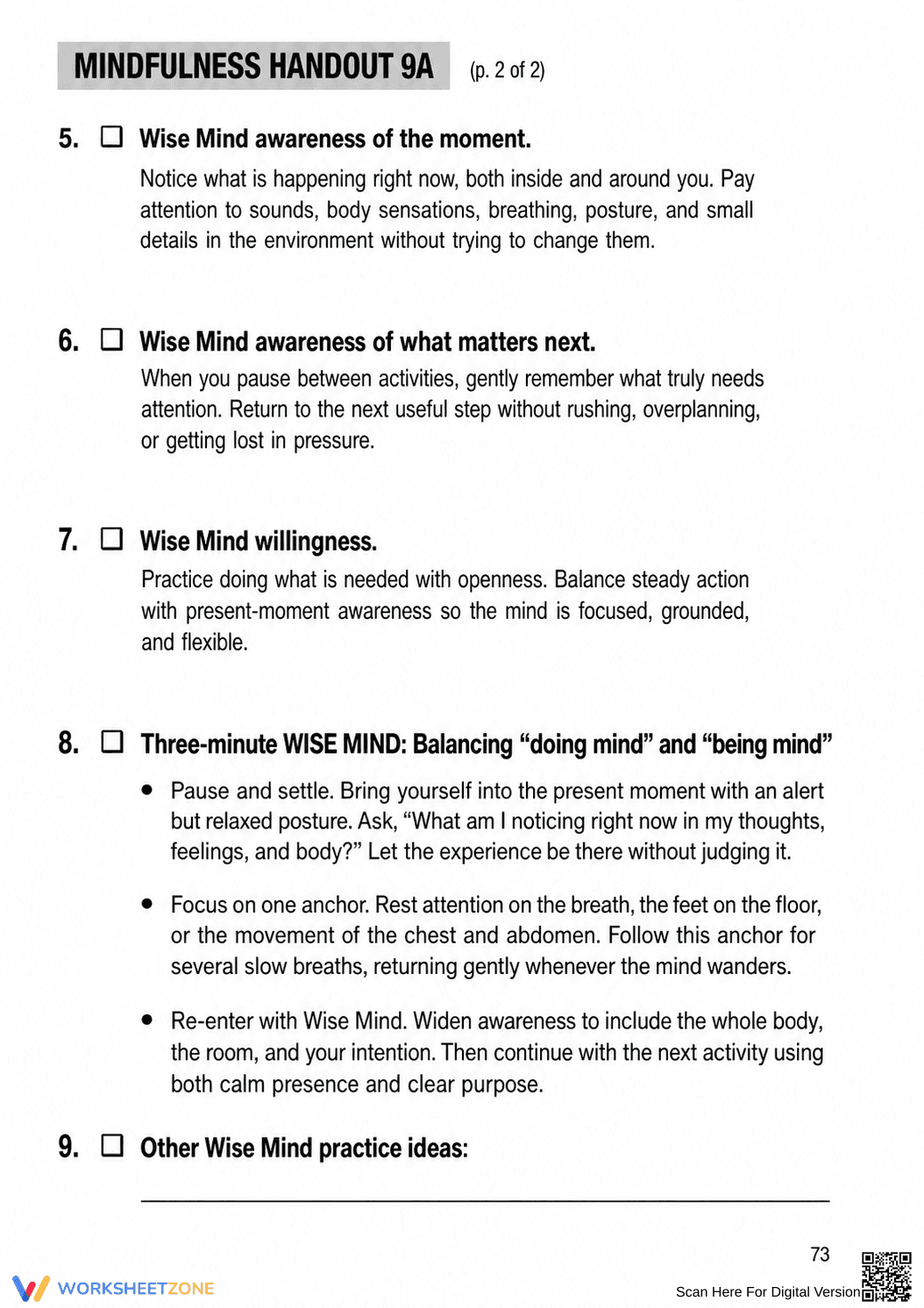
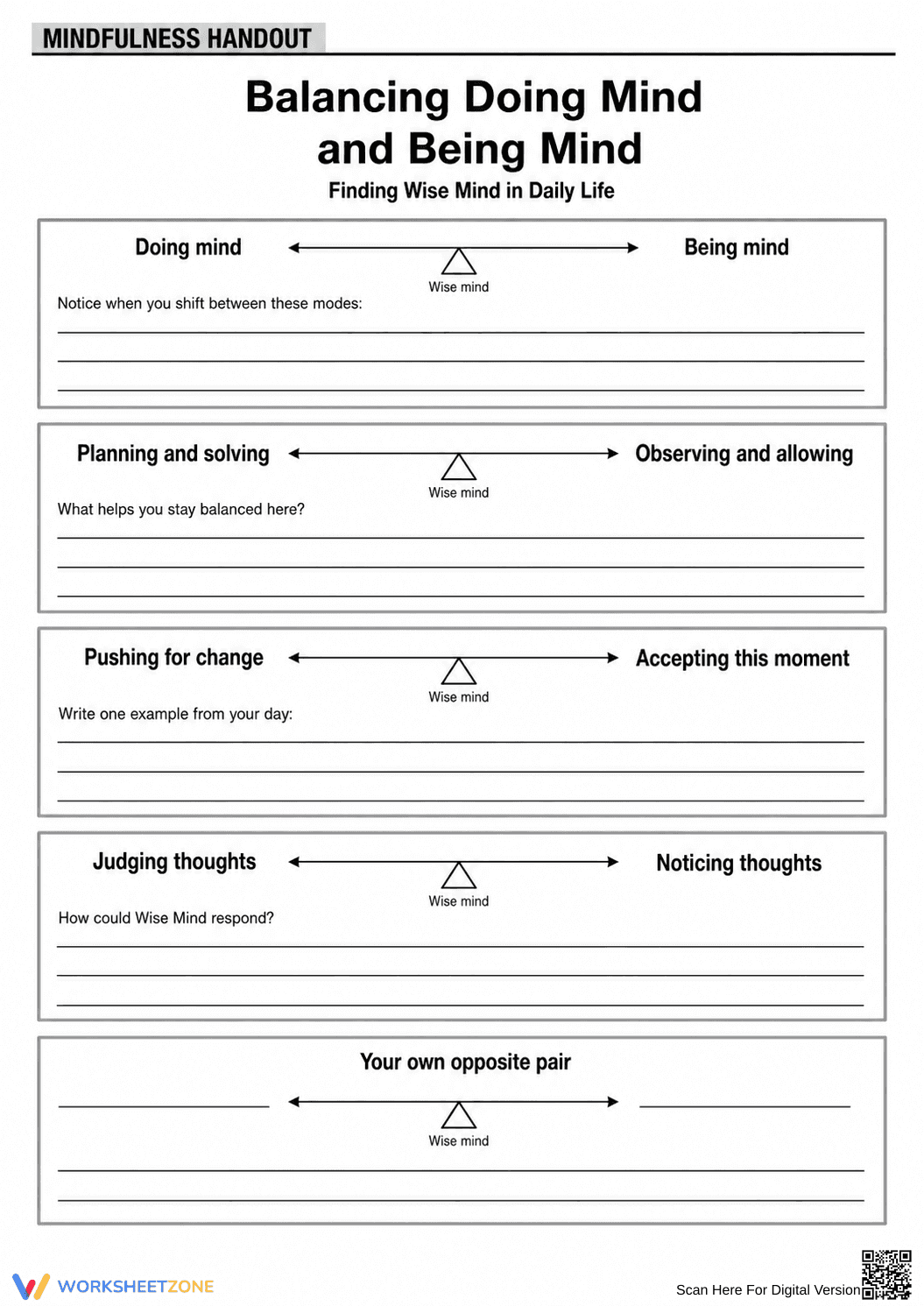
This 4-page PDF includes a comprehensive Venn diagram explaining the three mind states, a list of 9 concrete practice ideas, a guided 3-minute mindfulness exercise, and a final reflection page. The reflection page features 5 visual scales (Doing vs. Being) to help students plot their current mental state and identify "Wise Mind" responses. The layout is clean and professional, suitable for mature learners.
Zero-Prep Workflow
- Print (30 seconds): Select the 4-page packet for individual use or specific pages for targeted lessons.
- Distribute (1 minute): Hand out the visual Venn diagram to anchor the initial discussion on mental states.
- Review (Ongoing): Use the built-in reflection scales to check for understanding and emotional readiness.
Total teacher prep time is under 2 minutes, making this an ideal resource for unexpected schedule changes or social-emotional learning rotations.
Standards Alignment
This resource aligns with `CCSS.ELA-LITERACY.W.9-12.10`, which focuses on writing routinely for a range of tasks, purposes, and audiences. By engaging in self-reflective writing and analyzing internal states, students develop the metacognitive skills necessary for high-level academic and personal success. Both standard codes can be copied directly into lesson plans, IEP goals, or district curriculum mapping tools.
How to Use It
Use this during a dedicated SEL block to introduce the concept of emotional balance. After direct instruction on the Venn diagram, have students choose one of the 8 practice ideas to implement during the school day. As a formative assessment, observe students as they complete the "Finding Wise Mind in Daily Life" scales to identify those who may need additional support with emotional regulation. Expected completion time ranges from 20 to 45 minutes depending on the depth of discussion.
Who It's For
This is designed for high school students, counseling groups, or individuals in therapeutic settings. It is particularly effective for students struggling with anxiety or perfectionism. Pair this with a guided meditation audio track or a "Wise Mind" anchor chart to create a complete mindfulness unit for secondary learners.
According to Fisher & Frey (2014), the gradual release of responsibility is most effective when students are provided with clear scaffolds for self-regulation and metacognition. This worksheet applies those principles by moving from conceptual definitions (Doing vs. Being) to guided practice (3-minute exercise) and finally to independent reflection (daily life scales). Research from RAND AIRS 2024 suggests that structured social-emotional learning tools significantly improve student focus and academic resilience in secondary environments. By utilizing the CCSS.ELA-LITERACY.W.9-12.10 standard, educators can integrate these vital behavioral skills into the ELA curriculum without sacrificing academic rigor. The 14 distinct tasks provided ensure that students have multiple entry points for mastering the "Wise Mind" state, fostering a classroom environment where emotional intelligence is prioritized alongside traditional literacy goals.


