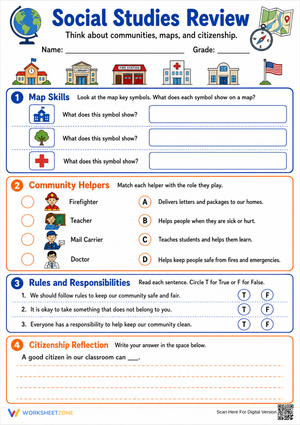
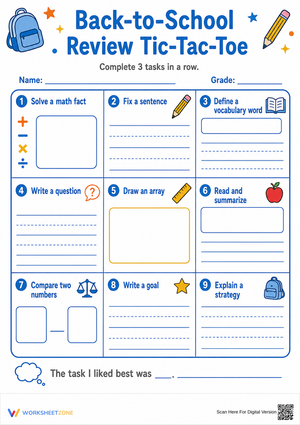
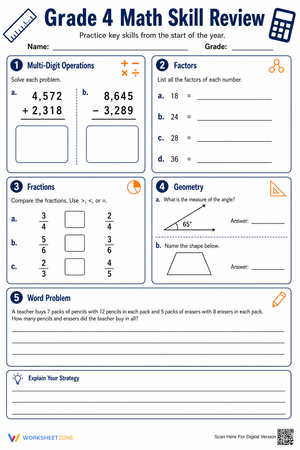
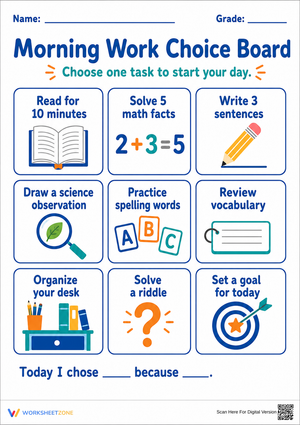
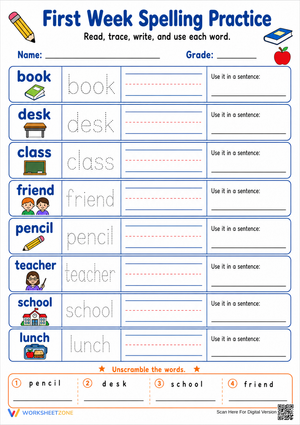
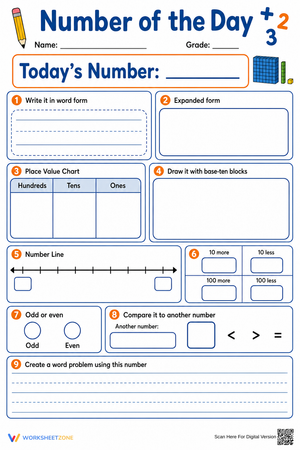
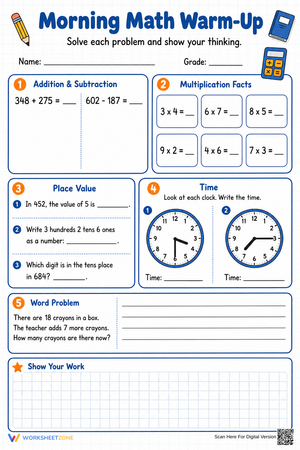
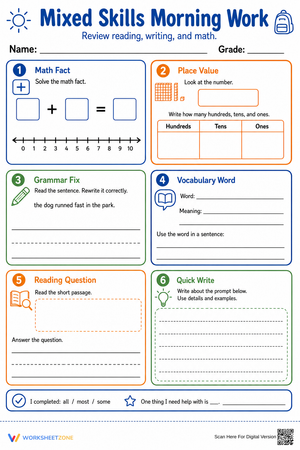
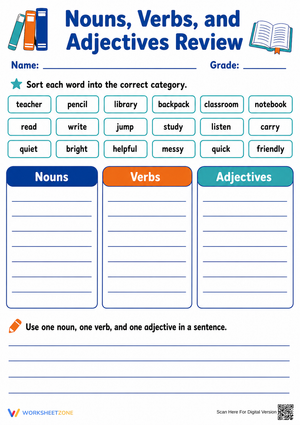
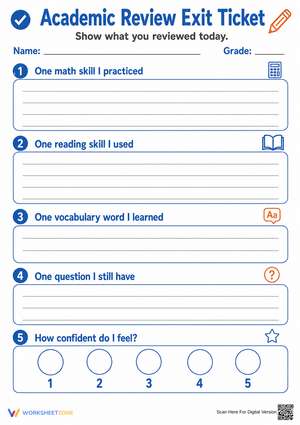
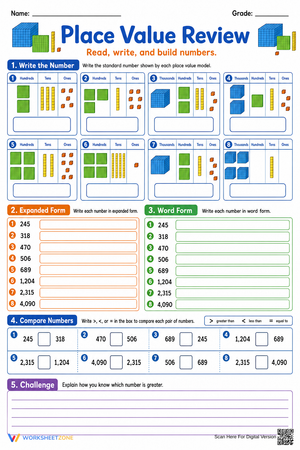
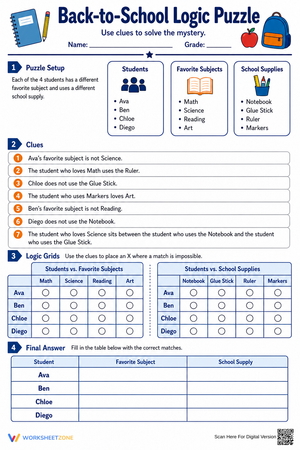
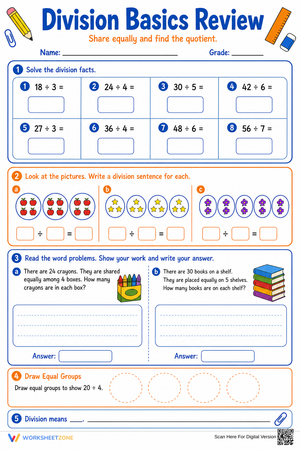
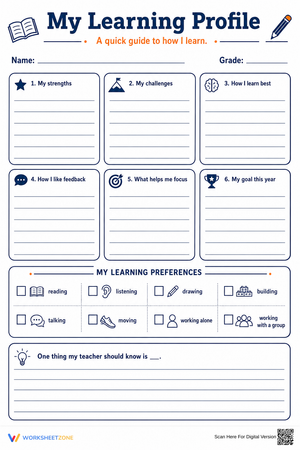
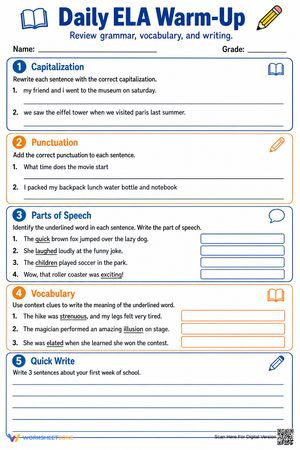
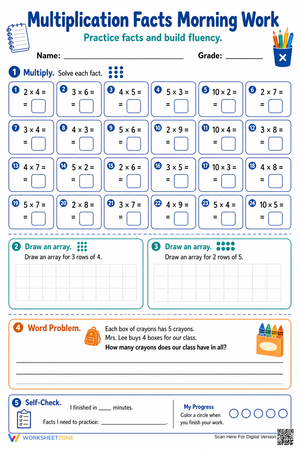
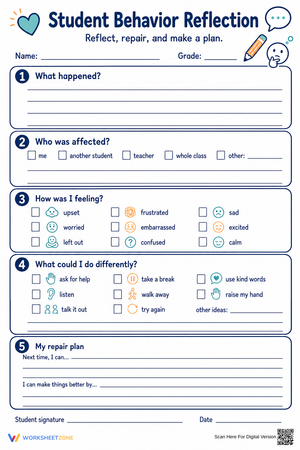
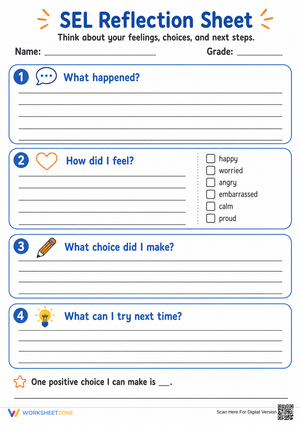
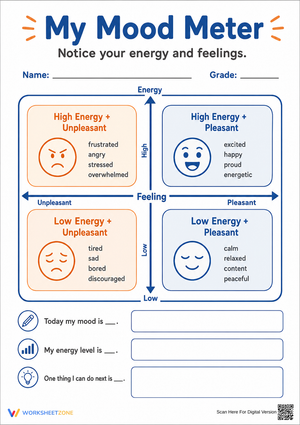
These back to school worksheets pdf resources give teachers exactly what the first week demands — structured activities that build genuine classroom community without requiring hours of preparation before the bell rings. Each worksheet stands alone, so teachers pull individual formats based on where the class is emotionally on a given day rather than moving through a predetermined sequence.
What's Inside the Set
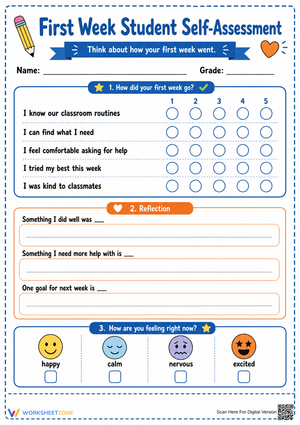
Five distinct worksheet types cover the core first-week functions. All-about-me pages ask students to identify interests, family details, and feelings about the new year; primary-grade versions include large illustration areas alongside fill-in sentences, while grades 4–8 versions push toward paragraph-length self-description. Classmate scavenger hunts send students around the room to find peers who match specific descriptions, generating real conversation before students have the social confidence to initiate it themselves. Goal-setting sheets guide students through an if/then structure that separates genuine intention from vague aspiration — "I want to be better at math" lives in a different category than "When I get home on Tuesdays, I'll spend ten minutes on my math facts before anything else." Classroom-expectation worksheets ask students to illustrate what one rule looks like when followed correctly; sketching the behavior produces a different kind of internalization than reading the rule from a posted list. Partner interview worksheets pair students to ask and record each other's answers, adding a listening task alongside the writing.
Frequent Student Responses Worth Watching For
The most predictable pattern in first-week worksheet work is the surface answer. A student who writes "I like sports" on an all-about-me prompt is usually not withholding — they are still reading the room, gauging how much of themselves feels safe to share. Two minutes of silent thinking time before writing raises response depth more reliably than rewriting the prompt. Goal-setting sheets surface a related issue: "do better in school" appears constantly because students hear it modeled by adults and treat it as a correct answer. A sentence frame requiring both a goal and a method — "This year I will ___ by ___" — closes that loophole and produces responses worth revisiting in May.
With kindergartners and first graders, open-ended illustration prompts occasionally produce the reverse problem: a student so absorbed in the drawing that the writing line stays blank. A visible two-minute timer during the illustration phase establishes that both parts of the worksheet carry weight before blank-writing-line becomes a habit. On scavenger hunt worksheets, some students shortcut the activity by asking one classmate to confirm multiple items rather than circulating around the room. Printing the rule that each name can appear only once — rather than announcing it verbally — ensures students encounter it before the shortcut becomes tempting.
Fitting These Worksheets Into Your First Week
The most effective placement for quiet reflective worksheets is the 10–15 minutes after morning meeting, once the class has settled but before the first formal lesson block. That window gives a natural gear-shift: students who were just moving and talking find a clear reason to sit and write. Scavenger hunt and partner interview formats belong mid-morning, after enough sit time to make movement welcome. Resist distributing goal-setting sheets on day one — goals written before students know what your classroom expects tend to be social performances rather than real intentions. Waiting until day three, when students have watched your routines operate for two days, produces noticeably more specific and honest responses.
One of the most effective long-term uses of a back to school worksheets pdf collection is the classroom time capsule. Collect completed goal-setting and all-about-me worksheets during the first week, seal them in labeled envelopes, and put them away. When you pull them back out in June, students re-reading their own August writing have a concrete record of how their thinking, goals, and handwriting have changed. The conversation that follows is one of the most natural reflective discussions of the year — no additional prompt required.
Why Printed Worksheets Belong in the First Week
There is a specific cognitive reason to favor paper-based formats here, and it is not about avoiding screens for their own sake. When students enter a new classroom, working memory is already taxed — new faces, new routines, unfamiliar physical space. A printed worksheet with a clear layout reduces the decisions students must make just to begin: no login, no platform navigation, no font choice. That reduction in overhead is what frees students to do the actual reflective work. Completed paper worksheets also function as informal writing samples, giving teachers a first look at handwriting fluency, sentence-level control, and comfort with open-ended prompts before any formal assessment has been administered.
Standard Alignment
Goal-setting and reflective writing worksheets align with CCSS.ELA-LITERACY.W.3.1 and CCSS.ELA-LITERACY.W.4.1, both of which require students to state an opinion and supply supporting reasons. When students name a goal and explain how they plan to reach it, they produce a compressed version of the argumentative structure those standards describe — low-stakes early practice before formal opinion writing instruction begins. Scavenger hunt and partner interview worksheets address CCSS.ELA-LITERACY.SL.2.1, which covers collaborative peer conversation with appropriate turn-taking; the worksheet format keeps those exchanges purposeful rather than purely social. Teachers working with English Language Learners also note alignment with WIDA Can Do Descriptors at the entering and emerging levels, particularly during partner interview tasks where oral production supports the written component.
Adjusting These Worksheets Across Grade Bands
Kindergarten and first grade require every open-ended prompt to carry a drawing option and a shortened sentence frame — ideally one or two blanks. Students at this stage are not being incomplete when they hand in a partially blank sheet; they lack the handwriting fluency to express what they actually know. The illustration carries the content; the frame captures one anchor detail. Treating these responses as equivalent to an incomplete older-student submission misreads the developmental picture entirely.
Grades 3–5 handle the full version of most worksheets without structural adjustment, but goal-setting sheets benefit from a brief whole-class discussion before students write independently. In that grade band, students anchor their goals to what they believe a teacher wants to hear. A five-minute conversation distinguishing a hope from a plan — "I want to read more" is a hope; "I'll read twenty minutes after dinner each weekday" is a plan — raises response quality more reliably than any prompt revision. For grades 6–8, all-about-me prompts need updating to hold engagement; replacing "my favorite food" with "a belief I used to hold that I no longer do" keeps older students in genuine reflection rather than filling in a form.
In a mixed-ability classroom, the worksheets that perform most consistently are those with embedded directions and adequate white space. When evaluating back to school worksheets pdf options for a mixed-ability group, check whether instructions appear on the worksheet itself — students who need extra processing time do better when they can re-read directions independently rather than recall a verbal explanation from fifteen minutes earlier, and students who finish quickly benefit from an extension prompt printed at the bottom rather than needing a separate activity prepared in advance.
Frequently Asked Questions
How many worksheets should I plan for the first day?
One or two, and prioritize the interactive format over solo writing. On day one, most students are still orienting to the physical space and social dynamics of a new classroom. A scavenger hunt or partner interview worksheet is easier to re-engage with than a reflective writing task because it does not require students to access deep self-knowledge before they feel safe. Save goal-setting worksheets for day two or three.
Do first-week worksheets work for reluctant writers?
They outperform academic writing tasks with reluctant writers precisely because the subject matter — themselves — requires no prior knowledge preparation. The knowledge barrier that causes reluctant writers to freeze in content-area writing is absent here. If a student still resists, the illustration component in primary worksheets or the oral format in partner interviews provides an alternative entry point without compromising the community-building work.
Can completed worksheets serve as early writing assessment data?
As informal baseline data, yes. A completed all-about-me paragraph or goal-setting response shows handwriting fluency, sentence structure, and comfort with self-directed writing — all useful early observations. Avoid treating them as summative assessments, though. The genre and the emotional context of the first week mean these worksheets often underrepresent the stronger writers in the room, who are still deciding how much of themselves to show to a teacher they met four days ago.
Where can I find printable first-week worksheets organized by grade level?
Filtering for back to school worksheets pdf resources by grade band before browsing — rather than sorting through general collections — saves significant time, since a kindergarten all-about-me sheet and a fifth-grade version have fundamentally different prompt complexity and visual layout. On platforms like Teachers Pay Teachers and Education.com, previewing the actual PDF before purchasing confirms that the reading level and white space match the students who will use it, which thumbnail images sometimes obscure.