


























Views
Plays




Essential ASL Alphabet Quiz | Grade 1 Printable
Paste this activity's link or code into your existing LMS (Google Classroom, Canvas, Teams, Schoology, Moodle, etc.).
Students can open and work on the activity right away, with no student login required.
You'll still be able to track student progress and results from your teacher account.
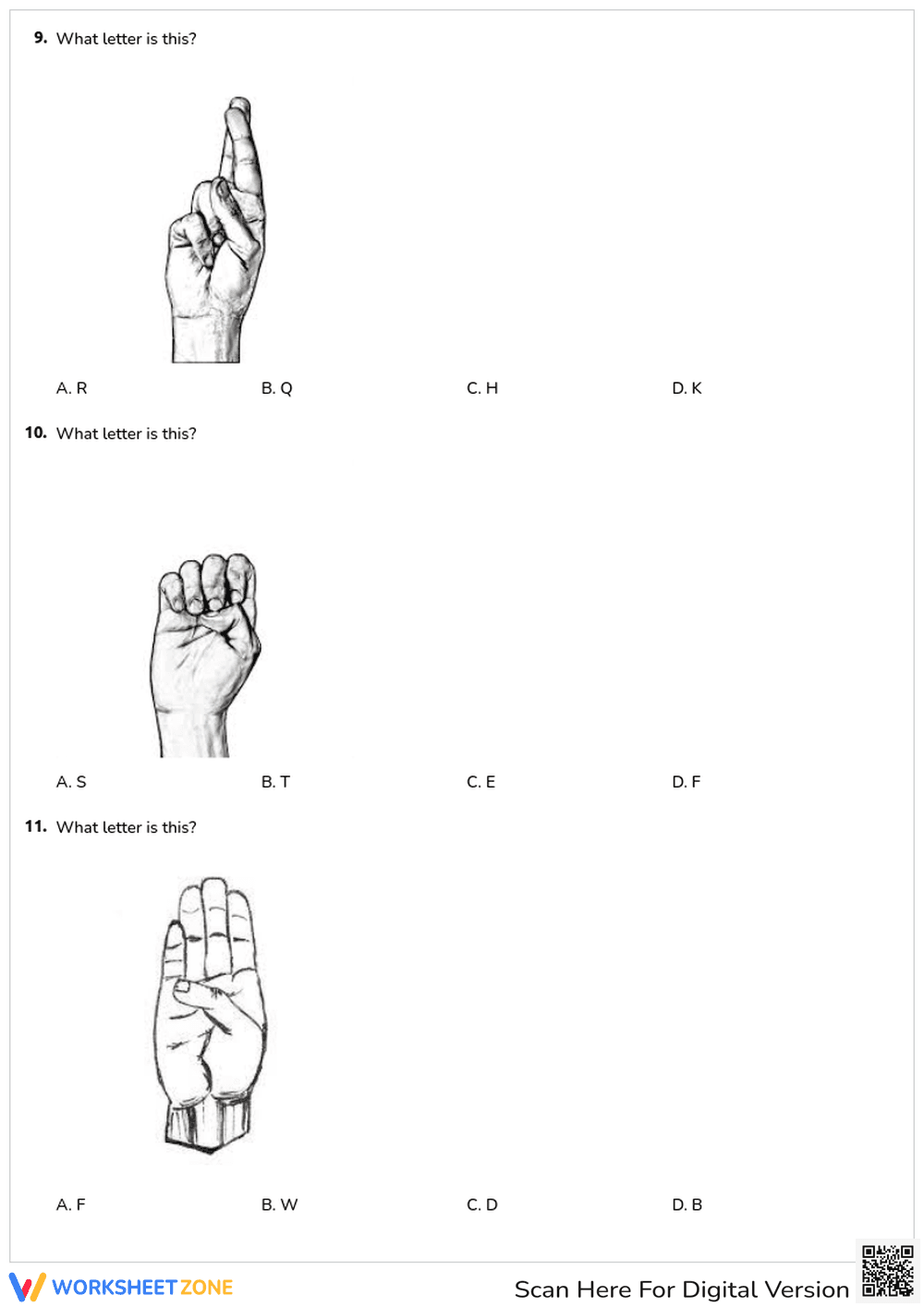
This Grade 1 ASL alphabet worksheet provides a comprehensive assessment for students learning American Sign Language handshapes. By identifying the correct letter for 26 distinct visual signs, learners bridge the gap between manual communication and written literacy. This resource ensures students can recognize and differentiate between similar hand positions effectively.
At a Glance
- Grade: 1 · Subject: ELA
- Standard:
CCSS.ELA-LITERACY.L.1.1.A— Recognize and identify the manual representation of the English alphabet- Skill Focus: ASL Alphabet recognition
- Format: 10 pages · 26 problems · Answer key included · PDF
- Best For: Introductory sign language and literacy centers
- Time: 15–20 minutes
What's Inside: This 10-page PDF contains 26 multiple-choice questions, covering the entire A-Z alphabet in American Sign Language. Each page features clear, high-quality illustrations of handshapes followed by four letter options. The layout is spacious and easy to read, ensuring that young learners or those with visual processing needs can focus on the specific details of each sign. A full answer key is provided for quick grading.
Zero-Prep Workflow: Teachers can implement this resource in under 2 minutes. First, print the 10-page document (30 seconds). Second, distribute the packets to students for independent work or a timed quiz (30 seconds). Finally, use the included answer key to review responses as a whole group or for individual grading (1 minute). This streamlined process makes it an ideal choice for substitute plans or morning work.
Standards Alignment: The primary standard addressed is `CCSS.ELA-LITERACY.L.1.1.A`, which focuses on the foundational ability to print and recognize all upper- and lowercase letters. While this worksheet uses manual signs, it reinforces the same letter-identification pathways required for traditional literacy. Both standard codes can be copied directly into lesson plans, IEP goals, or district curriculum mapping tools.
How to Use It: Use this worksheet as a summative assessment after a unit on the ASL alphabet to verify student mastery of all 26 signs. Alternatively, assign it as a "sign of the day" review where students complete 2-3 questions each morning. During the activity, observe if students are physically mimicking the signs shown in the images, which is a strong indicator of kinesthetic learning and retention. Completion typically takes 15 to 20 minutes.
Who It's For: This resource is designed for Grade 1 students, but it is equally effective for Kindergarteners or special education populations working on non-verbal communication goals. It pairs naturally with an ASL anchor chart or a direct instruction lesson where the teacher demonstrates the handshapes live before students attempt the independent quiz.
According to Fisher & Frey (2014), the use of visual and manual representations of language, such as the ASL alphabet, significantly enhances phonological awareness and letter recognition in early learners. This worksheet aligns with the `CCSS.ELA-LITERACY.L.1.1.A` standard by requiring students to map visual handshapes to specific English characters, a process that strengthens the neural pathways associated with alphabet mastery. Research indicates that multi-modal learning strategies—incorporating visual, kinesthetic, and linguistic inputs—lead to higher retention rates compared to single-mode instruction. By providing 26 distinct tasks that cover the full alphabet, this resource offers the repetitive, high-frequency practice necessary for students to achieve automaticity in sign recognition. This evidence-based approach ensures that the worksheet serves as more than just a quiz; it is a tool for cognitive reinforcement in foundational communication and literacy development.


