


























Views
Downloads
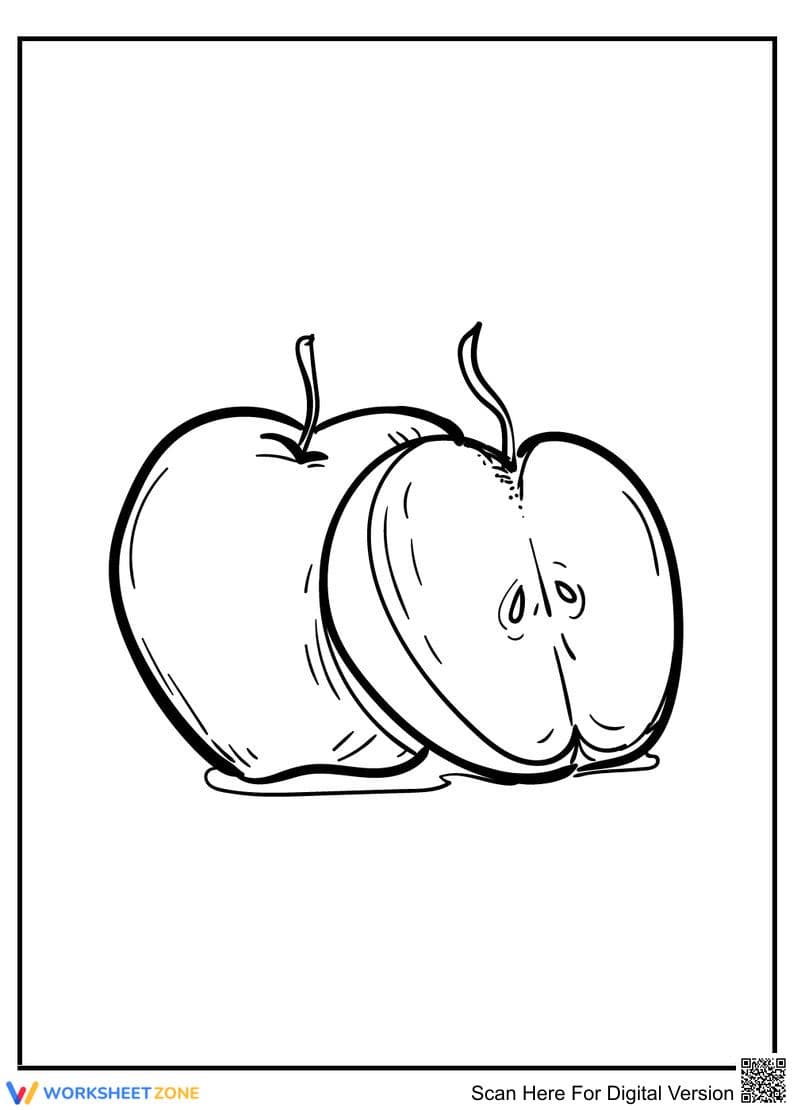

Apple Coloring Page | Essential Grade K-2 Printable
Paste this activity's link or code into your existing LMS (Google Classroom, Canvas, Teams, Schoology, Moodle, etc.).
Students can open and work on the activity right away, with no student login required.
You'll still be able to track student progress and results from your teacher account.
This apple coloring worksheet provides a simple yet effective way for early learners to engage with healthy food themes while developing essential fine motor control. By focusing on a single, recognizable fruit, students can practice color selection and spatial awareness. It serves as a perfect supplemental activity for nutrition units or autumn-themed lessons.
At a Glance
- Grade: K-2 · Subject: Arts & English
- Standard:
CCSS.ELA-LITERACY.SL.K.5— Add drawings or other visual displays to descriptions to provide additional detail- Skill Focus: Fine motor skills and fruit vocabulary
- Format: 1 page · 1 task · No answer key needed · PDF
- Best For: Morning work or early finisher activity
- Time: 10–15 minutes
Inside this resource, you will find a high-quality, single-page PDF featuring a clear line-art illustration of one whole apple and one sliced half. The bold outlines are designed specifically for young hands, ensuring that students can practice staying within the lines. There is ample white space for students to add their own background details or labels to the fruit.
The zero-prep workflow for this worksheet is designed for maximum efficiency. First, print the single-page PDF (30 seconds). Second, distribute the sheets along with crayons or colored pencils to your students (1 minute). Finally, review the completed work by having students name the fruit and its parts, such as the stem or seeds (1 minute). Total teacher prep time is under two minutes, making it an ideal sub plan filler.
This activity aligns with `CCSS.ELA-LITERACY.SL.K.5`, which encourages students to add visual displays to descriptions to provide additional detail. By coloring the apple and potentially labeling the "whole" and "half" sections, students demonstrate comprehension of physical attributes. This standard code can be copied directly into lesson plans, IEP goals, or district curriculum mapping tools for kindergarten and first-grade levels.
Use this worksheet as a quiet transition activity after a read-aloud about healthy eating. It also works well as a formative assessment tool; observe how students handle their coloring tools to gauge manual dexterity and pencil grip. Expect students to spend approximately 12 minutes completing the page, depending on their level of detail and color blending choices.
This resource is ideal for Kindergarten through Grade 2 students, particularly those working on grip strength or English language learners building basic food vocabulary. It pairs naturally with a "Healthy Plate" anchor chart or a direct instruction lesson on the five senses using real fruit samples to compare against the drawing.
Research from Fisher & Frey (2014) emphasizes the importance of visual representation in early literacy development, noting that activities like coloring and drawing help solidify conceptual understanding of vocabulary. This worksheet specifically targets `CCSS.ELA-LITERACY.SL.K.5` by providing a structured visual task that reinforces the identification of common objects. By engaging with the "apple and a half" imagery, students bridge the gap between abstract words and concrete visual models. According to the NAEP frameworks, fine motor development in the early years is a significant predictor of later academic success in writing and mathematics. This printable resource offers a low-stakes, high-engagement method for practicing these foundational skills. Educators can confidently cite this activity as a supporting tool for standard-aligned instruction in both art and language arts, ensuring that even simple coloring tasks contribute meaningfully to a student's developmental trajectory and mastery of basic descriptive concepts.


