


























Views
Downloads

Alphabet Writing M — Printable Kindergarten ELA Worksheet
Paste this activity's link or code into your existing LMS (Google Classroom, Canvas, Teams, Schoology, Moodle, etc.).
Students can open and work on the activity right away, with no student login required.
You'll still be able to track student progress and results from your teacher account.
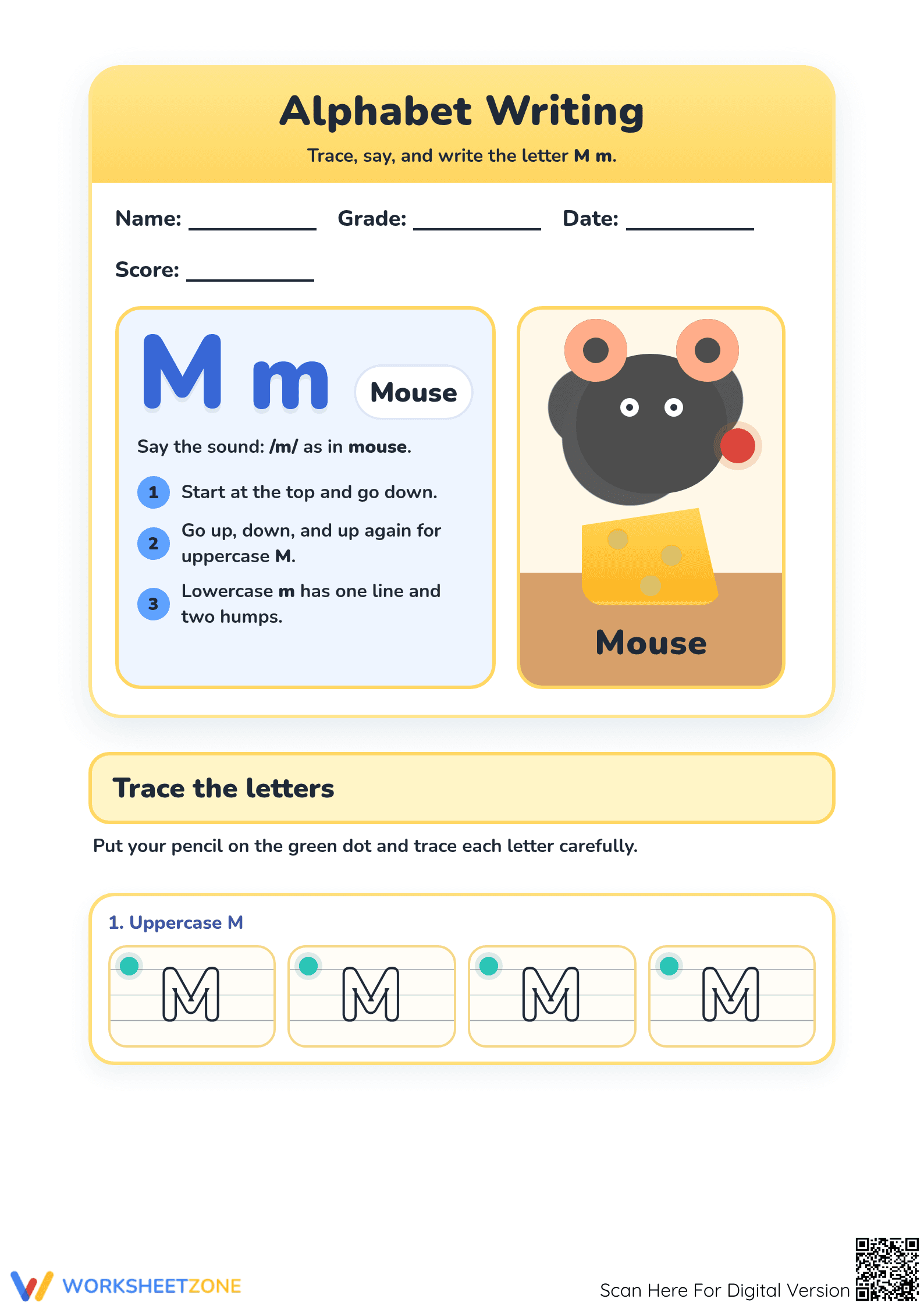
This worksheet helps preschool and kindergarten students master the letter M through a structured trace-and-write sequence. By engaging with both uppercase and lowercase forms, learners build the fine motor control and phonemic awareness necessary for early literacy success. Students will connect the letter M to the "mouse" sound while practicing precise stroke order and independent formation.
At a Glance
- Grade: K · Subject: English Language Arts
- Standard:
CCSS.ELA-LITERACY.L.K.1.A— Print upper- and lowercase letters of the alphabet with proper formation- Skill Focus: Letter M formation and phonics
- Format: 3 pages · 28 problems · Answer key included · PDF
- Best For: Daily morning work or handwriting practice
- Time: 15–20 minutes
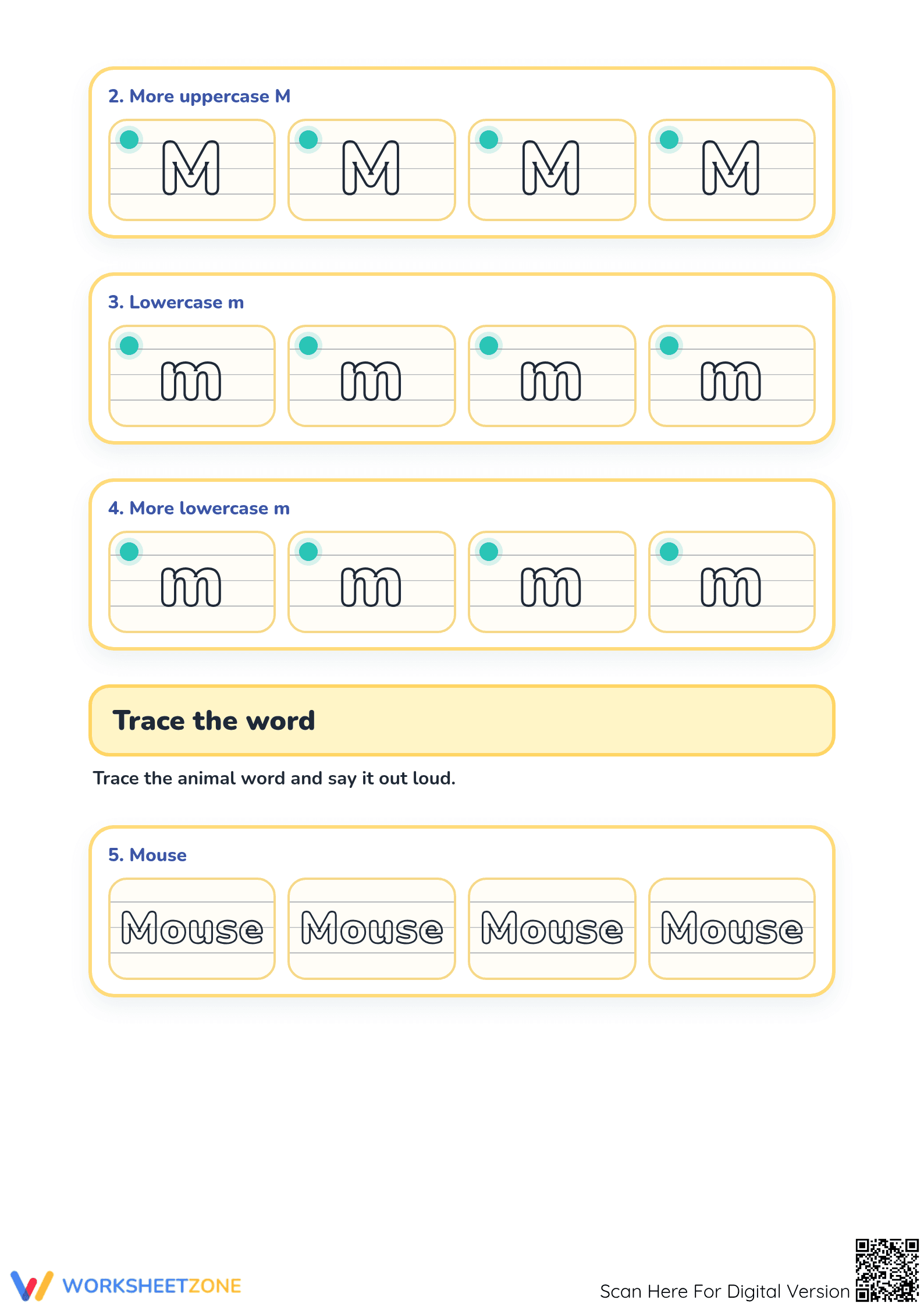
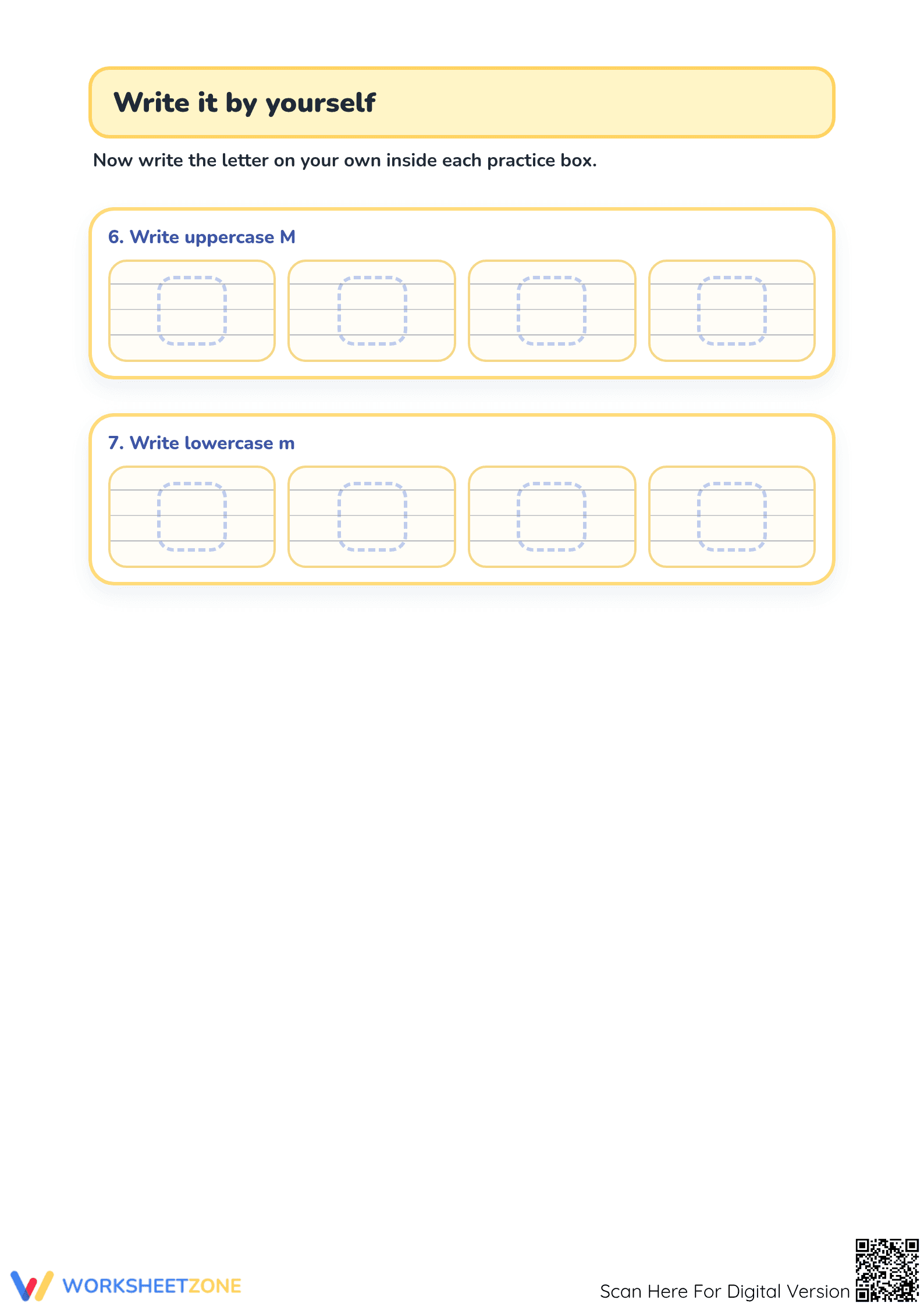
This 3-page printable packet contains 28 distinct practice boxes organized into seven developmental tasks. Page one introduces letter formation with clear visual guides and a "mouse" keyword illustration. Page two provides 16 tracing opportunities for both cases and the target vocabulary word. Page three features 8 independent writing boxes with traditional primary lines to support spacing and size consistency.
Zero-Prep Workflow
- Step 1: Print the three-page PDF in seconds for your entire class (1 minute).
- Step 2: Distribute to students with pencils or crayons for immediate engagement (1 minute).
- Step 3: Review student formation as they complete the independent writing section on the final page.
Total teacher preparation time is under two minutes, making this an ideal choice for busy classrooms, centers, or unexpected sub-plans where high-quality instructional materials are needed instantly.
Standards Alignment
This resource is aligned with CCSS.ELA-LITERACY.L.K.1.A: "Print many upper- and lowercase letters." It focuses specifically on the letter M, providing the repetitive practice required for developing muscle memory and stroke consistency. Both standard codes can be copied directly into lesson plans, IEP goals, or district curriculum mapping tools to ensure instructional accountability.
How to Use It
Use this as a center activity during your phonics block after introducing the /m/ sound. Observe students at Task 6 to see if they maintain the "top-down" stroke order without the tracing guide. This worksheet takes 15-20 minutes to complete and serves as a clear artifact for student portfolios or parent-teacher conferences to demonstrate growth in fine motor skills.
Who It's For
Ideal for preschool, kindergarten, and first-grade students who need targeted handwriting support. It is particularly effective for English Language Learners who benefit from the visual keyword "Mouse." Pair this resource with a letter M alphabet book or a tactile sand tray activity for a multi-sensory learning experience that reinforces letter-sound correspondence.
According to the RAND AIRS 2024 report on foundational literacy, repetitive handwriting practice is a significant predictor of reading fluency in early childhood education. This Alphabet Writing - M worksheet directly supports CCSS.ELA-LITERACY.L.K.1.A by providing 28 instances of structured letter practice. Fisher & Frey (2014) emphasize that gradual release—moving from tracing to independent writing—is essential for students to internalize the spatial relationships of upper- and lowercase characters. By focusing on the /m/ sound through the "mouse" mnemonic, students bridge the gap between phonemic awareness and grapheme production. This resource is designed to be a high-frequency, low-stakes practice tool that builds the mechanical confidence needed before moving to sentence-level composition. Research suggests that ten minutes of focused daily handwriting can significantly reduce cognitive load during later creative writing tasks, allowing students to focus on expression rather than letter recall.


