




























Aligned Trace a Claim to Its Source Worksheet | Grade 7 ELA
Paste this activity's link or code into your existing LMS (Google Classroom, Canvas, Teams, Schoology, Moodle, etc.).
Students can open and work on the activity right away, with no student login required.
You'll still be able to track student progress and results from your teacher account.
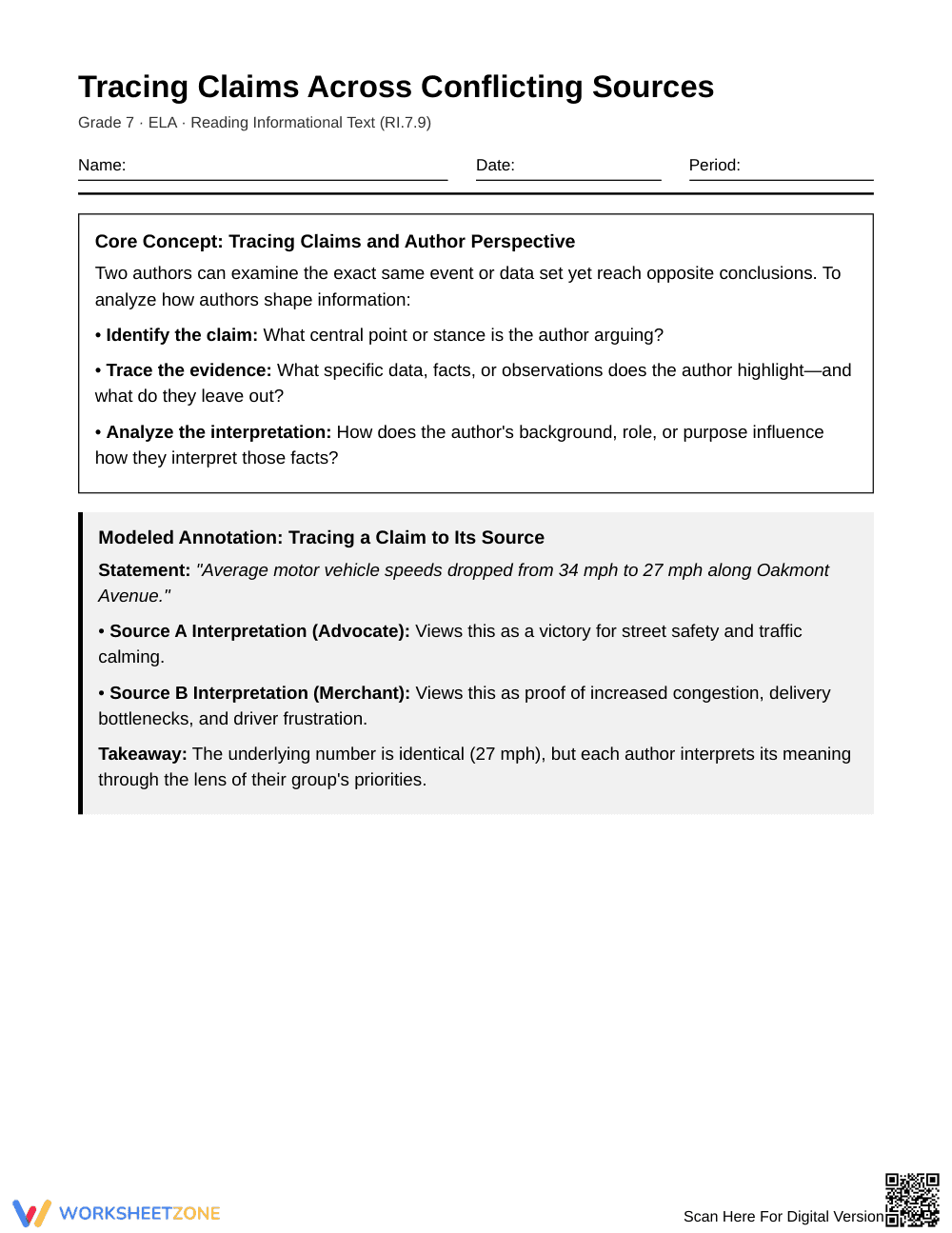
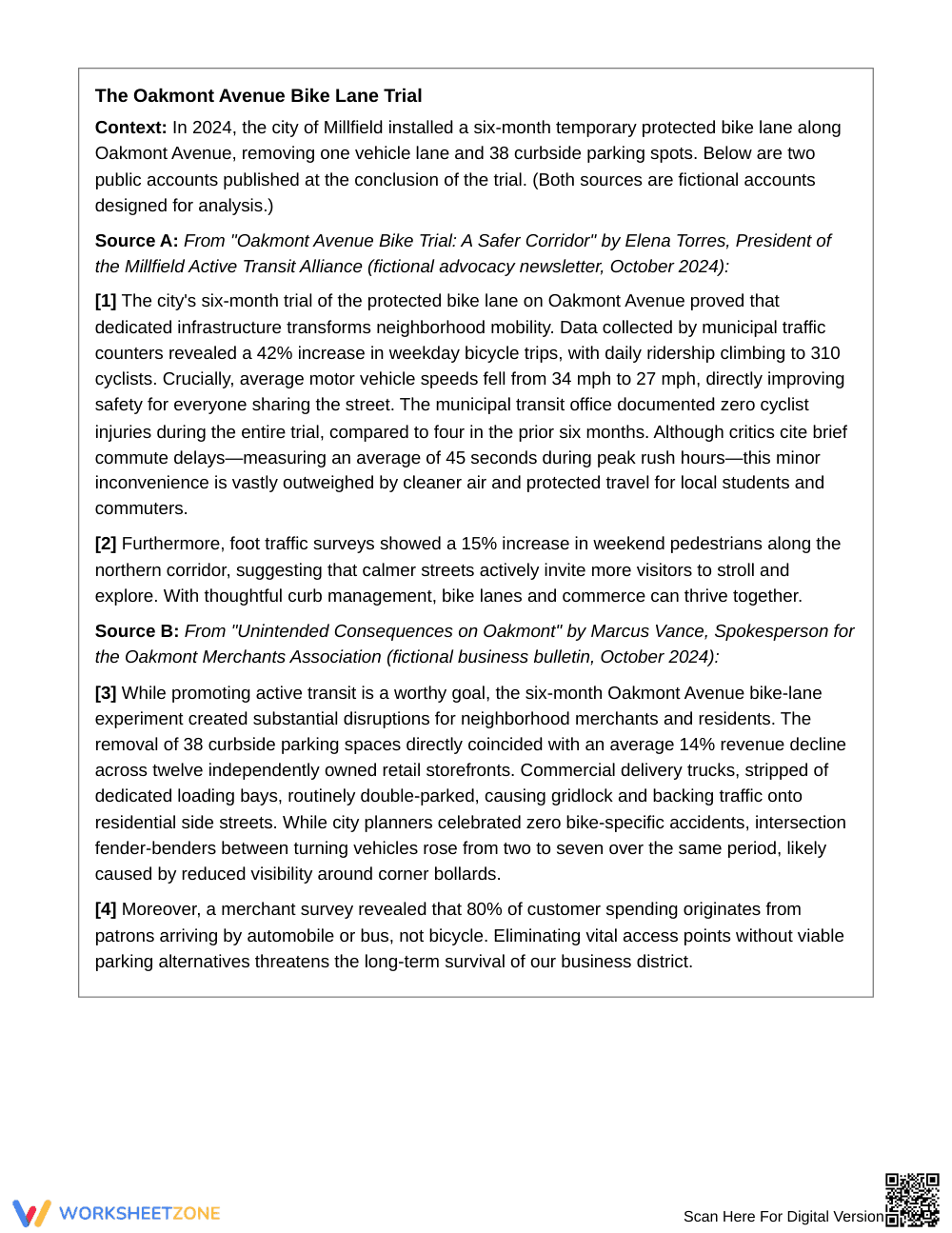
This Grade 7 informational text worksheet equips students to trace claims and examine author perspective across conflicting accounts. Using paired articles about a city bike lane trial, learners analyze how stakeholders interpret identical statistics to reach opposing conclusions, strengthening critical reading and source analysis skills.
At a Glance
- Grade: 7 · Subject: ELA
- Standard:
RI.7.9— Compare how two authors present the same event by analyzing evidence selection.- Skill Focus: Trace a Claim to Its Source
- Format: 5 pages · 10 scaffolded problems · Complete 3-page answer key · PDF
- Best For: Paired informational text close reading and analysis
- Time: 45–60 minutes
What's Inside
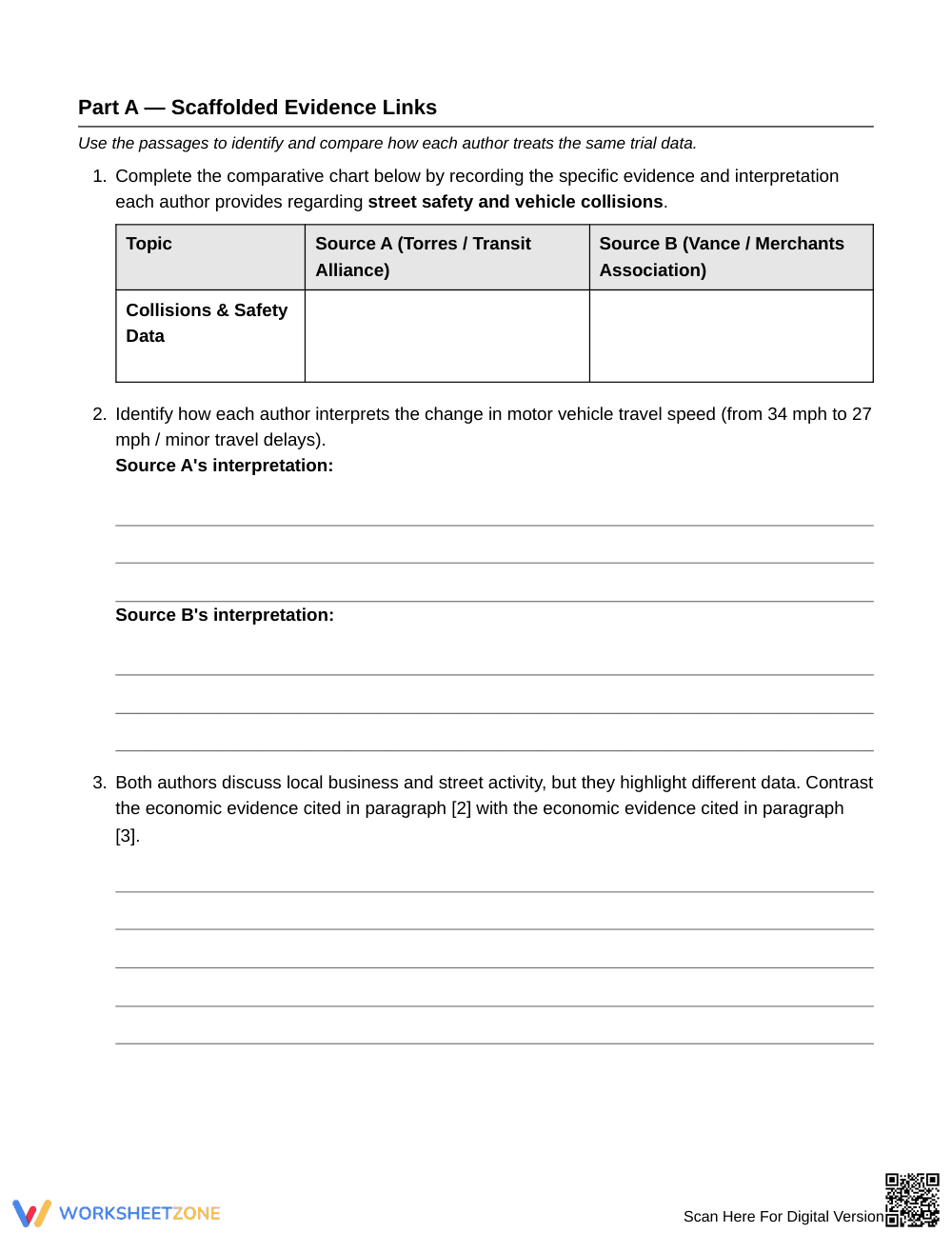
This 5-page resource features an explicit rule box with modeled annotation, two companion passages exploring an urban bike lane trial, and 10 focused tasks. Students complete a comparative chart, multiple-choice items, text-dependent short answers, and a policy evaluation prompt. A comprehensive 3-page answer key provides complete model responses for quick evaluation.
Skill Progression
- Guided practice (Part A, 3 tasks): Students use a comparative chart to record collision data, contrast speed interpretations, and categorize economic evidence with direct textual support.
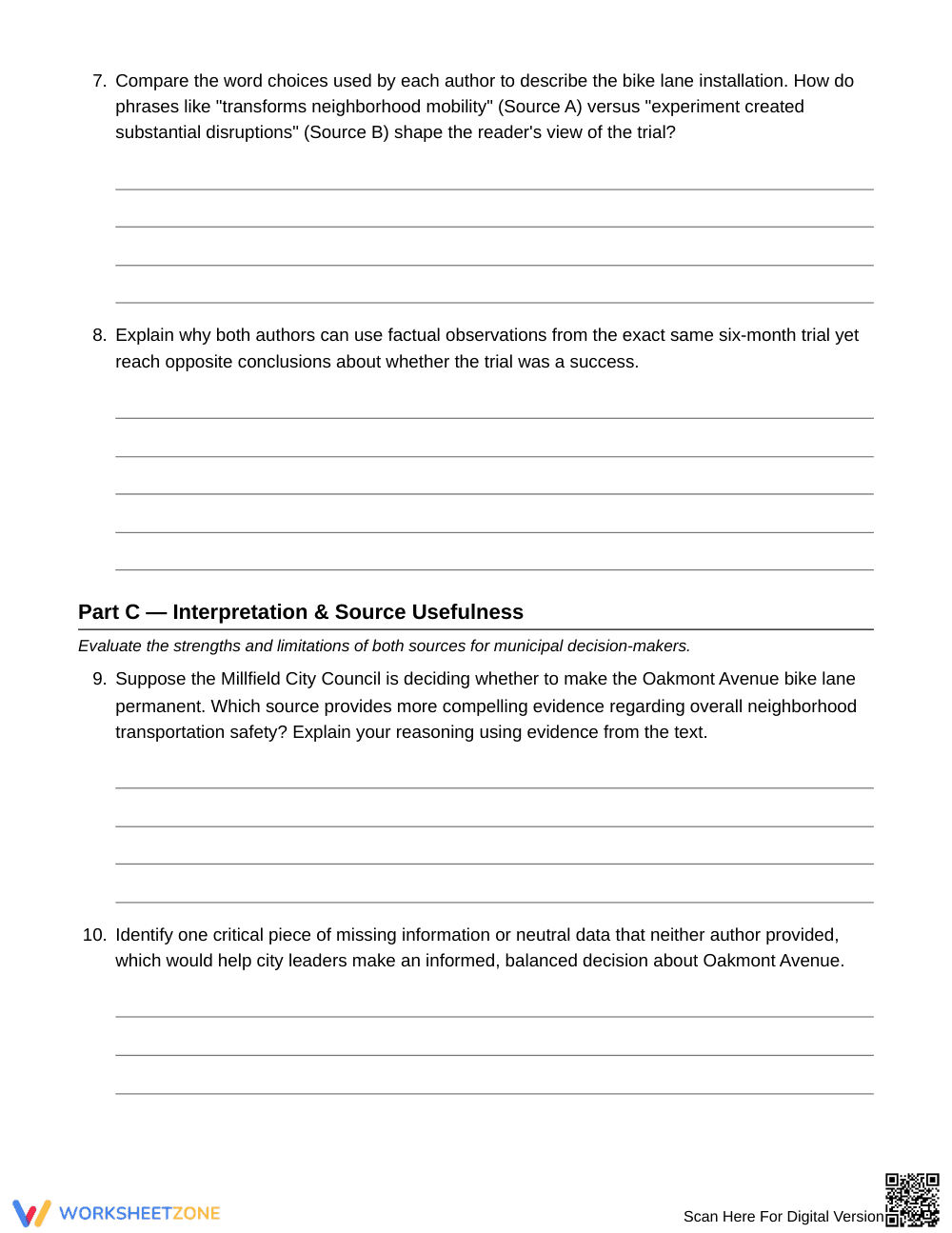
- Supported practice (Part B, 5 tasks): Learners complete multiple-choice and short-response items examining rhetorical word choice, author perspective, and data selection.
- Independent practice (Part C, 2 tasks): Students evaluate source usefulness for local governance and identify omitted data without instructional scaffolding.
This progression mirrors the gradual-release framework, moving learners from guided categorization to independent critical evaluation.
Standards Alignment
This worksheet aligns directly to RI.7.9: "Compare and contrast one author's presentation of events with that of another." It also reinforces supporting standard RI.7.1 by requiring evidence citations for each response. Both standard codes can be copied directly into lesson plans, IEP goals, or district curriculum mapping tools.
How to Use It
Use this worksheet after direct instruction on author perspective or as a paired text study. During independent practice, observe students completing the Part A chart to verify they separate objective numbers from subjective framing. The entire activity is designed for a 45- to 60-minute instructional block.
Who It's For
This activity serves Grade 7 English language arts classrooms, advanced Grade 6 groups, and Grade 8 students needing targeted remediation. The modeled annotation supports developing readers, while Part C challenges advanced thinkers. Pair this worksheet with an anchor chart contrasting factual data with rhetorical interpretation.
Research from Fisher & Frey (2014) demonstrates that adolescent literacy development requires structured classroom opportunities to evaluate conflicting claims and synthesize complex paired informational texts. This worksheet targets standard RI.7.9 by teaching seventh-grade students to trace a claim to its source, distinguishing empirical data from stakeholder perspectives. Using paired accounts of a municipal bike trial, students analyze how different authors interpret identical statistics to support divergent conclusions. Rather than treating texts as neutral reports, learners investigate how professional roles and institutional goals shape the selection and framing of evidence. The structured progression from a guided comparative chart to open-ended policy evaluation provides necessary scaffolding for all reading levels. By analyzing how authors frame facts to justify claims, students build essential critical reading skills applicable across academic disciplines. This evidence-based design ensures learners achieve demonstrable mastery in comparative informational analysis.


