































Aligned Compare Text Structures Worksheet | Grade 7 ELA

Paste this activity's link or code into your existing LMS (Google Classroom, Canvas, Teams, Schoology, Moodle, etc.).
Students can open and work on the activity right away, with no student login required.
You'll still be able to track student progress and results from your teacher account.
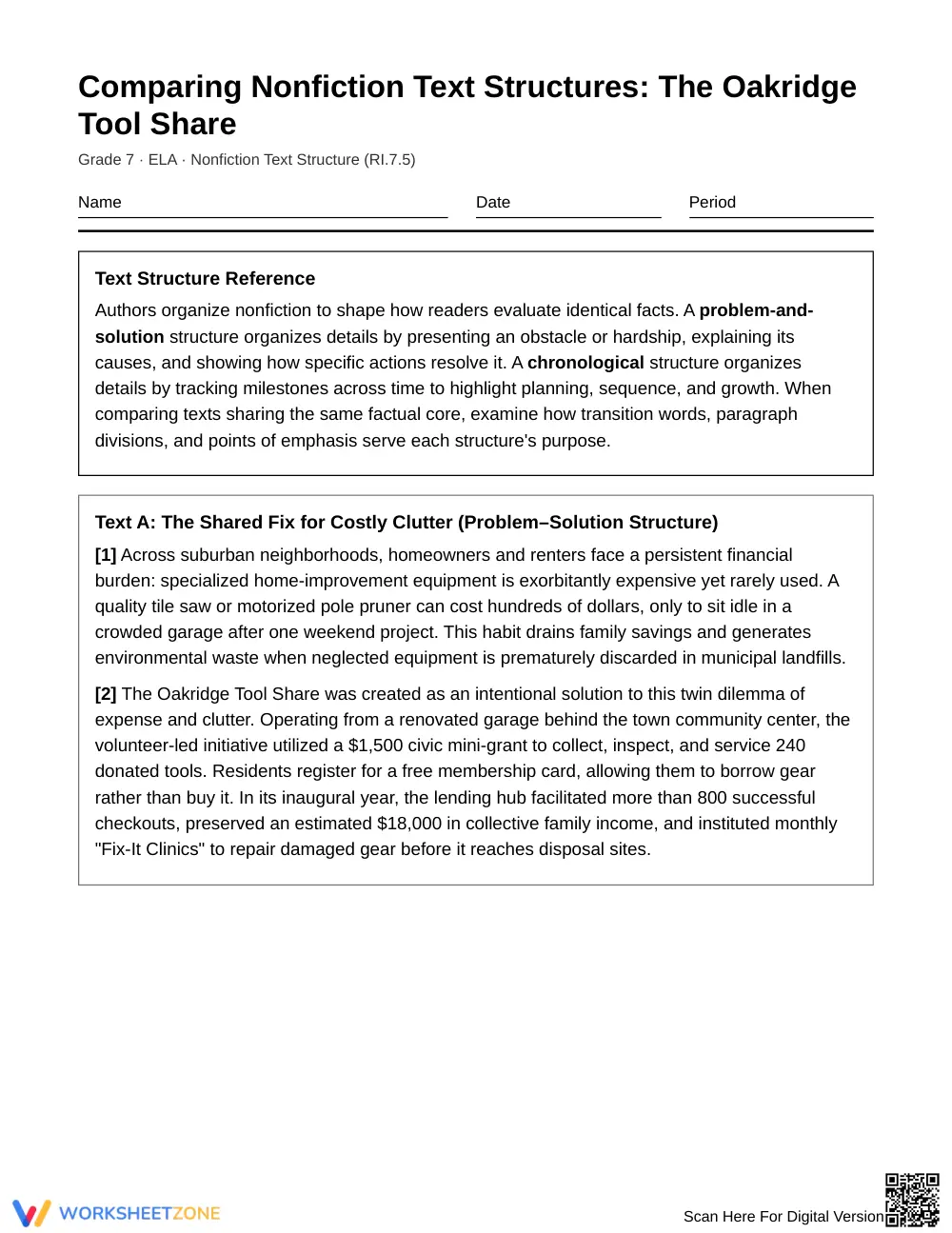
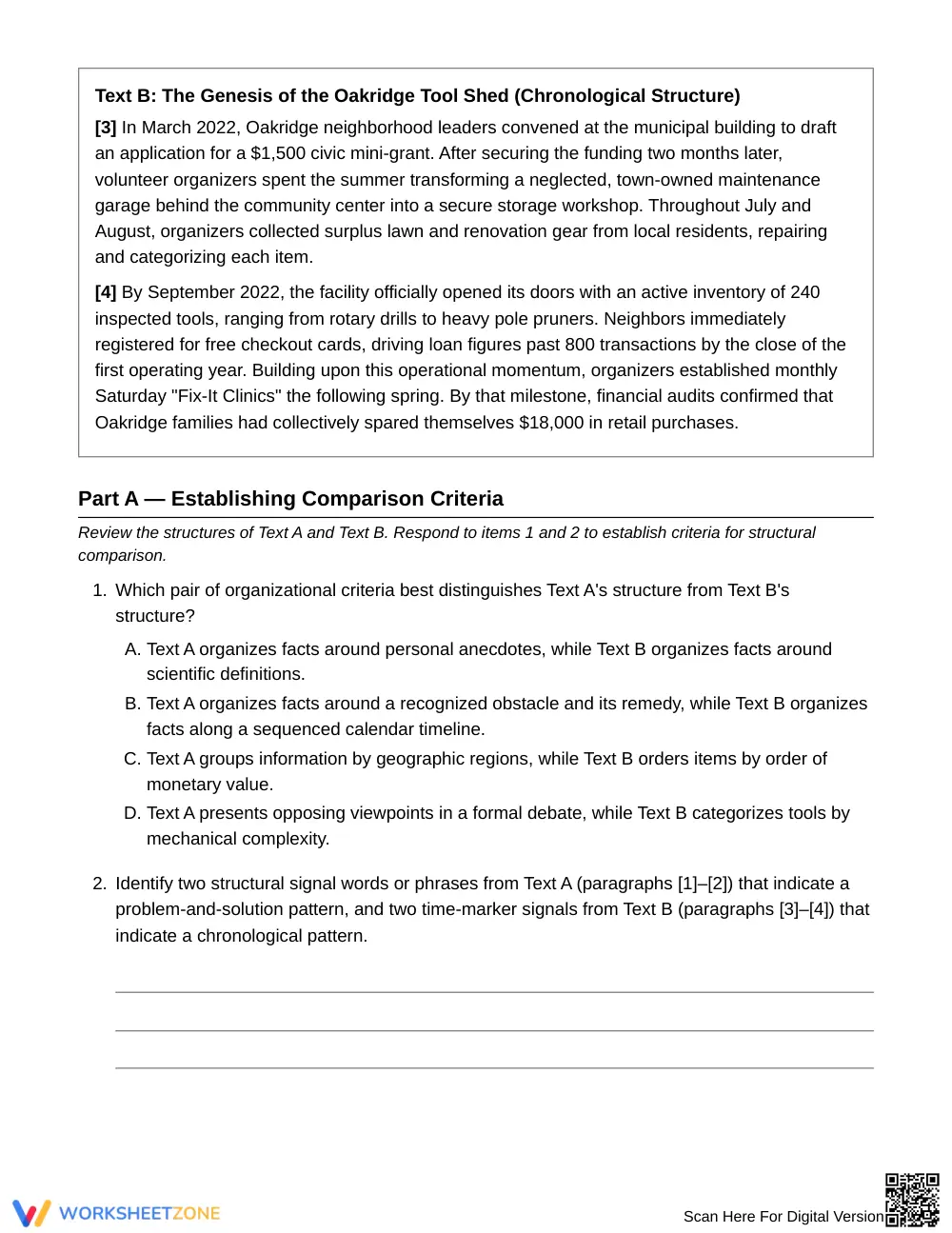
This Grade 7 informational text worksheet equips students to compare how two distinct organizational structures treat the identical factual topic. By analyzing paired texts about a community tool-lending project, learners evaluate how authors manipulate chronology and problem-and-solution frameworks to influence reader perception, strengthening analytical reading comprehension and structural text analysis.
At a Glance
- Grade: 7 · Subject: ELA
- Standard:
RI.7.5— Analyze how two different text structures present the same core set of facts.- Skill Focus: Compare Two Structures for the Same Facts
- Format: 5 pages · 10 problems · Complete 4-page answer key included · PDF
- Best For: Nonfiction paired-text analysis and close reading practice
- Time: 40–50 minutes
What's Inside
This 5-page resource features paired informational passages centered on the Oakridge Tool Share alongside an introductory reference guide. Ten targeted tasks encompass multiple-choice analysis, text evidence citation, transition evaluation, a synthesis comparison table, and short-answer evaluations. A thorough 4-page answer key provides model explanations and completed chart criteria.
Skill Progression
- Guided practice: Items 1–2 establish foundational criteria by prompting students to classify organizational patterns and extract signal markers using the reference framework.
- Supported practice: Items 3–8 require paired-text structural analysis, guiding students through multiple-choice comparisons, evidence-based short answers, transition evaluations, and an organizational comparison table.
- Independent practice: Items 9–10 demand deep evaluative synthesis, requiring students to articulate how structure changes reader perception and defend an optimal structure for an authentic persuasive task.
This structured progression reflects the gradual release of responsibility model, transitioning seventh graders from identifying organizational signals to critiquing authorial choices.
Standards Alignment
This resource focuses on RI.7.5: Analyze the structure an author uses to organize a text, including how major sections contribute to the whole and to idea development. Students also apply supporting standard RI.7.1 by citing textual evidence for structural claims. Both standard codes can be copied directly into lesson plans, IEP goals, or district curriculum mapping tools.
How to Use It
Deploy this worksheet after direct instruction on nonfiction text patterns as a mid-unit paired-text lab. Alternatively, assign Parts A and B for partner practice, reserving Part C for formative assessment. During circulation, verify whether students recognize how shared metrics (like the 240 tools or $18,000 saved) serve distinct structural purposes. Expected completion time is 40 to 50 minutes.
Who It's For
Designed for Grade 7 ELA classes, advanced Grade 6 readers, or Grade 8 intervention groups mastering informational text structures. English learners benefit from the reference guide and table, while advanced students tackle the evaluative extension in item 10. Pair this resource with an anchor chart highlighting organizational signal words.
Under CCSS RI.7.5, seventh-grade students must analyze how authors organize informational texts and evaluate how structural frameworks shape the meaning of shared facts. Rather than viewing text structure as a passive labeling exercise, modern reading research highlights the necessity of comparative analysis to build deep comprehension. As demonstrated by Fisher & Frey (2014), engaging learners in close reading of paired passages with contrasting organizational frameworks—such as chronological timelines and problem-solution models—forces students to examine how transitions, section placement, and rhetorical focus alter reader interpretation. By comparing how identical data points function within different architectural designs, students move beyond superficial recall to evaluate authorial intent and strategic communication. This 10-task worksheet operationalizes these evidence-based principles through structured, scaffolded practice that systematically prepares middle school readers for the complex informational demands of secondary coursework and standardized state assessments.


