


























Views
Downloads

Printable A-Z Bubble Letters Worksheet | Grade K-2 ELA
Paste this activity's link or code into your existing LMS (Google Classroom, Canvas, Teams, Schoology, Moodle, etc.).
Students can open and work on the activity right away, with no student login required.
You'll still be able to track student progress and results from your teacher account.
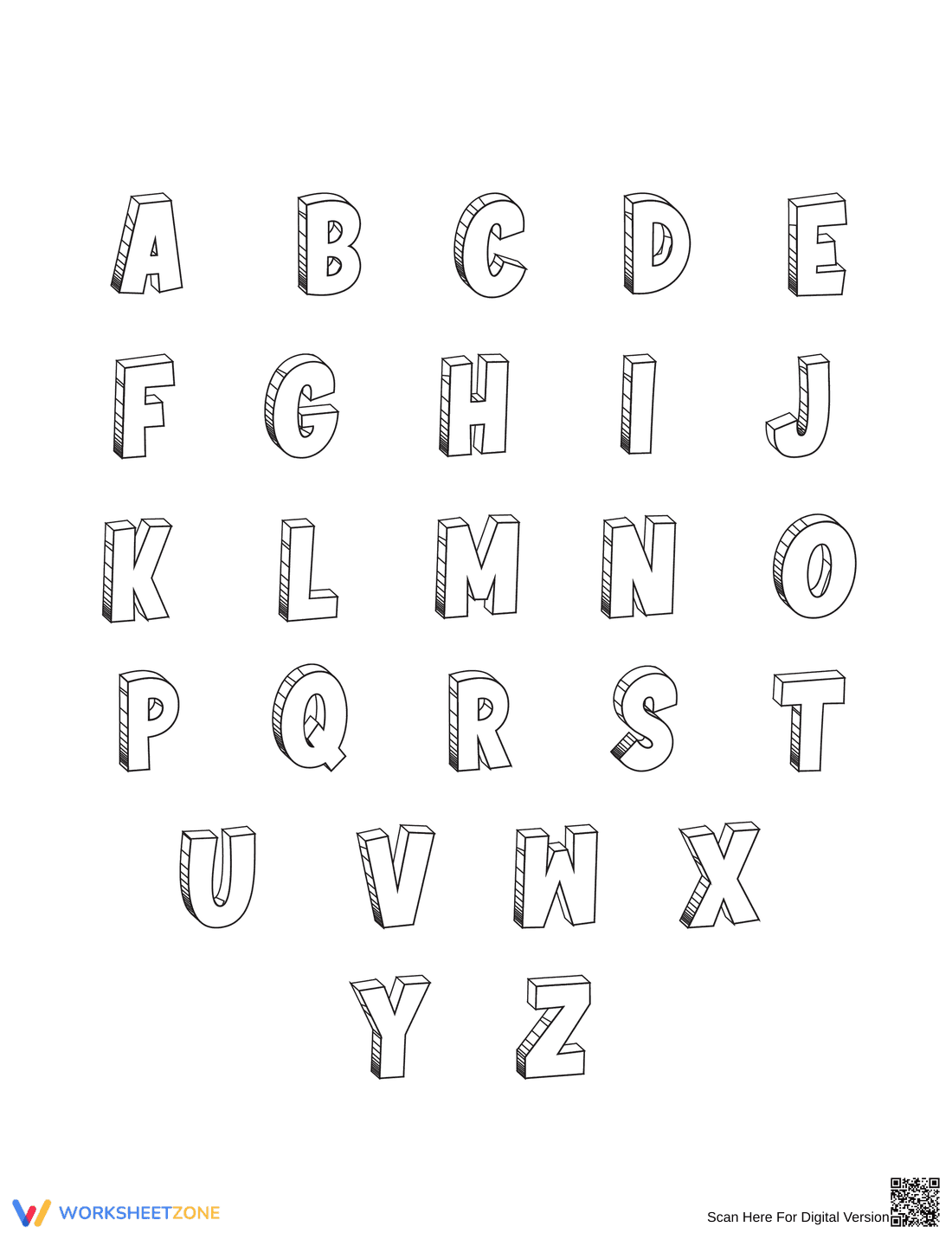
This A-Z bubble letters worksheet provides a creative way for students to master letter recognition and fine motor control. By engaging with 3D-style typography, learners develop the visual-spatial skills necessary for confident writing and artistic expression. It is an ideal resource for early finishers or as a fun literacy center activity that reinforces alphabet familiarity.
At a Glance
- Grade: Kindergarten · Subject: ELA / Art
- Standard:
CCSS.ELA-LITERACY.L.K.1.A— Print many upper- and lowercase letters with proper form- Skill Focus: Letter Recognition & Fine Motor
- Format: 1 page · 26 tasks · No answer key needed · PDF
- Best For: Early finishers and literacy centers
- Time: 15–30 minutes
This single-page PDF features all 26 uppercase letters of the English alphabet rendered in a stylized 3D bubble format. The layout is clean and spacious, allowing students to color, shade, or trace the outlines of each character. There are no complex instructions, making it accessible for independent work or as a supplemental tool for students who need extra engagement with alphabet shapes beyond standard handwriting drills.
Zero-Prep Workflow:
- Print: Select the single-page PDF and print enough copies for your class in under 30 seconds.
- Distribute: Hand out the sheets along with crayons, markers, or colored pencils to your students.
- Review: Walk around to observe letter recognition and grip technique as students work on their designs.
Total teacher prep time is under 2 minutes, making this an excellent sub-plan or transition activity for busy mornings.
The primary standard addressed is CCSS.ELA-LITERACY.L.K.1.A, which requires students to print many upper- and lowercase letters. While these are stylized bubble letters, the activity reinforces the structural components and identification of each character. This standard code can be copied directly into lesson plans, IEP goals, or district curriculum mapping tools to ensure all creative activities remain academically grounded.
Use this worksheet during a "Letter of the Day" wrap-up or as a reward for completing primary writing tasks. It serves as a formative assessment tool; observe if students can identify the letters out of sequence while they color. Expected completion time ranges from 15 to 30 minutes depending on the level of detail and shading students choose to apply to the 3D forms.
This resource is designed for Kindergarten and Grade 1 students, though it remains popular for older students in Art classes exploring typography. It is particularly effective for kinesthetic learners who benefit from tactile engagement with letter shapes. Pair this with an alphabet anchor chart or a direct instruction lesson on uppercase formation to maximize the instructional impact.
According to the RAND AIRS 2024 report, integrating creative arts into foundational literacy instruction significantly improves student engagement and retention of letter-sound correspondences. This worksheet targets CCSS.ELA-LITERACY.L.K.1.A by providing 26 distinct uppercase letter forms for students to explore. By focusing on the bubble letter aesthetic, the resource lowers the affective filter for students who may struggle with traditional handwriting drills. Research from Fisher & Frey (2014) suggests that such visual-spatial tasks support the gradual release of responsibility by allowing students to interact with complex shapes before moving to precise penmanship. This printable PDF is a high-utility tool for any early childhood classroom looking to bridge the gap between play and academic mastery through structured, creative practice.


