


























Views
Downloads
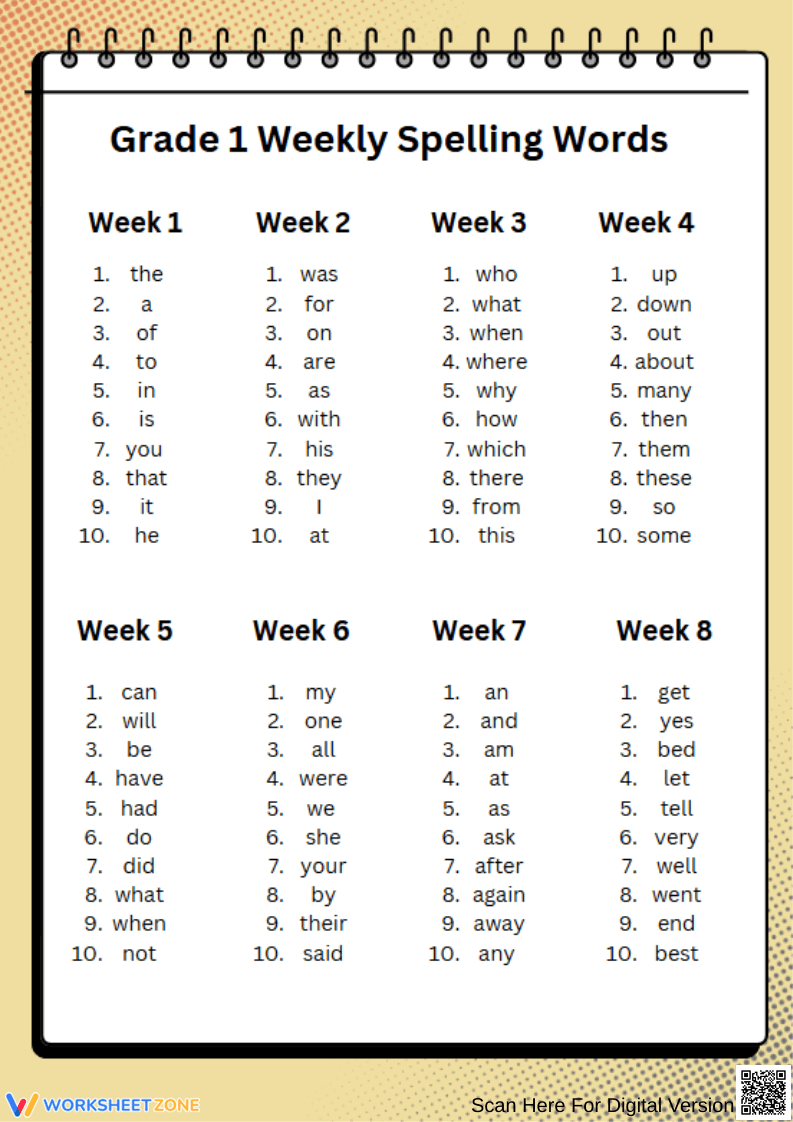
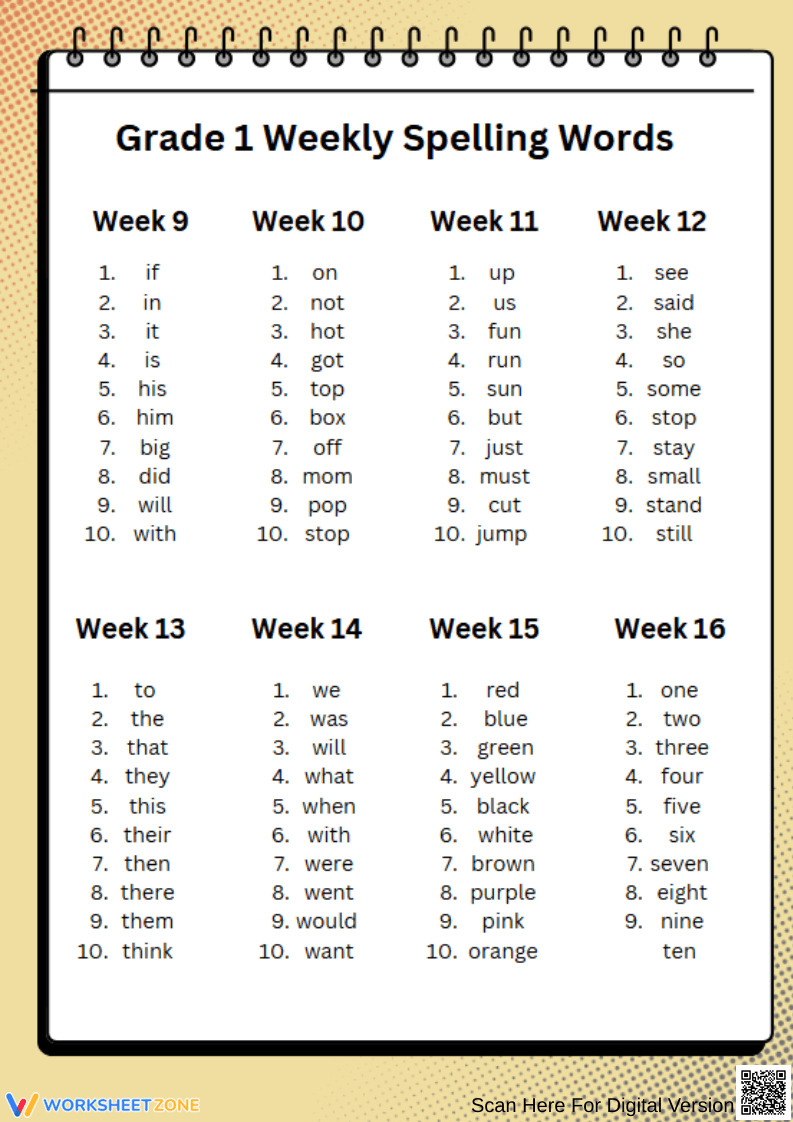
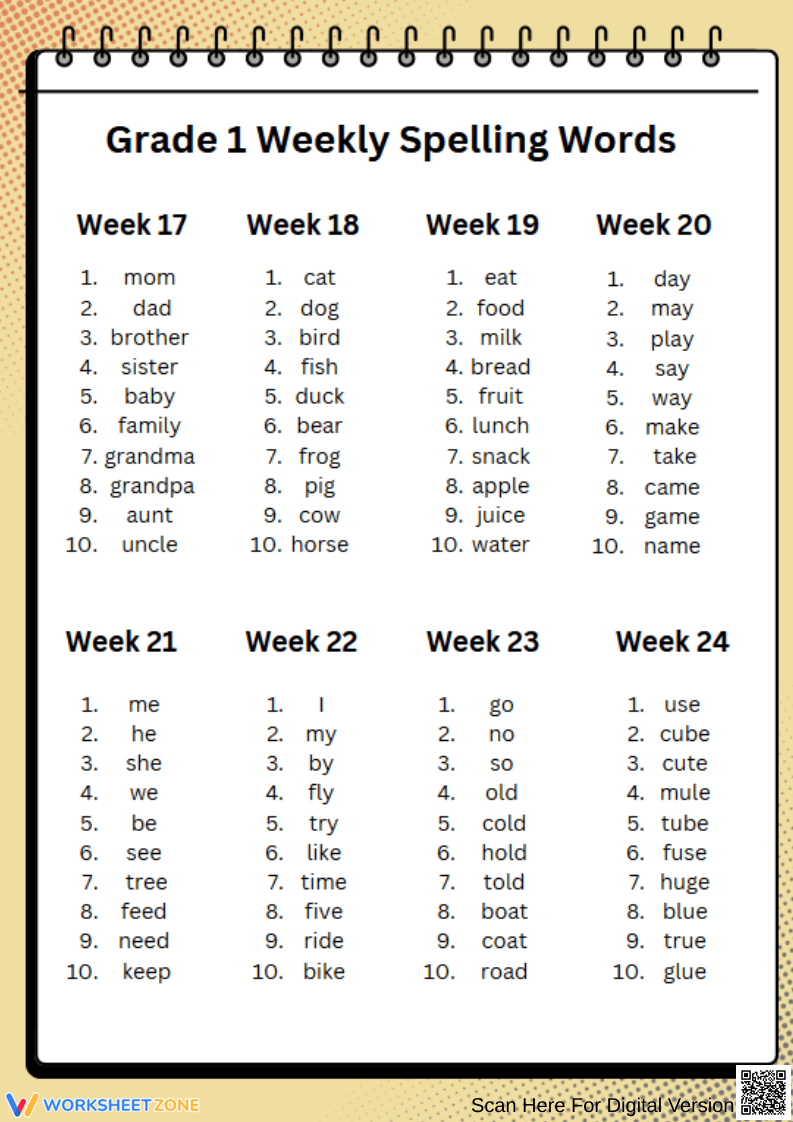
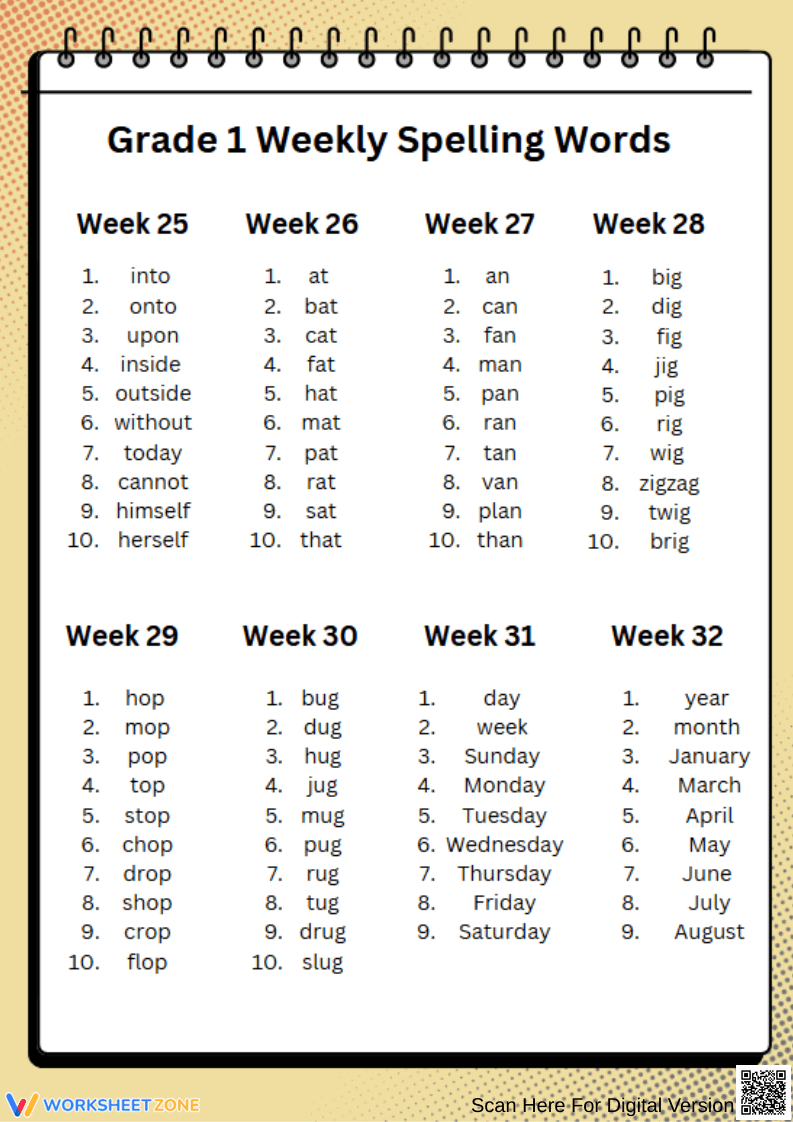
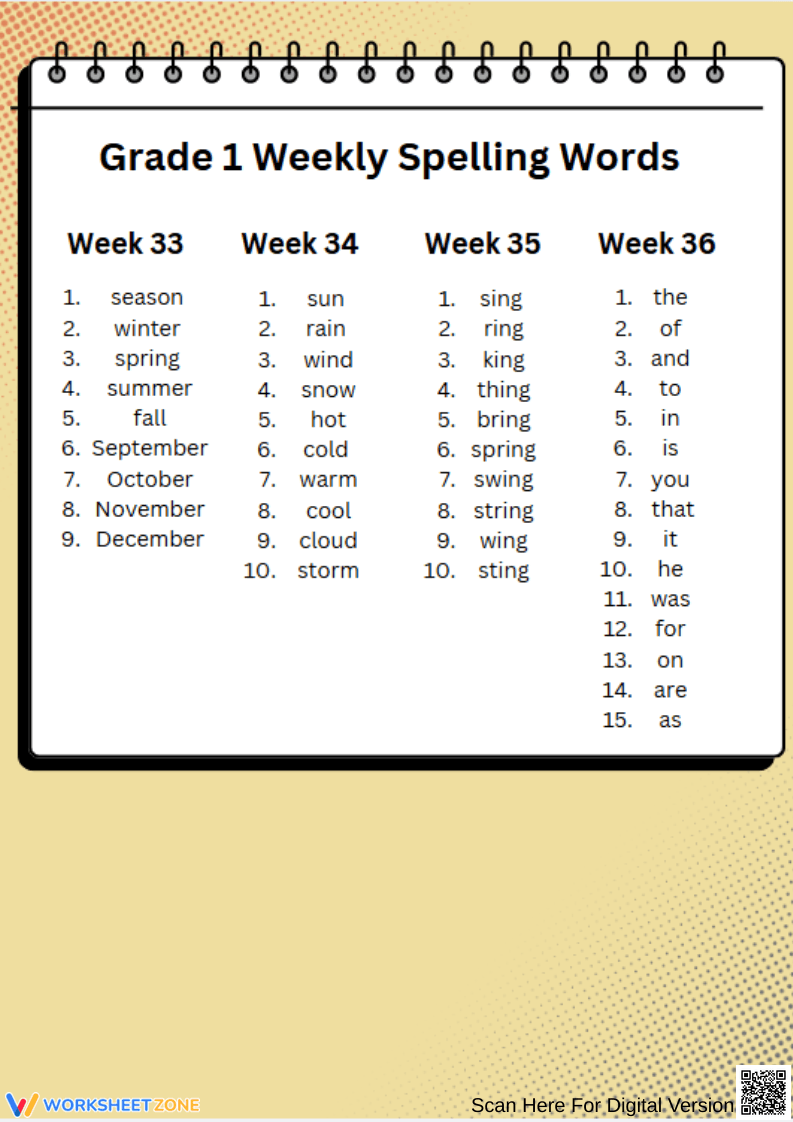

Printable 1st Grade Weekly Spelling Words List
Paste this activity's link or code into your existing LMS (Google Classroom, Canvas, Teams, Schoology, Moodle, etc.).
Students can open and work on the activity right away, with no student login required.
You'll still be able to track student progress and results from your teacher account.
This comprehensive spelling resource provides a structured, 36-week curriculum of high-frequency words and phonics patterns for first-grade students. By offering systematic weekly lists, it helps young learners build foundational reading, writing, and vocabulary skills. Students master essential sight words and spelling conventions to achieve early literacy success.
At a Glance
At a Glance
- Grade: Grade 1 · Subject: English Language Arts
- Standard:
CCSS.ELA-LITERACY.L.1.2.E— Spell untaught words phonetically using phonemic awareness and spelling conventions- Skill Focus: High-frequency sight words and phonics
- Format: 5 pages · 36 lists · Reference sheet · PDF
- Best For: Weekly spelling homework and vocabulary practice
- Time: 10–15 minutes daily
What's Inside
This five-page PDF contains 36 distinct weekly spelling lists designed specifically for first graders. Each list features nine to fifteen age-appropriate words, focusing on high-frequency sight words, word families, colors, numbers, and seasonal vocabulary. The clean, structured layout serves as an easy-to-read reference sheet for students, teachers, and parents alike.
Zero-Prep Workflow
Integrating this spelling curriculum into your classroom requires minimal effort. First, print the five-page document or individual weekly lists in under one minute. Next, distribute the lists to students at the start of each week to guide their daily practice. Finally, review the words through quick daily warm-ups or Friday spelling tests, requiring zero additional teacher preparation. This self-explanatory layout makes it an ideal resource for emergency sub plans, homework packets, or independent study folders.
Standards Alignment
This resource aligns directly with CCSS.ELA-LITERACY.L.1.2.E, which requires students to spell untaught words phonetically by drawing on phonemic awareness and spelling conventions. Additionally, it supports foundational reading standards by reinforcing high-frequency irregular sight words. Both standard codes can be copied directly into lesson plans, IEP goals, or district curriculum mapping tools.
How to Use It
Use this spelling list as a weekly homework reference sheet to encourage parent-led practice at home. Alternatively, introduce the list during direct instruction on Monday, highlighting specific phonics patterns or tricky sight words. Teachers can conduct formative assessments by observing students during daily writing activities to see if they apply these spelling words in context.
Who It's For
This resource is designed for first-grade students developing early literacy skills, but it also serves as an excellent intervention tool for struggling second graders. It pairs naturally with decodable readers, phonics anchor charts, and daily writing journals. Differentiate instruction by assigning fewer words to students needing extra support.
This spelling curriculum aligns with research from Fisher & Frey (2014) on the gradual release of responsibility and systematic vocabulary acquisition. According to their findings, structured exposure to high-frequency words and phonics patterns builds the orthographic mapping skills necessary for fluent reading. By organizing words into manageable weekly lists, this resource supports cognitive load theory, allowing young learners to internalize spelling conventions without feeling overwhelmed. The inclusion of CCSS.ELA-LITERACY.L.1.2.E standards ensures that students practice phonemic awareness alongside rote memorization of irregular sight words. Educators can confidently implement this tool knowing it reinforces research-backed methods for early literacy development. The structured layout facilitates consistent home-school communication, which studies show significantly improves spelling retention and overall reading comprehension in early childhood education.


