


























Views
Downloads

Lab Equipment Functions Worksheet | Essential Grade 6-8
Paste this activity's link or code into your existing LMS (Google Classroom, Canvas, Teams, Schoology, Moodle, etc.).
Students can open and work on the activity right away, with no student login required.
You'll still be able to track student progress and results from your teacher account.
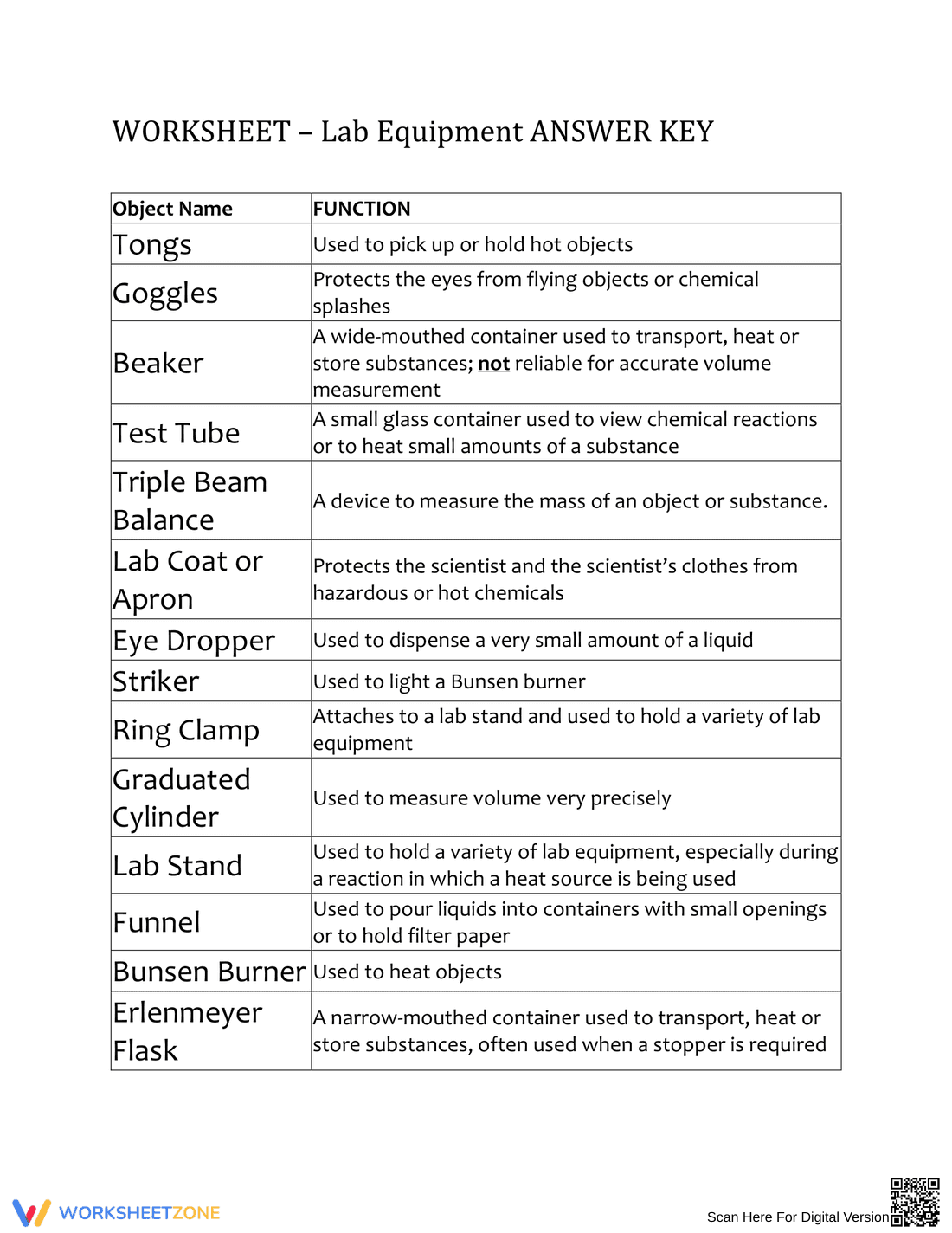
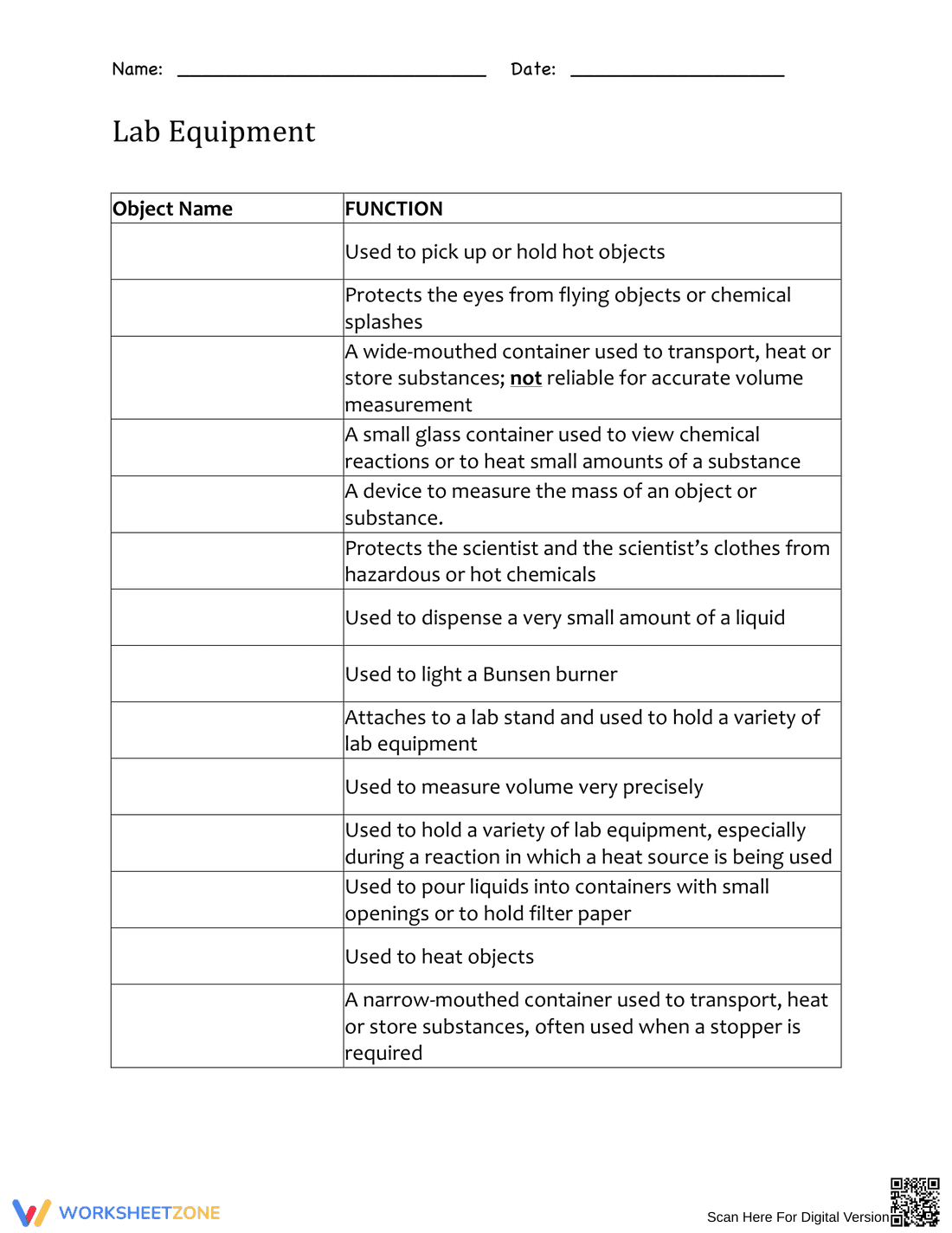
Mastering laboratory tools is a critical first step for any middle or high school science student. This Lab Equipment worksheet provides a structured way for learners to identify 14 essential pieces of apparatus and their specific functions. By connecting names like Erlenmeyer Flask and Graduated Cylinder to their uses, students build the vocabulary necessary for safe experimentation.
At a Glance
- Grade: 6-12 · Subject: Science
- Standard:
MS-ETS1-1— Define criteria and constraints for successful solutions using scientific tools and principles.- Skill Focus: Lab tool identification
- Format: 2 pages · 14 problems · Answer key included · PDF
- Best For: Introductory lab safety and tool orientation
- Time: 15–20 minutes
What's Inside
This resource consists of a clean, two-page PDF. The first page features a comprehensive table where students must fill in the names of 14 different laboratory objects based on provided functional descriptions. The second page is a complete teacher answer key, allowing for immediate feedback or self-grading. Tools covered include measurement devices like the Triple Beam Balance and safety gear like Goggles and Lab Aprons.
Zero-Prep Workflow
The zero-prep workflow for this worksheet is designed for maximum efficiency in a busy science department. First, print the single-sided student page in under 30 seconds. Second, distribute the sheets as a bell-ringer activity to activate prior knowledge before a lab session. Finally, use the included answer key to review the functions as a whole class, ensuring every student understands the purpose of each tool before they begin hands-on work. Total teacher preparation time is under 2 minutes.
Standards Alignment
This worksheet aligns with MS-ETS1-1: "Define the criteria and constraints of a design problem with sufficient precision to ensure a successful solution, taking into account relevant scientific principles." Understanding the specific limitations and uses of tools—such as knowing a beaker is not reliable for accurate volume measurement while a graduated cylinder is—is fundamental to this standard. Both standard codes can be copied directly into lesson plans, IEP goals, or district curriculum mapping tools.
How to Use It
Use this worksheet as a formative assessment during the first week of school to gauge student familiarity with science equipment. It serves as an excellent diagnostic tool before your first wet lab. Alternatively, assign it as a quick review for high school chemistry students who need a refresher on specialized equipment like the Bunsen burner and striker. Completion typically takes 15 to 20 minutes depending on prior exposure.
Who It's For
This resource is tailored for students in grades 6 through 12, with a focus on middle school introductory science. It is particularly helpful for English Language Learners who are building technical vocabulary. Pair this worksheet with a physical scavenger hunt where students find the actual items in the classroom after completing the written portion to reinforce the connection between the text and the physical object.
According to Fisher & Frey (2014), structured graphic organizers are essential for developing disciplinary literacy in science. This worksheet uses a clear table format to help students internalize the functions of 14 laboratory tools, from safety gear to precision devices. By linking object names to functional descriptions, the resource supports the gradual release of responsibility model, moving students from basic identification to applied use in experiments. Research indicates that students who can correctly identify and describe scientific apparatus perform better on hands-on tasks. This worksheet provides the foundational knowledge required for MS-ETS1-1 mastery, ensuring students enter the lab with the confidence and technical vocabulary needed for safe, accurate scientific inquiry and data collection.


