




























Views
Downloads

Essential Grade 1 Science: Young Animals Like Their Parents

Paste this activity's link or code into your existing LMS (Google Classroom, Canvas, Teams, Schoology, Moodle, etc.).
Students can open and work on the activity right away, with no student login required.
You'll still be able to track student progress and results from your teacher account.
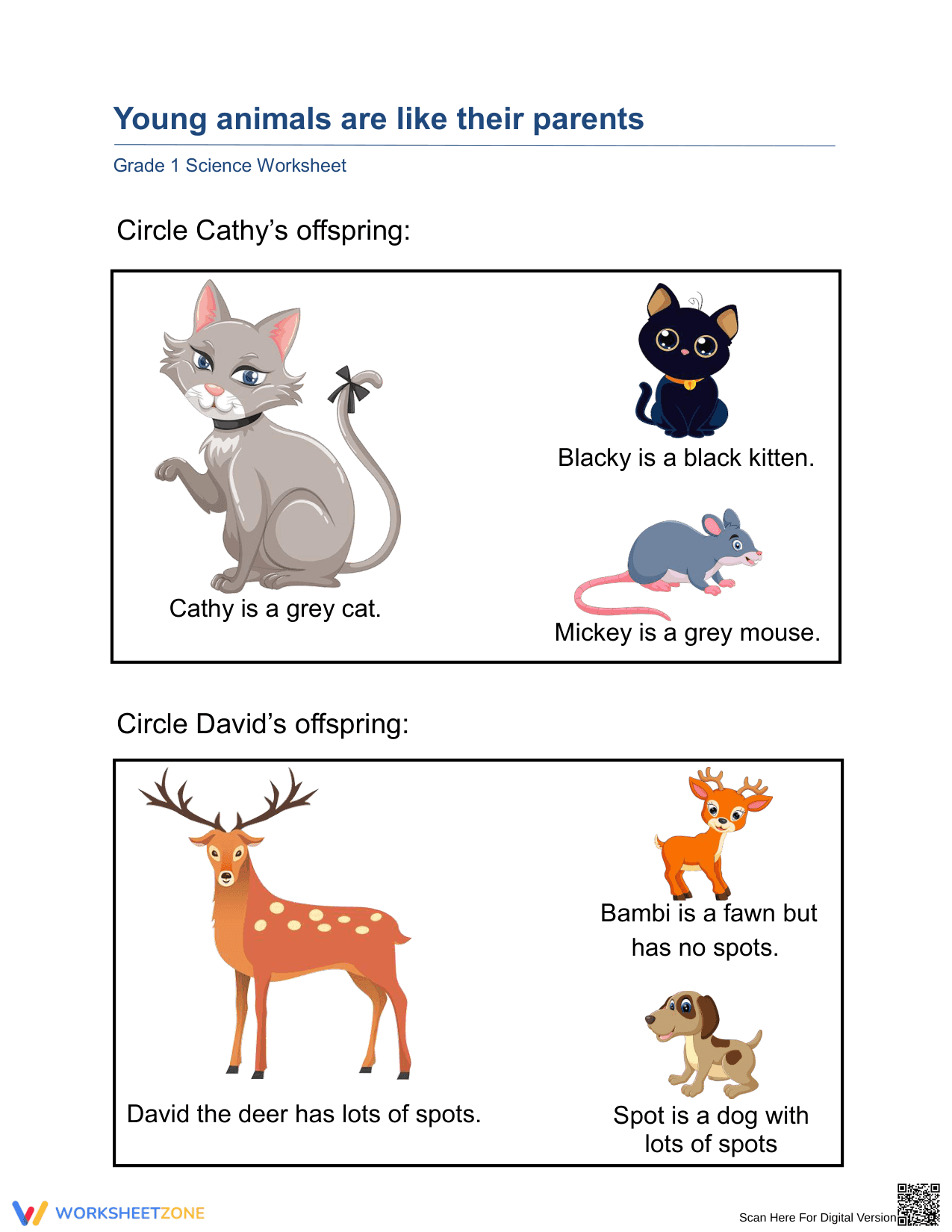
This Grade 1 science worksheet helps students observe and identify how young animals resemble their parents through specific physical traits. By comparing features like color and spots, learners develop a foundational understanding of biological inheritance. It is a perfect tool for introducing the concept that offspring are similar to, but not exactly like, their biological parents.
At a Glance
- Grade: 1 · Subject: Science
- Standard:
1-LS3-1— Make observations that young animals are like, but not exactly like, their parents- Skill Focus: Inherited Physical Traits
- Format: 1 page · 2 tasks · Answer key included · PDF
- Best For: Early elementary life science introduction
- Time: 10–15 minutes
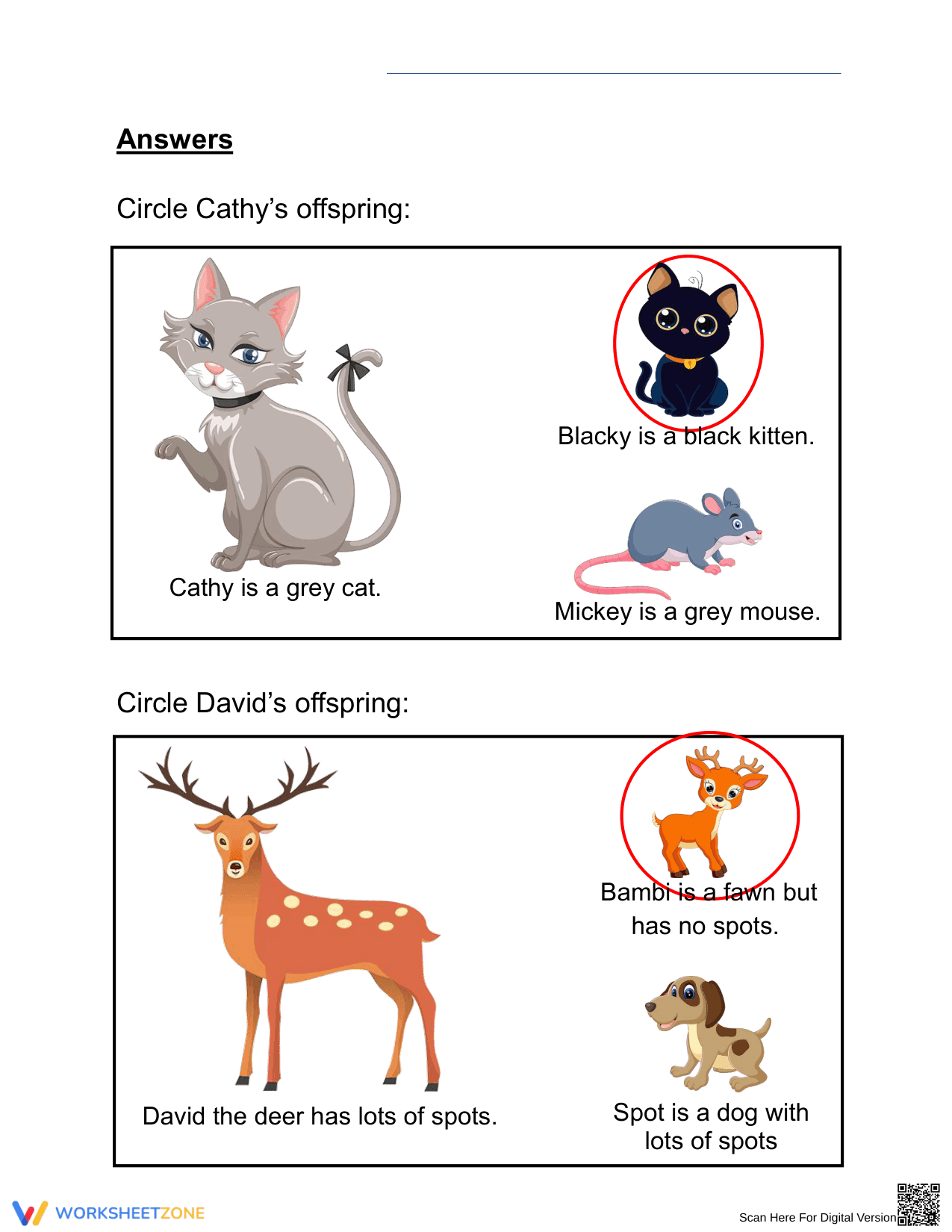
This single-page PDF includes two identification tasks for young learners. Each task presents a parent animal alongside two potential offspring. Students use observational skills to determine which juvenile shares critical inherited characteristics. The high-contrast, visual-heavy layout is accessible for emerging readers. A full answer key is included.
Integrating this resource into your lesson requires zero preparation. Simply print the single-sheet PDF in under 1 minute. Distribute the worksheets to your class in seconds. Finally, review correct answers using the included key in approximately 2 minutes. This makes it an ideal choice for morning work, sub plans, or a quick exit ticket.
This worksheet is aligned to NGSS 1-LS3-1. This standard requires students to observe that young animals are like, but not exactly like, their parents. By focusing on observable traits like spotting patterns and body shapes, the activity supports this performance expectation. Both standard codes can be copied directly into lesson plans, IEP goals, or district curriculum mapping tools.
Use this worksheet during the "Evaluate" phase of a lesson on living things. Before distribution, show pictures of puppies and dogs to prompt a discussion. While students work, observe if they are distracted by "tricky" traits like color versus species. Most first-grade students will complete the activity within 12 minutes, making it an excellent formative assessment.
This resource is designed for first-grade students but suits kindergarten enrichment or second-grade review. It supports diverse learners through clear, large illustrations and minimal text, reducing cognitive load for ELL students. Naturally pair this worksheet with a picture book about animal life cycles or an anchor chart displaying "Trait" vs. "Environment" examples.
Research from ScienceDirect TpT Analysis (2024) indicates that highly visual, single-skill worksheets significantly improve conceptual retention in early elementary science by reducing extraneous cognitive load. This worksheet specifically addresses the 1-LS3-1 standard by requiring students to utilize observational evidence to identify parent-offspring relationships. By isolating specific inherited traits like coat patterns and body structure, the activity reinforces the biological reality that young animals inherit characteristics from their parents. According to EdReports 2024, standards-aligned visual aids are critical for meeting Life Science benchmarks in the K-2 band. This resource provides the necessary scaffolding for students to move from simple observation to evidence-based reasoning. It ensures that learners grasp the fundamental concept of inheritance before moving on to more complex genetic principles in later grades. The inclusion of an answer key further supports immediate feedback, which is essential for early mastery of scientific concepts.


