


























Views
Downloads
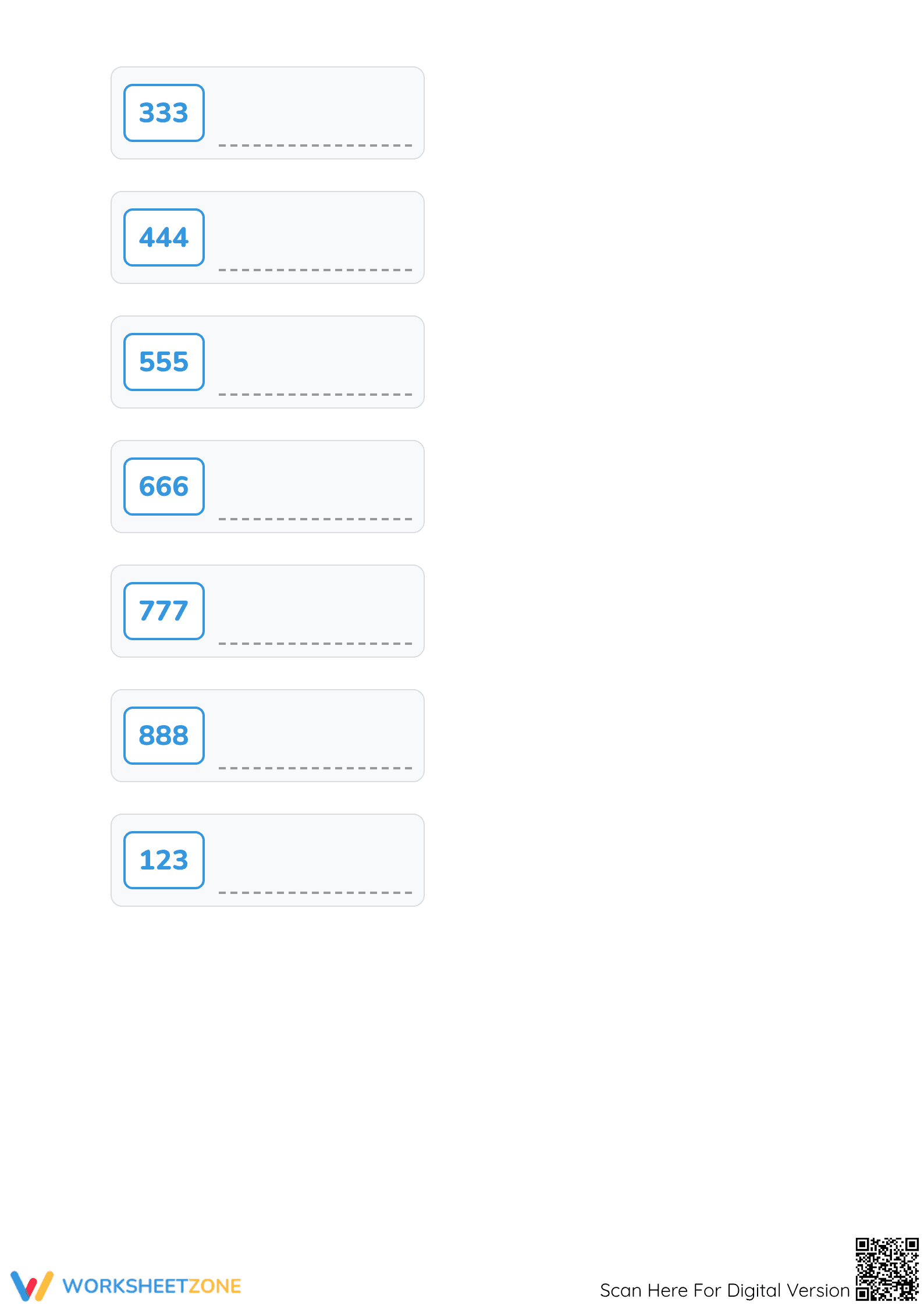

Writing Numbers Worksheet | Grade 2 Essential Practice
Paste this activity's link or code into your existing LMS (Google Classroom, Canvas, Teams, Schoology, Moodle, etc.).
Students can open and work on the activity right away, with no student login required.
You'll still be able to track student progress and results from your teacher account.
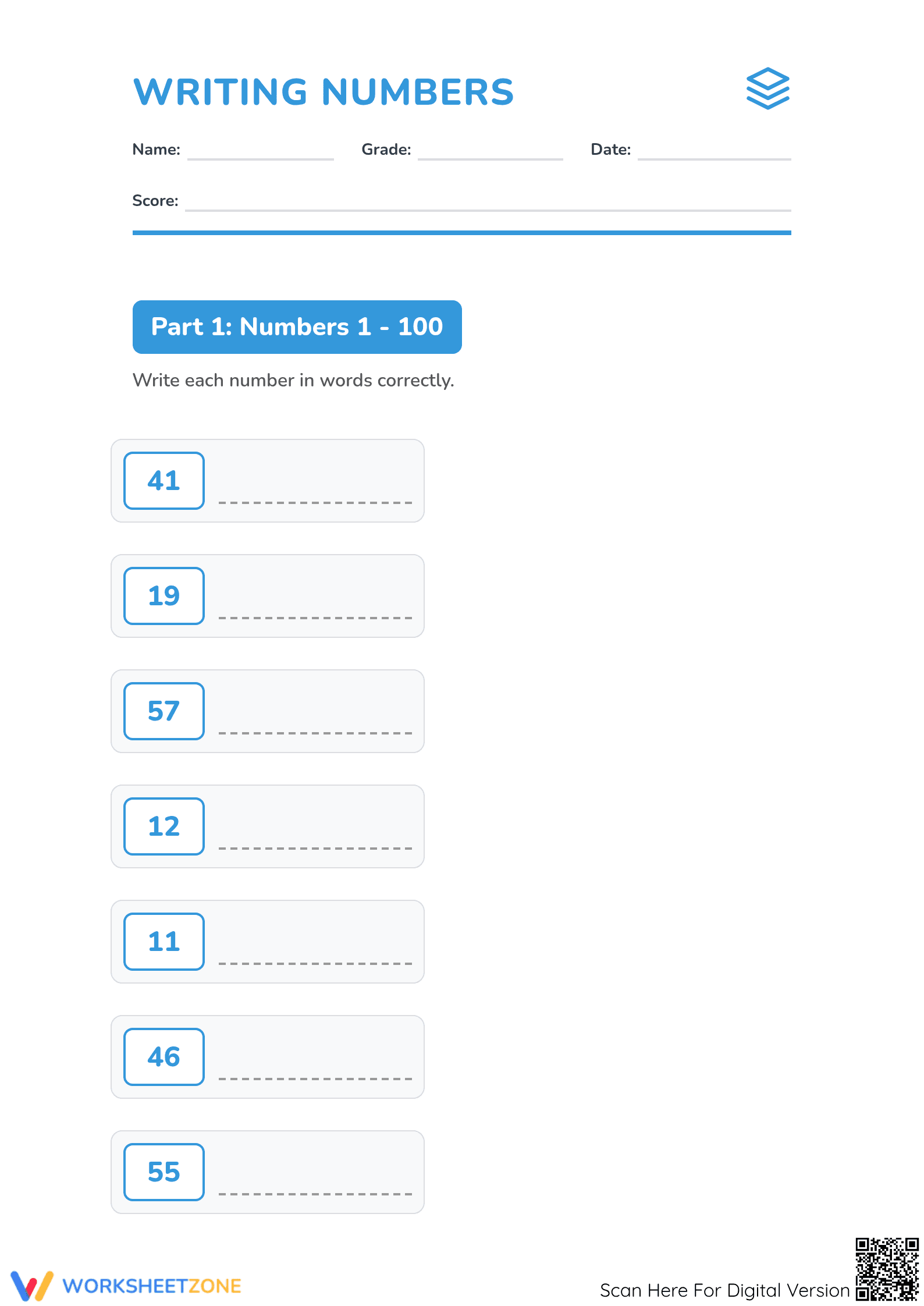
This Grade 2 writing numbers worksheet provides comprehensive practice for students to master the transition from digits to written number names. By focusing on the linguistic representation of numerical values, students strengthen their spelling accuracy and place value understanding simultaneously. This resource ensures students can confidently express values up to 1,000 in formal written English.
At a Glance
- Grade: 2 · Subject: English Language Arts
- Standard:
CCSS.MATH.CONTENT.2.NBT.A.3— Read and write numbers to 1000 using number names- Skill Focus: Writing number names (1–1000)
- Format: 5 pages · 37 problems · Answer key included · PDF
- Best For: Independent practice and spelling reinforcement
- Time: 20–30 minutes
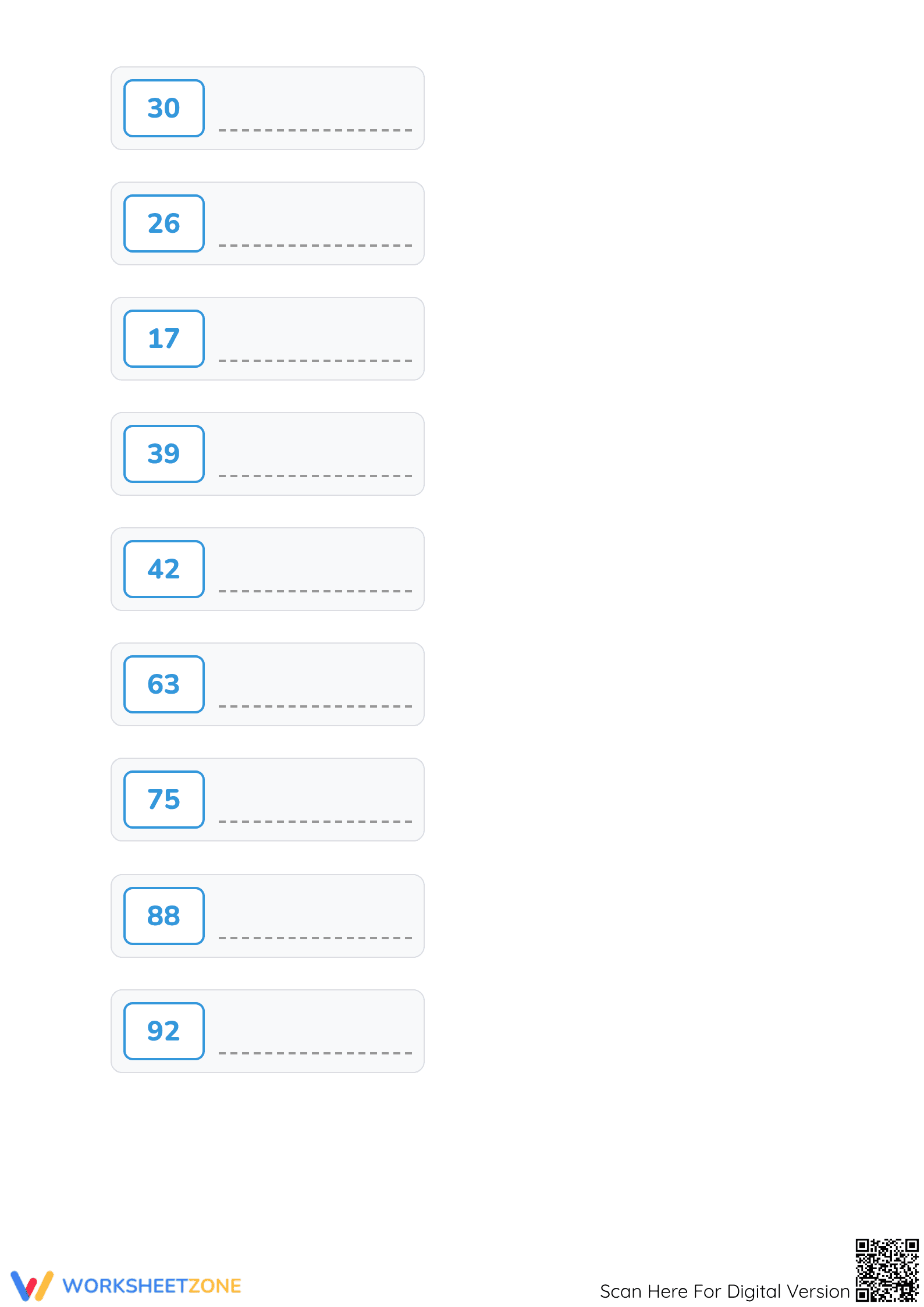
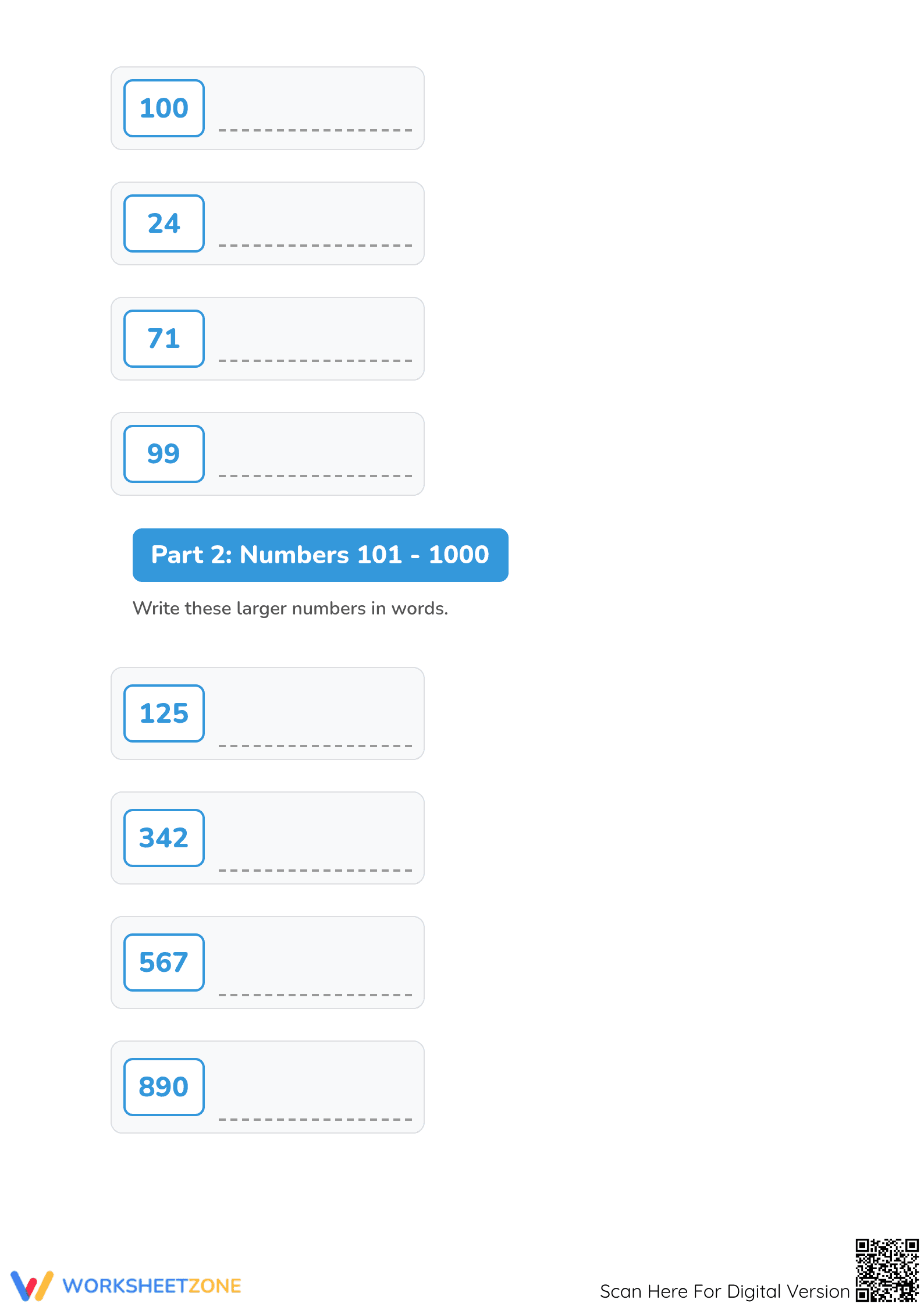
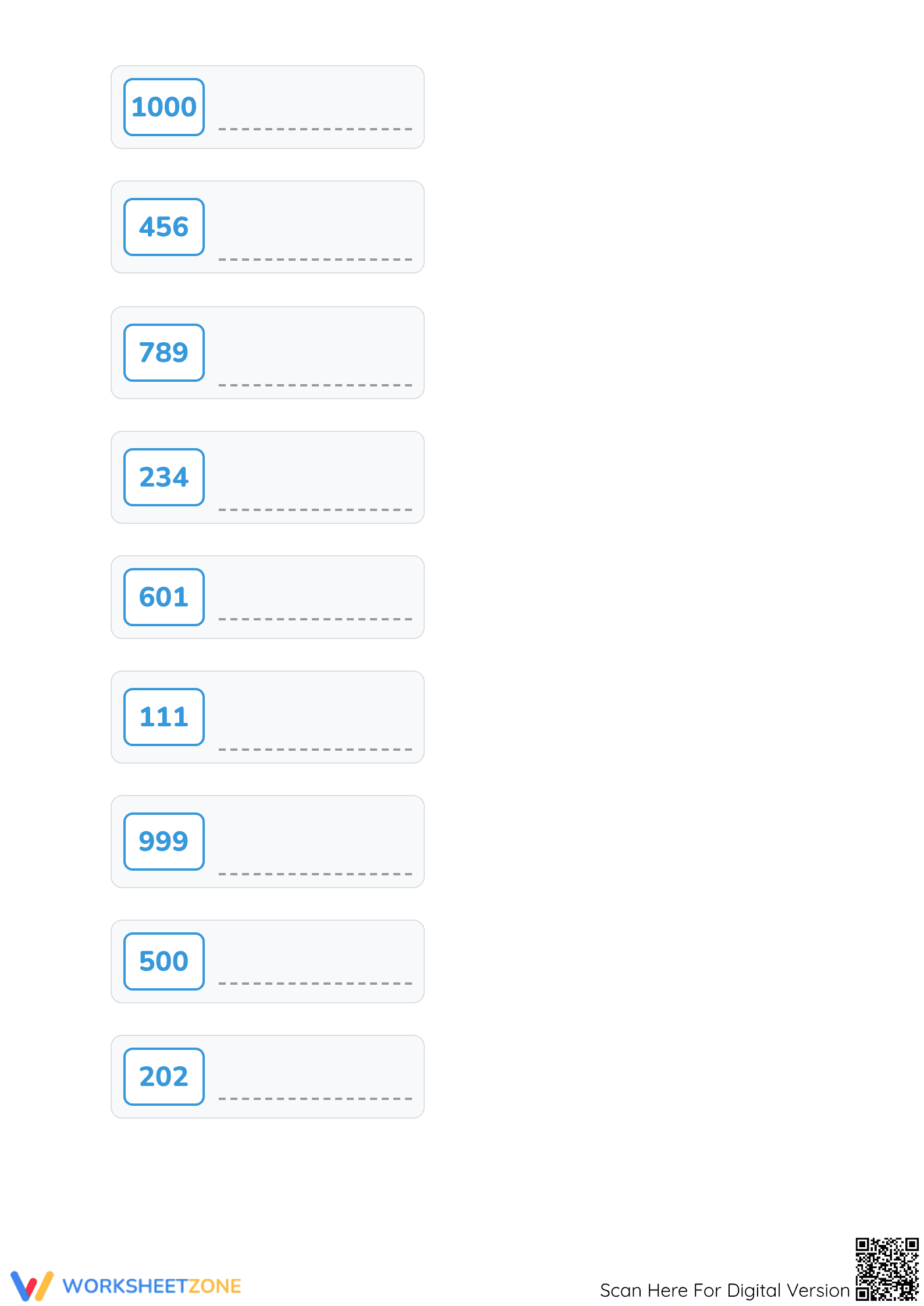
This extensive 5-page PDF contains 37 distinct tasks divided into two logical sections. Part 1 focuses on foundational numbers from 1 to 100, while Part 2 challenges students with larger values ranging from 101 to 1000. Each page features clear, boxed digits followed by a dedicated line for the written word form. A full answer key is provided to facilitate rapid grading or student self-correction.
Zero-Prep Workflow
- Print: Select the specific pages needed (1-100 or 101-1000) and print in seconds.
- Distribute: Hand out the sheets as a warm-up or independent center activity with zero teacher setup.
- Review: Use the included answer key to check for common spelling errors in hyphenated numbers in under 2 minutes.
This streamlined workflow is ideal for substitute plans or unexpected schedule gaps where high-quality instructional materials are needed immediately.
Standards Alignment
The primary focus is CCSS.MATH.CONTENT.2.NBT.A.3, which requires students to "Read and write numbers to 1000 using base-ten numerals, number names, and expanded form." While often categorized as a math standard, the orthographic demands of writing number names align closely with ELA spelling conventions. Both standard codes can be copied directly into lesson plans, IEP goals, or district curriculum mapping tools.
How to Use It
Assign Part 1 after a lesson on hyphenation rules for numbers twenty-one through ninety-nine. Use Part 2 as a formative assessment to see if students correctly include the word "hundred" without adding an unnecessary "and" (e.g., "four hundred fifty-six"). Completion typically takes 20 to 30 minutes depending on the student's writing speed and spelling proficiency. It works well as a quiet desk activity following direct instruction.
Who It's For
This resource is designed for second-grade students but serves as excellent remediation for third graders or enrichment for first graders. It is particularly helpful for English Language Learners (ELLs) who need to bridge the gap between mathematical symbols and English vocabulary. Pair this with a number name anchor chart or a place value mat for students requiring additional scaffolding.
According to the RAND AIRS 2024 report on foundational literacy, the integration of mathematical vocabulary into writing practice significantly enhances a student's ability to internalize complex spelling patterns. This worksheet targets the CCSS.MATH.CONTENT.2.NBT.A.3 standard, which bridges the gap between place value comprehension and linguistic expression. By requiring students to write out number names up to 1,000, the activity reinforces the orthographic rules of English, such as the correct use of hyphens in compound numbers and the spelling of irregular teen numbers. Research from Fisher & Frey (2014) suggests that such focused, repetitive practice is essential for moving skills from short-term memory to long-term mastery. This 5-page resource provides the necessary volume of practice to ensure students can accurately communicate numerical data in written form across all academic disciplines.


