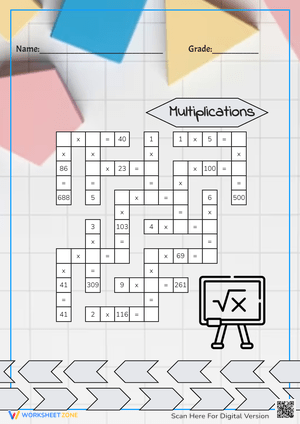
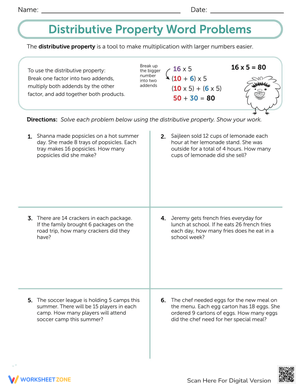
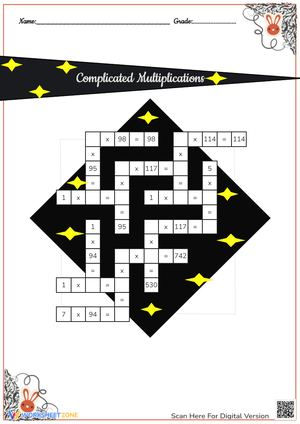
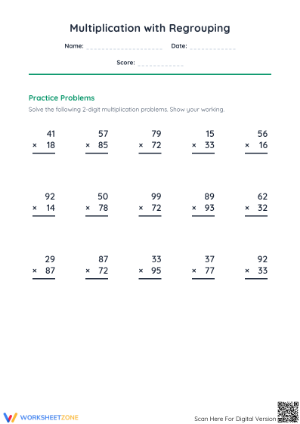
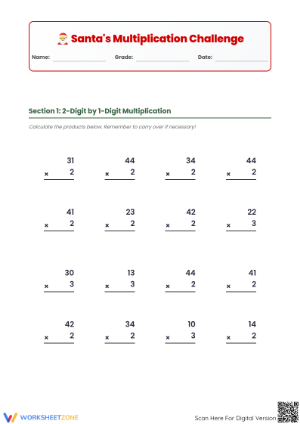
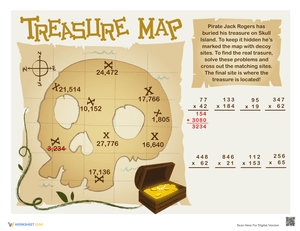
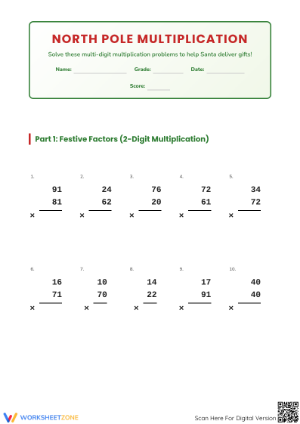
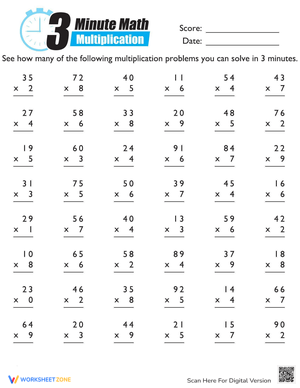
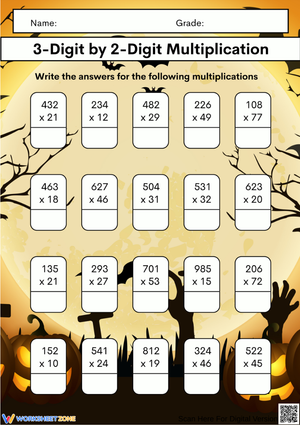
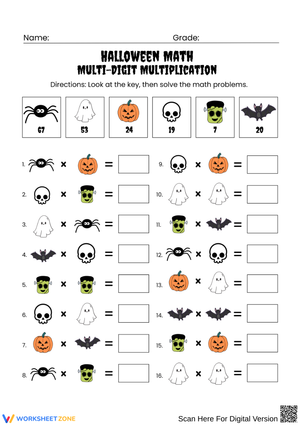
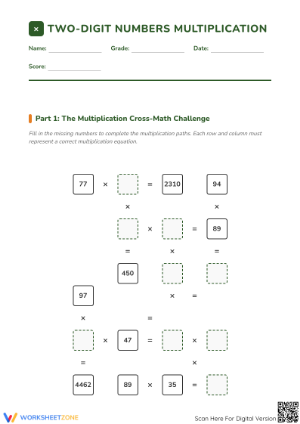
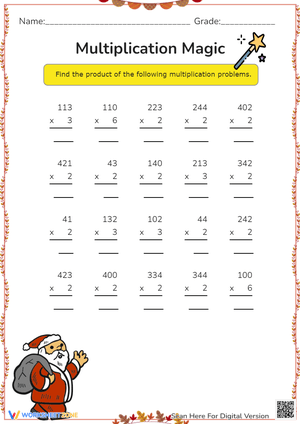
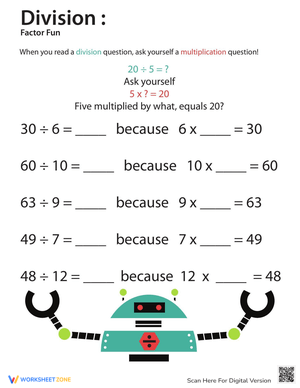
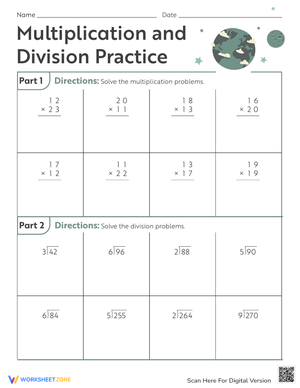
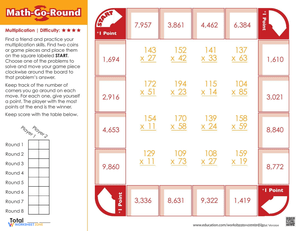
These multi digit multiplication worksheets give 4th and 5th grade teachers a sequenced, ready-to-use set that moves students through the full arc of the skill — from 2-digit by 1-digit regrouping problems all the way to 4-digit by 2-digit computation and real-world word problems. Each worksheet targets a specific format and difficulty level so teachers can assign exactly what their students need at any point in the unit.
The Specific Skills Targeted
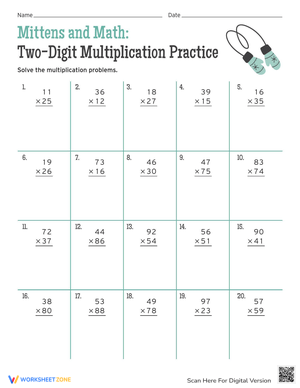
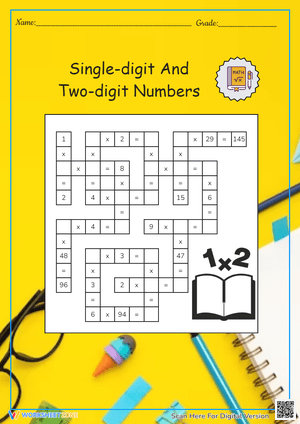
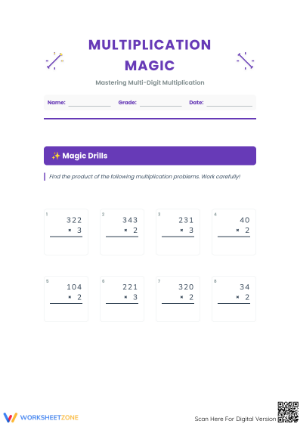
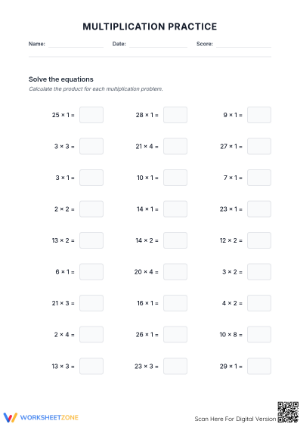
The set covers the two major benchmarks CCSS establishes for upper elementary multiplication. Fourth graders are expected to multiply numbers up to four digits by a one-digit number and to multiply two 2-digit numbers — both of which appear across several worksheets here. Fifth graders extend that work to fluent multi-digit multiplication using the standard algorithm, and the upper worksheets in this set support that transition directly.
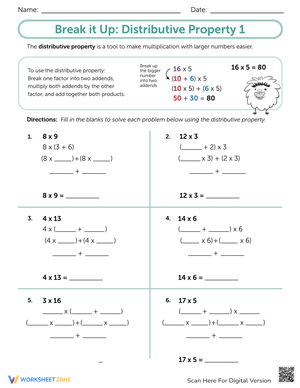
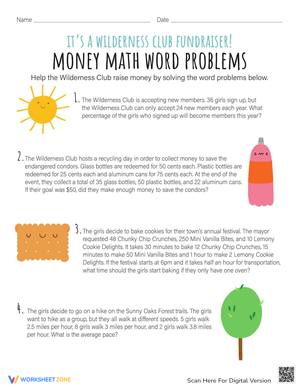
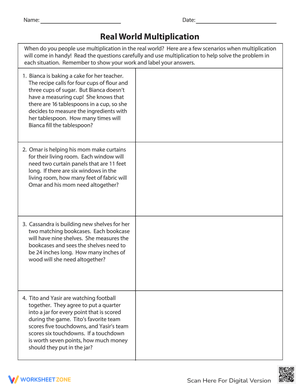
Beyond standard algorithm practice, the set includes area model worksheets and partial products worksheets. Area models decompose each factor by place value — multiplying 34 by 27 becomes four smaller products students add together — which makes the distributive property concrete before the compact algorithm asks students to do that same work invisibly. Partial products pages keep every step written out separately, which is especially useful for students whose errors come from skipping steps rather than from place value confusion. Word problem worksheets close out the sequence, requiring students to identify the operation, set up the problem, and interpret the answer in context.
Why This Format Works at This Grade Level
The standard algorithm for multi-digit multiplication asks students to hold several things in working memory simultaneously: the current partial product, the place value shift for the second row, any regrouped digits carried forward, and the running sum of all rows. That is a heavy cognitive load for a 4th grader still consolidating the algorithm itself. Separating the skill into distinct worksheet formats — area model first, partial products second, compact algorithm third — distributes that load across the learning sequence rather than dumping it on students all at once. By the time students reach the full standard algorithm, they have already practiced every sub-step in isolation.
One format detail worth using: worksheets that pair a standard algorithm problem and an area model for the same numbers on the same page help students see the two representations as connected. When a student gets 918 using the algorithm and 918 using the model, the match is more convincing than anything a teacher can say about why the algorithm works. That side-by-side design also gives students a built-in self-check — a mismatch between the two methods signals exactly where to look for an error.
Common Errors Worth Watching For
The most persistent mistake in multi-digit multiplication is the missing place value shift on the second partial product row. Students who can multiply 23 by 4 flawlessly will write the second row of a 23 × 47 problem directly beneath the first, as if they are multiplying by 4 again instead of 40. The error produces an answer close enough to the real one that students sometimes trust it. Worksheets with a pre-labeled row for the tens partial product — a small "×40" printed beside that row — interrupt this pattern before it calcifies.
Column misalignment is the second major error category, and it is almost always a handwriting and spacing problem, not a conceptual one. Students who know exactly what they are doing will record a carried digit in the wrong column because their numerals are crowded. Grid-lined worksheets address this directly. It is worth holding off on blank-paper practice until students can consistently produce neat, aligned work on a structured format — rushing that transition adds errors that look like misunderstanding but are really just messiness.
Fitting These Worksheets Into Your Lesson Plans
The 10-to-15-minute completion time for a standard 10-problem worksheet makes these a natural fit for the independent practice segment of a math block after a whole-class model. They also work well as Monday warm-ups to reactivate the previous week's work before introducing a new problem format — five minutes of 2-digit by 1-digit review before students see 3-digit by 1-digit for the first time is a low-stakes way to confirm retention and surface who needs a reteach before the lesson moves forward.
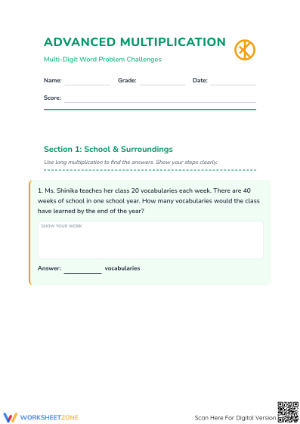
Word problem worksheets slot naturally into the end-of-unit sequence but can also function as formative checkpoints mid-unit. Assigning one mid-unit word problem worksheet before the algorithm work is fully consolidated shows which students can recognize a multiplication situation and set up the problem correctly even when computation is still developing — a useful distinction when deciding whether a student needs more procedural practice or more work on problem comprehension.
Standard Alignment
These worksheets align to CCSS 4.NBT.B.5, which requires students to multiply a whole number of up to four digits by a one-digit whole number and to multiply two two-digit numbers, using strategies based on place value and the properties of operations. The area model and partial products worksheets map directly to the "strategies based on place value" language of that standard — they are not pre-algorithm enrichment, they are the standard. The upper worksheets in the set align to CCSS 5.NBT.B.5, which calls for fluent multiplication of multi-digit whole numbers using the standard algorithm. Placing those worksheets in 5th grade instruction as formative and summative practice fits the standard's fluency expectation rather than treating algorithm practice as optional.
Adjusting the Worksheets for a Range of Learners
For students who are not yet secure with basic multiplication facts, the area model worksheets reduce the barrier to entry — a student who needs to use repeated addition to find 6 × 8 can still engage with the decomposition structure without the whole problem stalling. Pairing those students with a multiplication reference chart keeps the focus on place value reasoning rather than fact retrieval.
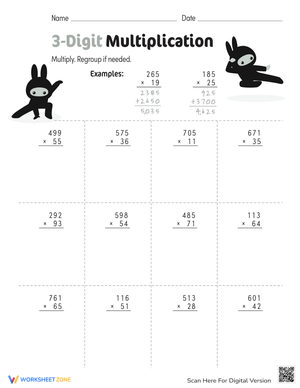
Students who demonstrate early mastery of 2-digit by 2-digit computation benefit from moving directly to the 3-digit by 2-digit and 4-digit by 2-digit worksheets, and then to multi-step word problems that embed the multiplication inside a larger problem context. Asking a student who already gets 47 × 23 to redo that worksheet is a reliable way to generate resentment without producing learning. The word problem worksheets also serve as natural extension material because they require a layer of interpretation that pure computation worksheets do not.
For students who freeze when they see a large problem on a blank page, reducing the number of problems per session — assigning five problems from one worksheet rather than the full set — lowers anxiety without changing the level of difficulty. These students often perform accurately when the volume feels manageable.
Frequently Asked Questions
What is the recommended order for working through these worksheets?
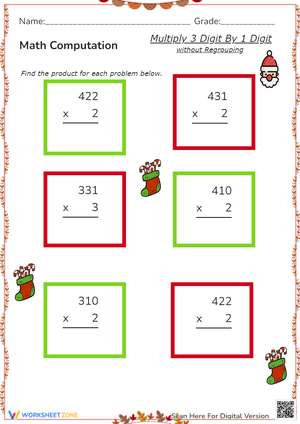
Start with 2-digit by 1-digit problems with regrouping, move to 3-digit by 1-digit, then introduce 2-digit by 2-digit using the area model before transitioning to the standard algorithm at that same size. From there, extend to 3-digit by 2-digit and 4-digit by 2-digit formats, and close the unit with word problem worksheets that require students to apply the computation in context.
Why do students struggle more with the second partial product row than with the first?
The first row of a multi-digit multiplication problem behaves like a single-digit multiplication problem students already know — multiply the top number by the ones digit of the bottom number and write the result. The second row introduces the place value shift, which has no parallel in anything students practiced earlier. They understand they are multiplying by the tens digit, but the instruction to shift one column left is procedural and easy to forget under pressure. Worksheets that label the shift explicitly — or that use a shaded column to mark where the second row begins — make that step visible until it becomes automatic.
Are these worksheets appropriate for use as quiz or assessment material?
The computation worksheets function well as short formative assessments or unit quiz components. A 10-problem worksheet covering 2-digit by 2-digit standard algorithm problems gives a clean, gradable snapshot of where a student is on that specific skill. Word problem worksheets work better as performance tasks than timed quizzes since they involve reading comprehension and problem setup alongside the computation itself.













 Interactive Worksheet Maker
 Quiz Maker
 Word Search Maker
 Crossword Puzzle Maker
 Word Scramble Generator
 Sentence Scramble Generator
 Handwriting Worksheet Generator
 Name Tracing Generator
 Fill In The Blank Generator