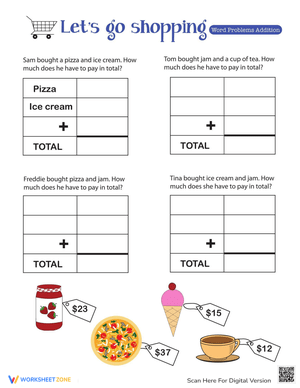
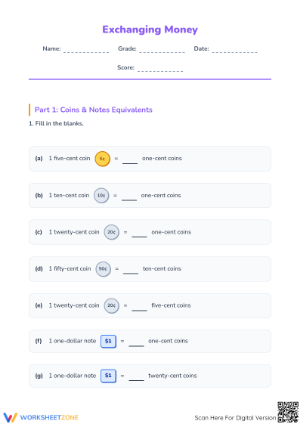
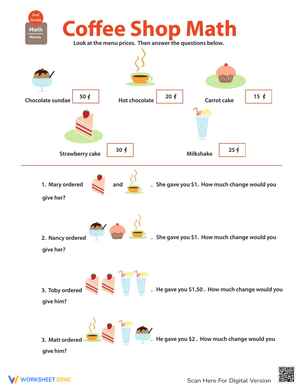
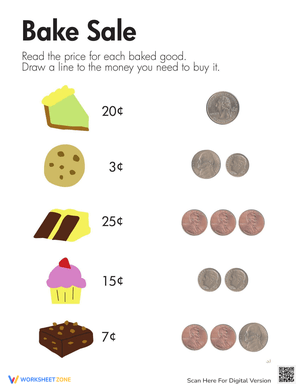
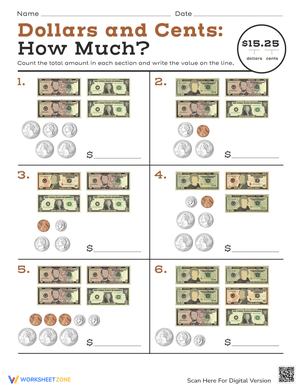
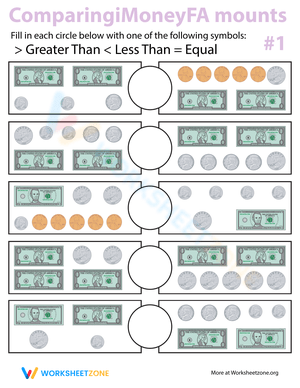
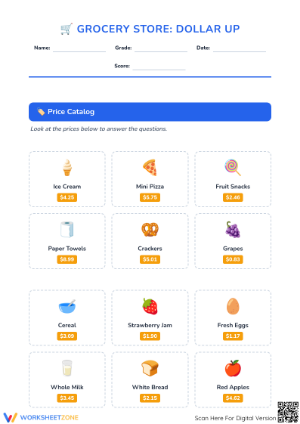
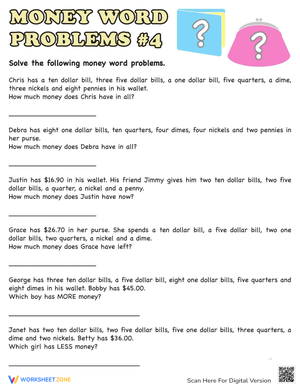
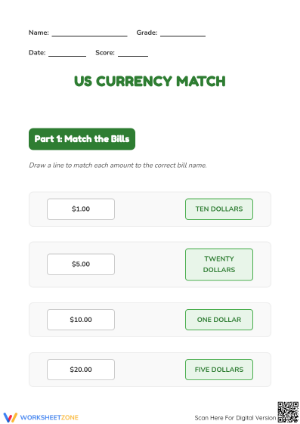
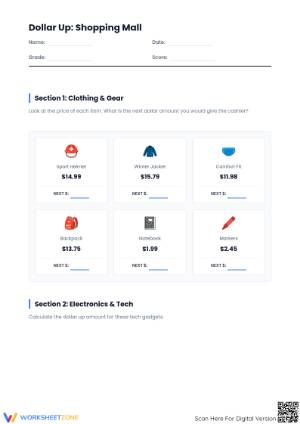
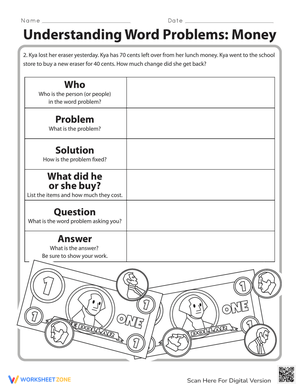
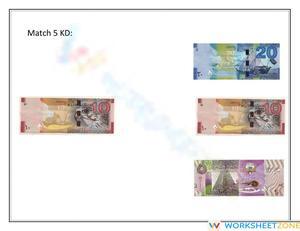
Money is one of those math topics that looks simple on the surface and quickly reveals gaps once students start mixing coin types. Currency worksheets give teachers a low-prep way to move students through the full arc of money skills, from naming a coin to solving a two-step word problem involving dollars and cents. For a Grade 1-3 classroom, that arc matters because money math sits at an odd intersection of number sense, skip-counting, and real-world reasoning that students do not automatically transfer from other units. Rather than treating currency practice as a stand-alone worksheet packet, it works best as a thread that runs through several weeks of instruction, with each worksheet building on the skill introduced before it.
How Currency Worksheets Map to the CCSS 2.MD.8 Progression
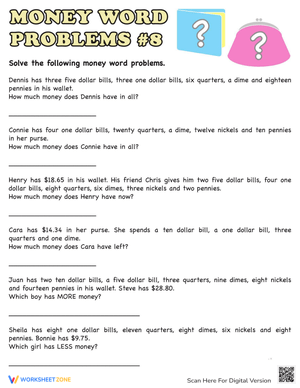
CCSS 2.MD.8 is the first standard that formally requires students to solve word problems involving dollar bills, quarters, dimes, nickels, and pennies using dollar and cent symbols. That single standard covers a lot of ground, which is why currency worksheets are most useful when they are sequenced rather than assigned all at once.
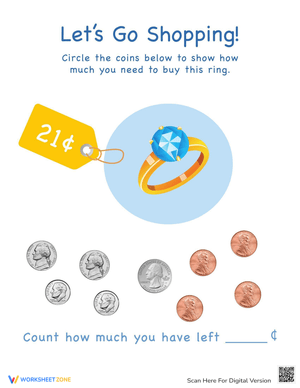
A typical progression looks like this: Grade 1 worksheets focus on identifying individual coins and stating their value. Grade 2 worksheets move into counting mixed coin groups up to one dollar and applying that skill to word problems. Grade 3 and beyond extend the work into making change and decimal notation. Matching your worksheet choice to where a class sits on that progression keeps practice targeted instead of generic.
One detail worth building directly into worksheet sequencing: skip-counting by 5s, 10s, and 25s is a prerequisite skill for accurate coin counting, not a side lesson. Students who have not automated skip-counting by 25s in particular tend to lose track partway through a mixed quarter-and-dime group, which shows up as a counting error rather than a money error on assessment.
Sequencing Coin Values From Highest to Lowest
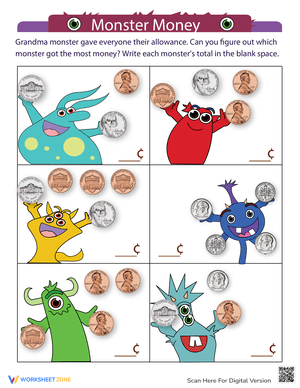
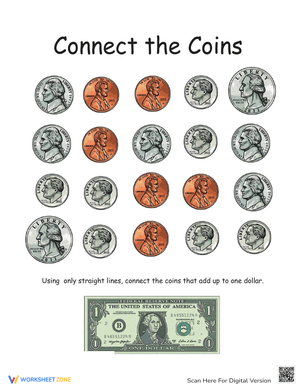
A common and effective instructional strategy is teaching students to count coins from highest to lowest value, starting with quarters, then dimes, then nickels, then pennies. Currency worksheets that reinforce this order, rather than presenting coins in random arrangement, help students build a repeatable counting habit instead of guessing at a strategy each time.
When a worksheet groups coins by descending value or asks students to reorder a mixed set before counting, it is directly training the habit that reduces errors on later, harder problems. This is a small design choice, but it has an outsized effect on accuracy once dollar bills enter the picture.
Teacher Tips: Sequencing Currency Worksheets Across a Unit
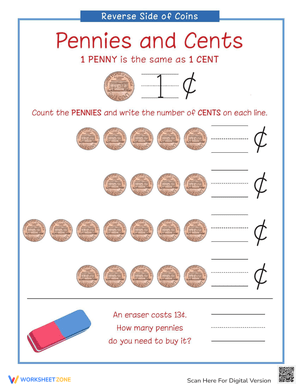
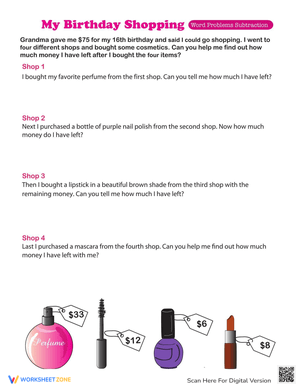
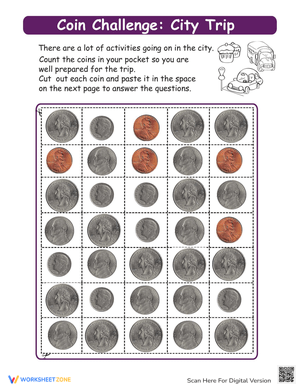
A practical unit sequence for currency worksheets might run as follows. Start with single-coin identification and value worksheets in week one. Move into same-coin counting groups, such as all nickels or all dimes, in week two. Introduce mixed coin groups up to one dollar in week three, reinforcing the highest-to-lowest counting strategy. In week four, layer in word problems that require reading a scenario and calculating a total or difference.
Using a currency worksheet as a formative checkpoint at the end of week three, before moving into making-change concepts, gives a clear read on whether students are ready to move forward or need another round of mixed-coin practice. This checkpoint approach avoids the common trap of introducing making change to a class that has not yet stabilized basic coin counting.
Frequently Asked Questions
1. What grade level should introduce currency and coin-counting worksheets?
Coin identification typically begins in Grade 1, with counting mixed coin groups and related word problems developing through Grade 2 as part of the CCSS 2.MD.8 progression.
2. How do currency worksheets align with Common Core money standards like 2.MD.8?
CCSS 2.MD.8 requires students to solve word problems involving dollar bills, quarters, dimes, nickels, and pennies using dollar and cent symbols, which currency worksheets can target directly through mixed coin and word problem formats.
3. What is the best order to teach coin values when using currency worksheets?
A common approach is counting from highest to lowest value, starting with quarters, then dimes, nickels, and pennies, which supports accurate skip-counting habits.
4. How can teachers use currency worksheets for small-group intervention or reteaching?
Grouping worksheets by coin complexity, such as low-value coins only versus mixed sets versus dollar bills, allows the same lesson objective to be taught at different tiers within one rotation.
5. Can currency worksheets be used to prepare students for making-change skills in later grades?
Yes, mixed coin-counting worksheets that stabilize accurate counting and skip-counting by 5s, 10s, and 25s build the number sense that making-change work in Grade 3 and beyond depends on.













 Interactive Worksheet Maker
 Quiz Maker
 Word Search Maker
 Crossword Puzzle Maker
 Word Scramble Generator
 Sentence Scramble Generator
 Handwriting Worksheet Generator
 Name Tracing Generator
 Fill In The Blank Generator