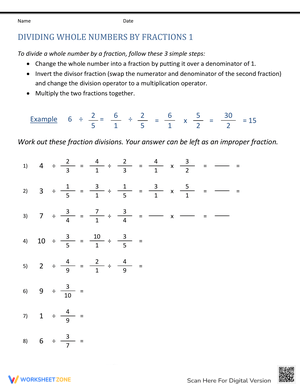
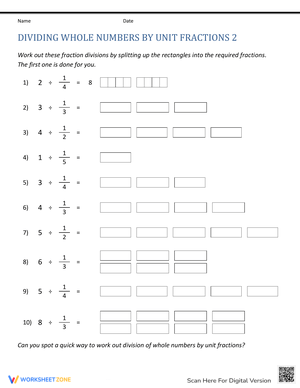
These division with unit fractions worksheets give 5th graders structured practice across both directions of the operation — dividing a unit fraction by a whole number and dividing a whole number by a unit fraction — with formats that move from visual models to equations to applied word problems. The set is built around the specific confusion patterns that appear in 5th grade classrooms every time this unit runs.
What's on the Pages
The set includes five worksheet formats, each targeting a different phase of instruction:
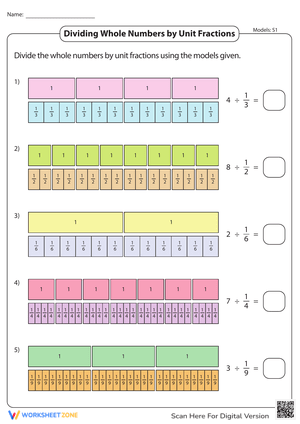
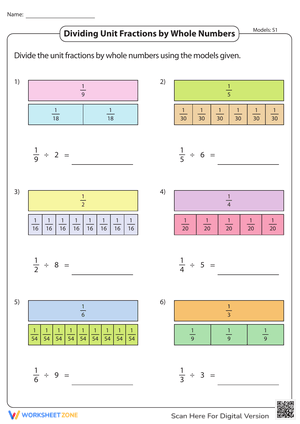
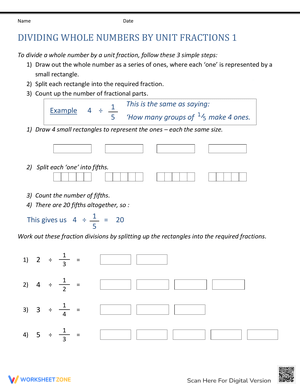
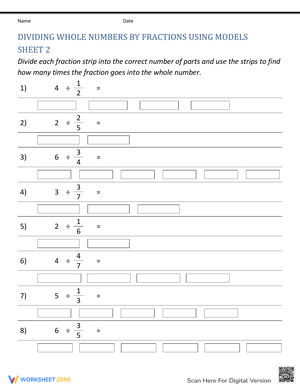
- Visual model pages pair each problem with a number line or fraction bar that students partition and label before writing the equation. The drawing step is required, not optional — it builds the mental image that makes the algorithm meaningful rather than arbitrary.
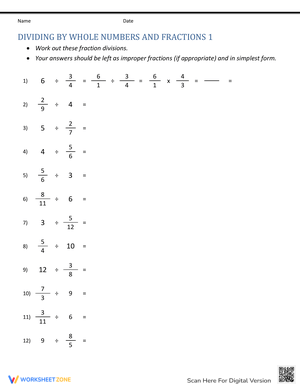
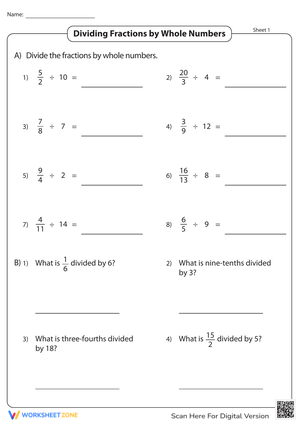
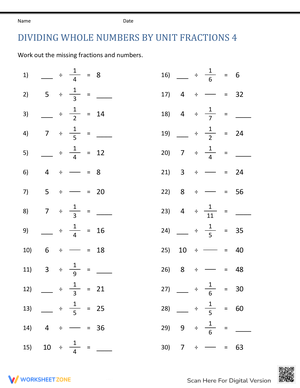
- Tiered equation practice separates the two division types into labeled sections. Students complete and check Section A before touching Section B, which mirrors the gradual release structure most 5th grade teachers already use.
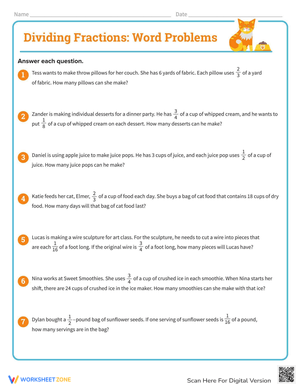
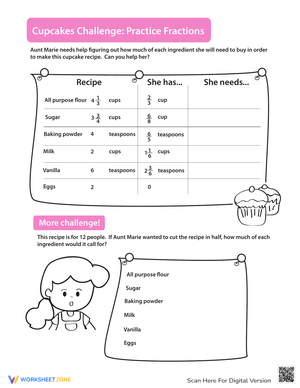
- Word problem sets use contexts like measuring lengths of rope, portioning ingredients, and dividing a garden plot into equal-sized rows. Before solving, students identify which division type the problem represents — a step that surfaces conceptual gaps before the arithmetic does.
- Error-analysis pages show finished student work containing a specific mistake. Students identify what went wrong and rewrite the solution correctly. These work well as a small-group re-teaching tool or as extension for students who finish early.
- Exit tickets are 5–8 problems, one page, designed for the last 8 minutes of a lesson. They give an immediate read on who is ready to move forward and who needs a targeted follow-up the next morning.
Standards Alignment
These worksheets address CCSS 5.NF.B.7 in all three of its components: 5.NF.B.7a (interpreting a unit fraction divided by a whole number and computing the quotient), 5.NF.B.7b (interpreting a whole number divided by a unit fraction and computing the quotient), and 5.NF.B.7c (solving real-world problems involving both types using visual models or equations). The standard is explicitly limited to unit fractions — general fraction division is a 6th grade skill under 6.NS.A.1 — which is why these worksheets stay inside that boundary. Teachers approaching this unit for the first time sometimes plan for broader fraction division, then find the standard narrower than expected. This set is scoped precisely to what 5.NF.B.7 requires.
Where Students Get Stuck
The most persistent error in whole number ÷ unit fraction problems is disbelief. A student who correctly computes 3 ÷ 1/4 = 12 will often erase the answer because it looks too large. They expect division to produce a smaller result, because every whole-number division problem they've seen since 3rd grade behaved that way. The visual model worksheet addresses this directly: a number line scaled to 3 whole units, with tick marks at every 1/4, forces the student to count 12 segments with their own pencil. That physical count overrides the intuition faster than restating the rule ever does.
The second reliable error shows up on the fraction ÷ whole number side. Students who can correctly solve 1/3 ÷ 4 on a worksheet will write 4/3 instead of 1/12 when the problem appears inside a word problem — they divide the denominator by the whole number rather than multiplying it, or they treat the whole number as a new numerator. Error-analysis pages were designed specifically around this mistake: the worked example shows exactly that error, with a number written in the wrong position, and students have to articulate why the placement is wrong.
How These Fit Into the Unit
A natural instructional sequence for a 5th grade class runs roughly four to five days. On the first day, the visual model worksheet runs as a whole-class activity — projected, completed together for two problems, then attempted independently. Day two introduces the tiered equation page, with a deliberate pause between sections to compare answers as a class. By day three, students are ready for word problems, and the identification step (naming the division type before solving) becomes a class norm rather than an optional scaffold. Error-analysis pages land well on day four, particularly in a small-group setting where students can argue about what the fictional student did wrong. Exit tickets close each lesson and inform the next day's groupings.
The Friday review block and Monday morning warm-up are natural homes for the mixed-practice exit tickets later in the unit, once both operation types have been introduced. Five problems takes about six minutes; the data they produce is more useful than a longer quiz delivered less frequently.
Frequently Asked Questions
Can these worksheets work for 6th graders who missed this standard?
Yes. The visual model pages in particular are useful for 6th graders who are entering general fraction division without a secure foundation in the unit fraction cases. Working through 5.NF.B.7 material explicitly — rather than assuming prior knowledge — closes the gap before the more abstract 6.NS.A.1 work begins.
How do I differentiate for students who are still shaky on basic fraction concepts?
The visual model worksheet is the right entry point for students who don't yet have a stable mental image of what a fraction represents. Having those students draw and label the fraction bar before any division happens — even just marking where 1/3 sits on a number line from 0 to 1 — catches the prerequisite gap without stalling the whole class. Students who have that foundation can move directly to the tiered equation pages.
Why do both division types appear at this grade rather than spacing them across two years?
The Common Core sequence places both in 5th grade deliberately, because the two types illuminate each other. Seeing that 1/3 ÷ 4 = 1/12 (smaller) and 4 ÷ 1/3 = 12 (larger) in the same unit pushes students to attend carefully to problem structure rather than applying a single memorized procedure. The contrast is pedagogically useful — which is also why worksheets that mix the types prematurely undermine that goal.













 Interactive Worksheet Maker
 Quiz Maker
 Word Search Maker
 Crossword Puzzle Maker
 Word Scramble Generator
 Sentence Scramble Generator
 Handwriting Worksheet Generator
 Name Tracing Generator
 Fill In The Blank Generator