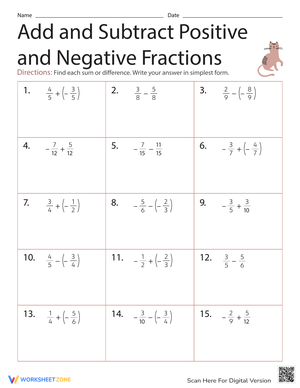
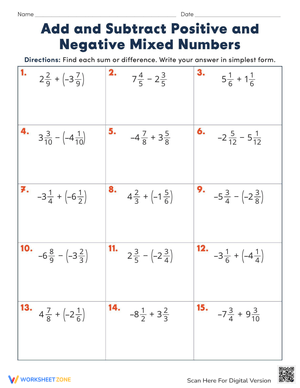
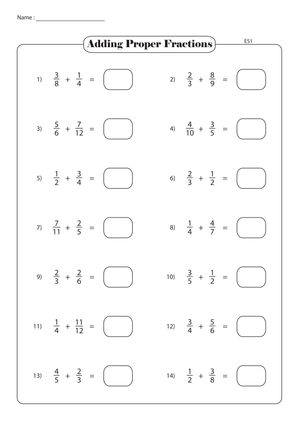
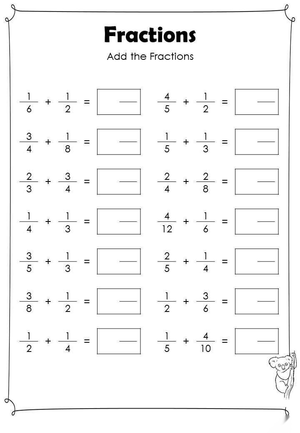
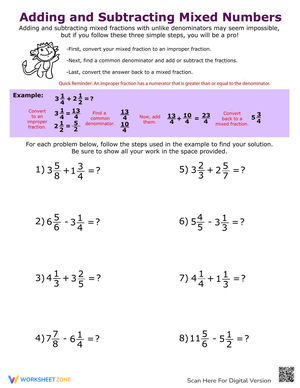
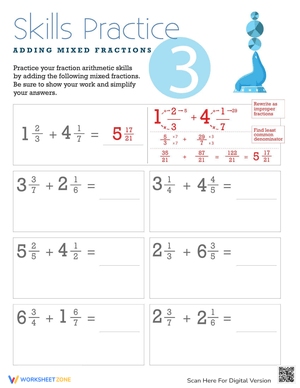
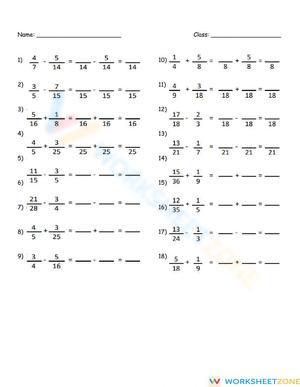
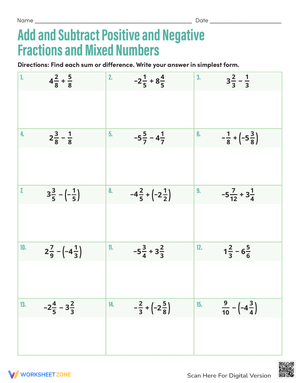
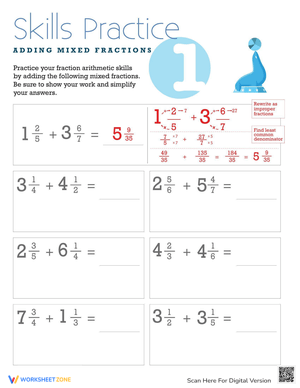
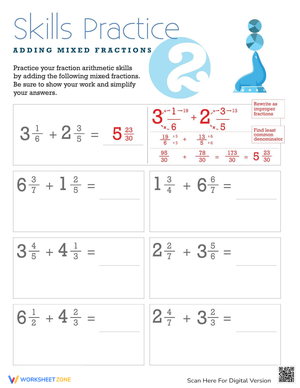
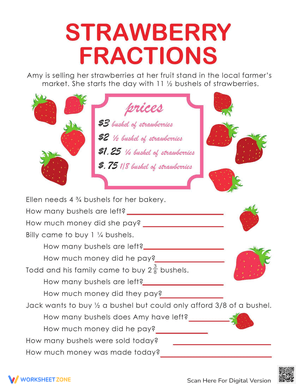
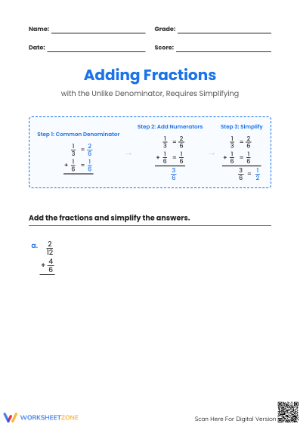
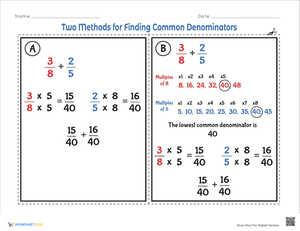
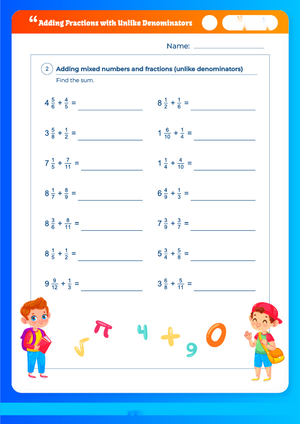
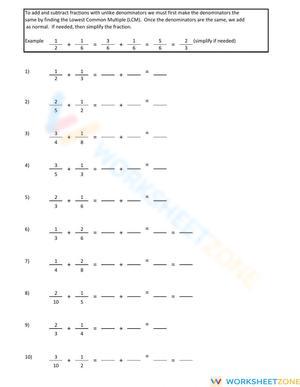
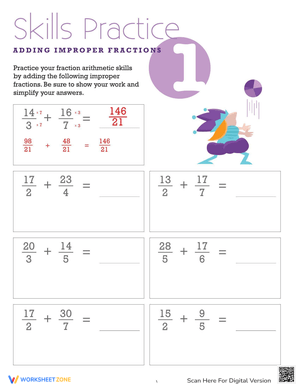
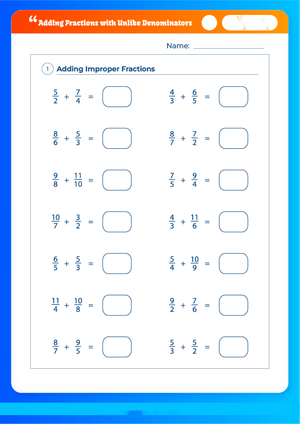
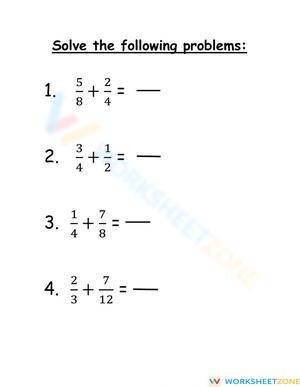
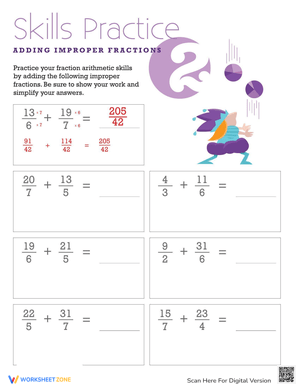
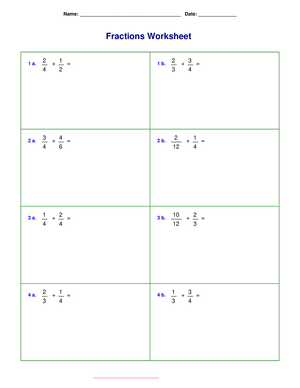
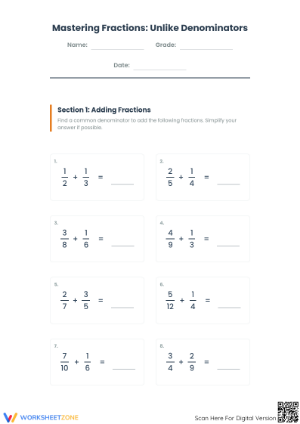
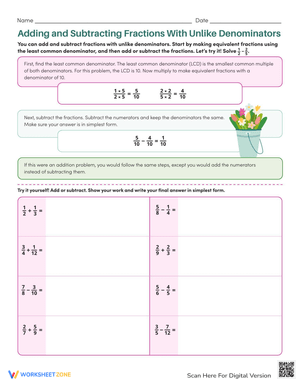
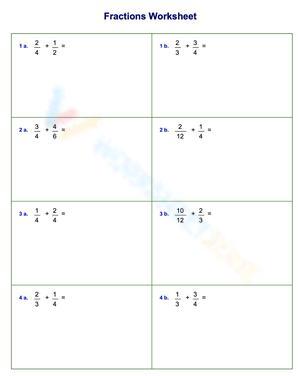
By the time students reach fifth grade, most can add fractions with like denominators without much trouble. The jump to unlike denominators is where things fall apart. Students who breezed through fourth-grade fraction work suddenly stall out, and the reason is almost always the same: they try to apply an addition rule that only works when denominators already match. Adding fractions with unlike denominators worksheets give you a structured way to catch this gap early and close it before it snowballs into middle school.
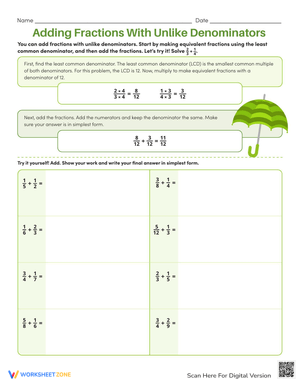
This skill sits at the center of grade 5 fraction instruction. Under CCSS.Math.Content.5.NF.A.1, students are expected to replace unlike denominators with equivalent fractions sharing a common denominator before adding, which means the worksheet practice you assign needs to explicitly require that conversion step rather than just rewarding a correct final answer.
Using Visual Models Before the Algorithm
Jumping straight to the standard algorithm, find a common denominator, convert, add numerators, often produces students who can execute steps without understanding why. Fraction bars, area models, and number lines give students a concrete reason the denominators need to match before the numerators can combine. When a student lines up a fraction bar for 1/3 next to one for 1/4, they can see that thirds and fourths are different-sized pieces, so counting them together directly does not make sense.
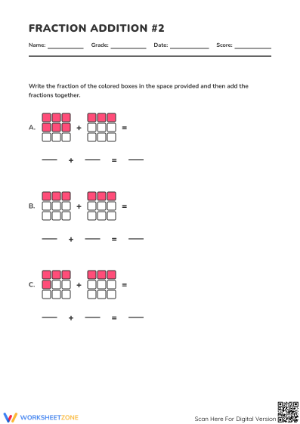
Worksheets that pair a visual model with the numeric problem work well for this stage. Ask students to shade a model for each fraction, then find a shared partition that lets both models use equal-sized pieces. Only after several rounds of this should you move to worksheets that present the algorithm in isolation. Skipping the visual stage is one of the most common reasons the numerator-plus-denominator error persists into sixth grade.
Catching the Straight-Across Addition Error
The single most common mistake on adding fractions with unlike denominators worksheets is students adding numerators and denominators directly, turning 1/2 + 1/3 into 2/5 instead of 5/6. This error is stubborn because it mirrors how students correctly add whole numbers, and it can persist even after a student has demonstrated understanding of common denominators in isolation.
Design your worksheets to expose this error rather than let it hide. Include an answer bank with both the correct sum and the straight-across result as a distractor, so students have to slow down and verify rather than pattern-match to whichever answer appears first. You can also require students to write the common denominator they used directly on the page before showing the final sum; if that step is missing, you immediately know where the breakdown happened without having to reverse-engineer their work.
Connecting to Word Problems and Benchmark Fractions
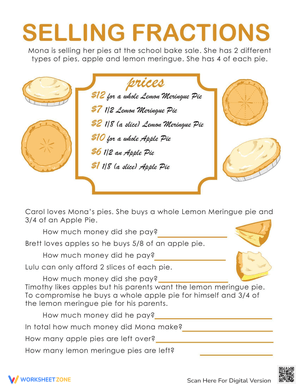
CCSS.Math.Content.5.NF.A.2 pushes this skill further by embedding it in word problems that use visual fraction models and benchmark fractions to judge whether an answer is reasonable. A worksheet set that stops at bare numeric problems only covers half the standard. Once students can reliably find common denominators, layer in short word problems: a class recipe needing 1/3 cup of one ingredient and 1/4 cup of another, or a student tracking 2/5 of a reading log completed on Monday and 1/6 completed on Tuesday.
Benchmark fractions are the reasonableness check that keeps students from accepting an implausible answer. Before students compute, ask them to estimate whether the sum will be closer to 0, 1/2, or 1 using benchmarks. If a student calculates 1/3 + 1/4 and lands on an answer greater than 1, the benchmark estimate should flag that something went wrong, prompting a self-check rather than moving on with a wrong answer.
Classroom Implementation
Build a short weekly rotation rather than assigning one large worksheet and moving on. A 10-minute daily warm-up using four to six unlike-denominator problems, reviewed as a class or in pairs, keeps the skill active without eating into your full math block. Rotate the problem type each day: numeric practice, visual model matching, word problems, and a mixed review that includes the straight-across distractor.
Use exit tickets built from your worksheet bank to monitor progress toward 5.NF.A.1 without creating extra grading work. A three-problem exit ticket at the end of a lesson tells you within minutes whether a student needs to move into an intervention group the next day or is ready for enrichment problems. Keep a simple tracking sheet noting which students consistently show the common-denominator step versus those still skipping straight to an answer, since that single data point predicts most of the errors you will see on a formal assessment.
Frequently Asked Questions
1. What grade level is adding fractions with unlike denominators taught?
This skill is a core fifth-grade standard under CCSS.Math.Content.5.NF.A.1, building on the like-denominator addition introduced in fourth grade under CCSS 4.NF.B.3.
2. What is the best strategy for teaching students to find a common denominator?
Start with visual models like fraction bars so students see why denominators need to match, then sequence numeric practice from multiple-denominator pairs to pairs with no shared factor.
3. How can teachers use worksheets to catch and correct the numerator-plus-denominator error?
Include a distractor answer that reflects the straight-across mistake and require students to show the common denominator step before the final sum, so the error becomes visible rather than hidden.
4. How do these worksheets align with CCSS 5.NF.A.1 and 5.NF.A.2?
Numeric conversion-and-addition problems target 5.NF.A.1, while word problems that use benchmark fractions and visual models to check reasonableness address 5.NF.A.2.
5. How can worksheets be adapted for small-group intervention versus whole-class review?
Intervention sets should pair every problem with a visual model and limit denominators to obvious multiples, while whole-class review can mix denominator types and include word problems for grade-level pacing.