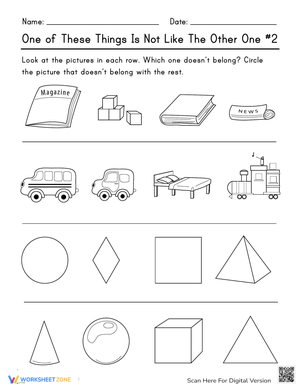
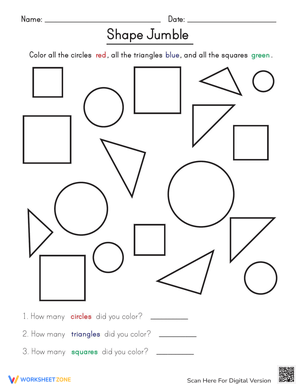
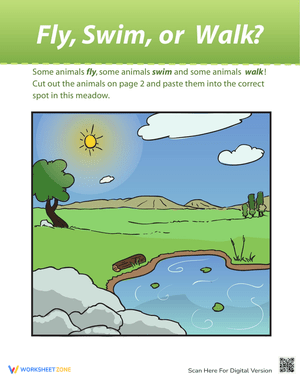
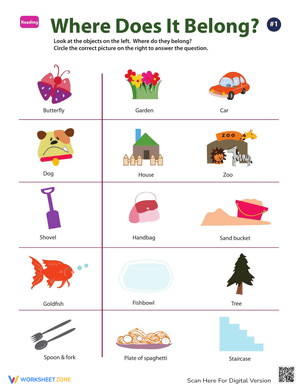
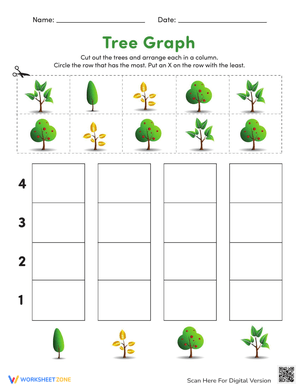
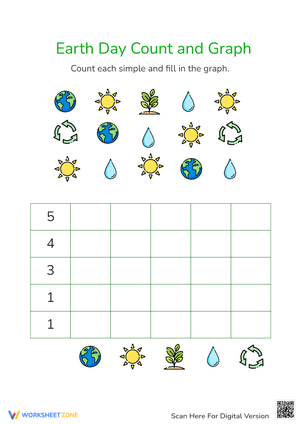
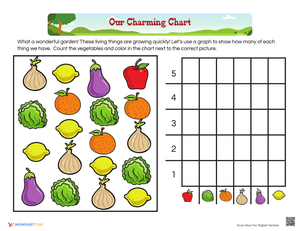
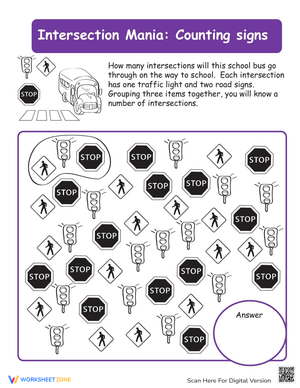
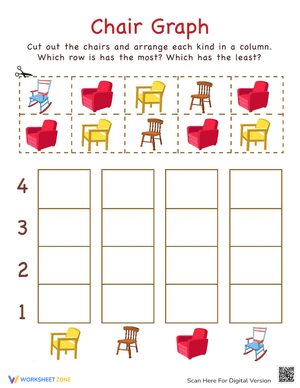
These sorting data printable worksheets for kindergarten give teachers a direct line into the first real data skill five-year-olds build: deciding that two things belong together and a third one doesn't. Each worksheet isolates a single sorting attribute — color, shape, size, or real-world category — so students practice the logic of classification without tracking multiple rules at once.
Skills These Worksheets Build
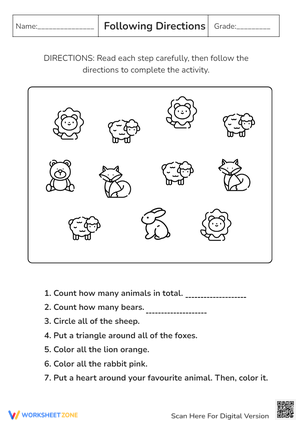
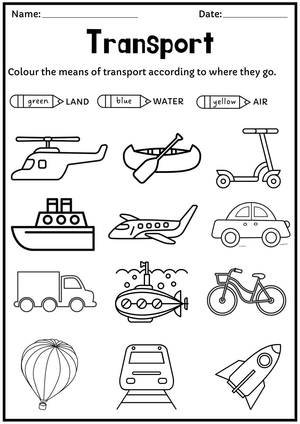
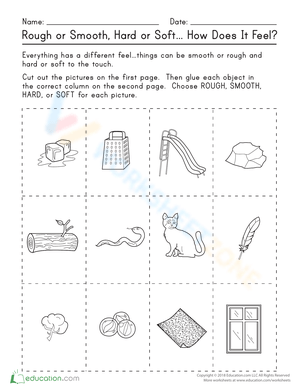
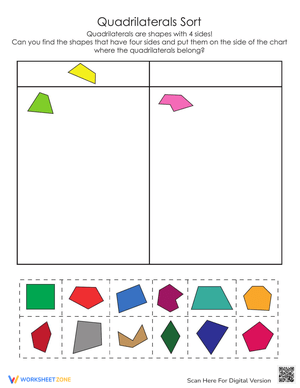
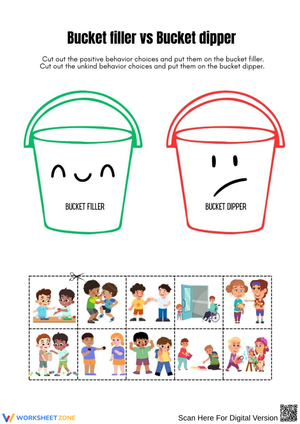
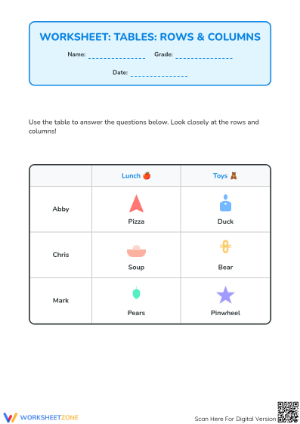
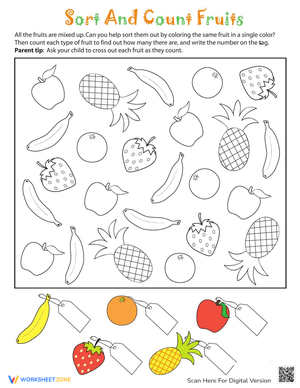
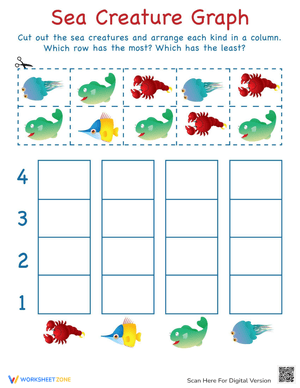
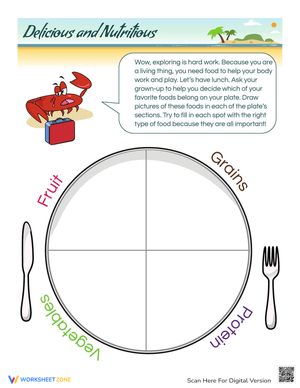
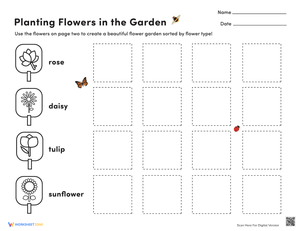
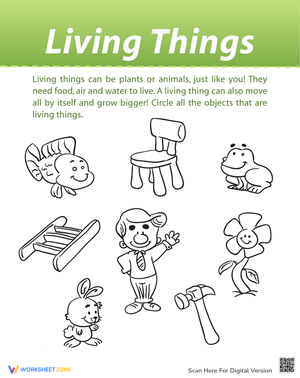
The core task across the set is categorical grouping — students look at a mixed collection of illustrated objects and sort them into labeled boxes or columns. Some worksheets ask students to cut and paste images into the correct group; others have students draw lines matching each object to its category, or circle all items that share a given attribute. Once sorted, many worksheets prompt students to count the objects in each group and write the corresponding numeral, linking classification directly to counting within ten.
The attributes covered move from concrete to more abstract:
- Color — the most perceptually immediate attribute; illustrations use high-contrast combinations where color differences are unambiguous even for students still learning color names in English
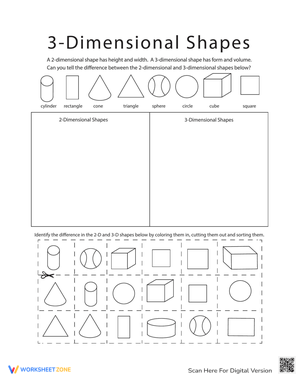
- Shape — circles, squares, triangles, and rectangles appear both as standalone geometric figures and embedded in pictures of real objects, so students practice recognizing shapes in context, not just in isolation
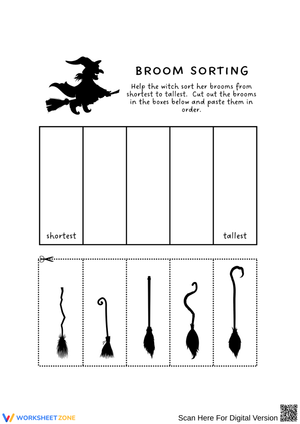
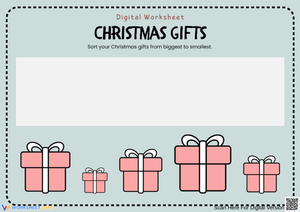
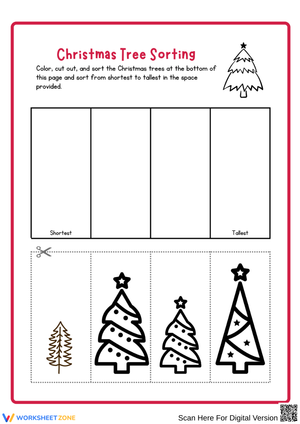
- Size — relative comparisons (big/small, tall/short) rather than numerical measurement, keeping the task in territory kindergarteners can access without ruler skills
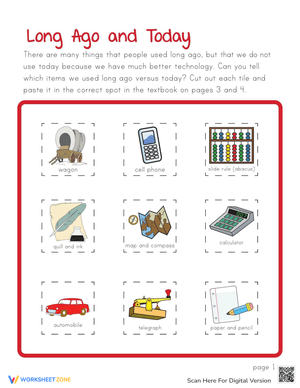
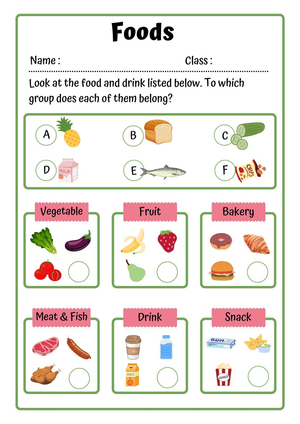
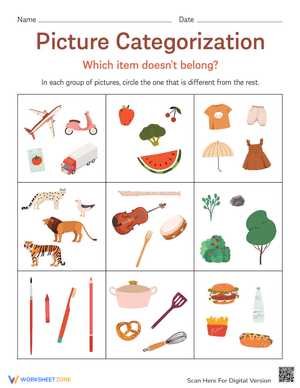
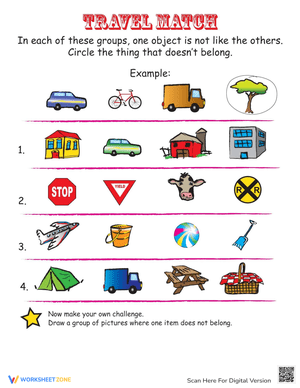
- Real-world category — animals versus vehicles, food versus clothing, things that fly versus things that swim; this is where sorting shifts from visual matching to genuine reasoning, and where background knowledge starts to matter
Mistakes Students Make That These Worksheets Help You Catch
The most consistent error at this level isn't misidentifying a color or shape — it's sorting by the wrong attribute when the task specifies a different one. A student working through a shape-sorting worksheet will often sort by color instead, because color is more visually dominant. You can see it clearly in their finished work: all the red items end up in one column regardless of shape, all the blue items in another. This isn't a sign that the student can't sort — it's a sign they haven't yet learned to filter out competing attributes. Naming the target attribute aloud before students begin, and pointing to the column headers as you do it, cuts this error noticeably.
A second pattern surfaces in real-world category worksheets. When asked to sort images into "animals" and "vehicles," students frequently misplace objects they've never encountered before — a salamander, a tugboat, a dung beetle. The error isn't about the sorting concept; it's a vocabulary gap. Previewing the illustrations as a class before distributing any worksheet that uses unfamiliar images keeps the task focused on classification rather than object identification.
Standard Alignment
These resources address CCSS.MATH.CONTENT.K.MD.B.3: classify objects into given categories; count the numbers of objects in each category; sort the categories by count. In practical classroom terms, that standard has three layered demands. Classifying is the entry point — students assign each item to a group. Counting how many objects fall into each group adds a number sense layer. Sorting the categories by count — recognizing that there are more red items than blue items, for instance — is the most cognitively demanding step and the one where kindergarteners most often need targeted follow-up. All three demands appear across the set, with object totals per category capped at ten to stay inside the counting range kindergarteners are building simultaneously.
Building These Worksheets Into Your Weekly Lesson Plan
These sorting data printable worksheets for kindergarten work well at three distinct points in an attribute unit. At the start — say, the day you introduce shape sorting after several weeks on color — project one worksheet and sort together as a class before students touch their own copies. This moves the first encounter with a new attribute into whole-group territory, where you can address confusion in real time. Midway through the unit, pull a small group of three or four students to work through a worksheet while you observe closely; that's when you'll catch the attribute-confusion errors described above before they settle in. At the end of the unit, an independently completed worksheet tells you who has genuinely internalized the concept versus who was reading the room during group work.
The cut-and-paste format has an advantage worth noting: the motor demand slows students down. Students who race through line-matching tasks tend to pause more deliberately when scissors are involved. Pairing each cut-and-paste worksheet with a quick verbal check — "Before you cut anything, point to where you think each picture goes" — gives you a read on student thinking before glue is involved.
Adjusting the Set for Different Levels of Learners
For students still solidifying the concept of categorical grouping, reduce the field. Cover one column of a three-category worksheet with a sticky note so they're only sorting into two groups. A binary sort — animal or not an animal, red or not red — removes the added weight of tracking multiple simultaneous categories. Letting a student place a counter on each picture before marking it also helps: it gives their hand something to do while their brain makes the decision, creating a natural pause between looking and committing.
Students who move through sorting data printable worksheets for kindergarten quickly benefit from a comparison layer added after they finish. Once they've sorted and counted, ask them to circle the group with more and cross out the group with fewer, then write a number sentence comparing the two totals. That extension keeps the task anchored in the same skill while pushing into early comparison and notation — without needing a separate, harder worksheet.
For students receiving support services, check whether the worksheet's illustrations are identifiable before distributing. Sorting tasks break down fast when a student can't tell what the picture is supposed to depict. Keeping a small set of labeled picture cards as a desk reference during sorting data printable worksheets for kindergarten gives those students the vocabulary access they need without changing the mathematical demand of the task.
Frequently Asked Questions
When in the school year should I introduce these sorting worksheets?
Most kindergarten teachers bring in color sorting during the first few weeks of school — it fits naturally alongside early number sense work, and the pictures are easy to read. Shape sorting typically follows once students have had some geometry exposure. Real-world category sorting works better after winter break, when students have more classroom vocabulary and can engage with the reasoning those tasks require, rather than simply recognizing color or shape at a glance.
Can these worksheets run as a math center without direct teacher support?
Yes, once students have sorted by the target attribute at least twice with teacher guidance first. The first time a student encounters a new attribute type cold — without prior instruction on that attribute — they default to color sorting regardless of what the worksheet asks, which produces unreliable assessment data. After two or three guided exposures, the same worksheet format runs independently without issue.
How do I know if a student truly understands sorting versus just following along with the group?
Give them a different worksheet that uses the same attribute but entirely different objects. If they sort correctly without a model in front of them, the concept is theirs. If they hesitate or place items randomly, they were tracking peers rather than the rule. The range across this set gives you the alternate versions needed to run that check without building new materials from scratch.













 Interactive Worksheet Maker
 Quiz Maker
 Word Search Maker
 Crossword Puzzle Maker
 Word Scramble Generator
 Sentence Scramble Generator
 Handwriting Worksheet Generator
 Name Tracing Generator
 Fill In The Blank Generator