




























Views
Downloads

Night and Day Sorting Worksheet | Essential Grade K Math

Paste this activity's link or code into your existing LMS (Google Classroom, Canvas, Teams, Schoology, Moodle, etc.).
Students can open and work on the activity right away, with no student login required.
You'll still be able to track student progress and results from your teacher account.
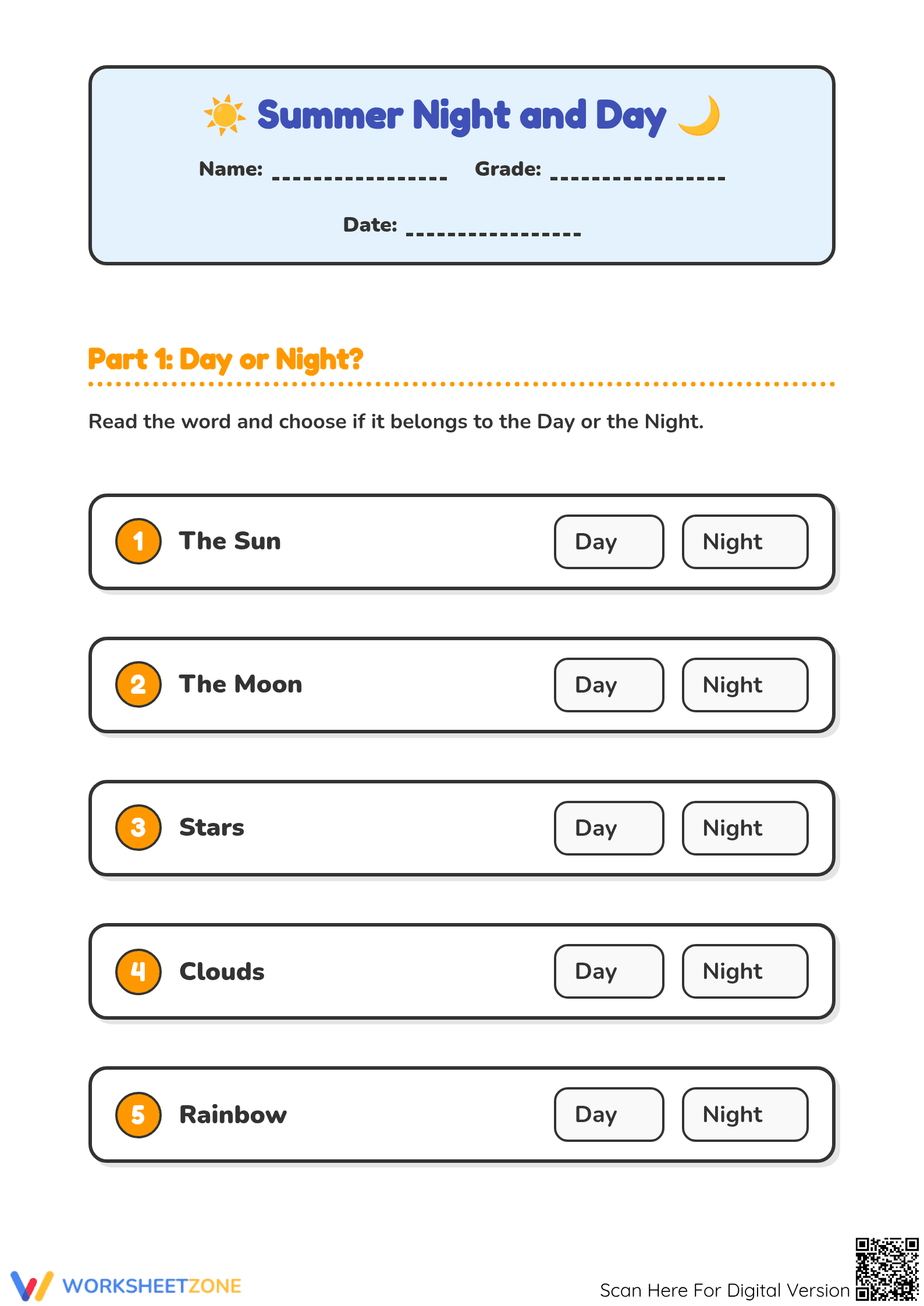
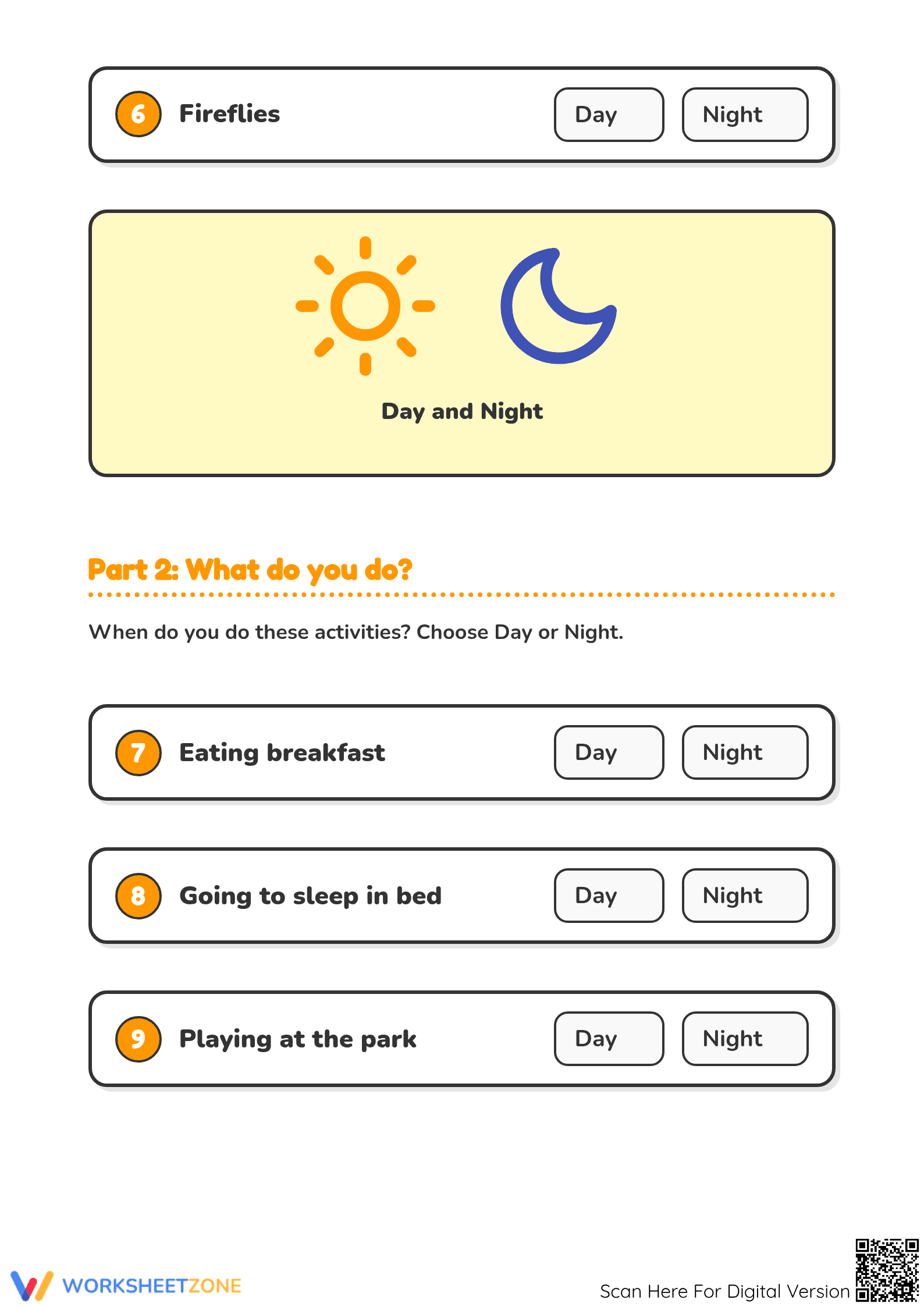
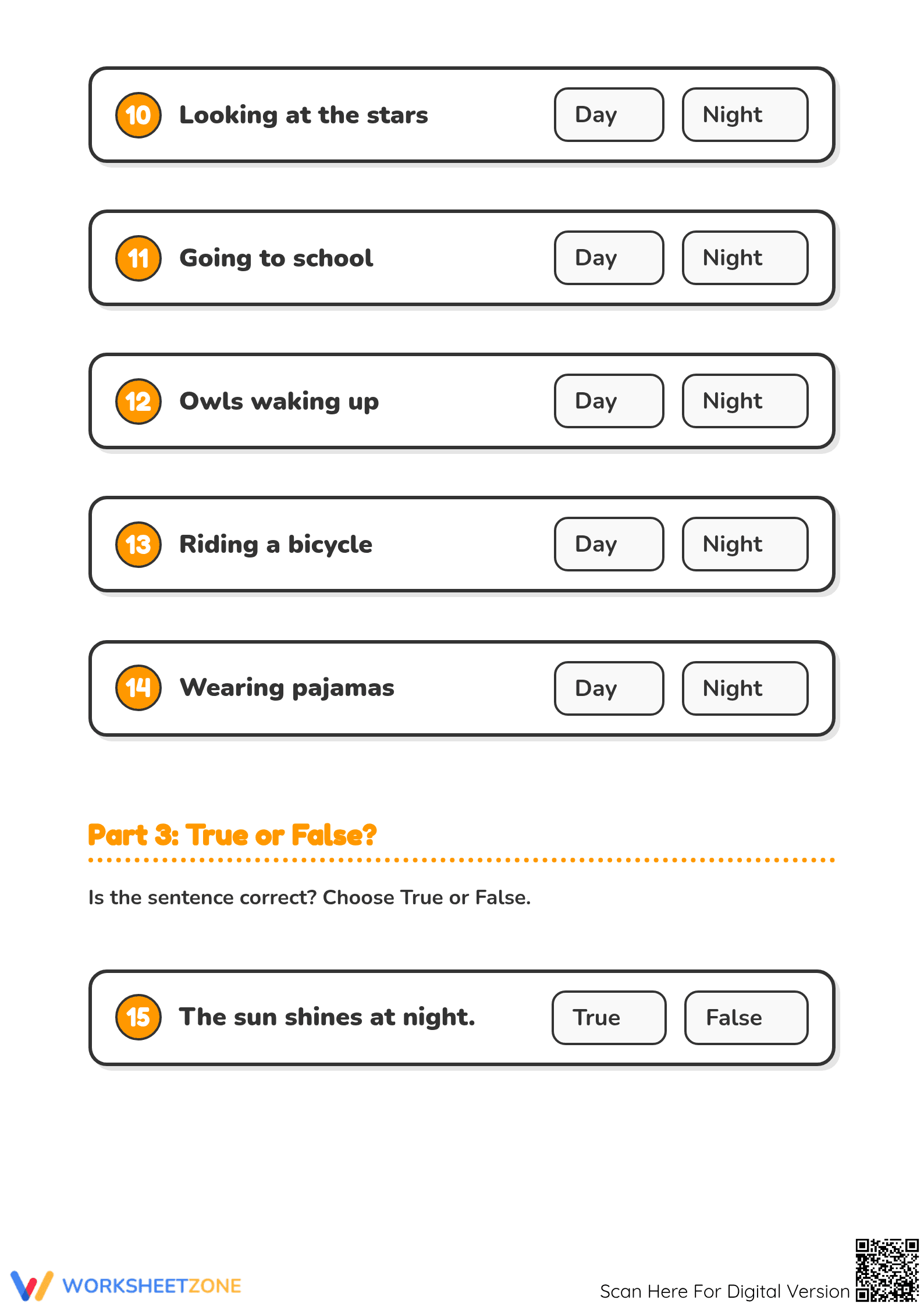
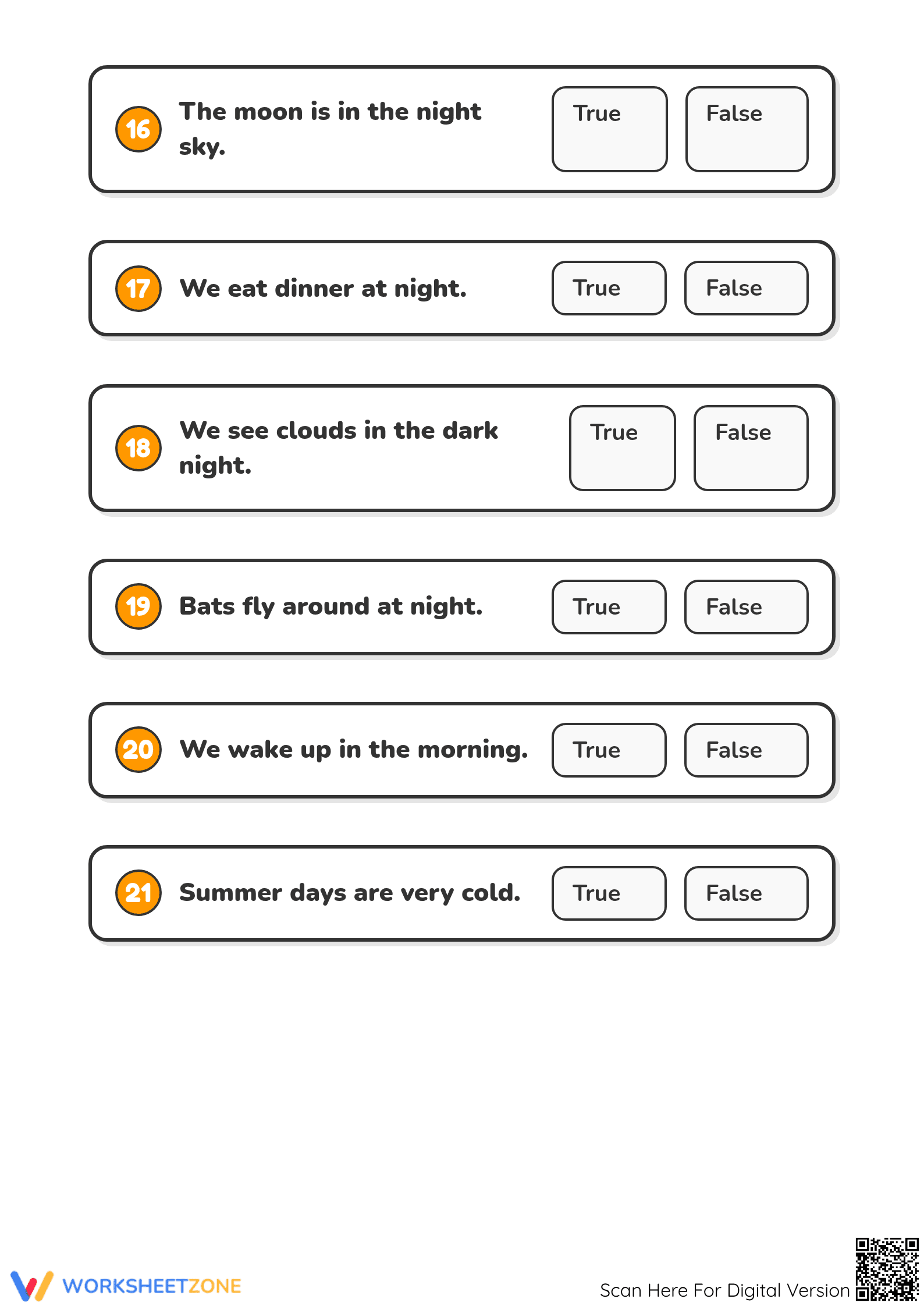
This printable Kindergarten math worksheet helps young learners master the skill of classification by sorting various objects and activities into daytime and nighttime categories. Students engage with 21 structured tasks that build foundational reasoning skills and scientific observation. By identifying patterns in the natural world, children develop a concrete understanding of how to categorize data based on observable attributes.
At a Glance
- Grade: Kindergarten · Subject: Math
- Standard:
K.MD.3— Classify objects into given categories and sort the categories by count- Skill Focus: Day and night sorting and classification
- Format: 4 pages · 21 problems · Answer key included · PDF
- Best For: Independent practice and sorting math centers
- Time: 15–25 minutes
What's Inside
This packet contains four comprehensive pages. Part 1 features six tasks for classifying celestial objects as day or night. Part 2 includes eight activity-based questions on daily routines. The final section presents seven true-or-false statements to assess understanding of environmental patterns. A full answer key is provided.
Zero-Prep Workflow
This resource is designed for a three-step zero-prep workflow to save valuable instructional time. First, print the four-page PDF for your entire class in under one minute. Next, distribute the worksheets to students during your math or science block; no additional manipulatives or setup are required. Finally, review the completed work using the included answer key to provide immediate feedback. This streamlined process makes the activity an ideal choice for emergency sub plans or last-minute lesson extensions.
Standards Alignment
The primary alignment for this resource is `K.MD.3` - Classify objects into given categories and sort the categories by count. By sorting 21 distinct items, students practice the critical early math skill of grouping data based on shared characteristics. Additionally, the worksheet supports NGSS `K-ESS2-1` through its focus on observing and describing patterns in the sky and daily environment. Both standard codes can be copied directly into lesson plans, IEP goals, or district curriculum mapping tools.
How to Use It
Use this worksheet during the independent practice phase of a lesson on sorting or environmental patterns. It works best after a direct instruction session where the teacher models how to identify daytime and nighttime markers. For a formative assessment tip, observe whether students can justify why a "rainbow" or "stars" belong in a specific category. Most Kindergarten students will complete the 21 tasks within a 15-to-25-minute window, depending on their reading level.
Who It's For
This activity is specifically tailored for Preschool and Kindergarten students who are developing early classification skills. It includes clear text and high-contrast visuals to support emerging readers and English Language Learners. To differentiate, pair this worksheet with a physical sorting activity using a "Day and Night" anchor chart or a read-aloud of the book "Sing Me The Summer." It is also an excellent tool for special education teachers working on IEP goals related to categorization.
Categorizing information is a fundamental cognitive building block crucial for success in mathematics and scientific inquiry. Early exposure to structured sorting tasks, like those aligned to K.MD.3, strengthens neural pathways for logical grouping and data organization. This worksheet offers "low-floor, high-ceiling" practice, moving students from simple identification to evaluating environmental claims. This approach helps Kindergarten learners actively apply classification rules to new scenarios, building a solid foundation for future STEM academic growth.


