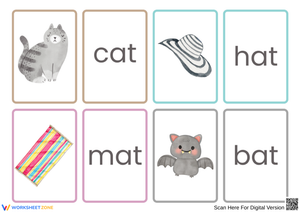
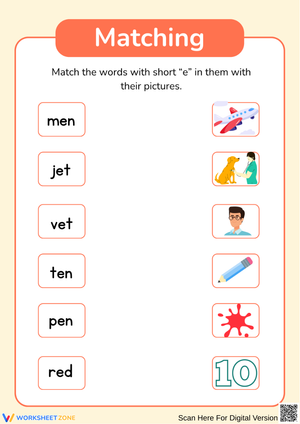
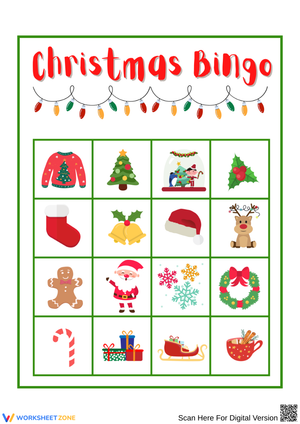
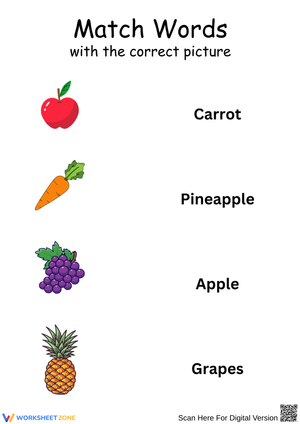
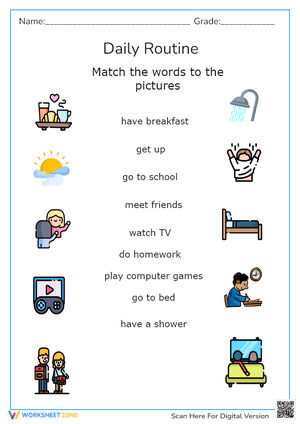
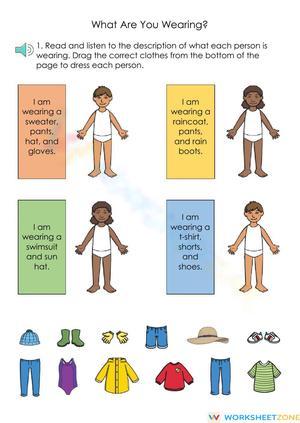
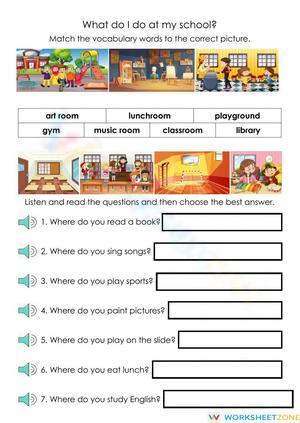
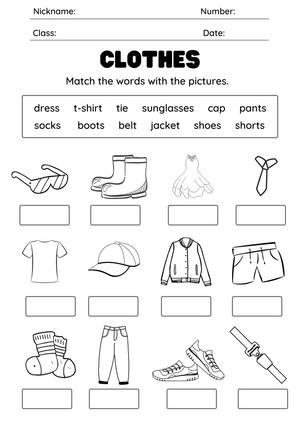
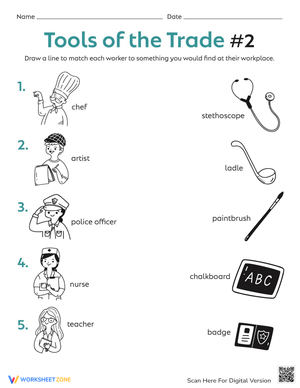
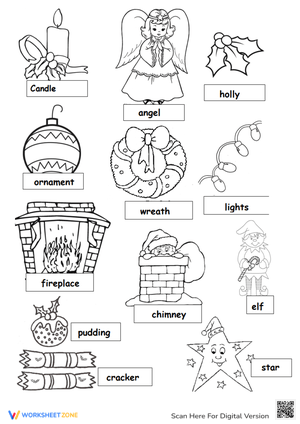
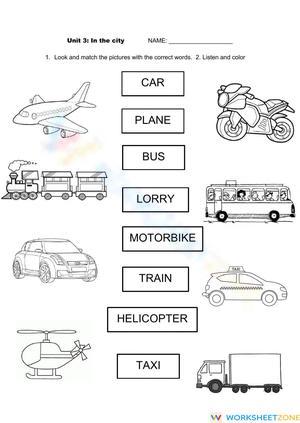
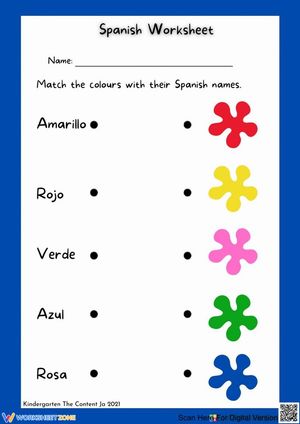
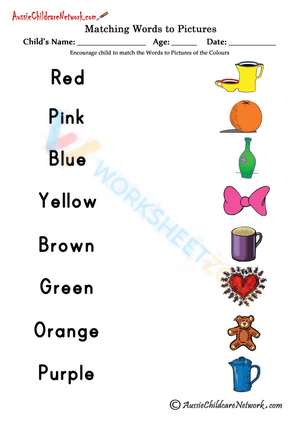
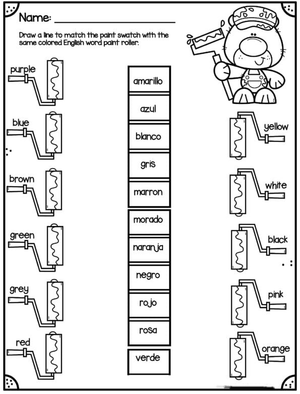
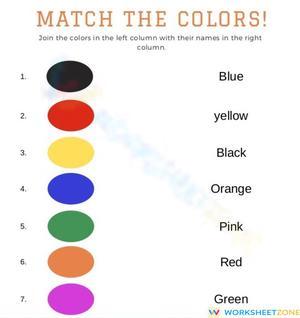
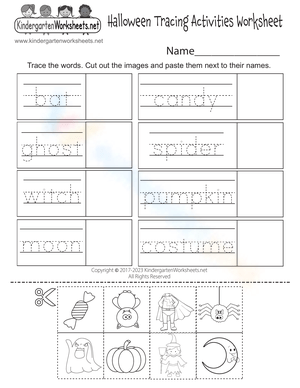
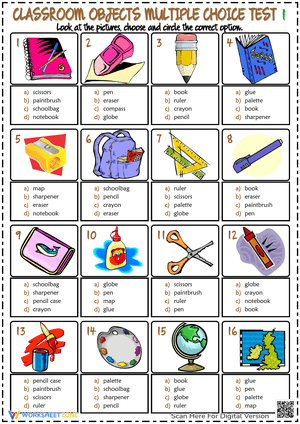
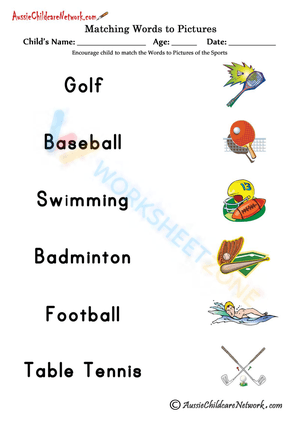
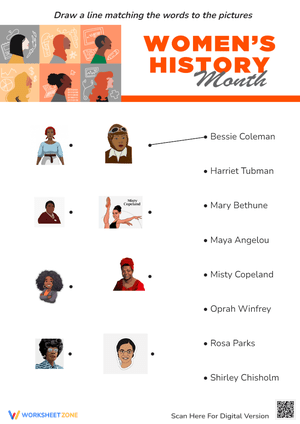
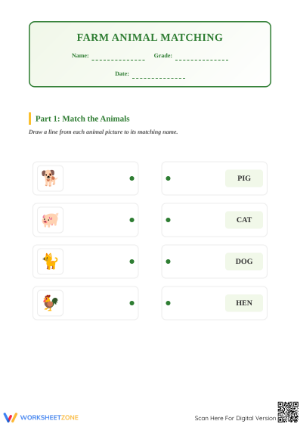
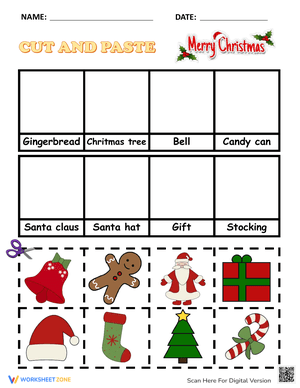
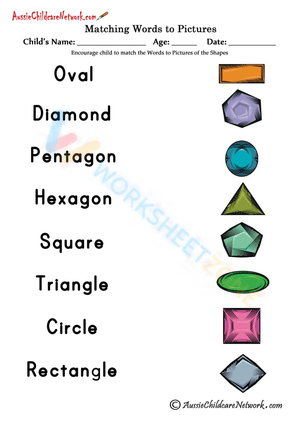
These picture word matching printable worksheets for kindergarten give teachers a direct path into early word recognition — students draw lines, cut and paste, or circle answers to connect familiar images to their written labels, building the letter-sound-meaning link that reading depends on. The formats rotate deliberately across the set so students don't auto-pilot through the task. What stays constant is the core demand: attend to the whole word, not just the first letter.
The Specific Skills These Worksheets Build
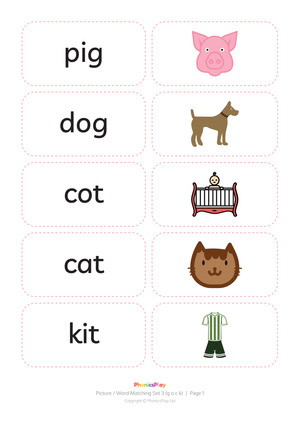
Across the set, picture word matching printable worksheets for kindergarten cover CVC (consonant-vowel-consonant) words organized around short vowel families. The short /a/ group includes words like bat, fan, and map; the short /i/ group includes pig, fin, and lid. That grouping is deliberate — when students compare words inside the same vowel family, they sharpen attention to the medial vowel rather than defaulting to the initial consonant as their only cue. Several worksheets also bring in high-frequency words (run, get, sit) that students encounter in their first leveled readers, so the matching task doubles as sight-word exposure.
Fine motor precision shows up in the line-drawing format. The pencil has to travel from image to word without crossing another line already on the page. That small physical constraint slows students down and requires them to look carefully before committing — which is exactly the close-reading behavior worth reinforcing at this stage.
What to Watch For in Student Matching Work
The most predictable error: students match by initial letter alone. A child who sees a picture of a bus scans the word list for anything starting with b and draws the line — even if that word is bat. At that moment, the picture has stopped doing cognitive work. Catching this in real time requires a verbal check: "Read me the word you matched." Students who matched by initial letter alone typically hesitate or misread the word aloud, and that pause tells you everything you need to adjust the next lesson.
A second pattern appears less often but matters: students who know the spoken word but are not yet tracking print left-to-right consistently. They match dog to the correct picture but cannot point to each letter in sequence while reading it. Asking students to underline each word after matching surfaces this gap quickly and gives you sharper diagnostic information than a completed worksheet alone can provide.
How to Work These Worksheets Into the Literacy Block
Morning arrival is the most reliable slot. One matching worksheet on the desk when students come in provides a defined task before morning meeting — no transition management required, no extended explanation once the format has been introduced once. By the second week, most kindergartners pick it up and begin without prompting.
Literacy centers are the other natural fit. Because picture word matching printable worksheets for kindergarten carry enough visual context to be completed without a teacher present, they run well in a center rotation while you pull a small group for targeted instruction. Laminate a set and supply dry-erase markers for repeated use, or keep paper copies in a folder with an answer key clipped inside so students can self-check before rotating to the next station. That self-check step matters — it moves students from answer-getting to answer-verifying, which is a meaningfully different cognitive act.
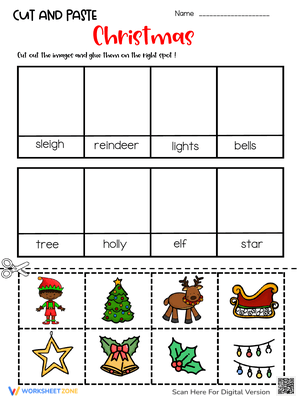
Reserve the cut-and-paste format for a seated small-group session rather than the busy arrival window. Scissors and glue during morning transitions create management overhead that the learning rarely justifies.
Standard Alignment
These worksheets address RF.K.3 (Phonics and Word Recognition), specifically the expectation that kindergartners know and apply grade-level phonics and word analysis skills in decoding words. The CVC-focused sets target RF.K.3.b directly — associating short vowel sounds with CVC patterns. The high-frequency word sets address RF.K.3.c, which covers the Dolch and Fry words students should recognize on sight by the end of the year.
In classroom terms, RF.K.3 typically becomes productive in the second half of the kindergarten year, after phonemic blending and segmenting have been introduced orally and students are ready to attach sounds to print. Using these resources before that oral foundation is in place often produces the initial-letter-guessing behavior described above rather than genuine decoding. Most teachers find the matching format most effective once students have worked through a solid phonemic awareness unit.
Adapting Each Worksheet for the Range of Readers in Your Room
For students working ahead, remove the word bank before printing and ask them to write the correct label from memory after studying each picture. That shift — from recognition to independent recall — is considerably harder and worth the extra prep step. Students can then write each matched word in a sentence on the back of the worksheet, which connects word recognition to early sentence composition and keeps those students purposefully occupied rather than waiting.
For students still solidifying letter-sound knowledge, reduce each worksheet to three or four pictures and increase the white space between items. Let them track with a finger or pointer as they say each sound aloud before searching for the match. Pairing picture word matching printable worksheets for kindergarten with a personal letter-sound reference card on the desk — not to hand over answers, but to support decoding attempts — keeps students in the task rather than shutting down at the first unfamiliar word. Students with limited English proficiency tend to do best with thematic sets built around classroom objects, body parts, or color words, where the picture provides the meaning bridge that a word-only task cannot.
Frequently Asked Questions
Can these worksheets function as a quick informal assessment?
Yes, with one adjustment to the setup. During a typical session, students self-check or compare answers with a partner. For assessment use, have students complete each worksheet independently and silently, then review the results yourself before students see a key. A child who mismatches words sharing the same initial consonant is showing a different phonics gap than one who mismatches across vowel families — and each gap points toward a different small-group lesson.
How many items per worksheet is the right amount for kindergarten?
Six to eight items is the practical range for most of the year. Below six, the task ends too quickly for students who already have the skill. Above ten, students at this age start skipping items or guessing rather than attending carefully to each word. The cut-and-paste format naturally handles more items than the line-drawing format because the physical handling slows the pace and sustains engagement longer.
What do I do with students who finish early and start distracting others?
Build the extension into your verbal directions before handing out the worksheet — not as an afterthought when students are already done and looking around the room. Students who finish early flip the worksheet over and draw their own illustration for each word they matched. No extra materials, no separate instruction, and it keeps them productively occupied without pulling your attention away from the group you're working with.












 Interactive Worksheet Maker
 Quiz Maker
 Word Search Maker
 Crossword Puzzle Maker
 Word Scramble Generator
 Sentence Scramble Generator
 Handwriting Worksheet Generator
 Name Tracing Generator
 Fill In The Blank Generator